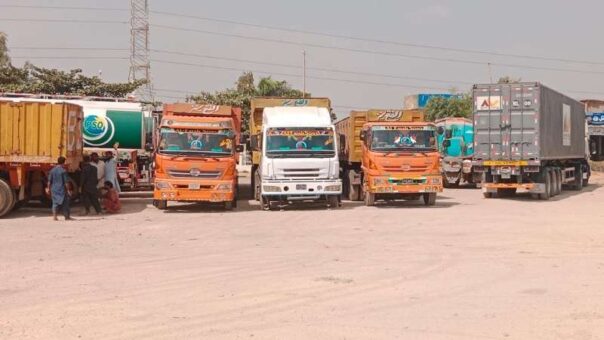
Karachi, December 17, 2025 — Pakistan’s goods transporters on Wednesday ended their week-long wheel jam strike after successful negotiations with the government, following acceptance of key demands aimed at easing cargo movement across major ports and highways.
The breakthrough came after talks led by Punjab Minister for Transport and Mass Transit Bilal Akbar Khan at the Customs House in Karachi. Senior Punjab Minister Marriyum Aurangzeb also participated in the discussions via Zoom, according to sources.
Confirming the development, Port Qasim Transporters Goods Association (TGA) Chairman Hammas Khan Lodhi said the strike was withdrawn after receiving an official government notification approving the transporters’ demands.
The TGA, along with nine other transporters’ associations, had remained on strike for nearly seven days, from last Thursday to Wednesday. The protest caused severe disruption to supply chains, resulting in daily losses worth millions of rupees to factory owners and the national exchequer.
Following the announcement, transportation activities resumed immediately, with cargo vehicles forming queues outside Port Qasim and Karachi Port.
Lodhi said the government agreed to extend operating hours for 20-feet long, 10-wheel cargo vehicles to 19 hours a day, up from the previous limit of nine hours. These vehicles will now operate almost round the clock, with two daily off-road windows of 2.5 hours each during school and office opening and closing times.
Operating hours for 14-wheel cargo vehicles will remain unchanged, restricted from 10:00 pm to 7:00 am.
In addition, the government has assured transporters of allocating 50 acres of land near the National Logistics Cell (NLC) facility in Karachi, close to the American Consulate, for dedicated vehicle parking.
The strike had raised serious concerns across industries. Former Pakistan Pharmaceutical Manufacturers Association (PPMA) chairman Tauqeer Ul Haq said disruptions in cargo movement led to medicine shortages in several areas, as pharmaceutical firms rely heavily on imported raw materials.
The protest also affected import and export operations, compounding losses already faced by exporters following the recent closure of the Afghanistan border, which reportedly caused an estimated $200 million loss to Pakistan’s pharmaceutical sector.