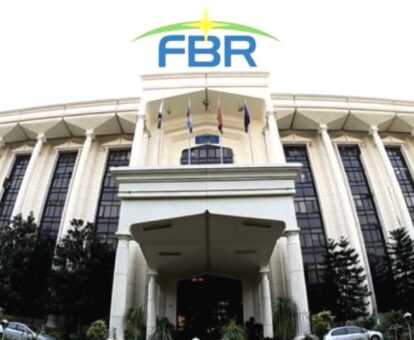
Islamabad: Finance Minister Muhammad Aurangzeb on Wednesday announced that the government plans to amend the Federal Board of Revenue Act 2007 through the upcoming Finance Act 2026 to shift tax policy responsibilities from the Federal Board of Revenue (FBR) to a newly established Tax Policy Office under the Ministry of Finance.
The proposed changes aim to create a clear separation between tax policy formulation and revenue administration in Pakistan’s fiscal management system.
Tax policy to shift to Finance Ministry
While briefing the Senate Standing Committee on Finance, Aurangzeb explained that the government has already established a dedicated Tax Policy Office within the Ministry of Finance Pakistan. The office will independently analyze and develop fiscal policies, ensuring that policy design remains separate from the tax collection and enforcement functions of the FBR.
He noted that the creation of the new office makes the FBR’s Tax Policy Board redundant. As a result, the government plans to remove Section 6 of the FBR Act 2007, along with other references to the Policy Board in the legislation.
Budget tax proposals to be prepared by Tax Policy Office
Chairman FBR Rashid Mahmood Langrial informed the committee that tax proposals for the federal budget 2026–27 will be prepared by the Tax Policy Office rather than the FBR.
“The tax policy function has been shifted from the FBR to the Tax Policy Office of the Finance Ministry, while the operational and administrative functions will continue to be handled by the FBR,” Langrial said.
He added that amendments to the Rules of Business and the FBR Act 2007 would be required to fully empower the new office and enable it to effectively carry out tax policy functions.
Senators raise concerns over policy shift
During the meeting, Senator Talha Mahmood raised concerns regarding the proposed restructuring. He argued that tax policy is a highly technical domain and suggested that an FBR member should lead the tax policy function.
The senator also criticized what he described as a negative perception of tax authorities among the business community. He claimed that many businessmen prefer paying bribes rather than dealing with tax officials due to distrust of the system.
Mahmood further called for greater accountability within the tax machinery and proposed that the assets of tax officials be examined by the Federal Investigation Agency (FIA).
Government vows accountability in tax machinery
Responding to the concerns, Finance Minister Aurangzeb assured lawmakers that the government is committed to eliminating corruption within the tax administration.
He emphasized that all civil servants, including FBR officials, are required to declare their assets and that action would be taken against any individuals found involved in wrongdoing.
Proposed changes in appointment powers
The FBR chairman also highlighted another proposed amendment to the FBR Act regarding the appointment of senior officials.
Under the proposed changes, the Secretary of the Revenue Division would be authorized to appoint FBR members through transfers and postings of officers in Grade-21 and above working within the organization.
Langrial explained that the FBR currently has more than 80 Grade-21 officers and frequent transfers occur within the tax administration. Granting these powers to the Secretary Revenue Division would help resolve legal ambiguities and ensure administrative continuity.
However, he clarified that the authority to appoint the Chairman and Members of the Board would remain with the federal government.
Reform aimed at strengthening tax governance
The government’s proposed reforms are part of broader efforts to modernize Pakistan’s tax system and improve transparency, policy formulation, and institutional efficiency within the country’s fiscal framework.