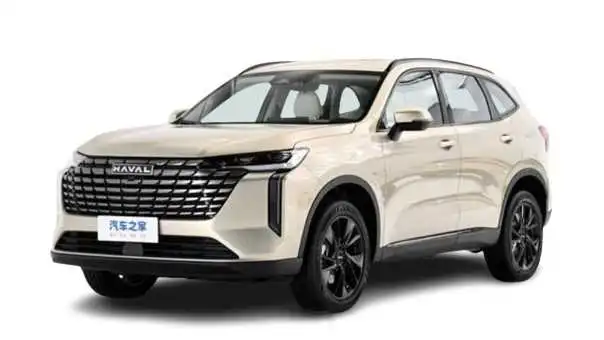
Pakistan’s plug-in hybrid SUV segment is heating up with the arrival of the Chery Tiggo 9 PHEV, challenging the well-established Haval H6 PHEV.
Both Chinese SUVs target buyers seeking premium features with electrified efficiency, but they cater to slightly different audiences. Let’s explore how these two contenders stack up in price, size, performance, and comfort.
Price Comparison: Which Offers Better Value?
The Haval H6 PHEV maintains its reputation as a value-focused hybrid SUV with an ex-factory price of Rs 12,895,000.
In contrast, the newly launched Chery Tiggo 9 PHEV enters the market at Rs 13,694,000.
While the Tiggo 9 commands roughly Rs 799,000 more, the higher price reflects its positioning as Pakistan’s first E-segment luxury PHEV SUV.
Buyers must decide whether the added premium justifies the extra features and space.
Dimensions Comparison: Space vs Practicality
When it comes to size, the Tiggo 9 PHEV clearly aims for a larger, more family-oriented footprint. It measures 4810 mm in length, wider at 1925 mm, and taller at 1741 mm, riding on a longer 2800 mm wheelbase.
It also offers seven-seat capacity and higher ground clearance of 183 mm, making it suitable for bigger families and long trips.
The Haval H6 PHEV, meanwhile, focuses on compact practicality. With a length of 4703 mm, width of 1886 mm, and height of 1730 mm, it is slightly smaller but still spacious for daily use.
Its five-seat layout and 600-liter boot space make it appealing for urban buyers who prioritize cargo capacity over extra seating.
Performance Comparison: Power Meets Efficiency
Performance is where the rivalry becomes intense. The Haval H6 PHEV delivers a combined 360 horsepower and 760 Nm torque from its 1.5-liter PHEV setup paired with AWD.
It also offers a higher top speed of 200 km/h, making it a balanced performer for highway driving.
However, the Tiggo 9 PHEV raises the stakes significantly. Its 1.5-liter turbocharged plug-in hybrid system produces an impressive 610 horsepower and 920 Nm torque (combined), also with AWD.
Although its top speed is slightly lower at 180 km/h, the raw power advantage makes it the clear winner for performance enthusiasts.
Comfort and Convenience: Luxury Face-Off
Both SUVs come generously equipped, offering dual-zone climate control, heated and ventilated seats, adaptive cruise control, 360-degree cameras, wireless charging, and auto parking.
The Haval H6 PHEV provides perforated faux leather seats and strong everyday comfort features, making it a well-rounded package for its price.
The Tiggo 9 PHEV, however, pushes further into luxury territory. It adds third-row AC vents, genuine leather upholstery, ambient lighting, a boss seat switch, and a built-in cool box.
These extras enhance rear passenger comfort and give it a more premium feel. That said, it misses smart cruise control found in the H6.
Verdict: Which PHEV SUV Should You Buy?
Choose the Haval H6 PHEV if you want better value, strong performance, and a practical five-seat hybrid SUV for city use.
Opt for the Chery Tiggo 9 PHEV if your priority is maximum power, seven-seat capacity, and a more luxurious cabin experience.
Both vehicles strengthen the growing Chinese PHEV footprint in Pakistan, but your final choice depends on whether you value affordability or flagship luxury.