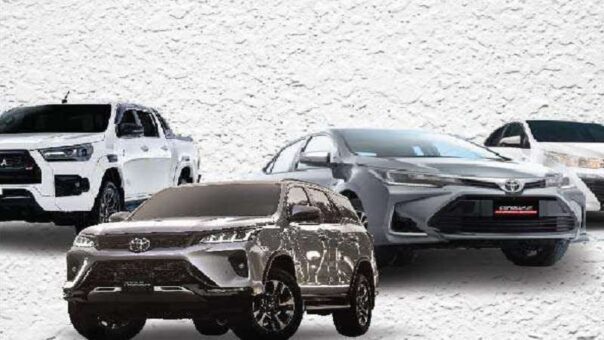
Karachi, February 27, 2026 – Indus Motor Company Limited has called on the government to ease duty and tax burdens while reducing auto financing rates to support growth in Pakistan’s automobile sector. The request comes ahead of the formulation of the Auto Industry Policy 2026–31, which will replace the existing policy set to expire in June 2026.
According to a filing submitted to the Pakistan Stock Exchange (PSX), Indus Motor expects continued demand growth for locally manufactured vehicles, supported by improving macroeconomic conditions, contained inflation, and stable financing costs.
Policy Recommendations by Indus Motor
The company highlighted the need for policy measures to promote local vehicle assemblers and parts manufacturers. Key recommendations include:
• Relaxing restrictions on auto financing up to Rs3 million.
• Providing relief from duties and taxes on both direct and indirect vehicle exports.
• Rationalizing taxes on vehicle prices to enhance affordability for consumers.
Indus Motor emphasized that such measures would not only drive sustainable growth in the automotive sector but also support the localization of auto parts, generate employment opportunities, and increase government revenue.
Macroeconomic Overview
During the first half of FY 2025–26, Pakistan’s economy showed signs of gradual recovery:
• GDP growth estimated at 3.6%
• Foreign exchange reserves at around USD 21 billion
• Inflation (CPI) averaged 5.6% in December 2025
• Policy rate maintained at 10.5% by the State Bank of Pakistan
• Fiscal deficit contained at nearly 5.4% of GDP
The country’s economic stability is supported by ongoing IMF Extended Fund Facility (EFF) reforms, contributing to a cautiously optimistic outlook for FY 2025–26.
Automobile Industry Performance
The local automobile sector continued its recovery in H1 FY 2025–26, driven by improving economic conditions and lower financing costs. Sales of Passenger Cars (PCs) and Light Commercial Vehicles (LCVs) by PAMA members rose 46% year-on-year, reaching approximately 88,322 units, compared to 60,676 units last year.
However, the industry is still operating at roughly 40% of installed production capacity, indicating room for growth. The import of used vehicles increased 49% to 25,507 units, though recent government restrictions on imports under the Personal Baggage Scheme and tightened rules for Gift and Transfer of Residence schemes are expected to boost local manufacturing.
Indus Motor Company Performance
Indus Motor recorded strong growth in CKD and CBU vehicle sales, which rose 63% to 20,754 units in H1 FY 2025–26, up from 12,749 units in the same period last year. The company’s market share stood at approximately 16%, driven by strong demand for Toyota Corolla and Toyota Yaris sedans.
• Net sales turnover: Rs119.821 billion, up from Rs84.879 billion
• Profit after tax: Rs12.701 billion, up from Rs9.957 billion
• Earnings per share (EPS): Rs161.60, compared to Rs126.69
• Interim cash dividend: Rs46 per share, up from Rs37
The growth in profitability was supported by higher CKD volumes, lower input costs due to favorable exchange rates, cost optimization, and increased localization efforts.
CEO’s Statement and Outlook
Indus Motor emphasized that the forthcoming Auto Industry Policy 2026–31 should focus on making vehicles more affordable, expanding local manufacturing, and ensuring sustainable growth. The company expects continued support from the government and regulatory bodies to achieve these objectives and further strengthen Pakistan’s automotive sector.