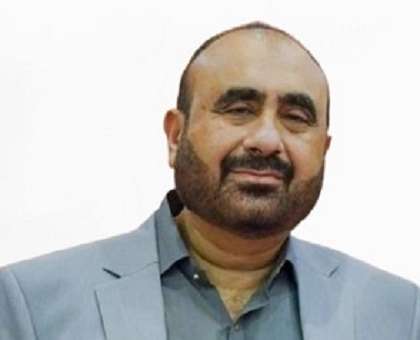
Karachi, February 23, 2026 — Khurram Ijaz, General Secretary of the Businessmen Panel Progressive (BPP) and former vice president of the Federation of Pakistan Chambers of Commerce and Industry (FPCCI), has called on the government to urgently adopt a strategy of export diversification to safeguard Pakistan’s trade interests amid fresh regulatory curbs imposed by the United States on global imports.
Ijaz warned that the United States, being Pakistan’s largest trading partner, plays a pivotal role in the country’s export performance, and any restrictive measures could significantly dent foreign exchange earnings. Citing data from the State Bank of Pakistan (SBP), he noted that the US remained the top destination for Pakistani exports, importing goods worth $6.03 billion in FY2024-25, up from $5.44 billion in the previous fiscal year.
Last year, US President Donald Trump had announced varying tariff rates on imported goods, a move later struck down by the US Supreme Court. However, the Trump administration subsequently imposed a flat 15% duty on all global imports.
According to SBP figures, Pakistan’s exports to the US declined from $547.75 million in January 2025 to $537.56 million in December 2025, and further dropped to $512 million in January 2026, highlighting a downward trend.
Referring to data released by the Pakistan Bureau of Statistics (PBS), Ijaz pointed out that the country’s overall exports fell by 7% to $18.19 billion during the first seven months (July–January) of FY2025-26, compared to $19.58 billion in the same period last year.
“To ensure sustainable export growth, the government and relevant ministries must identify alternative markets for Pakistani products,” Ijaz emphasized, adding that reliance on a limited number of destinations exposes the economy to external shocks.
A research paper by the FPCCI identifies Pakistan’s key export items to the US as bed and table linen, toilet and kitchen linen, men’s and boys’ suits, made-up textile articles, T-shirts, hosiery, sweaters, pullovers, leather apparel, chemical wood pulp, and worn textile articles, among others.
Ijaz stressed the need to explore new markets, particularly for textile products, which remain the backbone of Pakistan’s export sector. He warned that excessive dependence on a single market or a narrow product range could hurt long-term export receipts.
To boost competitiveness, Ijaz urged the government to provide maximum support to exporters, calling for reforms in taxation, energy tariffs, infrastructure development, and ease of doing business. “Comprehensive policy reforms are essential to maintain export momentum and ensure Pakistan remains competitive in international markets,” he concluded.