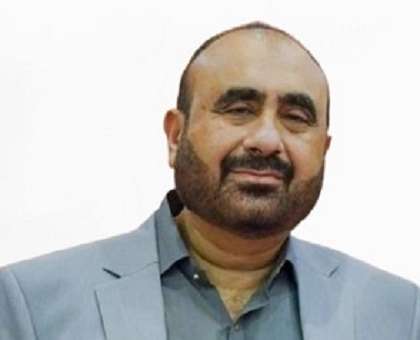
Karachi: Khurram Ijaz, General Secretary of the Businessmen Panel Progressive (BMPP) and former Vice President of the Federation of Pakistan Chambers of Commerce and Industry, has expressed serious concern over Pakistan’s widening trade deficit and urged the government to take immediate and effective measures to boost exports.
According to official data released by the Pakistan Bureau of Statistics, Pakistan’s trade deficit surged by 25% to $25.04 billion during the first eight months (July–February) of fiscal year 2025–26, compared to $20 billion in the same period last year. Exports declined by 7.30% to $20.46 billion, while imports rose by 8.06% to $45.50 billion during the period under review.
Commenting on the figures, Khurram Ijaz said, “The persistent decline in exports coupled with rising imports is a worrying sign for the economy. A widening trade deficit will further strain foreign exchange reserves and put pressure on the rupee.”
He emphasized that export-led growth must be treated as a national priority. “Pakistan urgently needs a comprehensive strategy focused on export diversification, value addition, and support for key sectors. Without structural reforms and consistent policies, our trade imbalance will continue to deepen,” he added.
On a year-on-year basis, the trade deficit widened by 4.63%, as exports fell 8.76% and imports declined 1.61% compared to February 2025. Month-on-month data showed an even sharper picture, with the deficit jumping 8.40% due to a 25.63% drop in exports and a 9.51% decline in imports compared to January 2026.
Ijaz noted that higher import costs—particularly for energy, machinery, and raw materials—alongside weak export performance are key drivers of the growing gap. Prolonged trade deficits could influence monetary policy decisions and further challenge macroeconomic stability.
Khurram Ijaz concluded by urging policymakers to act swiftly. “The latest data is a clear wake-up call. Sustainable economic growth is not possible without strengthening exports, rationalizing imports, and addressing long-standing structural weaknesses in our trade sector,” he said.