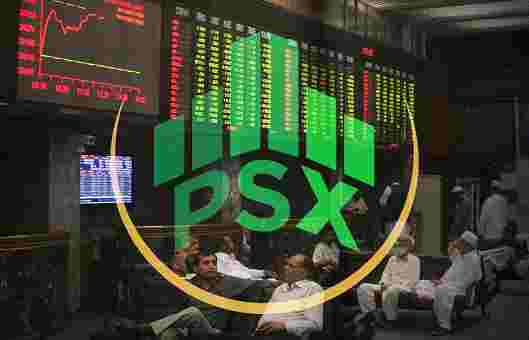
Karachi, March 2, 2026 – The benchmark KSE-100 index of the Pakistan Stock Exchange (PSX) suffered a historic crash on Monday, plunging by over 16,000 points in a single trading session, as escalating war tensions in the Middle East and Gulf region triggered widespread panic selling.
At 1:30 PM Pakistan Time (PKT), just ahead of market close, the KSE-100 index stood at 151,905.02 points, down sharply by 16,157.14 points or 9.61%, marking one of the largest single-day declines in PSX history.
📊 KSE-100 Index Market Summary (March 2, 2026)
| Market Indicator | Value |
| Current Index | 151,905.02 |
| Change | -16,157.14 |
| Percentage Change | -9.61% |
| Day High | 159,328.59 |
| Day Low | 151,905.02 |
| Volume | 458,244,822 |
| Previous Close | 168,062.16 |
| Traded Value (PKR) | 42,677,244,206 |
Panic Selling Triggers Historic Sell-Off
Market participants described Monday’s plunge as full-blown panic mode, driven by high leverage positions, geopolitical uncertainty, and fears of regional instability involving Iran and Afghanistan. The escalating conflict in the Middle East further fueled investor anxiety, resulting in heavy sell-offs across all major sectors.
Due to the intense selling pressure, trading was halted for 45 minutes until 10:27 AM, before resuming under extreme volatility.
Middle East War Sparks Market Shockwaves
Investor sentiment took a sharp hit following continued military strikes by the United States and Israel on Iran, coupled with Iran’s missile retaliation across the region. The intensifying conflict has raised fears of disrupted energy supplies and surging global oil prices, both of which pose serious risks to Pakistan’s fragile economy.
In response to deteriorating regional stability, stock markets in the United Arab Emirates and Kuwait were temporarily closed, citing “exceptional circumstances,” further adding to the bearish sentiment in regional markets.
Economic Risks for Pakistan
According to brokerage house Topline, the escalating conflict has significantly increased economic risks for Pakistan, despite the country not being directly involved in the hostilities. Analysts highlighted concerns over rising oil prices due to Pakistan’s heavy reliance on energy imports, imported inflation, and weaker investor confidence as tensions escalate along Pakistan’s eastern and western borders.
Market experts warned that volatility may persist for several sessions, advising investors to closely monitor international oil prices, noting that a dip below $80 per barrel could help stabilize markets by the end of the week.
Market Outlook
Analysts said short-term volatility is likely to remain elevated, as global investors continue to react to fast-evolving geopolitical developments. However, they expect selective buying interest to emerge once regional tensions ease and oil prices stabilize.