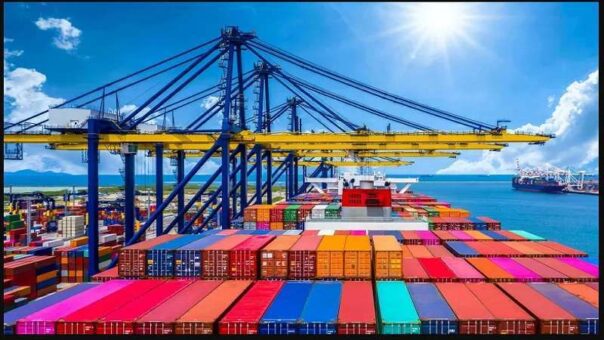
Karachi, February 4, 2026 — The Karachi Chamber of Commerce and Industry (KCCI) on Wednesday sounded the alarm over worsening congestion at Karachi International Container Terminal (KICT), revealing that more than 2,000 stranded containers linked to Afghan Transit Trade (ATT) are severely disrupting terminal operations.
KCCI President Rehan Hanif expressed deep concern over the persistent backlog at KICT, noting that nearly 50 percent of containers remain uncleared on a daily basis. He cautioned that prolonged congestion is disrupting supply chains, escalating logistics costs, and negatively impacting the ease of doing business in Pakistan.
In a statement, the KCCI chief identified an acute shortage of Customs staff as the primary cause of delays, particularly for consignments requiring physical examination. He stressed that at least 25 examination officers, supervised by two senior officials, are needed to address the issue. “Frequent staff rotations and an understaffed examination wing have slowed the clearance process, leaving around half of daily cargo pending,” he said.
Hanif also highlighted that over 2,000 ATT containers lying idle at KICT have significantly intensified congestion. He regretted that despite the installation of advanced container scanners—capable of scanning a container in under a minute—the clearance process remains sluggish due to inadequate staff training, lack of awareness about scanner capabilities, absence of live monitoring, and insufficient oversight.
Referring to assurances given during a meeting with the Chief Collector of Customs, the KCCI president said directives to prioritize clearance of single-item and industrial raw material consignments are not being implemented, causing avoidable delays for critical inputs.
Additionally, he termed the lengthy process of installing tracking devices on trucks—taking up to four to five hours—as another major bottleneck, creating long queues and inflating business costs. He further noted that KICT’s high volume of miscellaneous cargo, which requires unpacking and repacking for examination, remains a long-standing structural challenge.
Warning of further pressure between February 5 and 15 due to post–Chinese New Year shipments and the approaching Eid season, Hanif urged urgent intervention by the finance minister, FBR chairman, and customs authorities to avert shortages, market instability, and financial losses.