Blog

  • Stock market trades in narrow range

    Stock market trades in narrow range

    KARACHI: The stock market gained 16 points on Monday while trading in narrow range.

    The benchmark KSE-100 index of Pakistan Stock Exchange (PSX) closed at 33,284 points as against 33,268 points showing an increase of 16 points.

    Market traded in a narrow range between +48 points and -142 points, closing the session +16 points. Banking sector traded in the negative zone, and similar activity was observed in Cement and E&P.

    All eyes are set on MSCI rebalancing and Monetary Policy rate cut, of which MSCI is scheduled to announce decision on May 12, whereas SBP is also expected to take the decision on Policy rate during the ongoing week. Side board scrips came in the limelight today and contributed to the volumes, including WTL, HUMNL, UNITY and TRG.

    Pharma stocks, FEROZ and SEARL also reacted to possible non-exclusive engagement with Gilead for manufacturing Coronavirus drug Remdesivir and performed well on the bourse.

    Technology stocks contributed 94.2 million shares to the index, followed by O&GMCs (16.5 million) and Vanaspati (15.1 million). Among scrips, WTL topped with 62.4 million shares, followed by TRG (15.8 million) and UNITY (15.1 million).

    Sectors contributing to the performance include Pharma (+23 points), Technology (+12 points), Insurance (+8 points), Power (-10 points) and E&P (-10 points).

    Volumes increased from 88 million shares to 198.2 million shares (+125 percent DoD). Average traded value also increased by 15 percent to reach US$ 27.4 million as against US$ 23.9 million.

    Stocks that contributed significantly to the volumes include WTL, TRG, UNITY, HASCOL and HUMNL, which formed 56 percent of total volumes.

    Stocks that contributed positively to the index include SEARL (+12 points), SNGP (+10 points), TRG (+7 points), AICL (+6 points) and GLAXO (+6 points). Stocks that contributed negatively include HUBC (-12 points), PPL (-7 points), HBL (-4 points), PSO (-4 points), and OGDC (-4 points).

  • Rupee falls by 10 paisas against dollar

    Rupee falls by 10 paisas against dollar

    KARACHI: The Pak Rupee fell by 10 paisas against dollar Monday amid higher demand import payment, dealers said.

    The rupee ended Rs160.07 to the dollar from last Friday’s closing of Rs159.97 in interbank foreign exchange market.

    Currency analysts said that the market opened after weekly holiday which increased the demand for import payment.

    They said that the rupee also improved with shrinking trade deficit.

    The trade deficit shrank by 25.68 percent to $19.49 billion during July – April 2019/2020 as compared with the deficit of $26.23 billion in the same period of the last fiscal year.

    The exports in first ten months (July – April) 2019/2020 also fell by four percent to $18.41 billion as compared with $19.16 billion in the corresponding period of the last fiscal year.

  • FBR proposed to eliminate distortion in withholding tax on dividends from equity investments

    FBR proposed to eliminate distortion in withholding tax on dividends from equity investments

    KARACHI: Federal Board of Revenue (FBR) has been proposed to rationalize of withholding tax on dividends as higher rate from equity investments discourage investment in the capital market.

    Pakistan Stock Exchange (PSX) in its proposals for budget 2020/2021 submitted to Federal Board of Revenue (FBR) said that withholding tax on profit from debt instruments is currently charged a lower rate compared to the withholding tax charged on dividend from equity investments.

    The difference ranges between 2.5 percent – 5 percent. This reduces the incentive to invest in the equity market.

    Tax treatment on various asset classes should not be the primary driver of investment decisions, the PSX said, adding that the profit on debt and dividends should receive the same tax treatment.

    At present, it is observed that corporate profits are first taxed at company level, and subsequently, the resulting profits which are distributed as dividends are taxed at the individual level.

    This is essentially a form of double taxation, and result in the misallocation of capital in an economy by giving an upper hand to fixed income investments.

    To remove this discrepancy, the government should introduce a mechanism to eliminate the distortion on the tax charged on dividends, and make the effective tax rate equal to that on debt.

    Tax rate on investmentsProfit paid is more than rupees five hundred thousandProfit paid is rupees five hundred thousand or less
    Profit on Debt u/s 15115 percent10 percent
    Sukuk-holder (individual or an association of person), if the return on investment is more than one million U/S 150A12.5 percent
    Sukuk-holder (individual and an association of person), if the return on investment is less than one million U/S 150A10 percent
    Dividend U/S 150 & 236S15 percent

    The PSX submitted following proposals:

    i. Government should introduce a mechanism to remove the double taxation of company’s profits – once in the hands of the company, and once in the hands of shareholders as dividends – such that the effective tax rate on dividends is on par with profit on debt.

    ii. Rationalize the current tax rate on dividends to make it equal to the tax rate on profit from debt.

    Provided that there should be no withholding tax on dividend up to Rs100,000 per annum.

    Giving rationale to the proposals, the PSX said that a similar tax treatment on dividend from equity investment and debt instrument will provide a level playing field to equities and attract higher inflows in the stock market. Further, it would lead to increase in numbers of UINs.

    The PSX proposed following proviso should be inserted in section 150 and Section 236S to the Income Tax Ordinance, 2001:

    “Provided that there should be no withholding of tax where amount does not exceed Rs100,000 per annum.”

    Clause (b) Division-I, Part III, First Schedule to the Income Tax Ordinance, 2001, for the word ’15 percent’ shall be substituted by ’10 percent.’

  • PSX proposes reduction of withholding tax on margin financing transactions

    PSX proposes reduction of withholding tax on margin financing transactions

    KARACHI: Pakistan Stock Exchange (PSX) has proposed to reduce the rate of withholding tax in the gross income earned on margin financing transactions to 2.5 percent from existing 10 percent.

    (more…)
  • FBR suggested to abolish tax refund culture

    FBR suggested to abolish tax refund culture

    KARACHI: Federal Board of Revenue (FBR) has been suggested to abolish tax refund culture and bring down sales tax at five percent.

    Federation of Pakistan Chambers of Commerce and Industry (FPCCI) in its proposals for budget 2020/2021 suggested that the culture of refunds should be abolished and government should collect GST at the rate of 5 percent.

    “It will transfer the benefits to the end consumers which lead the control over inflation and poverty and enhancement in economic activities,” the FPCCI said.

    The apex trade body said that the reduction in the rate of sales tax will enlarge the size of consumer markets and government earnings will definitely increase.

    It will transfer the benefits to the end consumers which lead the control over inflation and poverty and enhancement in economic activities.

    The FPCCI highlighted the present structure of taxation policies in Pakistan.

    Here, it is noteworthy that inducement of private investment particularly foreign direct investment is the only feasible option to develop the badly deteriorated infrastructure in Pakistan.

    Greenfield investment and capitalization of the savings of expatriate Pakistanis are also included in this program.

    FPCCI proposed fiscal policy, while revival strategy will be based on foreign investment. It is unfortunate that tax rates in Pakistan are considered as major hurdle in investment.

    Tax and contribution as percentage of Gross profit is 33.9 percent in Pakistan, while it is 49.7 percent in India, 38.7 percent in Malaysia, 36.6 percent in USA, and 33.4 percent in Bangladesh.

    The average tax rate on corporate sector in Pakistan is 29 percent; it is 25 percent in India, 24 percent in Malaysia, and 21 percent in USA.

    It is important to note that tax system in Pakistan emphasizes on indirect taxes and surcharges. The share of direct taxes in government revenue is around 37 percent in Pakistan, 47 percent in India, 46 percent in Malaysia, 38 percent in UK and 50 percent only in USA.

    The lower share of direct taxes is because of exemptions and less e orts for tax collections from agriculture, services, real estates and retail trading activities.

    This situation leads to dependency on indirect taxes. The indirect taxes hampered the industry in many ways: they increase the cost of production and reduce the demand for manufacturing products, because of higher market prices of those products by inclusion of sales tax. By such a manner, they damage the industrial competitiveness and induce the inflation in economy.

    The FPCCI has recommended the shifting of dependency from indirect to direct taxes. We strongly recommend the reduction rate of sales tax to provide relief to the general public.

    This step will improve the buying power of general public and will help the industry in revival process and accelerate the investment in the country.

    It is extremely important for the survival of Pakistan economy at this stage. The reduction in the rate of GST is proposed on the basis of expected enhancement in revenue because of enhanced economic activities.

    To increase its revenue government should not depend on indirect taxation. This approach leads the poverty and inflation. We should encourage revenue enhancement through direct taxation on equity and egalitarian basis.

    Tax should be paid according to the magnitude of earning regardless the source of earning.

    To accelerate economic activities and improving efficiencies, the FPCCI suggests reduction in the rate of GST.

    This is the pivotal point of our taxation policy. A solution of containing the ongoing unsettled business environment is imperative. The present ongoing conflicts and contradictions has reduced the sales and as well as have chocked the sales points and agents of sales. The re-initiation efforts of FPCCI towards saleable policy objective of fixed sales system may find a substitute of settlement of ongoing disputed business environment.

    The reduction in the rate of sales tax will enlarge the size of consumer markets and government earnings will definitely increase. The sources of FBR have been indicating the effective tax rate of GST is less than 5 percent, which indicate that 71 percent of total collection of sales tax has to pay back in account of input adjustment and refund claims.

    The FPCCI in 2014 took-up a subject of fixed sales tax regime, which attended the influence level and even the then Finance Minister conceded to consider the same during his tenor as the document, submitted by FPCCI, concluded towards the objective that the collection would increase and not decrease by promoting business conducting environment through fixed sales tax regime.

    This will provide demand supported production environment for manufacturing. It will improve the collections and settle the disputed business environment.
  • FPCCI suggests measures to boost exports

    FPCCI suggests measures to boost exports

    KARACHI: Federation of Pakistan Chambers of Commerce and Industry (FPCCI) has suggested measures to boost exports of the country.

    The apex trade body in its proposals for budget 2020/2021 suggested measures to improve exports.

    The FPCCI said that if the proposals are implemented that those would create domestic demand suppression to promote investment– both local and foreign in exporting sector.

    The apex trade body suggested following measures to improve exports:

    i. Pakistan should formulate strategies to decrease dependence on traditional exports like textiles, leather, carpet, sports goods, stainless steel, surgical goods rice etc. There needs a shift in the composition of its exports that means promoting exports of high/ medium technology products whose participation in the world trade is increasing.

    ii. Either Zero rated or on reduced rate (say) 6 percent or 9 percent should be allowed on all inputs of five export sectors including the Packaging materials or refunds claims be paid within the stipulated time period.

    iii. To make Pakistan’s exports competitive in the international market, the exports be allowed 50 percent air freight subsidy from EDF.

    iv. Support from the government should be provided to establish Showrooms and warehouses and exhibition areas in mega departmental stores.

    v. Warehouses be established at borders of neighboring countries.

    vi. Land routes to the neighboring countries (Iran & Afghanistan) should be strictly controlled to stop smuggling.

    vii. The prevailing non-tariff barriers have restrained the volume of Pakistan’s exports to China and EU. Pakistani exporters are facing non-tariff barriers in safety and quality standards under the sanitary and phytosanitary (SPS) agreement. Sanitary and phytosanitary measures apply to trading commodities.

    viii. The importance of research cannot be neglected in today’s fast-changing world. Especially in high technology products, the need for research and development is to a greater extent. It will make the government more efficient in terms of production up-gradation and opportunities that arise from increasing technological export base. The relations between research institutions and the firms should be established and firmed.

    ix. All steps including increase in acreage under cotton crop, quality seed development and removal of weeds and eliminating of insects need to be adopted in this connection.

    x. To enhance the subsidized credit for exporters on higher interest rates.

    xi. To lower the imports tariff rates on the basis of cascading allowing effective protection rate to local industries – import substitution and export oriented – as per WTO agreement.

    xii. To enhance credit limit to SMEs to encourage the value chain of exports.

    xiii. There is a need of improving the export strategy to ensure sustainable growth and the role of fiscal responsibility to avoid recurrent external account crises.

    xiv. There is also a need of shifting from inward orientation to an outward looking economy as it puts a greater emphasis on exports to achieve high and sustainable growth. Moreover, different contours of an export oriented strategy that Pakistan should adopt in order to remain competitive in international market especially with regards to countries like India and Bangladesh.

    xv. Pakistan needs to penetrate the global synthetic products market which have overtaken cotton as synthetic / MMF, particularly polyester fibre (PSF) has substantially replaced cotton based fibre production. But Pakistan still lag behind MMF based production as a result is limiting itself to only some products.

  • FBR suggested to issue exempt list of persons not required to pay withholding tax

    FBR suggested to issue exempt list of persons not required to pay withholding tax

    KARACHI: Federal Board of Revenue (FBR) has been urged to issue a separate list of exempt list of persons who do not require to pay withholding tax as mentioned in Section 100BA and Tenth Schedule of Income Tax Ordinance, 2001.

    (more…)
  • FED on locally manufactured vehicles proposed to be withdrawn

    FED on locally manufactured vehicles proposed to be withdrawn

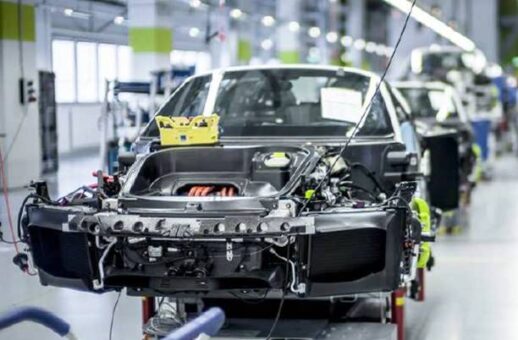
    KARACHI: Local automobile manufacturers have urged the Federal Board of Revenue (FBR) to withdraw federal excise duty, which will help in rationalizing prices in domestic market.

    Overseas Investors Chamber of Commerce and Industry (OICCI) in its proposals for budget 2020/2021 said that the Finance Act, 2019 revised FED on all categories of locally manufactured motor vehicle (Motor car & SUVs, 8703 category) as follows:

    VehiclesFED
    Up to 3 to 1000CC2.5 percent
    1001CC to 2000CC5 percent
    2000CC and above7.5 percent

    The OICCI said that this had resulted in significant increase of the sales price of the vehicles with consequential reduction in sales volume of the respective vehicle categories.

    The OICCI recommended that levy of FED on locally manufactured vehicles should be withdrawn by deleting the Serial No. 55B of Table I of First Schedule to the Federal Excise Act, 2005.

    The OICCI also suggested changes in advance income tax collected on various engine capacity.

    Currently, as per table under Division VII of Part IV of First Schedule, following advance tax under section 231 B is collected by manufacturers on the following categories of vehicles:

    Engine CapacityTax
    1001CC to 1300CCRs25,000
    1301CC to 1600CCRs50,000

    The OICCI said that presently most of the locally manufactured sedans passenger cars fall slightly above the 1300CC categories which includes Honda City (1339CC) etc. This slightly higher engine capacity size results in these vehicles falling in higher tax bracket making it more expensive with higher upfront cost to customers.

    The OICCI recommended that amendment should be made in the categories of vehicles mentioned in Division VII of Part IV of First Schedule as follows:

    Engine CapacityTax
    1001CC to 1350CCRs25,000
    1351CC to 1600CCRs50,000

    The OICCI highlighted levy of additional customs duty (ACD). It said that ACD was levied through SRO 1178(I)/2015 on various items, including raw materials at one percent which was enhanced to two percent through SRO 630(I)/2018. Through SRO 670(I)/2019, levy of ACD was further enhanced and slab wise ACD was introduced as follows:

    Tariff SlabAdditional Customs Duty
    Tariff Slab of 0%, 3% and 11%2%
    Tariff slab of 16%4%
    20% and higher7%

    The OICCI proposed to exempt imports under SRO 655(I)/2006 & SRO 656(I)/2006 from ACD.

  • Exemption on agriculture income should be withdrawn

    Exemption on agriculture income should be withdrawn

    KARACHI: Overseas Investors Chamber of Commerce and Industry (OICCI) has suggested that exemption on agriculture income should be withdrawn and bring all income into tax net.

    The OICCI in its proposals for budget 2020/2021, recommended withdrawal of exemption of agriculture income and also proposed amending Section 41 of Income Tax Ordinance, 2001.

    The OICCI said that the GDP includes some sectors which are exempt from income tax. The biggest exempted sector is agriculture which does not make any contribution to the national exchequer, despite the fact that over 65 percent of Pakistan’s population is directly or indirectly linked with the agricultural sector.

    The original rationale of keeping agriculture out of tax net was to facilitate the small agriculturists.

    However due to non-implementation of land reforms the benefit of the tax exemption is being availed by big landowners earning huge incomes.

    Unscrupulous elements also transfer their income and wealth to businesses fronting as agriculture sector.
    The OICCI recommended:

    i. Exemption given to agriculture income should be withdrawn and agriculturists should file income tax returns and wealth statements.

    ii. Suitable provisions should be incorporated in Income Tax Ordinance 2001 to enable tax authorities to implement the requirement of filing of income tax returns and wealth statements, effectively.

    iii. All incomes should be taxed and as a general rule exemptions be given only for attracting FDI and for under privileged and poor sections of society or, in exceptional circumstances, as motivation to encourage the registration of individuals and all legal entities.

  • Bearer bonds, certificates should be stopped to prevent tax evasion

    Bearer bonds, certificates should be stopped to prevent tax evasion

    KARACHI: The government has been recommended to stop all kind of bearer certificates, bonds and other instruments in order to eliminate parking lots for untaxed funds.

    Overseas Investors Chamber of Commerce and Industry (OICCI) in its proposals for budget 2020/2021 recommended measures to eliminate legally permissible parking lots for untaxed funds.

    The OICCI said that bearer certificates, bonds and other instruments lead to tax evasion.

    Therefore, sale of all kinds of bearer securities, prize bonds, and other such items should be stopped.

    The OICCI further said that despite the revision of real estate values there is still a lot of difference between actual market value and various ‘official’ values of real estate across the country.

    It is proposed that shortcomings in the mode and manner of valuation of immovable properties to be addressed. Registration of sale and purchase of real estate should be on fair market value at the time of the transaction. Necessary information on market value of real estate can be easily obtained.

    In order to broaden the tax base, the OICCI also suggested introduction of books of account and cash registers.

    It said that the Federal Board of Revenue (FBR) does not have any proper shop-wise record of approximately 35 million SMEs, which are mostly sole proprietorship or partnerships, despite the fact that jurisdictions within the tax offices are location centric, especially for small and medium sized businesses.

    The OICCI recommended:

    i. It should be made mandatory for all businesses to maintain books of account and taxes should be levied on ‘net income’ basis only.

    ii. Registration of all retail outlets and electronic cash registers should be made mandatory without any turnover thresholds, which gives rise to tax evasion. The

    iii. installation of these registers should be inspected regularly by tax inspectors.

    iv. FBR should engage with representatives of small manufacturers, wholesalers and retailers and ensure their buy-in for introduction of these documentation measures so that the previous back-tracking on these actions is not repeated.

    v. The book keeping requirements/ outline be regularly upgraded considering the best practices learnt from other neighboring countries in the region with similar business infrastructure.