Blog

  • FBR chief rules out reducing sales tax rate to single digit

    FBR chief rules out reducing sales tax rate to single digit

    KARACHI: Nausheen Javaid Amjad, Chairperson of Federal Board of Revenue (FBR) has ruled out reducing sales tax rate to single digit and said such move would bankrupt the economy of the country.

    However, she hinted at reducing the further sales tax rate in the upcoming budget 2020/2021.

    A press release issued by Federation of Pakistan Chambers of Commerce and Industry (FPCCI) on Friday quoted FBR chairperson as saying. She made these comments while a meeting with the office bearers of the apex trade body.

    The chairperson said that refunds are fully automated under FASTER; amendment in Annexures-F and H should be identified by the exporters for FBR consideration; tax on machinery would be abolished.

    The FBR chairperson further highlighted proposals to be incorporated in the Finance Bill 2020 which included that tax on distributors would be uniformed; tax rates including minimum tax rates would be reviewed for reduction; withholding tax paid would be appeared on IRIS w.e.f June, 2020; Exemption Certificate Law would be amended and rationalized; option would be given to remain in presumptive tax regime or opt for normal tax regime ; greenfield industry issue would be resolved in consultation with Engineering Development Board (EDB).Regarding CNIC condition the Chairperson, FBR said that agreement has been made with the traders and cannot be reversed.

    In response to the customs issues raised by the FPCCI, she replied regulatory duty on tyre would be considered to abolish in the next budget.

    She proposed to hold second round of the meeting to discuss the FPCCI Proposals in detail for consideration and incorporation in the forthcoming Federal Budget 2020-21.

  • FBR notifies transfer, postings of BS-18-20 IRS officers

    FBR notifies transfer, postings of BS-18-20 IRS officers

    ISLAMABAD: Federal Board of Revenue (FBR) on Friday notified transfers and postings of Inland Revenue Service (IRS) officers in BS-18 to BS-20 with immediate effect until further orders.

    The FBR notified transfers and postings of following IRS officers:

    01. Ms. Asma Aftab (Inland Revenue Service/BS-20) has been transferred and posted as Commissioner Inland Revenue (IP/TFD/HRM) Large Taxpayers Unit, Karachi from the post of Commissioner, (Zone-I) Corporate Regional Tax Office, Karachi.

    02. Ms. Attiya Ali Khan (Inland Revenue Service/BS-20) has been transferred and posted as Commissioner Inland Revenue (Zone-VII) Corporate Regional Tax Office, Lahore from the post of Commissioner, (Zone-I) Corporate Regional Tax Office, Lahore.

    03. Abdul Jawwad (Inland Revenue Service/BS-20) has been transferred and posted as Commissioner Inland Revenue (Zone-I) Corporate Regional Tax Office, Lahore from the post of Commissioner, (Special Zone for Builders) Corporate Regional Tax Office, Lahore. The officer is also assigned the additional charge of the post of Commissioner-IR (Special Zone for Builders and Developers), Corporate Regional Tax Office, Lahore till the posting of a regular incumbent.

    04. Abdul Hameed Shaikh (Inland Revenue Service/BS-20) has been transferred and posted as Commissioner Inland Revenue (Zone-I) Corporate Regional Tax Office, Karachi from the post of Commissioner, Large Taxpayers Unit, Karachi.

    05. Muhammad Amin Qureshi (Inland Revenue Service/BS-19) has been transferred and posted as Additional Commissioner Inland Revenue Corporate Regional Tax Office, Karachi from the post of Additional Director, Directorate of Intelligence & Investigation (Inland Revenue), Karachi.

    06. Ms. Amra Sarwar (Inland Revenue Service/BS-18) has been transferred and posted as Secretary, (IR-Operations) Federal Board of Revenue (Hq), Islamabad from the post of Additional Commissioner, Corporate Regional Tax Office, Lahore.

    07. Akhtar Abbas (Inland Revenue Service/BS-18) has been transferred and posted as Additional Commissioner Inland Revenue Corporate Regional Tax Office, Lahore from the post of Additional Commissioner, Regional Tax Office II, Lahore.

    The FBR said that the officers who are drawing performance allowance prior to issuance of this notification shall continue to draw this allowance on the new place of posting.

  • SBP expands economic refinance facility to existing projects

    SBP expands economic refinance facility to existing projects

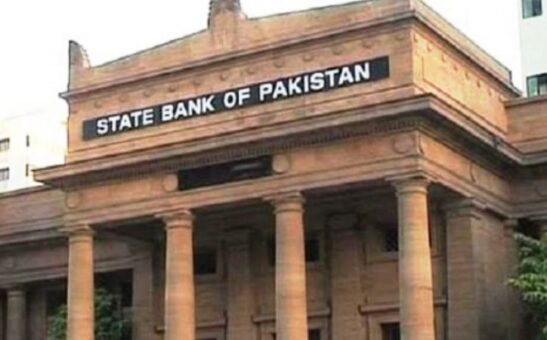
    KARACHI: State Bank of Pakistan (SBP) on Friday expanded the economic refinance facilities to existing projects in order to provide relief the industry to dilute impact of coronavirus.

    The SBP issued the scheme on March 17, 2020. On the basis of feedback from stakeholders, State Bank has decided to expand the scope of subject facilities.

    Accordingly, in addition to the new projects, existing projects/ businesses are being allowed to avail financing under these Facilities for undertaking Balancing, Modernization and Replacement (BMR) and/or expansion of their projects/ businesses.

    However, to ensure proper utilization of the Facilities, banks/ DFIs and borrowers are required to ensure the following:

    As per TERF’s/ITERF’s eligibility criteria, financing for BMR/expansion will only be available for purchase of new imported and locally manufactured plant & machinery against foreign LC and inland LC, respectively. Second-hand machinery, land or civil works are not covered under the Facilities.

    Banks/DFIs will be required to make disbursements to their customers on the basis of certificates of their Internal Audit confirming that financing is within the terms and conditions laid down in the Facilities. A copy of the said Internal Audit Certificate shall be submitted to the concerned office of SBP BSC (Bank) at the time of availing refinance for the first time for a project/ business while copies of certificates in respect of subsequent disbursements may be submitted at the time of availing last refinance for the same project/ business. In case of consortium finance the lead bank will be required to submit the certificate.

    The borrowers concerned will be required to submit a report from PBA’s approved surveyors (acceptable to bank/DFI concerned) with regard to confirmation that the newly purchased plant & machinery has been installed as per their initial request/proposal for BMR/expansion. In case of installation/fixation in part, this report will be required at first and final installation of the plant/equipment.

  • Stock market ends flat amid narrow range trading

    Stock market ends flat amid narrow range trading

    KARACHI: The stock market ended down by 36 points on Friday after narrow range trading.

    The benchmark KSE-100 index of Pakistan Stock Exchange (PSX) closed at 33,267 points as against 33,304 points showing a decline of 37 points (-0.1 percent DoD).

    Analysts at Arif Habib Limited said that KSE-100 traded in a narrow range between +197 points and -145 points, closing the session -36 points.

    The session low volumes as well compared with recent past sessions.

    Selling pressure was evident in Banks, E&P and Cement sectors. International oil prices had little impact on investor sentiment, which is affected more from upcoming MSCI rebalancing.

    Cement sector led the volumes with 15.7 million shares, followed by Technology (11.3 million) and O&GMCs (11.1 million). Among scrips, UNITY realized 9.3 million shares, followed by HASCOL (5.8 million) and MLCF (5.5 million).

    Sectors contributing to the performance include Banks (-50 points), Fertilizer (-29 points), Autos (-12 points), O&GMCs (+32 points), Power (+25 points), Food (+20 points).

    Volumes declined from 175.8 million shares to 88.0 million shares (-50 percent DoD). Average traded value also declined by 51 percent to reach US$ 23.9 million as against US$ 46.8 million.

    Stocks that contributed significantly to the volumes include UNITY, HASCOL, MLCF, HUMNL and TRG, which formed 34 percent of total volumes.

    Stocks that contributed positively to the index include HUBC (+27 points), NESTLE (+26 points), SNGP (+19 points), PAKT (+12 points) and PSO (+6 points). Stocks that contributed negatively include LUCK (-17 points), UBL (-13 points), ICI (-12 points), ENGRO (-11 points), and HBL (-10 points).

  • Foreign investors urge controlling Afghan transit trade

    Foreign investors urge controlling Afghan transit trade

    KARACHI: Foreign investors have urged the authorities to control Afghan Transit Trade to avoid incidence of smuggling and protect local industry.

    (more…)
  • OICCI suggests harmonization of sales tax on goods, services

    OICCI suggests harmonization of sales tax on goods, services

    KARACHI: Overseas Investors Chamber of Commerce and Industry (OICCI) has recommended harmonization of sales tax on goods and services and should be set at 13 percent as applicable in Sindh province.

    The OICCI in proposals for budget 2020/2021, said that the sales tax rate in Pakistan, at 17 percent, is the highest in Asia. Our analysis shows an average of less than 12 percent in Asia, with a range of 6 percent to 17 percent.

    Moreover different rates of sales tax on goods and services i.e. standard, reduced, specified etc. prevailing in the country lead to a number of issues for business organizations operating all over the country.

    Sales tax rates (federal and provincial), both on goods and services, should be harmonized throughout the country and be aligned to 13 percent charged in Sindh.

    Moreover only one Tax return should be filed with FBR.

    The OICCI highlighted the issue of admissibility of Input sales tax on civil work and other equipment and materials.

    Adjustability of input sales tax restricted under section 8(1)(h) & (i) of Sales Tax Act, 1990 and SRO 490(I)/2004 on building material, office equipment, furniture & fixtures, vehicles & their parts used for taxable activity purposes has increased the cost of doing business for all documented sectors, and encourages procurement from un-registered sector whereby 17 percent sales tax cost is mitigated with only 5 percent sales tax withholding.

    The OICCI recommended that Sub-Section (1)(h) and (i) of section 8 of STA 1990 should be deleted.

    SRO 490(I)/2004 which is in contradiction with section 8 should also be rescinded.

    The overseas chamber pointed out the issue of sales tax be applied at the time of delivery, instead of Earlier of Receipt of Payment or Delivery of Goods.

    It said that prior to amendment made in section 2(44) of Sales Tax Act, 1990, vide Finance Act, 2013, sales tax was levied at the time of actual delivery of goods regardless of time of payment.

    Application of sales tax on advances causes serious operational issues and also leads to unnecessary reconciliations resulting in hardships to taxpayers.

    The OICCI recommended that sales tax be applied at the time of actual delivery for ease of doing business, rather than earlier of receipt or delivery.

    The OICCI said that as per serial no. 1 and 2 of Eleventh Schedule of Sales Tax Act, 1990, Government departments/ bodies/ authorities and Companies as defined in ITO 2001 are required to withhold sales tax against supplies made by registered and active sales taxpayers. This is only creating hardship for registered sales tax persons as Government departments are not making withholding sales tax payments through FBR web-portal system and deductions made by Companies like leasing companies, Modarabas, etc who are not registered in STA 1990 and FBR does not allow any manual entry of such withholding sales tax.

    After implementation ‘STRIVe’ from July 2016 onwards, no mismatch arises between input and output tax for transactions with registered sales tax persons.

    Therefore, withholding sales tax on purchases made by Government departments/ bodies/ authorities or unregistered taxpayers, etc. from registered sales tax persons being active taxpayer is only creating hassles and unnecessary documentation for tax payers.

    It is recommended to abolish serial no. 1 and 2 of Eleventh schedule of STA 1990.

    Sales tax SRO’s are issued so frequently that it is very difficult to keep oneself updated with respect of different SRO’s and it’s also difficult to identify the current applicable SRO.s

    All active SRO’s should be made part of the Act. Subsequently in every budget, SRO’s issued during the previous year, should also be made part of the Act.

    Joint and several liability of registered persons in supply chain where tax remains unpaid.

    As per section 8A of Sales Tax Act, 1990 a registered person purchasing goods is jointly and severally liable if the sales tax is not paid by the seller of the goods. It is quite unjustified to punish a genuine buyer for an offense committed by corresponding supplier. This section is also inequitable as payments are made after verifying the seller status on the FBR portal at the time of purchase.

    It is recommended that Section 8A of the Sales Tax Act, 1990 should be abolished.

    As per section 8B a registered person is not allowed to adjust input tax in excess of 90 percent of the output tax for that period in STA 1990.

    It is recommended that section 8B of the STA 1990 should be abolished for registered taxpayers. Most industries have long term import contracts with international suppliers. Due to current COVID pandemic situation, sales of companies have reduced significantly and resultantly, input tax is getting accumulated as full adjustment of input taxes against output tax is not possible.


  • Reviewing withholding tax on profit on debt suggested

    Reviewing withholding tax on profit on debt suggested

    KARACHI: The tax authorities have been suggested to review withholding tax rates on profit on debt in forthcoming budget.

    Overseas Investors Chamber of Commerce and Industry (OICC) in proposals for budget 2020/2021 said that through Finance Act, 2019, multiple withholding tax rates of profit on debt were introduced which are based on the profit threshold and active /in-active status of taxpayer (i.e. Profit less than Rs0.5 million is subject to tax at the rates 10 percent and 20 percent for active and in-active respectively.

    Whereas, profit greater than Rs 0.5 million is subject to tax at the rates 15 percent and 30 percent for active and in-active filer respectively).

    It has been provided that minimum tax rate on profit on debt is 15 percent as prescribed under section 7B of Income Tax Ordinance, 2001.

    So, there is no need to tax the profit at reduced rate (i.e. 10 percent), if the person has to discharge his final tax liability on such higher rate i.e. 15 percent.

    The OICCI suggested that prescribed threshold of withholding tax on profit should be deleted and there should be only two rates, for active and inactive taxpayers respectively.

  • FBR proposed revamping withholding tax regime, reducing to five rates

    FBR proposed revamping withholding tax regime, reducing to five rates

    KARACHI: Federal Board of Revenue (FBR) has been proposed to revamped withholding tax regime and reduced the number of withholding tax rates to maximum five.

    Overseas Investors Chamber of Commerce and Industry (OICCI) in its proposals for fiscal year 2020/2021 highlighted withholding tax as one of the key irritant for compliant tax payer.

    It said that the fact that the ‘collection and deduction of income tax at source (Withholding Agents Perspective) (Taxpayer’s Facilitation Guide)’ on the FBR website is of 51 pages highlights the complexity of the withholding tax regime which has more than 30 tax provisions that need to be followed and 50 different tax rates, applicable on nearly all heads of receipts/payments.

    The rate of withholding/advance tax also varies depending upon the nature of transaction, legal/tax status of the parties i.e. company or individual and active or in-active filer.

    Moreover, FBR system does not auto populate taxes withheld in the portal to the credit of the beneficiary.

    Furthermore, at present FBR has prescribed following categories of withholding tax (WHT) rates under the ITO 2001, for various types of payments and it has become extremely difficult for the person processing payments to be precise and accurate in applying WHT rates and ensure compliance.

    The, complexity for the withholding agent has been further compounded after the introduction of active taxpayers list and different rates for an active and non-active filers, the OICCI said.

    It recommended that withholding tax regime should be revamped by reducing it to a maximum of five rates for all withholding taxes and the differentiation should be on the basis of active and inactive taxpayers only.

    FBR system should be upgraded and all taxes withheld should be auto populated in the portal to the credit of the beneficiary.

    Final Taxation Regime should be done away with and all withholding taxes should be available for adjustment and the operations wing of FBR should ensure that all persons whose taxes have been deducted file their tax returns.

    Withholding agents should be given incentive in the form of 2 percent tax credit of the amount collected for facilitating the Government.

    In addition to the above administrative/streamlining issues, withholding/ advance tax rates on below transactions should be reconsidered.

    Withholding tax rate be reduced to 1 percent for all FMCG distributors in line with the withholding taxes applicable on the distributors of cigarette and pharmaceutical products.

    Withholding tax rates applicable on services is 8 percent minimum tax regardless of the actual taxable income of the service provider.

    The nature of this tax effectively becomes indirect tax and increases the cost of doing business for service providers, hence, tax on services should be made adjustable.

    Withholding taxes deducted from payments should be deposited in the Govt. treasury on monthly rather than current requirement of weekly basis.

    In case of payments to non-residents, the law requires to deposit corresponding withholding tax amount, seven days before the actual remittance to the non-resident person. The deposit of withholding tax should be aligned to the payment to non-resident due to exchange rate implications.

    Withholding tax deduction u/s 153 (1)(a) which is currently considered as minimum tax for all the suppliers (except manufacturers and listed companies) should be made adjustable at least for corporates appearing in active taxpayers’ list

    i. Withholding tax under section 153 (1b) be reduced to 3% for all the taxpayers providing

    ii. services in line with 18 service sectors as mentioned in sub-clause 2 clause 1 of Division III of Part III of Schedule I. not clear

    iii. Withholding agent should be given authority to adjust from subsequent payments, in case of reversal of excess deduction of withholding or where underlying transactions are cancelled, reversed or cases where tax status is updated subject to filing of proper adjustment form/return.

  • Telenor awarded Rs588 million contract for providing hi-speed broadband

    Telenor awarded Rs588 million contract for providing hi-speed broadband

    ISLAMABAD: The Universal Service Fund (USF) has awarded contract worth Rs588 million to Telenor Pakistan for providing hi-speed broadband in Sanghar Lot (Sindh).

    Federal Minister IT & Telecom, Syed Amin ul Haque inaugurated the Next Generation Broadband for Sustainable Development project in Sanghar (Districts of Sanghar and Umerkot) at a ceremony held at Ministry of IT & Telecom on Thursday.

    The contract was signed by Haaris Mahmood Chaudhry, CEO USF and Irfan Wahab Khan, CEO Telenor Pakistan. Secretary IT, Shoaib Ahmad Siddiqui was also present at the ceremony.

    Chief Guest of the ceremony, Syed Amin ul Haque stated that under the vision of Digital Pakistan, the Ministry of IT & Telecom is taking concrete steps to spread the benefits of digitalization to the masses.

    He said that during the spread of Coronavirus, Ministry of IT & Telecom will keep on making efforts to ensure that broadband connectivity helps us overcome this crisis.

    He added that the key stakeholders in IT & Telecom sector should work together vigorously to come up with innovative ways for fighting against Covid 19 through technology.

    He congratulated the teams of USF and Telenor Pakistan and also hoped that they will continue to achieve these milestones in future as well.

    While sharing his views at the ceremony, Shoaib Ahmad Siddiqui said that the main objective of USF is to facilitate the masses through broadband technology in the country.

    He added that during the coronavirus pandemic, Ministry of IT & Telecom is making sure that broadband connectivity plays an integral part in creating ease for people.

    He further said that USF projects are already making a huge difference in lives of people and with the new challenging scenario during the spread of coronavirus, these projects have become more crucial for socio-economic benefit.

    Also speaking at the ceremony, Haaris Mahmood Chaudhry, CEO USF informed that Federal Minister, Syed Amin ul Haque, Secretary IT, Shoaib Ahmad Siddiqui and USF Board of Directors have been giving constant guidance and support to USF for making rapid progress.

    He also added that all these projects are playing an integral role in enabling people of Pakistan to carry on their activities through broadband technology during the Covid 19 pandemic.

    Through the project in Sanghar lot, broadband coverage will be provided in 500 mauzas in Sanghar, covering an approximate unserved area of 12,000 sq. km and benefitting a population of 1.47 million people.

    Sharing his views on the development, Irfan Wahab Khan, CEO Telenor Pakistan said, “We are more committed than ever before to strengthen the pillar of connectivity as part of our purpose of connecting people to what matters most to them.

    “At Telenor Pakistan we are driven to empower the country through enhanced connectivity, creating opportunities and uplifting the lives of millions and stand firm in our commitment to break socio-economic barriers through the use of mobile technology.”

    Senior officials of the Ministry of IT, USF and Telenor Pakistan were also present at the ceremony.

  • Foreign exchange reserves increase by $292 million to $18.75 billion

    Foreign exchange reserves increase by $292 million to $18.75 billion

    KARACHI: Pakistan’s foreign exchange reserves of the country have increased by $292 million to $18.755 billion by week ended April 30, 2020, State Bank of Pakistan (SBP) said on Thursday.

    The total foreign exchange reserves were at $18.463 billion a week ago.

    The official reserves held by the central bank increased by $259 million to $12.329 billion by week ended April 30, 2020 as compared with $12.07 billion a week ago.

    The reserves held by commercial banks also increased by $33 million to $6.426 billion by week ended April 30, 2020 as compared with $6.393 billion a week ago.