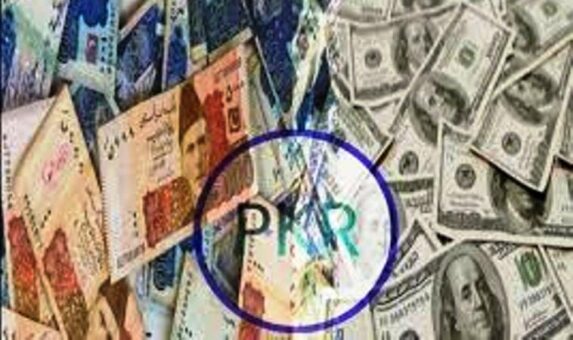
Karachi, March 1, 2026: The Pakistani rupee, which has shown relative stability against the US dollar in recent months, faces renewed uncertainty following escalating tensions in the Middle East.
The situation intensified after Israeli strikes on Iran and subsequent retaliatory actions by Tehran, raising concerns over potential market volatility when global financial markets open on Monday, March 2.
Despite these geopolitical challenges, analysts expect the rupee to remain stable or even strengthen slightly in the near term, supported by seasonal remittance inflows during Ramazan and the Eid festival. The local currency traded in a narrow range in the interbank market this week, closing at 279.55 on Monday and 279.47 on Friday.
The International Monetary Fund (IMF) team began discussions with Pakistani authorities on Wednesday for the third review of the $7 billion Extended Financing Facility (EFF) and the second review of the $1.1 billion Resilience and Sustainability Facility (RSF). Completion of these reviews could unlock $1 billion under the EFF and $200 million under the RSF by the end of April, providing a boost to Pakistan’s external finances.
Financial analysts note that the rupee has appreciated by approximately 60 paisa since the start of the year, despite pressures from rising geopolitical risks, high Brent crude prices above $72 per barrel, a widening trade deficit, slowing exports, tariff pressures, and domestic inflation differentials.
Tresmark, a financial data platform, highlighted that remittance inflows surged 15.4% YoY to $3.5 billion in January, and reached $23.2 billion in the first seven months of FY 2026, providing crucial support for the currency. However, economists caution that further appreciation offers limited structural benefit, making the recent stability somewhat surprising.
In summary, while seasonal inflows and IMF support may help stabilize the rupee in the short term, geopolitical uncertainty and economic pressures continue to pose risks for Pakistan’s currency outlook.