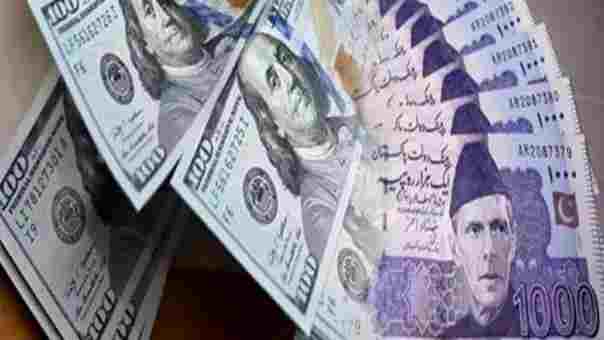
Karachi, December 14, 2025 – The Pakistani rupee showed modest gains this week, closing at 280.32 per dollar on Friday in the interbank market, after a slight rise from Monday’s 280.41, according to market reports.
A client note from Tresmark highlighted that the rupee strengthened by only 5-10 paisa per day, despite positive macroeconomic signals. The report noted that the central bank appears to be smoothing the currency’s appreciation, aiming to prevent sharp moves that could disrupt external account stability.
“Looking ahead, the rupee appears set to close the calendar year around 280/$ and remain largely range-bound into the first quarter of next year, with interest rates and oil prices both appearing stable,” the note added. “The near-term focus is on stability. The real question is whether Pakistan uses this window to commit to a growth path with a destination and a deadline.”
The Pakistani rupee has appreciated by 1.2 percent so far this fiscal year, supported by stronger inflows, improved credit ratings, and continued progress under the IMF program, according to a report by Arif Habib Limited. However, the brokerage warned that rising import demand and shifting trade dynamics could exert pressure on the currency in the near term.
Economic data for November revealed that Pakistan posted a trade deficit of $2.9 billion, marking a 32.8 percent increase compared to the same month last year. Exports fell by 15.4 percent to $2.4 billion, while imports rose 5.4 percent to $5.3 billion. Over the first five months of the fiscal year, the trade deficit widened by 37.2 percent to $15.5 billion, as imports surged 13 percent to $28.3 billion and exports declined 6.4 percent to $12.8 billion.
“While the widening trade gap suggests a potential rise in the current account deficit, remittances provided some support, rising 9 percent year-on-year to $3.2 billion in November,” the report added.
With a cautious central bank policy and relatively stable macroeconomic conditions, analysts expect the Pakistani rupee to maintain stability into early 2026, even as structural trade challenges continue to pose risks.