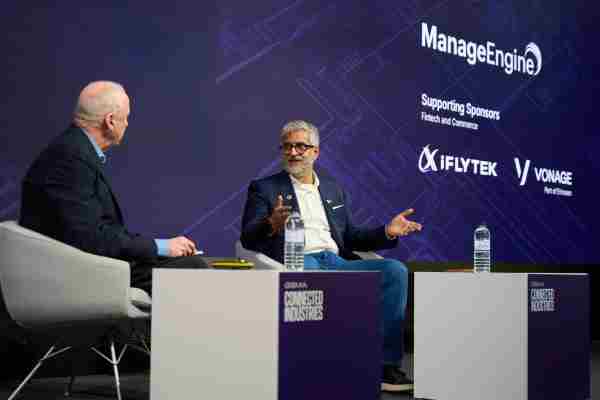
Karachi, March 3, 2026 – Pakistan’s digital payments ecosystem is rapidly transforming from a phase of innovation into a core pillar of national financial infrastructure, driven by Prime Minister Shehbaz Sharif’s Cashless Economy Initiative and enabling policies by the State Bank of Pakistan (SBP).
These views were shared by Aamir Ibrahim, Chairman of Mobilink Bank and JazzCash, during a fireside chat with Brian Gorman at the GSMA Fintech and Commerce Summit. Ibrahim outlined how the government’s push to digitise payments is gaining measurable traction nationwide.
Cashless Economy Initiative Gains Momentum
The Prime Minister’s initiative focuses on accelerating digital payment adoption, strengthening public digital infrastructure, and digitising government-to-person (G2P) and person-to-government (P2G) transactions. The broader objective is to reduce reliance on cash, expand documentation of economic activity, and increase access to formal financial services.
Ibrahim highlighted that Pakistan’s digital transition rests on strong institutional foundations led by the SBP. A major milestone has been the launch of Raast, the country’s instant payment system, which enables interoperability between banks and digital wallets, allowing seamless transactions for consumers and merchants nationwide.
JazzCash’s Expanding Digital Footprint
Operating within this national framework, JazzCash has emerged as one of the largest contributors to digital transaction volumes. The platform now serves nearly 58 million customers and supports over one million Raast QR-enabled merchants across Pakistan.
In 2025, JazzCash processed PKR 15 trillion in gross transaction value—equivalent to approximately 13 percent of Pakistan’s GDP—reflecting the scale of digital adoption. The company also disbursed more than PKR 100 billion in government-to-person payments last year, reinforcing transparency and efficiency in public fund distribution.
Additionally, the platform issues over 200,000 digital loans daily, extending regulated credit access to micro-entrepreneurs and small businesses that were previously outside the formal banking system.
Merchant Digitisation and Financial Inclusion
Merchant digitisation remains central to the cashless transformation. With more than one million Raast QR-enabled merchants and tap-on-phone technology converting smartphones into payment acceptance devices, digital payments are expanding beyond major cities into smaller towns.
Documented transaction histories are helping small retailers formalise revenues and unlock working capital through regulated financial channels. Across the economy, salaried employees are paying bills and school fees digitally, freelancers are receiving cross-border earnings in mobile wallets, and welfare disbursements are increasingly routed through digital platforms.
Remittances Fuel Digital Growth
International flows are further accelerating the digital shift. Pakistan recorded USD 38 billion in remittance inflows during FY25. In 2025 alone, JazzCash processed PKR 138 billion in international remittances, enabling funds to settle directly into digital wallets for payments, savings, and credit use.
Ibrahim emphasised that financial inclusion extends beyond convenience. “Digital transactions create documentation. Documentation strengthens transparency, improves credit access, and supports broader economic participation,” he said.
As Pakistan advances toward a cashless economy, the combined force of government policy, SBP’s regulatory leadership, and private sector innovation is positioning digital payments as foundational infrastructure for sustainable economic growth.