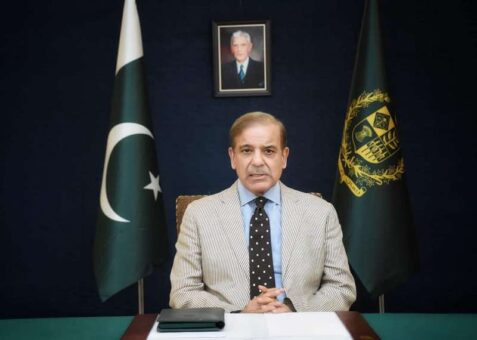
Islamabad, March 2, 2026 – Prime Minister Shehbaz Sharif has constituted an 18-member high-level committee to monitor the impact of rising international oil prices on Pakistan’s economy following the US-Israel attack on Iran.
The notification issued by the Prime Minister’s Office on Monday stated that the committee was formed in response to an upward trend in global oil prices amid the escalating Middle East tensions. The body will track price volatility and devise strategies to mitigate economic impact.
Global Oil Market Reacts to Middle East Crisis
Following the attacks on Iran, Brent crude briefly surged by nearly 14%, while West Texas Intermediate (WTI) climbed almost 12%, causing stock markets across Asia to fall. The strikes, which killed several senior Iranian officials, disrupted the Strait of Hormuz, a key shipping route through which about 20% of global seaborne oil passes. Attacks on ships in the region have further fueled supply concerns.
Committee Composition and Leadership
Federal Minister for Finance and Revenue Muhammad Aurangzeb has been appointed as the convener of the committee. Its members include:
• Minister for Petroleum
• Minister for Power
• Minister of State for Finance
• Governor of the State Bank of Pakistan
• Secretaries of Petroleum, Power, and Finance
• Chairman of the Federal Board of Revenue (FBR)
• Chairman of the Oil and Gas Regulatory Authority (OGRA)
• Managing directors of Pakistan Refinery Limited, Pakistan LNG Limited, SNGPL, SSGC-LPG
• Supply chain head of Pakistan State Oil (PSO)
• Representatives of Inter-Services Intelligence (ISI) and Intelligence Bureau (IB)
The Petroleum Division will provide secretarial support and officially notify the committee.
Committee Mandate and Responsibilities
The committee will:
• Monitor forward and futures prices of petroleum products
• Assess supply chain predictability amid regional instability
• Evaluate foreign-exchange implications of oil price fluctuations
• Recommend measures to ensure uninterrupted petroleum supply
• Analyze the fiscal impact of a prolonged conflict on Pakistan’s economy
• Review broader economic effects of the Middle East crisis
The body is required to meet daily and submit reports directly to the Prime Minister. It may also co-opt additional members as needed to fulfill its mandate.
Ensuring Stability in Pakistan’s Energy Sector
This committee aims to safeguard Pakistan’s economy from sudden oil price shocks and maintain stability in the energy sector, while preparing contingency plans for possible long-term disruptions in global crude supply.