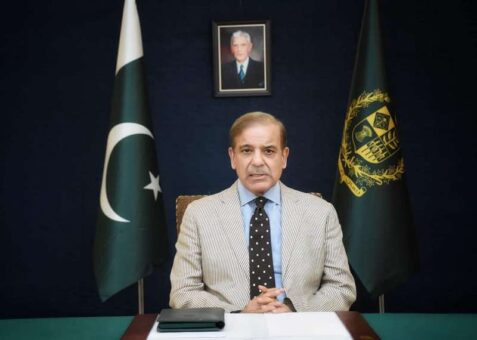
Islamabad, December 31, 2025 — Prime Minister Muhammad Shehbaz Sharif on Wednesday formally launched the government’s Economic Governance Reforms, announcing that Pakistan has moved beyond the phase of economic firefighting after two years of politically difficult but structurally essential decisions that restored macroeconomic stability and international credibility.
Addressing the launch ceremony, the prime minister said Pakistan inherited a severely distressed economy in early 2024, marked by nearly 30 per cent inflation, critically low foreign exchange reserves, fragile state institutions and reduced global economic engagement. He stressed that the depth of the crisis left no space for populist or short-term measures.
“Economic recovery demanded tough decisions that affected every political constituency,” PM Shehbaz Sharif said. He explained that the government withdrew unsustainable subsidies, enforced fiscal discipline, strengthened public financial management and initiated long-delayed privatisation reforms, describing them as necessary structural changes rather than cosmetic fixes.
The prime minister highlighted that inflation dropped sharply from 29.2 per cent to 4.5 per cent, while foreign exchange reserves more than doubled from $9.2 billion to over $21 billion. He noted that the current account position improved from a $3.3 billion deficit to a $1.9 billion surplus, alongside a shift from a primary deficit to a primary surplus and a narrower overall fiscal deficit.
He added that revenue reforms were correcting long-standing distortions, with the tax-to-GDP ratio rising from about 8 per cent to over 10 per cent and more than one million new taxpayers brought into the formal economy. Tax collection increased by 26 per cent in 2025, supported by extensive digitisation of government systems. The e-procurement platform ePADS now covers over 1,000 federal agencies and more than 500,000 contracts, integrated in real time with FBR, NADRA and SECP.
PM Shehbaz Sharif said the successful privatisation of Pakistan International Airlines and First Women Bank marked a decisive shift after decades of delays, with further state-owned enterprise reforms underway. He noted that Pakistan’s reform momentum has been recognised by international credit rating agencies and development partners.
“With macroeconomic stability achieved, our focus now is on accelerating growth, boosting exports and making Pakistan far easier to do business,” he said, describing the reforms as a transition from crisis management to institution building.
The Economic Governance Reforms include 142 actions—59 priority reforms and 83 complementary measures—to be implemented by 58 institutions within defined timelines, covering taxation, energy, privatisation, pensions, SOEs, tariff rationalisation, regulatory simplification, federal rightsizing and digital governance.
Earlier, Finance Minister Senator Muhammad Aurangzeb outlined key economic indicators, stating that GDP growth reached 3.1 per cent in FY25 and accelerated to 3.71 per cent in the first quarter of FY26. He said inflation remained near 5 per cent in the first five months of FY26, public debt declined to about 70 per cent of GDP, the policy rate fell to 10.5 per cent, and investor confidence strengthened, reflected in a stable exchange rate, rising private credit and a 52 per cent increase in the Pakistan Stock Exchange in dollar terms during 2025.