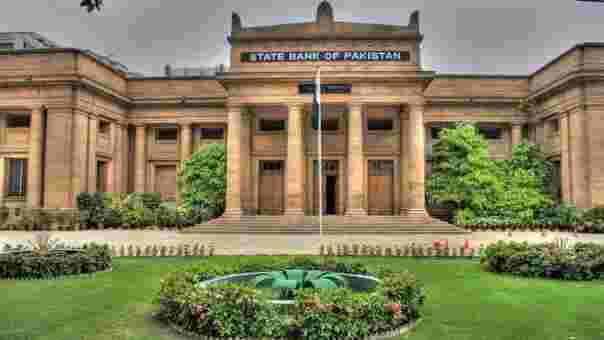
Karachi, December 13, 2025 – The State Bank of Pakistan (SBP) is expected to maintain its benchmark policy rate at 11% in the upcoming monetary policy review scheduled for December 15, 2025.
Analysts say the central bank is likely to adopt a cautious, wait-and-see approach amid rising inflationary pressures and a gradual domestic economic recovery.
According to Arif Habib Limited, the SBP may hold rates steady to ensure stability as the base effect that previously kept headline inflation low is fading. The slight widening of the current account deficit and early-stage recovery in industrial activity further reinforce the central bank’s prudent stance.
Inflation Pressures Rising
Headline inflation has gradually increased from 4.1% in July 2025 to 6.1% in November 2025, largely due to flood-related food supply disruptions. While the five-month FY26 average remains moderate at 5%, core inflation remains sticky at around 7.4%. Analysts warn that inflation could temporarily test double-digit levels in the second half of the fiscal year, particularly with seasonal demand spikes during Ramadan and Eid. Nonetheless, the full-year FY26 average is expected to stay within the SBP’s medium-term target range of 5–7%.
External Sector Dynamics
On the external front, the Pakistani rupee has appreciated 1.2% year-to-date, supported by stronger inflows, improved credit ratings, and progress under the IMF program. However, rising import demand and a widening trade deficit could pose pressures ahead. According to the Pakistan Bureau of Statistics (PBS), Pakistan’s trade deficit reached USD 2.9 billion in November 2025, a 32.8% increase year-on-year, with exports declining 15.4% and imports rising 5.4%. Remittances provided some relief, increasing 9% YoY to USD 3.2 billion in November.
Domestic Economic Recovery
Large-scale manufacturing grew 4.1% YoY in 1QFY26, driven by textile, food, and petroleum sectors. Analysts say maintaining policy consistency is crucial to support this slow but steady recovery. While a rate cut could further stimulate growth, the SBP is likely to defer easing to safeguard stability.
Market and Analyst Outlook
The bond market also signals an unchanged policy stance, with yields largely stable across all tenors. Analysts surveyed expect no cut at Monday’s meeting, forecasting inflation in the range of 6–8% in the coming months before rising toward the end of FY26. Many expect the SBP to consider its first policy rate cut only in the final months of FY26 or even in FY27.
IMF Cautions Against Premature Easing
In its second review, the IMF stressed that monetary policy should remain “appropriately tight and data-dependent” to maintain price stability and rebuild external buffers. The IMF noted that the SBP’s positive real interest rates have been pivotal in reducing inflation and should be preserved to support macroeconomic stability.
Since September 2025, the SBP has held the policy rate at 11% after a sharp 1,100 basis point cut between June 2024 and May 2025, when inflation fell from nearly 40% in 2023 to manageable levels. Analysts warn that premature easing could pressure the rupee even with anticipated IMF inflows, including a USD 1.2 billion disbursement expected this week to support reserves and climate-resilience reforms.
Sana Tawfik, Head of Research at Arif Habib Limited, said, “Any demand-driven uptick in inflation will have an adverse impact on the external front,” underscoring the importance of policy caution.