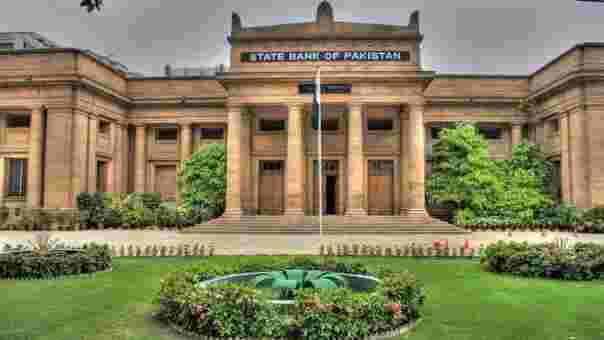
Karachi, February 9, 2026 — The State Bank of Pakistan (SBP) on Monday projected the country’s real gross domestic product (GDP) growth in the range of 3.4 to 4.75 percent for fiscal year 2025-26 (FY26), while estimating further improvement in FY27, supported by macroeconomic stabilization, easing financial conditions, and continued fiscal consolidation.
In its bi-annual Monetary Policy Report (MPR), the central bank said that economic activity has strengthened, prompting an upward revision in growth expectations. According to the report, real GDP growth is now projected at 3.75–4.75 percent in FY26, with momentum expected to build further in FY27 as reforms take hold and financial conditions improve.
The SBP noted that macroeconomic conditions and the overall outlook have improved due to a prudent monetary policy stance, a decline in inflation, and ongoing fiscal discipline. Inflation is projected to remain within the 5–7 percent target range for most of FY26 and FY27, despite some near-term volatility driven by global commodity prices and supply-side risks.
On the external front, the current account deficit is expected to remain contained at 0–1 percent of GDP in FY26, with a higher trade deficit likely to be offset by strong workers’ remittances and planned official inflows. As a result, foreign exchange reserves are projected to rise to $18 billion by June 2026, providing nearly three months of import cover, and are expected to increase further in FY27.
The central bank also highlighted that economic activity has gained traction, supported by macroeconomic stabilization, easing financial conditions, and the recent reduction in the Cash Reserve Requirement (CRR) to 5 percent, which has enhanced liquidity in the banking system and improved credit availability for businesses.
However, the MPR underscored several risks to the economic outlook, including persistent uncertainty from global tariff-related developments, volatility in international commodity prices, and domestic challenges such as below-target revenue collection and potential adverse climate events. While the risk of widespread disruption from recent floods has receded, climate-related vulnerabilities remain a concern for inflation, external balances, and growth prospects.
To strengthen economic resilience, the SBP stressed the need to accelerate structural reforms, enhance productivity, and plug losses in state-owned enterprises (SOEs). The report emphasized that sustained reforms are crucial to improving the economy’s capacity to absorb shocks and achieve long-term, sustainable growth.
The MPR also featured four special box items addressing key macroeconomic concepts related to monetary policy. These include an update on the monetary policy transmission mechanism in light of the earlier policy rate cuts since June 2024, the use of heat maps to assess economic activity, and the role of surveys and stakeholder engagement in strengthening data-driven policymaking.
Overall, the SBP’s latest projections signal growing confidence in Pakistan’s economic recovery, with stable inflation, improved external buffers, and structural reforms expected to support stronger and more sustainable growth in the coming years.