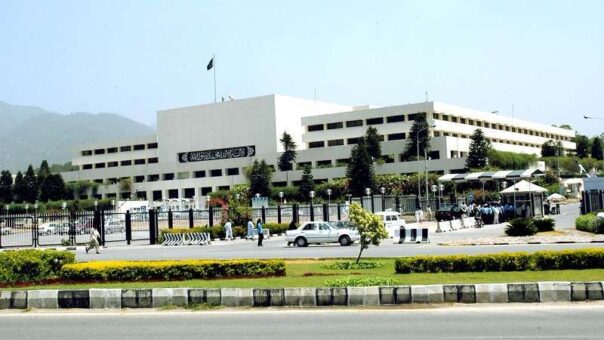
Islamabad, December 22, 2025 — Raising serious concerns over weak regulatory enforcement and the growing influx of hazardous products, the Senate Standing Committee on Science and Technology on Monday reviewed pre-shipment testing, quality control mechanisms, and ongoing institutional reforms, warning that lax oversight posed grave risks to public health, consumer rights, and the national economy.
The meeting, held at Parliament House under the chairmanship of Senator Kamil Ali Agha, was attended by Senators Husna Bano, Dr Muhammad Aslam Abro, Dr Afnan Ullah Khan, and Saeed Ahmed Hashmi, along with Federal Minister for Science and Technology Khalid Hussain Magsi, senior ministry officials, and heads of key regulatory bodies.
Members held detailed deliberations on the pre-shipment testing policy, smuggling of hazardous food items, enforcement failures in quality control, mandatory testing of solar equipment, and wide-ranging institutional reforms. The Rs135 billion petroleum products scandal in Quetta also came under review.
Briefing the Committee, Chairman Pakistan Council of Scientific and Industrial Research (PCSIR) said the federal cabinet had approved pre-shipment testing at borders, though the operational framework was yet to be finalized. The Federal Minister stressed that once implemented, consignments should be cleared within 15 to 25 days, cautioning that prolonged delays—particularly for sensitive goods—could lead to financial losses and health hazards. Members voiced strong concern over extended detention of consignments and demanded strict timelines.
The Committee was informed that substandard betel nut (supari) and gutka were being smuggled through sea and land routes. Members and the Minister warned that spoiled supari and gutka posed severe health risks, including cancer. Senator Dr Afnan Ullah Khan called for a complete ban on gutka, while PCSIR’s chairman emphasized stricter checks at the supply stage.
On the Quetta petroleum scandal, the Secretary Science and Technology informed that investigations had been completed, disciplinary action initiated against serving officers, and cases against retired officials referred to the FIA. Dissatisfied with delays, the Committee directed the FIA to submit its response within ten days.
The Committee also discussed ineffective factory inspections under PSQCA, adulteration in spices, harmful substances in cosmetics, and the unchecked inflow of substandard solar equipment. Officials highlighted upcoming testing facilities, new standards, and digital reforms, while the Committee urged strict enforcement, transparency, and stronger coordination to safeguard public and national interests.