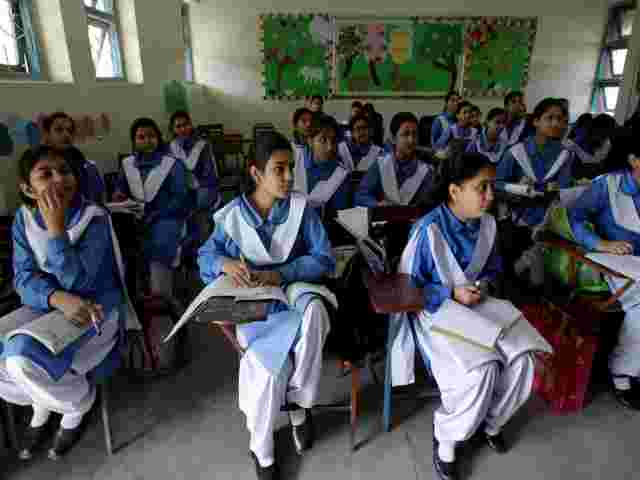
Karachi, January 21, 2026 – The Sindh government has announced a major reform in the education sector by introducing a new grading system for matriculation and intermediate examinations across all provincial education boards.
Marks-Based System Replaced by Modern Grading
Universities and Boards Minister Ismail Rahoo confirmed that the traditional marks-based evaluation system has been replaced with a modern grading framework in line with the Inter Boards Coordination Commission (IBCC) policy. The reform aims to ensure uniformity among education boards nationwide and includes the eventual introduction of a GPA system once the grading structure is fully implemented.
The government’s notification stated that the decision aligns with IBCC’s approval of the grading system during its August 2025 meeting.
Federal Board Leads the Way
The Federal Board of Intermediate and Secondary Education (FBISE) had earlier announced a revised grading formula for SSC and HSSC exams in October 2025. According to the federal board:
• The new grading scheme will apply to SSC-I/HSSC-I from the First Annual Examinations 2026.
• For SSC-II/HSSC-II, it will take effect from the First Annual Examinations 2027.
Under this system, students’ performance will be evaluated using grades instead of numerical marks, with a minimum passing threshold of 40%. Candidates scoring below this mark will be declared ‘U’ (ungraded). Students who fail can reappear for examinations, subject to eligibility conditions.
New Grading Scale
The grading framework has been designed to clearly categorize students’ academic performance as follows:
| Percentage Marks | Grade | Description |
| 96% – 100% | A++ | Extraordinary |
| 91% – 95% | A+ | Exceptional |
| 86% – 90% | A | Outstanding |
| 81% – 85% | B++ | Excellent |
| 76% – 80% | B+ | Very Good |
| 71% – 75% | B | Good |
| 61% – 70% | C+ | Fairly Good |
| 51% – 60% | C | Above Average |
| 40% – 50% | D | Emerging |
| Below 40% | U | Ungraded / Fail |
Impact of the Reform
Officials say the grading system will provide a standardized measure of students’ performance across all education boards, reduce discrepancies in marks, and help align Sindh’s evaluation system with national standards.
The move is expected to bring greater clarity for students, parents, and universities, while modernizing the province’s educational assessment system in line with international practices.