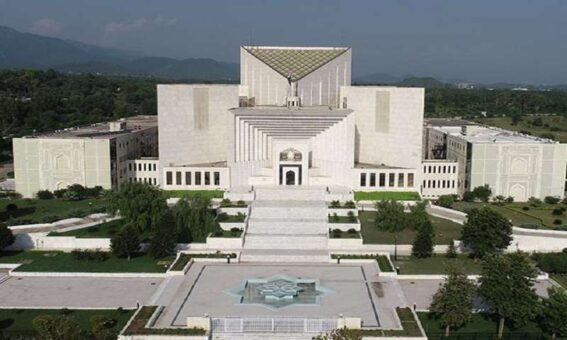
Islamabad, January 28, 2026 — The Supreme Court of Pakistan has ruled that tax orders issued by the Federal Board of Revenue (FBR) after the expiry of the legally prescribed time limit are unlawful, reaffirming that such actions cannot be sustained under the Sales Tax Act, 1990.
In its detailed written judgment, the apex court emphasized that once a show-cause notice is issued, the relevant authority is legally bound to pass an order within 120 days. Any order issued beyond this statutory period automatically becomes ineffective in the eyes of the law.
The judgment was issued by a three-member bench comprising Justice Mian Gul Hasan Aurangzeb, Justice Naeem Akhtar Afghan, and Justice Muhammad Shafi Siddiqui, which dismissed the FBR’s petition filed in Civil Petition for Leave to Appeal (C.P.L.A) No. 1990/2025. The petition had been submitted by the Assistant Commissioner Inland Revenue, Rawalpindi, challenging the Lahore High Court Rawalpindi Bench’s ruling dated March 10, 2025.
The court noted that the Regional Tax Office Rawalpindi had issued a show-cause notice on November 15, 2023, to Umar Tariq Khan, alleging recovery of over Rs4 million in inadmissible input tax. However, the Order-in-Original was passed on March 20, 2024, exceeding the mandatory 120-day limit.
The Supreme Court observed that the issue had already been conclusively settled in earlier judgments, including Collector Sales Tax vs. Super Asia, WAK Limited, and Abbasi Enterprises. These precedents clearly establish that delayed tax orders are void and unenforceable.
Under Article 189 of the Constitution, the court stressed that such rulings are binding on all state institutions, including the FBR. Expressing concern, the bench criticized the repeated filing of appeals on settled legal questions, calling the practice regrettable and a waste of public resources.
The court warned that in future cases, similar appeals may be dismissed at the preliminary stage, with costs imposed and responsibility fixed on concerned officials. It also advised the Chairman FBR to form independent review committees comprising retired judges, senior tax experts, and experienced officers before filing appeals, to curb unnecessary litigation.
Ultimately, the Supreme Court refused to grant leave to appeal and upheld the earlier judgment, dismissing the FBR’s petition in its entirety.