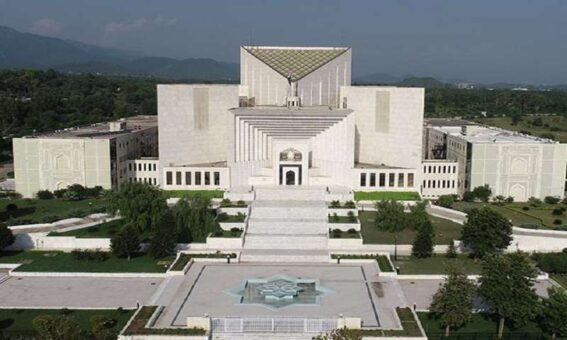
The Supreme Court of Pakistan has declared illegal the Sindh High Court’s order to block a citizen’s Computerized National Identity Card (CNIC) to enforce a court judgment, ruling that depriving a person of their CNIC infringes on the fundamental right to life.
Justice Muneeb Akhtar issued a three-page written judgment, emphasizing that a CNIC is not a luxury but an essential document for everyday life. The judgment questioned, “Will courts tomorrow also order the disconnection of electricity and water connections for the recovery of money?”
The Supreme Court noted that Section 51 of the Code of Civil Procedure does not permit blocking a CNIC, and without explicit legal provision, no court can order such an action. It further clarified that amendments made by the Peshawar High Court to the Civil Procedure Code do not apply to Sindh.
The case originated from a 2016 trial court decree in a property dispute, which directed the petitioner to deposit a specific sum. After non-payment, the trial court ordered the blocking of his CNIC—a decision upheld by the Sindh High Court. The Supreme Court’s ruling now overturns that order, reinforcing the protection of citizens’ fundamental rights.
The verdict has been hailed as a landmark decision, highlighting that essential civil documents, like CNICs, cannot be withheld as a means of enforcing judgments, ensuring that citizens’ access to basic services and legal identity remains protected.