
KARACHI: Federal Board of Revenue (FBR) is working hard to broaden the tax base for achieving Rs7.5 trillion collection target for fiscal year 2022/2023.
(more…)Tag: APTMA
-
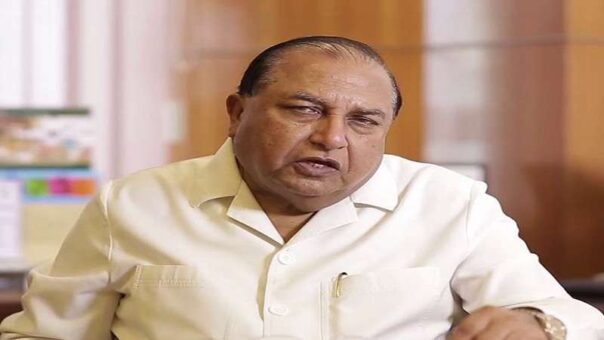
Business community mourns demise of SM Muneer
KARACHI: Business community has mourned the demise of renowned business leader SM Muneer, who died yesterday on November 28, 2022.
S.M. Muneer business leader of Pakistan who have walked through hard time and become an example to entire Pakistani entrepreneur. The start from the rise of his Din Group of Companies as one of the major business groups in the country is the story of almost 50 years of hard work and perseverance.
The leadership of Businessmen Group (BMG) and Karachi Chamber of Commerce & Industry (KCCI), while expressing deep grief and sorrow on sad demise of Chairman Din Group & United Business Group (UBG) SM Muneer, stated that Late SM Muneer will always be remembered not only by the business community of Karachi but the entire Pakistan for his valuable services to the country.
READ MORE: Member Customs assures swift clearance of export consignments
In a joint statement, Chairman Businessmen Group Zubair Motiwala, Vice Chairmen BMG Tahir Khaliq, Haroon Farooki, Anjum Nisar, Jawed Bilwani, General Secretary BMG AQ Khalil, President KCCI Mohammed Tariq Yousuf, Senior Vice President Touseef Ahmed and Vice President Muhammad Haris Agar stated that Late SM Muneer was a good human being who generously contributed to dedicatedly serve the humanity as he was an active philanthropist. His sad demise has undoubtedly created a vacuum in business politics as he was a person who always raised a strong voice for the rights of business & industrial community.
While extending heartfelt condolences to members of the bereaved family members, friends and well-wishers of Late SM Muneer, BMG & KCCI Leadership prayed that may Almighty Allah place the departed soul in Jannat ul Firdous and grant courage to all of them to bear this irreparable loss.
READ MORE: FTO urges business community to lodge complaints for tax issues
Chairman BMG Zubair Motiwala, who recently assumed charge of Trade Development Authority of Pakistan (TDAP) as its Chief Executive, said that SM Muneer visited TDAP office just two days ago to congratulate him on taking over his new assignment at TDAP. “Late SM Muneer, besides discussing matters of mutual interest, gave valuable advises for improving the exports”, he added and prayed that may Almighty Allah grant higher ranks to Late SM Muneer in Jannat ul Firdous.
Faisal Moiz Khan, President North Karachi Association of Trade & Industry (NKATI), SVP Shabbir Ismail, VP Naeem Haider, Akhtar Ismail, Sadiq M, Imran Moiz and Younus Khamisani, have expressed their grief and sorrow over the sad demise of S.M. Munir Bhai Jan. They termed a big loss for the business community.
In a statement, NKATI leaders were of the opinion that S.M. Munir’s outstanding services to the business community will always be remembered.
READ MORE: Business community welcomes appointment of new Army chief
They prayed that Almighty Allah may grant courage to the members of bereaved family to bear this irreparable loss with fortitude and the departed soul may rest in eternal peace.
Former President and Patron in chief SITE Zubair Motiwala, Former President and Chief Coordinator Saleem Parekh, Former President Jawed Bilwani, President Riaz Uddin and office bearers of SITE Association of Industry, have, condoled the sudden demise of KATI Patron-in-Chief S.M. Muneer.
The leaders said that the passing away of S.M. Muneer has created a vacuum in business politics. He was a good human being and his services were acknowledged by the President of Pakistan who conferred on him ‘Sitara-e-Isaar’ and ‘Sitara-e-Imtiaz’ in recognition of his outstanding public service for the cause of humanity.
Zubair Motiwala said that a few days ago, (late) S. M. Muneer came to meet & greet him on his appointment as CEO, TDAP.
READ MORE: APTMA demands restoring controversial SRO for sales tax refunds
They have prayed to the almighty Allah to rest the departed soul in eternal peace, grant him place in ‘Jannatul Firdaus’ and give strength & fortitude to the bereaved family to bear this irreparable loss with equanimity.
M. M. Zubair Motiwala, Patron-in-Chief All Pakistan Textile Processing Mills Association (APTPMA), has expressed heartfelt condolence on the sad demise of SM Muneer, leader of business community.
May Allah the Almighty, rest the departed soul in eternal peace and grant strength, courage and fortitude to the breaved family of Mr. SM Muneer to bear this irreparable loss, Ameen!
“WE ARE FROM ALLAH, TO WHOM WE RETURN”
He said that SM Muneer will be long remembered as a man of conviction and commitment. His demise would create vacuum in business community. May Allah rest his soul in peace!
Pervaz Lala, Chairman APTPMA, Mr. M. Imran, Regional Chairman, Mr. Amjad Jalil, Sr. Vice Chairman, Mr. M. Iqbal Arbi, Saleem Parkeh, former Chairman APTPMA, M. Arif Lakhani, Sikander Imran, Anwer Aziz, all Members Executive Committee and other senior members of the Association have condoled the sad demise. May Allah rest his soul in peace.
-
APTMA demands restoring controversial SRO for sales tax refunds
KARACHI: All Pakistan Textile Mills (APTMA) has demanded the tax authorities to restore a very controversial SRO for settlement the issue of sales tax refunds.
The textile millers demanded the FBR to restore SRO 1125(I)/2011 i.e. zero rating for the textile value chain to enable the industry to survive and maintain export momentum.
Gohar Ejaz, Patron In Chief, APTMA, in a letter to Prime Minister Shehbaz Sharif, apprised about an important matter, which resulted in a massive loss of exports as well as significant increase in unemployment.
READ MORE: APTMA urges PM to save textile industry from total closure
“Approximately 60 per cent of the industry has closed or is on the verge of closure primarily due to an extreme liquidity crunch.”
He said that the association had held a series of meetings with the ministry of finance and the ministry of commerce and the FBR starting June 2022 wherein the restoration of SRO 1125 (zero rating) was discussed.
“We request the government to restore 1125 i.e. zero rating for the textile value chain to enable the industry to survive and maintain export momentum in these extremely difficult circumstances,” he added.
READ MORE: APTMA demands immediate release of textile machinery
Sources in the Federal Board of Revenue (FBR) said that the SRO 1125 was rescinded after reports of mega fraud cases by misusing the notification by various quarters.
The Federal Tax Ombudsman (FTO) in a suo moto case in May 2019 directed Federal Board of Revenue (FBR) to conduct audit of all manufacturers who availed the benefit of SRO 1125(I)/2011.
The FTO observed that the review of sales tax registration rules and risk score weightage assigned to the risk parameters employed in the registration process which lead to misuse of ‘manufacturer’ status by registered persons for the purpose of tax evasion.
READ MORE: APTMA suggests measures to avoid Pakistan’s economic collapse
The FTO further observed that the FBR vide SRO 494 (I)/2015 dated June 30, 2015 showed that the IRIS based Sales Tax Registration module failed to timely incorporate the provisions of revised registration rules.
“The requisite changes in IRIS were incorporated after nine months vide SRO 227(I)/2016 dated March 21, 2016.”
The FTO observed that the FBR had failed to take timely action in integrating the registration modules in IRIS system thereby providing opportunity to the unscrupulous elements to take advantage of the weaknesses in the registration procedure of the sales tax department.
“Moreover, modification in the registration module was carried out after nine months of the revision of sales tax registration rules, but evidently no exercise was carried out by the field formation to verify that the existing manufacturers were registered in conformity with the provisions of revised rules.”
READ MORE: Govt. halts gas supply to export industry: APTMA
The FBR through Circular No. 01 of 2019 dated July 26, 2019 explained that SRO 1125(I)/2011 dated 31.12.2011, relating to zero-rating of five export-oriented sectors, has been rescinded since July 01, 2019 vide rescinding SRO 694(I)/2019 dated 29.06.2019.
From July 01, 2019, the items listed in the said SRO shall be charged to sales tax at 17 per cent at import and local supply. Only in case of integrated retail outlets, sales tax on finished textile and leather item shall be charged at 14 per cent.
All STGOs granting zero-rating on supply of electricity, gas, diesel, furnace oil and coal have been rescinded vide STGO 100/2019 dated 29.06.2019. In order to resolve the issue of increased sales tax refunds of exporters due to withdrawal of zero-rating on inputs, the scope of Expeditious Refund System is proposed to be extended with automated payment on generated RPOs.
-
APTMA urges PM to save textile industry from total closure
KARACHI: All Pakistan Textile Mills Association (APTMA) has urged Prime Minister Shehbaz Sharif to save export oriented textile industry of Sindh and Balochistan from total closure due to denial of gas.
In a statement issued on Monday, APTMA Chairman Zahid Mazhar, Southern Zone has urged the Prime Minister of Pakistan, Mian Shahbaz Shareef and the Chief Minister of Sindh, Syed Murad Ali Shah for their intervention to save export oriented textile industry of Sindh and Baluchistan from total closure due to denial of gas from November 15, 2022 to February 28, 2023.
READ MORE: APTMA demands immediate release of textile machinery
Zahid Mazhar said that the export oriented textile industries of Sindh and Baluchistan are contributing more than 54 percent in total exports of Pakistan have been served notices of gas closure without taking in confidence the real stakeholders in respect of gas closure for three and half months even though the two provinces are producing more than 80 percent of gas produced in the country.
He further said that due to extremely low gas pressure and frequently unavailability it is very difficult for the export oriented textile industries located in Sindh and Hub Industrial Area to run the mills and fulfill their export commitments well in time.
READ MORE: APTMA suggests measures to avoid Pakistan’s economic collapse
Zahid Mazhar further said that the textile industry is an export oriented industry running on 24/7 basis and almost all of our member mills are using natural gas as fuel for generation of electricity to meet their energy requirements and or to run their processing units.
Hence if they will be forced to consume only 50 percent of their load, they will not be able to run their mills smoothly and fulfill their export commitments on time resultantly they would not only lose their hard earned foreign buyers as well as the foreign exchange earned by the country through exports would also be curtailed which is the need of the hour.
READ MORE: Govt. halts gas supply to export industry: APTMA
He said that APTMA member mills are very much disturbed after receipt of SSGCL’s notices of gas closure for three and half months. He further said that gas closures for export oriented textile industry would be the last nail in the coffin of the economy of Pakistan and resultantly Pakistan would lead to default in payment of the foreign obligations and the currency rate would deteriorate further and reach a point of no return.
Chairman APTMA Southern Zone said that the government should take appropriate measures to ensure gas supply to export oriented industries, instead of complete gas outages, which would lead to a huge decline in exports and revenue, closure of industries, and layoffs.
READ MORE: APTMA demands continuation of energy tariffs
Zahid Mazhar urged the government and gas supply companies to provide gas first to export oriented industries including textile to run their mills without any disruption so that they can fulfill their export commitments in time otherwise they would be compelled to shut down their mills resulting in massive decline in foreign exchange earnings through exports and increase in unemployment which will result in a law & order situation.
-
APTMA demands immediate release of textile machinery
KARACHI: All Pakistan Textile Mills Association (APTMA) on Thursday demanded the government of immediate release of textile machinery, which are stuck up at ports.
(more…) -
APTMA suggests measures to avoid Pakistan’s economic collapse
KARACHI: All Pakistan Textile Mills Association (APTMA) on Friday suggested the government to avoid economic collapse.
The APTMA in a statement said that Pakistan is currently on the brink of economic collapse. With depleting foreign currency reserves, rising inflation, the exchange rate in free-fall and irrationally high interest rates, the country is headed towards a path similar to the economic downfall of Sri Lanka.
“We at APTMA are pushing for all leaders and policymakers to develop a consensus on how to navigate from this situation of extreme distress and pull the economy out of this downward spiral. We recommend the following key areas for reform,” according to the statement.
The association said a lack of political stability is a serious impediment to economic progress. Not only does it shorten policymakers’ horizons leading to suboptimal short term macroeconomic policies, but it is also the cause of frequent policy U-turns and leads to non-completion of ongoing projects. Stability and consistent policy implementation are crucial for economic growth and for the export sector to thrive and contribute dollar earnings to stabilize the Balance of Payments for a sustainable economic outlook.
READ MORE: Govt. halts gas supply to export industry: APTMA
The exchange rate is a major cause for concern. The ER instability has significant negative relationship with sectoral exports of Pakistan such as textile. A negative indication indicates that a rise in relative price is to blame for the decline in export demand. Pakistan has been under the grip of debilitating ER for quite some time now. The value of one dollar reached its highest point ever on 27th July 2022 when it hovered at around 237 Pakistani rupees. In the long run, the large devaluation of the rupee is worst for exporters especially textile exporters because it raises input costs, making exports less competitive.
It is time to abandon the widespread misconception that exporters welcome rupee devaluation. The central bank and government should concentrate on achieving an ER that is competitive in the market and achieves actual exchange parity. Dollars earned through exports are the most sustainable with the added benefit of no compulsion to return them, no interest, and the cheapest with only 3-4% cost. Hence, focusing upon dollars generated through exports are far better option than bonds.
Moreover, the need for a long-term policy featuring lower interest rates cannot be underestimated, and its implications for a brighter economic future which generates foreign currency, jobs and international recognition cannot be denied. We need more investments in Pakistan, alongside holistic policy reforms that lend confidence to investors and the markets. This need cannot be met with an interest rate of 15 per cent.
READ MORE: APTMA demands continuation of energy tariffs
Roadblocks to entrepreneurship and innovation need to be mitigated so that we can empower our youth and our disenfranchised talent to bring about a grassroots level economic revolution. We must rid our policymaking of the economic formula whereby interest rates are raised in order to stabilize the economy, as this can only be effective in certain Highly Developed Economies: a title which Pakistan’s economy is a long way off from attaining. The best mechanism is through supply-side interventions, bringing more individuals into the economy and increasing the labor supply – for which entrepreneurship and financial inclusion is critical.
The current account deficit increased by 517 percent in FY22 compared to FY21. To counter the dangers of our mounting debt, we must immediately take the following steps:
1) Reduce the import bill by at least $ 5 billion, especially energy’s, through ensuring energy efficiency.
2) Shockingly, petroleum imports increased by 50 per cent in June 2022 in volume terms. Pakistan imported petroleum products worth $24 billion last year. Gas needs to be used for productive purposes only. At present gas is being supplied to ceramics, steel and glass also.
3) Declare an energy emergency and introduce measures to conserve energy which can save Pakistan’s economy in more ways than one:
READ MORE: Prolong Eid holidays to adversely affect exports: APTMA
• Aggressive conservation – cuts import bills by more than 25 per cent and saves $6 billion.
• Implement both Price & Administrative measures to curtail consumption.
• Curtail domestic gas supply to reduce consumption & waste by 18 per cent UFG.
• Single point Energy supply to Domestic Gas.
• Fast track calibration of cooking burners to save 200 MMCFD of Gas/RLNG.
4) Improve documentation and inclusion of unbanked persons
5) Reduce external pressure ‘hawala’ from $10 – $5 billion by documentation as hawala can survive on undocumented sector only; introduce scheme whereby State Bank of Pakistan opens up bank accounts for those currently having no account with a pre-approved overdraft facility of Rs 10,000 that can be used as seed money for entrepreneurship.
6) Revamp and improve the export paradigm by ensuring competitive tariffs and improved facilitation.
Furthermore, we must take steps to add value in our exports and thereby improve global perceptions of Pakistan. This would require an environment that facilitates exporting industries to focus on quality improvement through new processes, thereby developing new products and entering fresh markets.
With a myopic focus on short staple fiber raw cotton, we rely on a shrinking market while neglecting the rapidly expanding market for MMF. The MMF tariff regime effectively prevents Pakistan from aligning its products in tandem with the rest of the world. The duty protection given to obsolete plants in Pakistan is denying the Pakistani industry any chance to compete in this booming market, internationally or domestically. We must do away with such hurdles so that progress can be made in value addition, diversification and market expansion.
Lastly, leaders must prioritize export-led economic growth. Enhanced exports enable the inflow of foreign currency to finance imports, service debt, stabilize exchange rates and to overcome the persistent problem of the balance of payment deficit.
READ MORE: APTMA condemns lobbying for Indian yarn import
The textile sector has performed exceptionally well in the last 2 years. Textile exports have increased by 43 percent in FY22 as compared to FY18. Textile industry has invested a sum of $5 billion over the past few years in new plant & machinery and upgradation.
Further expansion and increase in exports are limited by the inconsistent availability of energy at Regionally Competitive Energy Tariffs (RCET). Given that the past export spur occurred due to the priority of the government to provide regionally competitive terms for the sector, this policy must be consistently maintained in the future to enable economic stability and subsequent growth.
-
Govt. halts gas supply to export industry: APTMA
KARACHI: All Pakistan Textile Mills Association (APTMA) on Friday resented the decision of the government to halt gas / LNG supply to the key export industry.
The APTMA in a statement said textiles is the only sector that continues to grow and bring foreign exchange to the country, gearing up to close at $20 billion in June 2022 compared to $15.4 billion in June 2021. The sector has charted a remarkable performance in the past year.
READ MORE: APTMA demands continuation of energy tariffs
However, despite this progress, the gas/RLNG supply to the Punjab textile sector, which was at only 25 per cent of required volumes (50 per cent of August to November actual consumption), was shut down two days prior with the guarantee that supply would be restored on the morning of Friday 3rd June 2022. However, it has now been stated that the gas/RLNG supply will not be restored for an indefinite period.
The tragedy is that even with a 59 per cent increase of textile exports in May 2022 ($1.69 billion) over May 2021 ($1.06 billion), exports are not being given their due importance. Gas/RLNG is being continuously supplied to non-export industries – ceramics, glassware, steel etc. and not the export sector, against all economic rationale.
READ MORE: Prolong Eid holidays to adversely affect exports: APTMA
The government’s decision to halt the supply of gas/RLNG to exporters is highly illogical as it is a critical input to textiles, the single largest contributor to Pakistan’s exports and the mainstay of Pakistan’s economic future. The sector has sizeable investments in state-of-the-art machinery and high efficiency generation, with over USD $5 billion worth of investments for expansion and modernization made in the last 1 ½ years.
The potential losses thus accruing to the shutdown of gas/RLNG supply are phenomenal. On the contrary, the industry can bring substantial economic benefit from enhanced exports if the stable and consistent supply of gas/RLNG is guaranteed. New plants and expansions completed since November 2021 are still awaiting gas/power supply.
READ MORE: APTMA condemns lobbying for Indian yarn import
APTMA strongly urges the government to restore the priority of export industry and to recognize the immense losses and damage to Pakistan’s economic future this will cause.
A loss in production will lead to a further loss of exports and the need for billions of dollars in additional loans, which are already hard to come by. Due to poor quality grid electricity and non-supply of gas/RLNG, mills are operating at less than 75 per cent capacity, which if continued will incur a loss of $250-400 million in exports each month.
This has occurred previously and the losses were not and can never be recovered. Furthermore, most mills at present cannot fulfill the energy needs for power or gas/RLNG alone and require both to function. It is important to stress upon the fact that captives’ gas/RLNG usage is not consumptive but economic, that is, it leads to sustained production, with benefits of employment generation and enhanced exports.
READ MORE: APTMA disapproves Indian cotton import
The textile sector requires unwavering support to maintain export-led economic growth, so the sustained provision of energy will have long-term benefits for the country at large. Pakistan cannot afford to have an inefficient export-oriented sector, and the gas/RLNG supply and priority must be restored with immediate effect so that exports and economic growth are able to continue on an upward trajectory.
-
APTMA demands continuation of energy tariffs
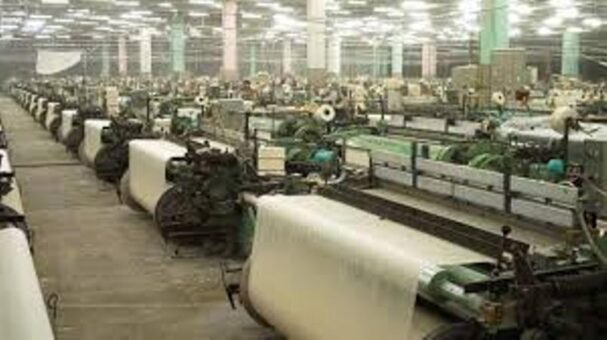
KARACHI: The All Pakistan Textile Mills Association (APTMA) has called on the government to sustain regionally competitive energy tariffs (RCETs) to ensure the continued growth of the textile sector, which remains vital to Pakistan’s economy.
(more…) -
Prolong Eid holidays to adversely affect exports: APTMA
KARACHI: All Pakistan Textile Mills Association (APTMA) has strongly reacted to the announcement of the government regarding Eid Holidays and stated the prolong closure may adversely affect economic activities.
The Patron in Chief APTMA, Gohar Ejaz has rejected the decision of the Government for Eid ul Fitr holidays from 10th to 16th May 2021. While expressing his concerns, stated that this will bring the whole country practically shut down for 10 days from Saturday, 8th May to Monday 17th May 2021.
Shutting down the country for 10 consecutive days is unacceptable as it would create a lot of glitches for the economy, industries, particularly the exporters who will not be able to dispatch their shipments abroad due to the complete closure of banks, ports, customs, and all other departments during excessive holidays.
He warned that we cannot afford such extended holidays as they will result in giving losses of up to billions of rupees to the national exchequer and terribly affect business activities particularly the exports.
Simultaneously, it will badly affect and deprive the daily wage earners of the country of their desperately needed earnings for continuous 10 days. Workers will find it impossible to feed their families creating a social disaster.
He particularly highlighted the Textile Industry that despite the issues and hardship, committed to double the exports.
Textile manufacturers have orders in hand and are working day and night to dispatch shipments according to the agreed schedule.
This decision will end up in the cancellation of orders which will not only result in losses to manufacturers but also to the country.
Keeping in view the social overall business climate and economic crises being faced by the country, Gohar Ejaz requested the Government to review the decision of Eid ul Fitr holidays from 10th to 16th May 2021.
The holidays should only be from 13th to 16th May 2021. The government should not shut down production and transportation for 10 days as the country simply cannot sustain such production and export loss.
-
APTMA condemns lobbying for Indian yarn import
KARACHI: All Pakistan Textile Mills Association (APTMA) has strongly condemned vested interests for fake claims of shortage and lobbying for import of yarn from India.
Asif Inam, Chairman – APTMA Sindh-Balochistan Region strongly condemned mala-fide propaganda of shortage and unavailability of yarn despite yarn import is allowed from all over the world except India in response of their restriction on import of Pakistani products.
In a statement issued to the press and electronic media, Asif Inam said that as per Customs data yarn is already imported from 59 countries.
Their love for India despite the hostile attitude for Pakistani products is not understandable and the data is strangely fabricated to portray gloom and doom situation of slight decline in exports by comparing exports of 28 days February of 2021 with 29 days February of 2020 which was the leap year.
Asif Inam further said that the downstream industry is creating hue and cry of unavailability of cotton yarn even though they are availing all facilities which are not provided to the exporters of yarn including subsidized Export Refinance Facility, Duty Local Taxes and Levies (DLTL), etc.
Moreover they are also allowed to import duty free cotton yarn under DTRE, Export Oriented and Manufacturing Bond Schemes if they find the local yarn expensive.
On the one hand downstream industry is claiming and pushing the government for long term policies and at the same time would like government interference to rescue them from any bad decision of forward selling of foreign exchange, not selling of foreign exchange and higher commodity prices all over the world due to relentless money printing by developed countries during COVID-19 which everybody has to dealt with.
Asif Inam urged the government not to allow import of cotton yarn, etc. from India until they restore normalization in trade with Pakistan.