Tag: FPCCI

  • FPCCI suggests FTO should deal with adjudication cases

    FPCCI suggests FTO should deal with adjudication cases

    KARACHI: Federation of Pakistan Chambers of Commerce and Industry (FPCCI) has suggested that the cases of tax adjudication should be handled by the Federal Tax Ombudsman (FTO).

    The suggestion has been made to make adjudication more fair, neutral, transparent, and competent resolution.

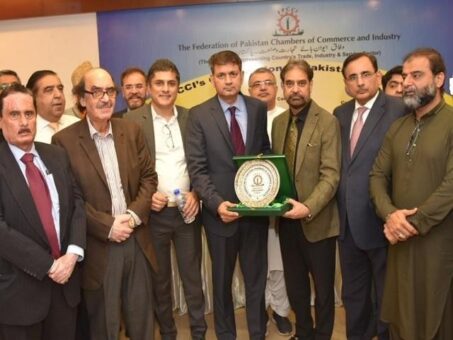
    According to a statement issued on Wednesday, the FPCCI President Mian Nasser Hyatt Maggo presented the suggestion while speaking on the occasion of Dr. Asif Mahmood Jah, FTO Pakistan, visit to FPCCI Head Office in Karachi.

    He said that FPCCI appreciates FTO’s recent notice and report on the misuse of powers by the officials of the Federal Board of Revenue (FBR) in issuing fake notices and accessing the bank accounts of the taxpayers unnecessarily.

    Maggo apprised the audience that it has been FPCCI’s longstanding demand to have a well-reputed, fearless, competent, and senior officer appointed as FTO Pakistan.

    Highlighting the major issues with income tax cases, FPCCI President said that discrimination, delay, injustice, non-transparency and non-payment of refunds are plaguing the taxation system of the country and that is the reason FPCCI recommends sweeping reforms in the system.

    Hanif Lakhany, Vice President FPCCI, said that the business community is, for the first time, feeling secure and protected against the tax and customs officials’ harassment and highhandedness; due to the fair redressal by the office of FTO. He also thanked the government for having the right man for the right job.

    Nasir Khan, Vice President FPCCI, expressed his satisfaction over the performance of the office of FTO; but, maintained that the tax and customs authorities use time-delay and procrastinating tactics to avoid swift redressal of the issues of business, industry and trade community. In order to resolve these grievances, FTO should be given the authority to reprimand and punish corrupt officers.

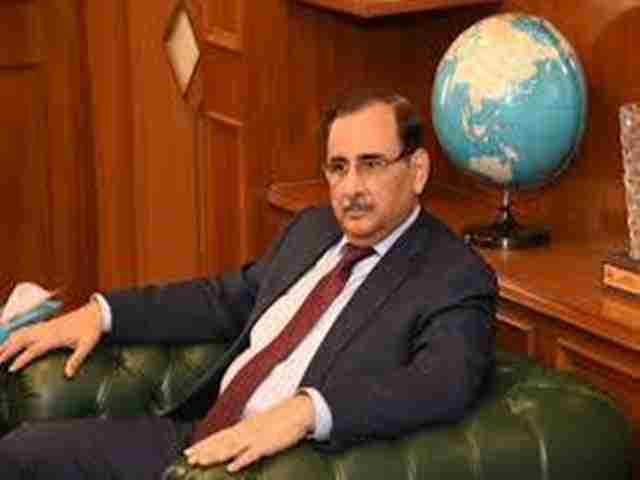
    FTO Dr. Asif Mahmood Jah apprised the audiences on the mandate and the performance of the Federal Tax Ombudsman.

    He said that 90% of the complaints by the business community go in their favor on average. The complainants have the option of appealing to FTO or of even filing a representation with the constitutional office of the President of the Islamic Republic of Pakistan.

    Dr. Asif Mahmood Jah added that FTO can not directly reprimand the tax and customs officials; but, he can make his observations on misuse of powers, maladministration, anomalies, harassment and corruption; and, those are taken seriously.

    Another limitation of the FTO is that we can not take up cases that have been already taken up by any court of law and are subjudice. Explaining the other functions of the institution of FTO, Dr. Jah said that inspections, own-motion actions and research are also mandated.

    Dr. Asif Mahmood Jah also stated that he wants to expedite the turnaround time for the resolution of complaints from 60 days to 60 hours. He also agreed to FPCCI’s demand of setting up help desks at FPCCI offices in Karachi, Lahore and Islamabad.

  • Direct tea import from Tanzania to reduce prices: FPCCI

    Direct tea import from Tanzania to reduce prices: FPCCI

    KARACHI: The president of Federation of Pakistan Chambers of Commerce and Industry (FPCCI), Mian Nasser Hyatt Maggohas emphasized that tea prices can be quickly curtailed if imports are facilitated directly from Tanzania, which is a major producer of tea in the world.

    Pakistan should explore every possible avenue to control food inflation and tea is one of the major food items fueling inflation; as it is dependent on imports heavily, he added.

    Maggo said that it is perturbing to note that currently only 2 per cent of tea is being imported from Tanzania directly and pricing pressures in Kenyan tea markets are causing an added strain to foreign exchange reserves of Pakistan and exchange range volatility; and, exchange rate volatility is adding up to the miseries of importers and general public alike.

    Hanif Lakhany, VP FPCCI, apprised the Pakistani exporters of the potential to export a number of products to Tanzania in large quantities, e.g. value added textiles, pharmaceuticals, surgical goods, sports goods, fruits & vegetables, plastic ware, etc.

    Zeeshan Maqsood, Convener FPCCI’s Standing Committee on Tea Trade, said that Pakistan imports a huge amount of around 240 million kilograms of tea annually and Tanzanian share is only 3.5 million kilograms. Pakistan is a $600 million tea market and Tanzania stands to benefit a lot from getting a share out of it.

    Dr. Jacqueline Mkindi, CEO of Tanzania Horticulture Association, led the counterpart delegation and invited the Pakistani traders to explore the opportunities in textiles, pharmaceuticals, gemstones, minerals and fruits & vegetables.

    FPCCI considers the current trade volume of approximately $220 with Tanzania too short of the real potential and considers the psychological mark of $1 billion achievable within a short span of two to three years.

  • FPCCI proposes enhancing SME turnover to Rs1.5 billion

    FPCCI proposes enhancing SME turnover to Rs1.5 billion

    KARACHI: Federation of Pakistan Chambers of Commerce and Industry (FPCCI) has proposed to increase the turnover of Small and Medium Enterprises (SMEs) to Rs1.5 billion from existing Rs250 million for treatment of income tax.

    FPCCI President Mian Nasser Hyatt Maggo, while praising the government for launching the SME Policy, said the defined annual sales turnover of a meager Rs250 million does not reflect the current ground realities of Pakistan; as when that threshold was set, the exchange rate was around Rs60 for a dollar, which has now climbed to over Rs170.

    Therefore, he has suggested, the new limit should be set at Rs1.5 billion for SMEs.

    FPCCI Chief has reiterated his proposal for a simplified and streamlined taxation regime; including, easy-to-fill tax return forms; end to corruption; phased lowering of sales tax rates, etc. through alignment it to FPCCI’s proposal called Simplification of Taxation System in Pakistan sent to the Prime Minister of Pakistan back in February 2021.

    The FPCCI chief hailed the concerted efforts of Makhdoom Khusro Bakhtiar, Federal Minister for Industries & Production, for launching long-overdue SME Policy of Pakistan.

    The SME Policy has been in the making for many years now and the process unfortunately got deferred many times over, he added.

    Maggo said that financing is the lifeline for SMEs and the SBP’s current SAAF Scheme has allowed a banking spread of 8 per cent to commercial banks; on top of 1 per cent refinancing rate of SBP; which makes it 9 per cent for the SMEs. That much cost of capital is unaffordable, unproductive and unfeasible. FPCCI has proposed an interest rate of 3 per cent for SMEs to make it viable for small businesses & entrepreneurs.

    Mian Nasser Hyatt Maggo has demanded that the government should update the definitions of Micro, Small and Medium-sized organizations and make it MSMEs on the lines of current best practices internationally; for devising preferential treatment protocols based on peculiar ground realities of Pakistan. MSMEs are the engines of growth & employment generation, he added.

    Addressing the glaring issues in labour-related provincial & federal levies on SMEs in Pakistan, Mian Nasser Hyatt Maggo has proposed that all the provincial and federal levies to be clubbed together to make a single levy to be charged either as a percentage of turnovers or on some other pertinent criteria for the sake of simplification; but, protecting the present collections for the purposes these departments have been created as well.

    In order to keep demand-side variables in SMEs favour, President FPCCI has suggested that the government should keep their procurement from SMEs strong & steady; incorporating procurement for CPEC-related projects.

  • FPCCI, IBA to collaborate for budget proposals, research

    FPCCI, IBA to collaborate for budget proposals, research

    KARACHI: Federation of Pakistan Chambers of Commerce and Industry (FPCCI) and Institute of Business Administration (IBA) have agreed to collaborate in policy research and formulating proposals for federal and provincial budgets.

    The two institutions have agreed to collaborate in the spheres of Data-based Policy Research; Data Sharing; formulating Proposals for Monetary Policy and Federal & Provincial Budgets; Policy Advocacy; conducting Economic Surveys, etc., according to a press release on Tuesday.

    Mohammad Younus Dagha, Chairman of FPCCI’s Policy Advisory Board & Dr. Akbar Zaidi, Executive Director of IBA Karachi, signed a Memorandum of Understanding at a ceremony attended by the press representatives at the FPCCI Headquarters, Federation House, Karachi.

    Mian Nasser Hyatt Maggo, President FPCCI, said that a strong proponent of industry-academia linkages & cooperation, he has always pursued the promotion of knowledge-based economy and the MoU is a manifestation of his vision for FPCCI.

    Mian Nasser Hyatt Maggo maintained that, to him, FPCCI & IBA are natural allies as FPCCI is the apex representative business & trade body of Pakistan and IBA is one of the most prestigious business schools of Pakistan.

    Mohammad Younus Dagha said that Policy Advocacy, the primary function of FPCCI, should be data-driven & evidence-based. Policy advocacy should be the primary function of FPCCI; but, it has to be grounded in hard facts to be valid, pragmatic and result-oriented.

    Dagha added that an effective policy advice has to reconcile the inspirations of entrepreneurs & expectations of the society at large. He said that the Policy Advisory Board has therefore started its journey by joining hands with the academia & economic think tanks; as well as NGOs working in social sectors.

    Amjad Rafi, a Senior Member of FPCCI & a Member of the Board of Governors of IBA, emphasized that business & industry should start looking towards academia & researchers for solutions to their real-world management & operational issues for indigenous, sustainable and research-based ideas; in order to contribute to socioeconomic growth & employment generation.

    Dr. Akbar Zaidi said that FPCCI & IBA are old allies and, historically, IBA has always had a member from FPCCI on its board. He expressed his satisfaction that the MoU is a step forward. He added that IBA is a university now; but, its business school continues to be the most important part of it.

  • FPCCI disagrees with high markup on SME financing

    FPCCI disagrees with high markup on SME financing

    KARACHI: Federation of Pakistan Chambers of Commerce and Industry (FPCCI) has denounced high mark-up rate on financing to Small and Medium Enterprises (SMEs) under a scheme announced by the State Bank of Pakistan (SBP).

    In a statement on Monday, FPCCI President Mian Nasser Hyatt Maggo expressed shock over the interest rate of up to 9 per cent under SBP’ SME Asaan Finance Scheme (SAAF).

    The SMEs were appreciative of the announcement of collateral-free SAAF Scheme; but, the interest rate of 9 per cent makes it unaffordable, unproductive and unsupportive for SMEs, he added.

    Maggo said that it is a welcome step that SBP has selected eight banks to get financing under SAAF Scheme from SBP; however, it makes no economic and commercial sense to allow these eight banks to charge up to 8 per cent in addition to 1 per cent of SBP’s lending fee to banks.

    The FPCCI chief demanded that SAAF scheme should not have a total interest rate over 3 per cent, which will make it at par with TERF to make it affordable for SMEs, i.e. 1 per cent for SBP financing and 2 per cent for banks’ margin.

    He said that in the post-pandemic scenario, nowhere in the world SMEs can afford to get capital at 9 per cent and pay it back without getting bankrupted. Maggo also noted, with concern, that SBP itself sets maximum interest rate under TERF Scheme at 3 per cent for larger enterprises and business groups; and, for SMEs, it has taken a discriminatory and unsupportive stance.

    Iftikhar Ghani Vohra, Convener of FPCCI’s Central Standing on SMEs, said that based on the feedback from across Pakistan, he can say that SMEs are not happy with the exorbitant interest rate; as 9 per cent will make the SAAF Scheme unaffordable for them.

    Vohra added that his committee had a detailed meeting with the SBP officials in the mid-September; and, they categorically conveyed their concerns to the officials. However, FPCCI’s concerns have fallen on deaf ears and no change in interest rate has been announced.

    Maggo said that he disagrees with the assertion by SBP that all stakeholders have been taken onboard on SAAF Scheme; as FPPCI’s proposal has not been taken into account. It is pertinent to note that FPCCI is the apex representative body of all the SMEs, chambers & associations of Pakistan and; therefore, the biggest stakeholder in the policies affecting SMEs, he added.

  • FPCCI alleges SBP for misguiding on Pak-Iran trade

    FPCCI alleges SBP for misguiding on Pak-Iran trade

    KARACHI: The apex trade body of the country has alleged the State Bank of Pakistan (SBP) for misguiding the ministry of commerce on Pak-Iran trade.

    Mian Nasser Hyatt Maggo, President of Federation of Pakistan Chambers of Commerce and Industry (FPCCI) in a statement on Saturday said that the SBP had misdirected the commerce ministry by advising against banking channels with Iran for sanctions-related concerns; and, not offering and advocating its due and required facilitative role for the barter trade. “Any State Bank should be an enabler of trade and growth; not a block and disruptor like SBP,” the FPCCI said.

    The FPCCI chief hailed the Ministry of Commerce’s efforts to kick start barter trade with Iran on a mass scale; however, he has expressed his concerns and apprehensions pertaining to the conduct of the SBP for creating obstacles and showing inaction for the same.

    Maggo maintained that when Europe, India and China can do barter trade with Iran, why Pakistan can not do that; while, Pakistan is at the greater advantage on the back of long border and geographical contiguity as compared to all other countries and regions.

    Nasir Khan, VP FPCCI from Balochistan, emphasized that it is in the national interest of Pakistan to have barter trade with Iran and have marketplaces in the border areas of the two brotherly countries.

    He added that he considers the conduct of the Governor SBP against the national interest and detrimental to the economic growth and prosperity of Pakistan.

    Nasir Khan added that Pakistani exporters can export large quantities of rice, meat, pharmaceuticals and textiles to Iran and that can translate into upwards of equivalent of five billion dollars annually; which, in turn, will create millions of jobs.

    Nasir Khan further said that the current Governor SBP is an imported one and is not taking care of Pakistani interests into account. We need a die-hard Pakistani at the helm of the affairs, he added.

  • Customs ready to form valuation advisory committee

    Customs ready to form valuation advisory committee

    KARACHI: Dr. Fareed Iqbal Qureshi, Director General, Customs Valuation has said that Pakistan Customs is ready to constitute an advisory committee of the stakeholders from government and business community; and he has an open-door policy for addressing all the grievances.

    (more…)
  • FPCCI demands replacing SBP governor

    FPCCI demands replacing SBP governor

    KARACHI: The Federation of Pakistan Chambers of Commerce and Industry (FPCCI) on Friday demanded the government of replacing the governor of State Bank of Pakistan (SBP).

    “The business, industry and trade community of Pakistan demands a better, more competent and responsible leadership at the helm of the affairs at State Bank of Pakistan,” said Mian Nasser Hyatt Maggo, President FPCCI while criticizing irresponsible and fictitious statement by the Governor SBP on deprecating value of Pakistani Rupee and how it is benefiting Pakistan.

    FPCCI Chief said that there is no economic sense and justification in the statement that Pakistan has gained around $3 billion due to recent depreciation in Pak Rupee. He added that the ground realities are diametrically opposite than that of assertions by SBP Chief.

    Mian Nasser Hyatt Maggo emphasized that monetary policy should be devised in a manner to promote economic growth and bring stability in the economic indicators; however, monetary policy has failed to achieve any of the above.

    Nasir Khan, VP FPCCI, has said that unrelentingly depreciating exchange rate is playing a havoc with Pakistani society and the economy. This is unsustainable and the Prime Minister should intervene – in the larger national interest – immediately to arrest the slide in the value of Pak Rupee.

    Nasir Khan said that the government must address the domestic and imported inflation through its monetary and fiscal policies; instead of making lame excuses.    

    Mian Nasser Hyatt Maggo said that hardly any justification exists in continuation of the present Governor SBP. In fact, ethically speaking, he should prefer to resign himself in view of totally indefensible policy structure given by SBP.

    Mian Nasser Hyatt Maggo has also demanded a binding inquiry into the conduct of SBP in recommending sweeping tax concessions for non-resident companies to attract investments in government debt at very high rates to favor certain foreign commercial banks. The same conduct of Governor SBP is part of the history archives, when he was in Egypt.

  • FPCCI rejects hike in petroleum, electricity prices

    FPCCI rejects hike in petroleum, electricity prices

    The Businessmen Panel (BMP) of Federation of Pakistan Chambers of Commerce and Industry’s (FPCCI) has rejected hike in prices of petroleum products and electricity.

    BMP Chairman Mian Anjum Nisar, while strongly reacting to increase in electricity base tariff by Rs 1.39 per unit for the second time in one year, along with exorbitant hike of Rs10.49 per litre in petrol prices, has said that the government has declared another minibudget by burdening the trade and industry with billions of rupees new taxes in the form of huge increase in electricity, gas and petroleum rates.

    FPCCI’s Businessmen Panel Chairman Mian Anjum Nisar observed that the government has raised the petroleum product price for the third consecutive time in one month period, lifting it by more than Rs20 per litter to Rs137.79 per litre, as the authorities hiked the oil prices by Rs4.50 on Sept 16, then by Rs5.50 on Oct 1 and now by Rs10.49 per litter on Oct 16, 2021.

    “It is unfortunate that the authorities had reduced the petroleum rates just by Rs1.50 one and a half months back on Sept 1, 2021,” he added.

    Moreover, the federal government has announced to increase electricity base tariff by Rs 1.39 per unit across the country from Nov 1, while it had already enhanced the base power tariff by Rs 1.95 per unit in January this year along with quarterly and monthly electricity price hike under fuel adjustment formulas, totaling the power price hike to over Rs5 per unit, he claimed.

    He said that the National Electric Power Regulatory Authority (NEPRA) has allowed an increase of Rs1.65 per unit in power tariff, under quarterly adjustments, which will empower the distribution companies to collect Rs173 billion from consumers in the next one year. He said that the trade and industry were expecting some relief at the expiry of early adjustments of Rs1.62 per unit on Sept 30, 2021, however, the NEPRA announced the transfer of new adjustments equal to Rs1.65 per unit to the consumers with effect from Oct 1, 2021.

    FPCCI former president rejected the increase in power prices along with the periodic hike in rates of petroleum products. He said the increase in power and fuel prices will increase the cost of production for the industrial section which in turn will impact the ease of doing business and exports. This will ultimately hit the economy as envisioned by the Prime Minister, he maintained.

    Condemning the government’s move, the ruling group chief of apex chamber said the increase was being done to meet the conditions of the International Monetary Fund.

    It is unfortunate that Minister for Finance Shaukat Tarin had pledged a day earlier – on October 14, 2021 in Washington DC while attending the annual meeting of IMF – that electricity tariff will not be increased.

    Rejecting the latest increase in electricity and petroleum prices, he termed it a cruel decision by the authorities, which will bring the economy to a grinding halt. Millions more will be unemployed while millions are facing abject poverty and starvation. Imposition of 17 per cent sales tax on exempted items, increase in petrol, electricity prices is not just for the economy, he said.

    He further said the government had dropped a new bomb on the trade and industry at a time when inflation and unemployment was at an all-time high and the economy was facing total collapse because of government’s incompetence.

    The government blindly acted on the terms of the IMF and did not bother to care about the public interest. He warned that severe inflation was creating a serious problem of economic viability of the country which was not a good omen for Pakistan.

    Businessmen Panel Chairman Mian Anjum Nisar said the constant increases in energy rates on the behest of the International Monetary Fund (IMF) would make the Pakistani products uncompetitive in the international market.

    He opposed the government’s move of raising power tariff by more than Rs5 per unit, besides lifting rates of petroleum products twice a month to qualify for the revival of the stalled $6 billion IMF loan program, leading the economy towards point of no return due to interference of the International Monetary Fund.

    Mian Anjum Nisar said it was imperative to make power and gas tariffs for domestic, as well as export sectors compatible with the tariff being applied in regional and neighboring countries.

  • FPCCI criticizes restoring bank account freezing powers

    FPCCI criticizes restoring bank account freezing powers

    KARACHI: Federation of Pakistan Chambers of Commerce and Industry (FPCCI) on Wednesday expressed serious reservations over restoration of powers to officers of Inland Revenue (IR) in freezing bank accounts without approval.

    FPCCI President Mian Nasser Hyatt Maggo recorded his strong reservations on the attachment of bank account under section 140 of the income tax ordinance, 2001 and section 48 of the sales tax act, 1990 and term new amendment as a hurdles to ease of doing business as envisioned by Prime Minister of Pakistan.

    He stated that on the instructions of the Prime Minister the government machinery made an atmosphere among the taxpayers that unless the taxpayers are at ease to do their business without any fear of the tax officials, it is not possible to boost the collection of revenue.

    However, it seems that the said atmosphere is again at its disturbance in the light of the Board’s letter dated 11-10-2021 wherein attachment of bank account is ordered to be made without informing tax the payers and implementation is ordered retrospectively on all recoveries.

    President FPCCI said that the trade is facing a blow due to escalation of parity between the dollar and rupee and now comes the draconian steps being taken by the Board in the shape of instructions to forcefully recover the disputed taxes from the bank accounts of taxpayers.

    Maggo further added that this is totally against the recent instructions to bar the tax machinery from taking money without prior intimation to the account holders and the fresh instructions would be a dent on the Finance Minister’s pro taxpayer posture. It is also not out of place to mention that the former Chairman FBR also against such steps of the Board to collect taxes forcefully and taken practical steps to stop such practices.

    He also said that the tax machinery is almost at a failure to dig out new taxpayers instead it is bent upon on hand twisting methods against the existing taxpayers to collect so called revenue.

    On the other hand if such practices are enforced it will pile up the litigation between the tax collectors and taxpayers and the courts are already at a burden due to such litigation.

    The trade community feels that the hierarchy of the FBR is under pressure to meet their targets and to recover the disputed taxes by using their extra ordinary powers.         

    In recent months, the taxpayers have been complaining about the “highhandedness” by the FBR. The matter had also landed in the Senate Standing Committee on Finance that last week recommended the government to sack taxmen who made exaggerated tax demands and then rejected appeals of taxpayers under pressure from FBR headquarter.

    Maggo registered a strong complaint on behalf of the Business Community against the orders passed by the FBR and urged to review its policy and collect the taxes under the trade friendly atmosphere.