Tag: imported vehicles

  • Car import surges by 180 percent

    Car import surges by 180 percent

    KARACHI: The import of motor cars has increased by 180 percent during first two months of current fiscal year due to normalization of life after lifting of corona lockdown.

    The import of motor cars was at $26.53 million during July – August 2020 as compared with $9.46 million in the corresponding period of the last year, showing an increase of 180 percent.

    The commercial import of motor cars is not allowed in Pakistan. However, under different schemes such as personal luggage, gift and transfer of resident schemes the overseas Pakistan can bring motor cars in Pakistan.

    In the past these scheme were grossly misused and the government while taking strict action imposed restriction that clearance of motor vehicles would only be allowed on payment of duty and taxes out of those amount which was remitted into Pakistan with evidence of banking channels.

    The import of motor vehicles in completely built units (CBU) including motor cars recorded an increase of 151 percent to $47.18 million during first two months of current fiscal year as compared with $18.76 million in the same period of the last fiscal year.

  • ECC approves expanding duty free car import scheme for disabled persons

    ECC approves expanding duty free car import scheme for disabled persons

    ISLAMABAD: The Economic Coordination Committee (ECC) of the Cabinet on Wednesday granted approval to expand the scheme of duty free car import by disabled persons.

    (more…)
  • Import of old, used motor cars falls by 55.41 percent in 2019-2020

    Import of old, used motor cars falls by 55.41 percent in 2019-2020

    KARACHI: The import of used and old cars massively fell by 55.41 percent during fiscal year 2019/2020 due to condition of payment of duty and taxes through foreign exchange imposed by the government.

    The import of used and old cars in Completely Built Unit (CBU) condition fell to $99 million during 2019/2020 as compared with $222 million in the preceding fiscal year, according data released by Pakistan Bureau of Statistics (PBS).

    The commercial import of used or old cars is not allowed under prevailing laws of the country. However, in order to facilitate expatriate Pakistanis the government allows incentives to bring cars into the country.

    The Federal Board of Revenue (FBR) has allowed Pakistani nationals residing abroad including dual nationals can import old and used vehicles into Pakistan under these schemes: Personal Baggage; Gift Scheme; and Transfer of Residence.

    The cars not older than three years and other vehicles not older than five years can be imported under these schemes, the FBR said.

    These schemes were grossly misused in the past and bulk of imported cars brought into the country.

    However, the ministry of commerce in February 2019 amended Import Policy Order, 2016 and made it mandatory for clearance of cars through foreign exchange, which should be certified by banks.

    Since then the clearance of the cars has come to a standstill. Customs authorities said that a large number of imported cars were at the port but importer had failed to make payment as per procedure prescribed by the ministry of commerce.

    However, later in a meeting of Economic Coordination Committee (ECC) decided to allow payment for duty and taxes for customs clearance of imported cars through local resources with condition that if foreign exchange becomes short due to currency fluctuations or change in duty and tax rates.

    The overall import of CBU vehicles during fiscal year 2019/2020 fell by 43 percent. The import of heavy vehicles including buses and trucks has declined by 24.5 percent. While import of CBU motorcycles fell by 71.63 percent.

    On the other hand the import of cars as Completely Knocked Down (CKD) condition also fell by 41.57 percent to $478 million during 2019/2020 as compared with $818 million in the same period of the last fiscal year.

    Market sources said that massive depreciation in the local currency during past couple of years had increased the cost of local car manufacturers.

    Further, the rates of locally assembled cars for end consumers also jumped up sharply.

    These factors have reduced the productions of locally manufactured cars and subsequently reduced the import of cars in CKD condition.

    The overall import of vehicles in CKD fell by 41.63 percent to $727.52 million during 2019/2020 as compared with $1.24 billion in the preceding fiscal year.

  • Car imports fall by 61pc in eleven months

    Car imports fall by 61pc in eleven months

    KARACHI: The import of used and old cars witnessed sharp decline of 61 percent during first eleven months (July-May) of current fiscal year due to condition of payment of duty and taxes through foreign exchange imposed by the government.

    The import of used and old cars in Completely Built Unit (CBU) condition fell by 61 percent to $84.2 million during July –May 2019/2020 as compared with $216.5 million in the corresponding period of the last year, according data released by Pakistan Bureau of Statistics (PBS).

    The commercial import of used or old cars is not allowed under prevailing laws of the country. However, in order to facilitate expatriate Pakistanis the government allows incentives to bring cars into the country.

    The Federal Board of Revenue (FBR) has allowed Pakistani nationals residing abroad including dual nationals can import old and used vehicles into Pakistan under these schemes: Personal Baggage; Gift Scheme; and Transfer of Residence.

    The cars not older than three years and other vehicles not older than five years can be imported under these schemes, the FBR said.

    In the past these schemes were grossly misused and bulk of imported cars brought into the country.

    However, the ministry of commerce in February 2019 amended Import Policy Order, 2016 and made it mandatory for clearance of cars through foreign exchange, which should be certified by banks.

    Since then the clearance of the cars has come to a standstill. Customs authorities said that a large number of imported cars were at the port but importer had failed to make payment as per procedure prescribed by the ministry of commerce.

    However, later in a meeting of Economic Coordination Committee (ECC) decided to allow payment for duty and taxes for customs clearance of imported cars through local resources with condition that if foreign exchange becomes short due to currency fluctuations or change in duty and tax rates.

    The overall import of CBU vehicles during first eleven months of current fiscal year fell 48 percent. The import of heavy vehicles including buses and trucks has declined by 27 percent. While import of CBU motorcycles fell by 71 percent.

    On the other hand the import of cars as Completely Knocked Down (CKD) condition also fell by 40 percent to $440 million during July – May 2019 as compared with $736 million in the same period of the last fiscal year.

    Market sources said that massive depreciation in the local currency during past couple of years had increased the cost of local car manufacturers.

    Further, the rates of locally assembled cars for end consumers also jumped up sharply.

    These factors have reduced the productions of locally manufactured cars and subsequently reduced the import of cars in CKD condition.

    The overall import of vehicles in CKD fell by 40 percent to $675 million during first eleven months of 2019/2020 as compared with $1.128 billion in the corresponding period of the last fiscal year.

  • Customs auction of vehicles to be held on June 04 at ASO Headquarter

    Customs auction of vehicles to be held on June 04 at ASO Headquarter

    KARACHI: Pakistan Customs has announced auction of used vehicles to be held on June 04, 2020 at Anti-Smuggling Organization (ASO), East Wharf, Karachi.

    Following vehicles will be presented for the auction:

    01. Used Toyota Lexus Car – Reg No. UC-868 -Model-2006-(As per seat Belt), Chassis: JTHBG 963905034702 / Engine EMH-3 GR-FE158467 – 3485 cc.

    02. Used Toyota Harrier Jeep – Reg.No-JAA-454 – Model-1998 – 2999cc, Chassis No-MCU-10-0013510 – Engine No- IMZ-FE6688090.

    03. Used Toyota Mark-II Saloon Car / Reg. No-BBL-708 / Model-2000 / 1800 HP, Chassis No-JZX110-6000922 / Engine No-1JZ-075010

    04. Used Toyota Land Cruiser Jeep – P.White Reg.No. LZN-888 – Model – 1999 – 4663 CC, Chassis No-UZJ 100-0081129 / Engine No- 2 UZ-0132269.

    05. Used Toyota Hilux Surf Jeep – Reg. No. CJ-4242 (Sindh) – Model-1990 – 2446 CC, Chassis No LN130-0026273 / Engine No. 2L-2264058

    06. Used Nissan X-Trail 5 Door Jeep – Pearl White Reg. No. GR-621 – Model-2005 (As per seat Belt Model-2000), Chassis No. NT 30-100374 – Engine No. QR 20 (DE)

    07. Used Toyota Land Cruiser Jeep – ( Petrol ) White Reg. No. BF-5933 – Model-1995 – 4476 CC, Chassis No. FZJ 80-0109507 / Engine No.

    08. Used Mercedes Benz Saloon Car (AG) – Reg.No. # AB 1001, Chassis No-WDB1240312B476728

    09. Used Toyota Hilux Surf Heep – Reg,No. UU-691 – Modle – 1992 – 240CC., Chassis – LN130-7022502 –

    Engine No-3244904

    10. Used Toyota Mark-X Car Reg. No. AQD-567 – Model-2006 – 2499 cc, Chassis # GRX120-3018594 Engine # 4 GR-FSE

    11. Used Toyota Hilux Surf Jeep Reg. # BC-4942 (Sindh) – Model-1993 – 3000 cc, Chassis # KZN130-9021488 – Engine # 1KZ-0040092

    12. Used Mercedes Saloon Car Reg # ZA-030 (Islamabad) – Model-2000 – 3200cc – Colour White, Chassis # WDB1704652F205019 Engine # 1234567

    13. Used Honda Hybrid Saloon Car Reg # AAP-669 (Quetta) – Model-2006 – 1300 cc, Chassis # FD3-1004625 Engine # LDA-1304637

    14. Used BMW Saloon Car ( 320i ) Reg # AAQ-687 (Quetta) – Model-2005 – 1995 cc, Chassis # WBAVA76080NK19520 Engine # A629H507N46B20BA

    15. Used BMW Car ( 735i ) Reg # YG-455 ( Islamabad ) – Model-2003 – Colour Black, Chassis # WBAGL42050DD81475

    16. Used Toyota Crown Royal Saloon Car Reg # AZS-383 – Model-2013 – Colour Silver, Chassis # AWS210-6030122

    17. Used Toyota Hilux Surf Jeep Reg # WAG – 871 (Quetta) – Model-1996 – 2700 cc, Chassis # KZN185-0033706 Engine # 1KZ-0347330

    18. Used Toyota AQUA Car Reg # ADT-722 – Model-2012, Chassis # NHP10-2060843

    19. Used Nissan X-Trail Jeep Reg # WAJ-910 ( Quetta ) – Model-2004, Chassis # NT30-132366

    20. Used Toyota Mark-X car Reg # Fake-SP-046-A – Model-2005 – 2500 cc, Chassis # GRX120-3006864

    21. Used Toyota Land Cruiser VX Jeep Reg # BC-3498 – Model-1993, Chassis # JT111TJ-800701495

    22. Used Toyota Hilux Surf Jeep ( Petrol ) Reg. # BF-0150 – Model-1996, Chassis # VZN185-0024837

    23. Used Toyota Hilux Surf Jeep ( Petrol ) Reg. # BF-1429 – Model-1996, Chassis # RZN185-0006433
  • FPCCI proposes duty free import of used cars for subsequent export

    FPCCI proposes duty free import of used cars for subsequent export

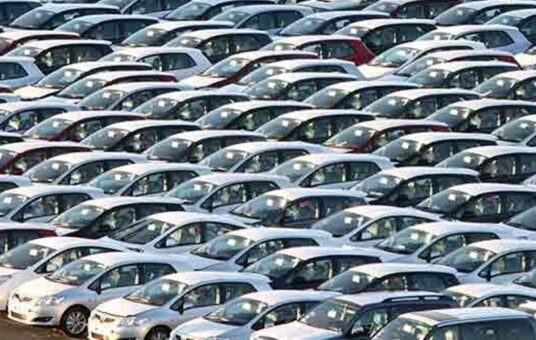
    KARACHI: Federation of Pakistan Chambers of Commerce and Industry (FPCCI) has proposed duty free import of used cars and their subsequent export after repair.

    The apex trade body in its proposals for budget 2020/2021 said that the UAE had developed Export Processing Zone (EPZ) for duty free import of used cars, their repair and subsequent export to different countries especially those of Africa.

    “On similar pattern a ‘Used vehicles EPZ’ be set up in Karachi, Port Qasim or Gwadar and import of both right hand and left-hand drive vehicles may be allowed under this EPZ for their export to different countries. Because of its more feasible sea route to Africa and land route to Central Asian markets, cheap labour, painters and mechanics, the proposed EPZ may turn out to more attractive than the ones in UAE.”

    The FPCCI also highlighted issue of import of stock lot and job lot goods. The apex trade body said that despite the fact that stock lot and job lot goods are available in the world at lower prices, but for the protection of local industry, their import is banned.

    Maintaining the ban for home consumption, permission may be granted for import of stock lot and job lot goods under Export Facilitation Schemes on 100 percent export basis.

    The FPCCI also said that import of used clothing and their exports after sorting, repair, washing and packing is allowed to exporters operating in EPZ.

    However, this facility is not allowed under DTRE scheme and is denied under other Export Facilitation schemes too. If the same is allowed, Pakistan can capture a bigger share because of its cheap labour.

    The FPCCI said that the global warehousing market is more than $ 1.0 trillion and is growing at a very fast pace. The Export Policy Order vide para 9(g) allows export of imported goods in same state – unprocessed form from bonded warehouse and the imported goods already cleared from home consumption.

    The FPCCI said that this is not in line with this global business practice. “Singapore, Malaysia, Sri-Lanka and a number of other countries allows such export, which helps in earning FE and generates employment,” it added.

    The issue is that re-export of imported goods in the same state is allowed but there is no procedure which allows refund of duty and taxes paid, neither such imports are covered under DTRE or any other export facilitation scheme (manufacturing bond, temporary imports, export oriented unit etc).

    No importer can import goods, ware house it and re-export after payment of import duty and taxes. He can re-export to mitigate his loss but cannot adopt it as a business to utilize cheap warehousing in Pakistan.

    It proposed the Ministry of Commerce and FBR to allow import for re-exportation under DTRE Rules subject to value addition of 5percent or 10 percent.

  • FBR suggested simplification of valuation for imported vehicles

    FBR suggested simplification of valuation for imported vehicles

    KARACHI: Federal Board of Revenue (FBR) has been advised to simplify valuation and levy of duty and taxes on imported vehicles.

    Officials in FBR said that in budget proposals received for 2020/2021, the business community proposed simplification of valuation and fixing duty and taxes.

    According to the proposals the valuation of vehicles may also be simplified and fixing duty / taxes as is already done for 1000 CC , 1300 CC and 1600 CC vehicles.

    The duty for vehicles above 2000 CC may also be fixed or manufacturer’s retail price for each year may be made a basis and give lump sum adjustment on account of various factors.

    This will simplify the assessment procedure.

    Further, the business community also recommended simplification of assessment and duty/taxes regime for imported goods.

    Currently entrepreneurs who want to set up new industries and importers wanted to know about the incidence of tax on various items have to contact either some customs expert or department.

    The department never gives proper reply in a given time period or sometimes does not respond at all.

    It is therefore proposed that the module of WeBOC relating to filing of GD and calculation of duty may be separately placed on the website of FBR so that any person can fill-in the description of item and HS code to get incidence of duty and taxes for imports.

    At present, the custom duty is calculated on the original value whereas sales tax is calculated on the duty paid value (value +customs duty), FED is calculated on (value +customs duty+ ST) and income tax / withholding tax is calculated again on original value.

    This makes the system very complicated. In case of sales tax the rate is already high i.e., 17 percent but it’s calculation on duty paid value further increases the rate beyond 17 percent. (If value is Rs 100 and custom duty is 15 percent the sales tax comes to Rs 21.25 instead of Rs 17).

    In this way a common man will be able to calculate duty and taxes on any item.

  • Car import registers 148 percent growth amid coronavirus pandemic

    Car import registers 148 percent growth amid coronavirus pandemic

    KARACHI: Import of motor vehicles in completely built-up unit (CBU) condition registered phenomenal growth of 148 percent in April 2020 despite restrictions to foreign trade owing to lockdown for preventing coronavirus pandemic.

    According to data released by Pakistan Bureau of Statistics (PBS) the import of motor vehicles in CBU condition increased to $10.77 million in April 2020 as compared with $4.34 million in the same month of last year.

    Sources said that due to coronavirus pandemic many overseas Pakistanis opted to return homeland and they brought household along with them.

    It is interesting to note than due to the pandemic most of the imported goods registered massive decline in the month of April 2020 due to restrictions imposed on the foreign trade.

    Whereas, the lockdown imposed in the country not a single locally manufactured car was sold during April 2020.

    The commercial import of motor car is not allowed in Pakistan. However, overseas Pakistanis are allowed to bring motor car under three different ways including personal baggage, transfer of residence and gift schemes.

    The import of CBU motor vehicles registered 64.58 percent decline to $75.57 million during first ten months (July – April) 2019/2020 as compared with $23.37 million in the corresponding period of the last fiscal year.

    The overall decline in import of motor vehicles can be attributed to measures taken by the government to discourage misuse of the facility which is only allowed to overseas Pakistanis.

    Last fiscal year the government brought changes to these schemes and customs clearance of imported cars under these schemes only through payment made out of foreign exchange, which should be verified by banking system.

    Recently, the ministry of commerce through a SRO issued on December 30, 2019 amended in payment system for clearance of imported cars under which local resource could be utilized in case of shortage of payment due to enhancement of exchange rate fluctuation or enhancement in duty rate etc.

    The import of motor vehicles in completely knocked down (CKD) condition registered 40 percent decline to $405.6 million during first ten months of current fiscal year as compared with $678.76 million in the corresponding period of the last fiscal year.

    Industry sources said that the decline in motor vehicles in CKD condition was due imposition of duty and taxes in the last budget, which resulted in hike in prices of locally manufactured cars.

    Besides, slowdown in economy in pre-Covid and later imposition of lockdown to prevent coronavirus spread also discourage the sales of locally manufactured motor cars.

  • Import of old, used cars plunges by 69 percent in nine months

    Import of old, used cars plunges by 69 percent in nine months

    KARACHI: The import of used and old cars witnessed sharp decline of 69 percent during first nine months (July-March) of current fiscal year due to imposition of condition regarding payment of duty and taxes through foreign exchange.

    The import of used and old cars in Completely Built Unit (CBU) condition declined by 69 percent to $64.8 million during July – March 2019/2020 as compared with $209.03 million in the corresponding period of the last year, according to data released by Pakistan Bureau of Statistics (PBS) on Friday.

    The commercial import of used or old cars is prohibited under prevailing laws of the country. However, in order to facilitate expatriate Pakistanis the government allows incentives to bring cars into the country.

    The Federal Board of Revenue (FBR) allowed Pakistani nationals residing abroad including dual nationals, can import old and used vehicles into Pakistan under these schemes, included: Personal Baggage; Gift Scheme; and Transfer of Residence.

    The cars not older than three years and other vehicles not older than five years can be imported under these schemes.

    In the past these schemes were misused and bulk of imported cars brought into the country.

    However, the ministry of commerce in February 2019 amended Import Policy Order, 2016 and made it mandatory for clearance of cars through foreign exchange, which should be certified by banks.

    Since then the clearance of the cars has come to a standstill. Customs authorities said that a large number of imported cars were at the port but importer had failed to make payment as per procedure prescribed by the ministry of commerce.

    However, in November 2019 a meeting of Economic Coordination Committee (ECC) decided to allow payment for duty and taxes for customs clearance of imported cars through local resources with condition that if foreign exchange becomes short due to currency fluctuations or change in duty and tax rates.

    The overall import of CBU vehicles during first nine months of current fiscal year fell 59 percent. The import of heavy vehicles including buses and trucks has declined by 39.32 percent. While import of CBU motorcycles fell by 74 percent.

    On the other hand the import of cars as Completely Knocked Down (CKD) condition also fell by 43 percent to $343.42 million during July – March 2019 as compared with $611.38 million in the same period of the last fiscal year.

    Massive depreciation in the local currency during past couple of years had increased the cost of local car manufacturers. Further, the rates of locally assembled cars for end consumers also jumped up sharply.

    These factors have reduced the productions of locally manufactured cars and subsequently reduced the import of cars in CKD condition.

    The overall import of vehicles in CKD fell by 42.16 percent to $545 million during first nine months of 2019/2020 as compared with $942 million in the corresponding period of the last fiscal year.

  • Vehicle imports fall 10-year low on regulatory restrictions: State Bank

    Vehicle imports fall 10-year low on regulatory restrictions: State Bank

    KARACHI: The State Bank of Pakistan (SBP) has said that the regulatory restrictions on vehicle imports under the gift and baggage schemes continued to dent Completely Built Unit (CBU) imports.

    (more…)