Tag: Monetary Policy

  • SBP increases policy rate by 150 basis points in line with IMF directives

    SBP increases policy rate by 150 basis points in line with IMF directives

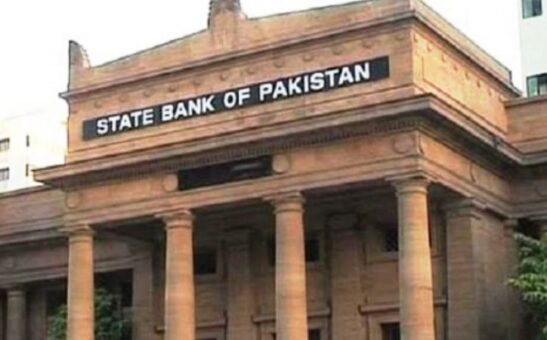
    KARACHI: State Bank of Pakistan (SBP) on Monday increased key policy rate by 150 basis points to 12.25 percent, which is inline with the direction of newly agreed loan program with the IMF.

    The SBP in a statement said that there have been three notable developments since the last Monetary Policy Committee (MPC) meeting in March 2019.

    First, the government of Pakistan has reached a staff-level agreement with the International Monetary Fund for 39-month long Extended Fund Facility of around US$ 6.0 billion.

    The program is designed to restore macroeconomic stability and support sustainable economic growth, and is expected to unlock considerable additional external financing.

    Second, trends in government borrowing reflect a widening fiscal deficit during the first nine months of FY19 when compared to the same period in FY18.

    In addition, a greater reliance on central bank financing of the deficit has acted to dilute the impact of previous monetary tightening. Finally, since the last MPC, the exchange rate has depreciated by 5.93 percent to PKR 149.65 per USD, at the close of 20th May 2019, reflecting a combination of underlying macroeconomic factors and market sentiment considerations.

    SBP’s estimates show that economic growth is expected to slow in FY19 but rise modestly in FY20.

    This slowdown is mostly due to lower growth in agriculture and industry. More than two-thirds of real GDP growth in FY19 is expected to come from services.

    Going forward, some gradual recovery in economic activity is expected on the back of improved market sentiment in the context of the IMF supported program, a rebound in the agriculture sector and government incentives for export-oriented industries.

    The current account deficit narrowed to US$ 9.6 billion in Jul-Mar FY19 as compared to a deficit of US$ 13.6 billion during the same period last year, a fall of 29 percent.

    The reduction is mainly driven by import compression and a healthy growth in workers’ remittances. This impact was partially offset by higher international oil prices.

    The non-oil trade deficit declined from US$ 13.7 billion in Jul-Mar FY18 to US$ 11.0 billion in Jul-Mar FY19 reflecting the impact of stabilization policies implemented so far.

    Recent indicators suggest export volumes have begun to grow although total export receipts have not grown due unfavorable prices.

    Despite the improvement in the current account and a noticeable increase in official bilateral inflows, the financing of the current account deficit remained challenging.

    Consequently, reserves declined to US$ 8.8 billion as of 10th May 2019 from US$ 10.5 billion at end-March 2019. The exchange rate also came under pressure in the last few days.

    In SBP’s view, the recent movement in the exchange rate reflects the continuing resolution of accumulated imbalances of the past and some role of supply and demand factors.

    SBP will continue to closely monitor the situation and stands ready to take measures, as needed, to address any unwarranted volatility in the foreign exchange market.

    Furthermore, the current level of reserves is below standard adequacy levels (equal to three months of imports cover). As noted in previous MPC statements, deep structural reforms are required to improve productivity and competitiveness of export-oriented sectors and improve the trade balance.

    The overall fiscal deficit is likely to be considerably higher during Jul-Mar FY19 as compared to the same period last year due to a shortfall in revenue collection, higher than budgeted interest payments and security related expenditures. From a monetary policy perspective, a growing portion of the fiscal deficit has been financed through borrowings from SBP.

    In absolute terms, the government borrowed Rs 4.8 trillion from SBP during 1st Jul-10th May FY19, which is 2.4 times the borrowing during the same period last year.

    A major portion of this borrowing from the SBP (Rs 3.7 trillion) reflects a shift away from commercial banks which were reluctant to lend to the government at prevailing rates.

    The resulting increase in monetization of the deficit has added to inflationary pressures.

    Despite the recent tightening of monetary policy, private sector credit rose 9.4 percent during 1st Jul-10th May, FY19.

    Much of the increase in credit was for working capital needs due to higher input prices. The expansionary impact of higher government borrowing and private sector credit on broad money supply (M2) was partly offset by a contraction in net foreign assets of the banking sector.

    In aggregate, broad money supply grew by 4.7 percent during 1st Jul – 10th May, FY19.

    The consumer price index (CPI) rose 9.4 percent in March 2019 and 8.8 percent in April 2019, on a y-o-y basis. Average headline CPI inflation reached 7.0 percent in Jul-Apr FY19 compared to 3.8 percent in the same period last year.

    Moreover, the annualized headline month-on-month inflation has risen considerably in the last three months due to the recent hike in domestic fuel prices and rising food prices and input costs.

    As such, inflationary pressures are likely to continue for some time. The most recent IBA-SBP consumer confidence survey also shows that most households expect higher inflation during the next six months.

    Taking into account the recent developments discussed above and outlook for key sectors, average headline CPI inflation is expected to be in the range of 6.5-7.5 percent in FY19 and it is anticipated to be considerably higher in FY20.

    This inflation outlook is subject to a number of upside risks from an expected rationalization of taxes in the upcoming budget, potential adjustments in electricity and gas tariffs, and volatility in international oil prices. The inflation outlook suggests a fall in real interest rates on a forward-looking basis.

    Taking into account the above considerations and the evolving macroeconomic situation, the MPC noted that further policy measures are required to address underlying inflationary pressures from (i) higher recent month-on-month headline and core inflation outturns; (ii) recent exchange rate depreciation; (iii) an elevated fiscal deficit and its increased monetization, and (iv) potential adjustments in utility tariffs.

    In this context, the MPC decided to increase the policy rate by 150 bps to 12.25 percent effective from 21st May 2019.
  • SBP may continue with monetary policy tightening; 100 basis points increase likely

    SBP may continue with monetary policy tightening; 100 basis points increase likely

    KARACHI: The State Bank of Pakistan (SBP) likely to increase key policy rate by 100 basis points in the next monetary policy announcement scheduled for May 20, 2019, analysts said.

    Analysts at Arif Habib Limited forecast another rate hike of 100bps in policy rate from 10.75 percent to 11.75 percent in the upcoming monetary policy.

    The aggressive monetary tightening is expected to continue by the central bank as it is going to be the seventh consecutive rate hike, they said.

    The monetary tightening is expected on the back of

    i) rising inflationary pressure due to rise in prices of petroleum products and essential food items coupled with continuous slide of PKR leading to surge in prices of imported and local products (sold on import parity),

    ii) mounting Fiscal Deficit despite sharp cut in PSDP and rationalization of tariffs and duties, and

    iii) narrowing real interest rate as it declined to 1.66% in May’19 compared to last four year average of 2.75%.

    The analysts believed the SBP is adopting a proactive stance to increase policy rate on account of higher inflation in upcoming months alongside attempting to curtail the current account deficit.

    Since October 2011, the analysts observed that during International Monetary Fund (IMF) period real interest rate (RIR) has always remained on the higher side at an average of 3.1 percent compared to an average of 2.2 percent in non-IMF period.

    “This depicts that the IMF expects an increase in discount rate for sustainability despite lesser CPI during the period,” they added.

    Furthermore, it seems like the money market has already incorporated the rate hike which is essential to fulfill the gap of 61bps between 12-M T-Bills (11.86 percent) and Discount Rate (11.25 percent).

    The analysts conducted a short survey with institutional investors regarding their view on 1) interest rate in the upcoming Monetary Policy Statement (MPS) and 2) outlook on interest rates going forward.

    Majority of the respondents (53 percent) are of the view that the interest rates are likely to see a 100 bps spike in the upcoming MPS.

    Only 12 percent of the respondents opined that the rates may see a 150 bps surge.

    With regards to whether interest rates have peaked, 71 percent of the respondents are of the view that the rate hike era is yet to halt and will see further hikes going forward.

    It is asked the poll respondents about their 1-Yr forward view on the interest rate cycle. About 48 percent of the respondents are of the view that interest rates will see a surge of 50-100 bps in the next one year.

    Around 29 percent of the respondents do not see any further rate hike following the upcoming MPS.

    The analysts believed that May 2019 inflation to settle at 9.59 percent YoY compared to 4.19 percent in May 2018 and 8.82 percent in April 2019, respectively.

    They said inflation to continue its upward trajectory in upcoming months amid low base effect of last year, sharp increase in prices of perishable goods (fresh vegetables and fresh fruits), lagged impact of adverse exchange rate movements and gradually increasing international oil prices which may result in higher prices of local petroleum products (MoGas and HSD). This may keep inflation in the range of 9.0-9.5 percent for the next four months.

  • SBP to announce monetary policy on May 20

    SBP to announce monetary policy on May 20

    KARACHI: State Bank of Pakistan (SBP) will announced monetary policy for next two months on Monday, May 20, 2019.

    A statement issued by the SBP on Thursday said that it would announce Monetary Policy on Monday, May 20, 2019.

    In the last monetary policy announcement on March 29, 2019, the central bank increased the policy rate by 50 basis points to 10.75 percent effective from April 01, 2019.

  • SBP increases policy rate by 50bps to 10.75 percent

    SBP increases policy rate by 50bps to 10.75 percent

    KARACHI: State Bank of Pakistan (SBP) on Friday increased key policy rate by 50 basis points to 10.75 percent for next two months effective from April 01, 2019.

    (more…)
  • SBP to announce monetary policy on March 29; experts expect 75bps increase

    SBP to announce monetary policy on March 29; experts expect 75bps increase

    KARACHI: State Bank of Pakistan (SBP) will announce Monetary Policy for the next two months on Friday, March 29, 2019, a statement said on Wednesday.

    In the last monetary policy announcement, the central bank increased the policy rate by 25 basis points to 10.25 percent effective from February 01, 2019.

    The monetary policy committee (MPC) decided to increase the rate on the basis of: (i) the fiscal deficit is yet to show signs of consolidation despite a reduction in PSDP spending; (ii) although a gradual improvement in current account deficit is visible, it remains high; (iii) a marked shift in the pattern of government borrowing from scheduled banks to SBP entails inflationary concerns; and (iv) even as stabilization measures gradually work through the economy, underlying inflationary pressures persist.

    Analysts at Arif Habib Limited said that the SBP to increase policy rate by 75 basis points to 11.00 percent (Discount rate 11.50 percent) in the upcoming monetary policy statement.

    This might be the last rate hike before Pakistan enters the International Monetary Fund (IMF) program whereas inflation will remain moderate after making its peak in the ongoing month.

    The monetary tightening is expected on the back of i) rising inflationary pressure due to recovery in prices of petroleum products and essential food items, ii) mounting Fiscal deficit despite sharp cut in PSDP and rationalization of tariffs and duties, and iii) narrowing real interest rate as it declined to 1.6 percent compared to last four year average of 2.85 percent.

  • Tighter monetary policy chokes investment in Pakistan

    Tighter monetary policy chokes investment in Pakistan

    KARACHI: Federation of Pakistan Chambers of Commerce and Industry (FPCCI) on Saturday said that the tighter monetary policy stance by the central bank has strangulated the investment in the country.

    In a statement Eng. Daroo Khan Achakzai, President, FPCCI showed his serious concern over the hiking of policy rate by another 25 basis points in last two months in view of prevailing inflation, devaluation of currency and twin deficit in Pakistan.

    He said: “SBP continues to operate a tight monetary policy and increased policy rate by 4.50 percent in last one year despite the clear evidences that this policy strangulates investment in Pakistan and hampered the economic activities.”

    The statistics clearly showing that investment to GDP in Pakistan is very lower i.e. 16.4 percent of GDP compared to 22.5 percent in 2007 while in India the investment to GDP ratio is 30 percent and in Bangladesh it is 31 percent.

    He termed the contraction in monetary policy as an anti-investment policy which has declined the economic activities in the first six month of the current fiscal year due to declining of large scale manufacturing growth particularly textile industry, food-beverages, petroleum, iron, pharmaceutical, electronics and wood products etc.

    He indicated that the 10.5 percent policy rate is very high compared to regional economies like India 6.5 percent, China 4.35 percent, Sri Lanka 9.0 percent, Thailand 1.75 percent, Indonesia 6.5 percent, Malaysia 3.25 percent etc.

    He said that the present inflation rate is 6.0 percent which is high compared to last year same period 3.8 percent; but this inflation is cost push inflation which cannot be controlled through demand management policies.

    The major cause of rising inflation in the country is high cost of doing business particularly utility prices, increase in the prices of industrial inputs and shortage of essential items of daily necessity.

    The government should focus to increase the demand for credit by declining interest rates and make easy access to finance.

    “Globally, the aim of monetary policy is to protect the value of the currency in co-ordination with the fiscal policy in order to achieve the objectives of macro-economic stability with constraining inflation and expansion of private sector investment,” he added.

    The President FPCCI further stated that the government should create its own fiscal space for financing its expenditures instead of borrowing from SBP and other institutions.

    During the first half year, there was an expansion in private sector credit, but is largely attributed to high cost of raw materials (cotton, petroleum products, etc), continuation of capacity expansion in power and construction-allied industries.

    This private sector credit should be expanded to other industries which are showing declining growth trend, he suggested.

    Related Stories

    FPCCI to move review petition in demolition of illegal constructions

    FPCCI welcomes decision for making Torkham Border operational

  • SBP raises key policy rate by 25bps to 10.25pc on inflationary concerns

    SBP raises key policy rate by 25bps to 10.25pc on inflationary concerns

    KARACHI: State Bank of Pakistan (SBP) on Thursday decided to further increase key policy rate by 25 basis points to 10.25 percent for next two months effective from February 01, 2019 on concerns over increase in inflation.

    (more…)