
Tag: money laundering

This tag provides stories related to money laundering. PkrRevenue is committed to provide all updates related to money laundering.

  • FBR sets up directorate to initiate legal action in suspicious transactions, stop currency smuggling

    FBR sets up directorate to initiate legal action in suspicious transactions, stop currency smuggling

    ISLAMABAD: Federal Board of Revenue (FBR) has established Directorate of Cross Border Currency Movement (CBCM) to stop individual and trade based money laundering and initiate legal action in suspicious transactions.

    The directorate shall be function under administrative control of the Directorate General of Intelligence and Investigation, Customs, a notification said on Thursday.

    According to its scope and objectives, a database of currency seizures would be maintained and updated at the directorate. Further each Model Customs Collectorate (MCC) and regional directorate of I&I shall report information about currency seizures made within their jurisdiction on fortnightly basis to the directorate.

    The FBR said that the directorate would share the data of currency seizures with the FBR and Financial Monitoring Unit (FMU) on monthly basis or as when required.

    The FBR said that the directorate shall maintain and update database containing information of Suspicious Transaction Reports (STRs) received from the FMU. “The aforesaid data shall be shared with FBR and FMU on monthly basis or as when required,” it said.

    The directorate will require to disseminate the STRs to the concerned regional directorate of I&I for inquiry and investigation. “Each regional directorate shall maintain record of STRs received and appoint officers to carry out investigation in light of the approved plan. “Progress on the investigation conducted in each case shall be communicated to the directorate for onward submission to the FMU,” it added.

    The directorate will also responsible to devise a mechanism for information sharing with other law enforcement agencies (LEAs) on real time as well as on routine basis. The directorate shall also cooperate with LEAs in areas of mutual interest.

    The directorate has been authorized to institute cases of money laundering. “Nominated or appointed investigation officers shall instituted money laundering cases emanating from STRs or currency seizures or from other sources, by filing complaints/applications in the respective competent courts through public prosecutors appointed under AML Act, 2010.”

    The FBR said that investigation and prosecution of the cases would be conducted in accordance with the procedure laid down in AML Act, 2010 Customs Act, 1969 and Cr.P.C 1898.

    While investigating money laundering cases in general and currency cases in particular, investigating officer shall focus on the following aspects:

    a. The personal and / or family association with any religious / political/ social organization or groups, travel history, past criminal record, professional history, etc. of the accused / arrested persons shall be investigated. The motive/linkages of each currency smuggling case with any of the associated offence such as trade- based money laundering, capital flight, Hundi/Hawala, etc. shall also be covered in such investigation.

    b. Whether there is any linkage of terror financing related to trans-national terrorist networks or UN designated entities and individuals detected in the cases the officers will be required to report to the directorate.

    c. Whether there are possibilities of involvement of any foreign networks other than trans-national terrorist networks, the officers should approach Chief International Customs – FBR for seeking information about the foreign linkages of the investigation.

    d. the investigation officers are also required to find source of funding for cash smuggling and the end user of the smuggling proceeds.

  • Rupee gains 20 paisas in open market on monitoring to prevent money laundering

    Rupee gains 20 paisas in open market on monitoring to prevent money laundering

    KARACHI: The Pak Rupee gained 20 paisas against dollar on Saturday amid improved inflows in the open market and tight monitoring of law enforcement agency to prevent money laundering.

    The buying and selling of dollar was recorded at Rs141.30/Rs141.80 as compared with previous day’s closing of Rs141.50/Rs142.00 in cash ready market.

    Currency dealers said that the steps taken by the government to curb money laundering through money exchanges had resulted in availability of greenback for general public.

    The dealers said that during past few months the regulators and law enforcement agencies had taken various measures to stop money laundering and Hawala and Hundi.

  • Banks may verifying goods for manual import payment

    Banks may verifying goods for manual import payment

    KARACHI: Banks shall be required to verify valuation of goods before approving electronic or manual import payment in order to prevent incidents of money laundering and terror financing.

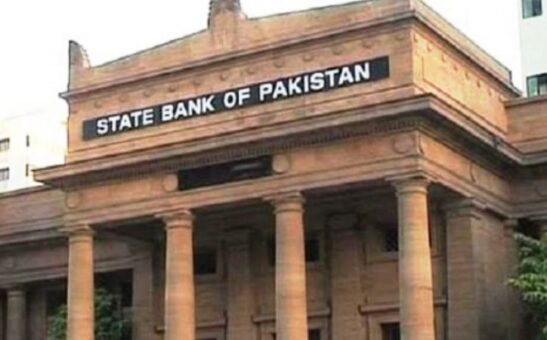
    According to draft “Framework for Managing Risks of Trade Based Money Laundering, Terrorist Financing and Proliferation Financing” issued by State Bank of Pakistan (SBP) banks shall make a reasonable effort to verify the prices of underlying contracts as declared on EIF/MIF, EFE/MFE from reliable sources i.e. local business circles, daily newspaper, Internet, historic appraisements, Customs valuation rulings etc. and shall satisfy themselves that the prices declared by their client represent the fair market value of goods before approving an EIF/MIF, EFE/MFE.

    In the draft framework, the SBP said that transferring value through legitimate trade transactions has become increasingly attractive avenue for money launderers, terrorist financiers and proliferation financiers, as they are able to easily obscure their transactions in significant volumes of international trade and escape detection.

    “The main methods by which such people transfer value through legitimate trade transactions are under invoicing, over invoicing, short/over shipment, obfuscation of type of goods/services etc.” it said.

    As the international trade is becoming highly vulnerable to ML/TF/PF risks, effective regulatory framework is required to mitigate the misuse of trade transactions.

    The SBP said that the document contains instructions that shall help banks in effectively managing ML/TF/PF risks.

    However, it may not be construed as exhaustive list of measures for curbing TBML.

    Further, the compliance of the provisions of this framework does not absolve ADs from their legal and regulatory obligations under prevailing AML/CFT/CPF laws/rules and regulations or any other relevant law for the time being in force.

    The prime objective of this framework is to strengthen the trade related AML/CFT/CPF regime and conserve foreign exchange.

    This framework applies to all banks authorized by SBP to deal in foreign exchange.

    Bank’s AML/CFT/CPF Policies

    i. ADs shall emphasize on the overall trade related risks in their AML/CFT/CPF and relevant trade business guidelines, policies and procedures.

    Such policies and procedures should, inter alia, specify:

    a) Screening procedure of customers for trade transactions

    b) Procedure for identification and monitoring of trade transactions with related party.

    c) Procedure for complete risk profiling of customers involved in or intending to be involved in trade.

    d) Procedure for verification of prices of underlying contracts related to import/export of services.

    e) Procedure for handling descriptions, which are unclear, coded or worded in a language other than English.

    f) Screening procedure of goods being traded as per relevant Trade Policy

    g) Procedure for Identification of dual use of goods such as:

    Price related Due Diligence

    i. Banks shall define clear policies and procedures for price verification, including defining the level of acceptable price variance, escalation procedures and suspicious transaction reporting mechanism when significant differences in prices are identified.

    ii. Banks shall make a reasonable effort to verify the prices of underlying contracts as declared on EIF/MIF, EFE/MFE from reliable sources i.e. local business circles, daily newspaper, Internet, historic appraisements, Customs valuation rulings etc. and shall satisfy themselves that the prices declared by their client represent the fair market value of goods before approving an EIF/MIF, EFE/MFE.

    iii. In case of advance payment export, Banks shall satisfy themselves, before disbursing the amount to the exporter, that price declared on Advance Payment Voucher represents the fair market value of goods or services. In this respect, banks shall require the exporter to submit a copy of underlying sale contract alongwith revised Appendix V-14.

    iv. The procedure of price verification shall be documented by banks for later review /audit/inspection.

    v. In order to enhance the effectiveness, this function shall be performed by the department other than the front office/centralized trade-processing unit where transaction is taking place.

    vi. The significant variance between prices declared on EIF/MIF, EFE/MFE, Advance Payment Voucher and fair market value of goods declared therein shall serve as one of the prime red flag indicators and all such transactions shall be escalated to the higher management which shall review the same and consider the option of filing STR with FMU etc. This procedure shall be documented by banks for later review /audit/inspection.

    vii. Further, banks shall develop the detailed scenarios of other trade related red flag indicators. A non-exhaustive list of common red flag indicators is also provided for guidance.

  • PSX asks brokers to file suspicious transaction report to FMU

    PSX asks brokers to file suspicious transaction report to FMU

    KARACHI – The Pakistan Stock Exchange (PSX) has issued a significant directive, compelling stock brokers to file Suspicious Transaction Reports (STR) with the Financial Monitoring Unit (FMU) as part of efforts to combat money laundering and financing terrorism.

    (more…)