Tag: SBP

  • SBP revises instructions for financing wheat procurement

    SBP revises instructions for financing wheat procurement

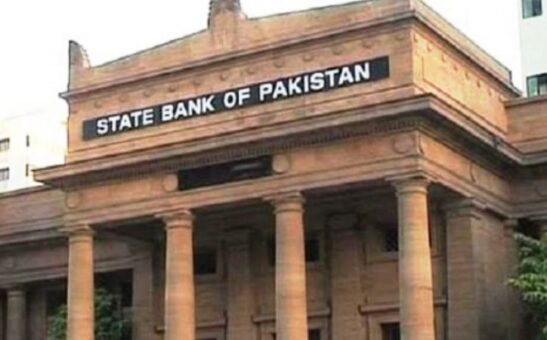
    KARACHI: The State Bank of Pakistan (SBP) has issued notification to revise instructions regarding bank financing for wheat procurement by the private sector.

    The SBP issued circular No. 02 of 2021 for amending the instructions issued on March 19, 2021 for financing wheat procurement by the private sector.

    Following amendments have been notified by the SBP:

    I. For private sector participation in the wheat procurement season 2021, banks are required to strictly fulfill the following minimum conditions for extending financing to eligible borrowers (licensed and functional flour mills duly evidenced by some documentation or licensed wheat traders registered with concerned authority/department);

    a. Fresh financing for procurement of wheat shall start from commencement of wheat procurement season 2021 in respective provinces. Banks will provide financing to eligible borrowers for the procurement of indigenous wheat for the harvest season of 2021 (April 01-June 30, 2021). The financing facility would be extended to the eligible borrowers for procurement of indigenous and imported wheat from July 01, 2021 subject to other conditions mentioned in this circular.

    b. Banks may provide financing facility to functional flour mills for purchase of indigenous wheat from their authorized representative and respective Food Department against supply of wheat by them. Quantum of such loan shall not be more than the value of wheat to be supplied by the respective Food Department or actual purchase from wheat traders, commensurate to the milling capacity of each mill. Banks will also monitor that existing stock of wheat purchased by the concerned functional flour mill, has been grinded and that the by-products of wheat (financed against bank loan) have also been released to the market gradually to repay the loans so obtained.

    c. Banks will ensure that the subject financing will be used only for intended purposes. However, there is no restriction on banks for extending financing to flour mills for purpose other than procurement of wheat. Banks may provide financing to flour mills for general requirements like overhead expenses, however, banks will ensure that such financing is not used for procurement of wheat or to acquire wheat stocks/by-products of wheat.

    d. Financing to private sector for procurement of wheat shall be provided against pledge of fresh wheat stock only and hypothecation / charge of moveable or immovable property would not be acceptable as collateral for such financing. Moreover, banks will ensure that no revaluation of the pledged stock is considered for release of any differential financing amount to the borrowers against stock of wheat already pledged with the banks.

    e. Banks are also allowed to provide financing facilities for wheat procurement by the seed processing plants duly evidenced by the testing certificates issued by the Federal Seed Certification and Registration Department, in line with their lending policies and the capacity/production plans of the seed processing plants ensuring that such stock of wheat will be used for processing purposes.

    f. These loans will be fully settled on or before 31st March 2022, positively.

    g. In order to curb the possibility of hoarding, banks shall:

    i. require client(s) to disclose their storage location and verify the same.

    ii. strictly monitor the wheat stock held by the client vide periodical and random inspections of wheat pledged with the bank as well as the gradual release of wheat stock to generate cash for the purpose of repayment of bank loan. SBP may acquire stock reports from banks to verify their authenticity/genuineness as and when desired.

    iii. be under obligation to immediately recall the advances allowed to the private sector in case of hoarding of wheat.

    iv. ensure that no financing is allowed to client for retirement of loans availed from other banks.

    v. ensure that their clients are in strict compliance with the guidelines of respective government (Federal/Provincial) for release of wheat stock and are not involved in any other activity which may cause speculation of wheat/flour price in market.

    h. The lending shall be in compliance with applicable laws, Prudential Regulations and other instructions of SBP issued from time to time.

    II. Banks will submit a monthly statement in respect of financing to private sector for wheat procurement to this department as per attached format (Annexure-A) within ten working days from the close of the relevant month.

    III. Any violation of the above instructions will attract administrative and/or penal action under the provisions of BCO, 1962 and other relevant laws.

  • Pakistan’s foreign exchange reserves increase by $401 million to $20.836 billion

    Pakistan’s foreign exchange reserves increase by $401 million to $20.836 billion

    KARACHI – In a significant development, Pakistan’s liquid foreign exchange reserves witnessed a robust increase of $401 million, reaching $20.836 billion by the week ending March 26, 2021, according to the State Bank of Pakistan (SBP).

    (more…)
  • Call centers: SBP issues instructions to banks for customers’ protection

    Call centers: SBP issues instructions to banks for customers’ protection

    KARACHI: The State Bank of Pakistan (SBP) on Thursday issued instruction to banks for protection of customers’ identity while making communication through call centers.

    The SBP said that to ensure confidentiality of consumers’ data, banks will put in place adequate controls at their call centers including continuous CCTV vigilance, physical entry and exit checks, restriction on portable devices like cell phones, controlled accessibility to printers and emails.

    Banks will allow their call center staff access to customers’ data on a ‘Need-to-Know’ basis only i.e. restricted only to the customers contacting the call center.

    Proper logs of access to customer’s information will be maintained and monitored to detect unauthorized access.  Moreover, banks will ensure masking of the Credit or Debit card numbers so that the call agents could only view the last four digits of the cards.

    SBP has also instructed banks to deploy sufficient call center resources to ensure a satisfactory customer experience. For this, the banks will have adequate IT controls and contingency and disaster recovery set-ups for their call centers.

    All inbound and outbound calls at the call centers will be recorded and the record will be retained at least for one year.  Banks will also ensure that their call centers are adequately staffed with proper trainings, particularly on digital fraud management, relevant policies and initiatives of banks and query and complaint handling.

    To improve call center management, banks will have proper policy and oversight mechanisms in place and performance will be regularly monitored. The banks will put in place key performance indicators for reviewing performance of call centers with appropriate benchmarks as per international best practices. Banks will also have a comprehensive policy and Standard Operating Procedures (SOPs) on call center management duly approved by their Board of Directors and CEO.

    The SBP said that call centers are rapidly becoming customers’ top choice to communicate with their Banks. Over time, the use of call centers by customers to seek information, guidance and redressal of complaints from their banks has increased significantly.

    On the other hand, the technological advancements are helping the banks to provide self-banking solutions through call centers. The growing importance of call centers in bank-customer relationship makes it imperative for the banks to efficiently manage their call centers for enhanced customer experience. Recently, SBP conducted a thematic review of the call center management at banks.  In the light of findings of the review, it has issued today regulatory instructions to banks on call center management.

    To bring ease in lodging complaints, all the banks are encouraged to deploy toll-free numbers for their call centers besides making sure that call center numbers are displayed prominently on banks’ premises and websites.

    Banks are also required to take measures to reduce the call wait time i.e. the time before connecting to an agent, as much as possible to avoid inconvenience to the customers.

    Further, banks will also ensure that call agents do not refuse to lodge complaint and a proper complaint number is provided to all the complainants.

  • Pakistan receives $498.7 million IMF tranche

    Pakistan receives $498.7 million IMF tranche

    KARACHI: Pakistan has successfully received a tranche of $498.7 million under the Extended Fund Facility (EFF) from the International Monetary Fund (IMF), as confirmed by the State Bank of Pakistan (SBP) on Tuesday.

    (more…)
  • Banks directed to extend hours for duty, tax collection

    Banks directed to extend hours for duty, tax collection

    KARACHI: State Bank of Pakistan (SBP) on Tuesday directed banks to observe extended banking hours to facilitate collection of duty and taxes.

    The SBP said that to facilitate the collection of government receipts/ duties / taxes, it has been decided that the field officers of SBP Banking Services Corporation (SBP-BSC) and authorized branches of National Bank of Pakistan (NBP) will observe extended banking hours till 6:00 PM on March 31, 2021 (Wednesday). For which purpose a special clearing has been arranged at 5:00 P.M. on the same day by the NIFT. 

    All banks are, therefore, advised to keep their concerned branches open on March 31, 2021 (Wednesday) till such time that is necessary to facilitate the special clearing for Government transactions by the NIFT.

  • SBP issues guidelines for processing sugar import at concessionary tax rates

    SBP issues guidelines for processing sugar import at concessionary tax rates

    KARACHI: State Bank of Pakistan (SBP) on Monday issued guidelines for banks to process application for import of raw sugar at concessionary tax rates.

    The SBP said that the government had allowed 300,000 metric tons of raw sugar to be imported by sugar millers at reduced withholding tax rate.

    The central bank further said that the ministry of commerce had issued a public notice in this regard.

    To comply with the public notice, the banks should process the requests of the sugar mills for import of raw sugar under the aforementioned Public Notice subject to the following:

    Import may be allowed to Sugar mills who have been issued quota by the Ministry of Commerce under the above-mentioned Public Notice;

    Import on CFR Free out basis may be allowed as an exception to the instructions given under Para 5 Chapter 13 of the FE Manual;

    Advance payment up to 100% of the value of the contract/proforma invoice may be allowed, subject to compliance with other applicable foreign exchange regulations given under Chapter 13 of the FE Manual;

    The SBP said that banks shall submit consolidated data of LCs issued and advance payments made, against issued quotas, to Foreign Exchange Operations Department, SBP BSC, Head Office, Karachi on daily basis.
    The SBP further directed that banks shall ensure compliance with all other terms & conditions of the Public Notice issued by Ministry of Commerce and bring the above instructions to the knowledge of all their constituents for meticulous compliance.

  • SBP signs pact for digitizing government payments

    SBP signs pact for digitizing government payments

    KARACHI: State Bank of Pakistan (SBP) on Monday signed an agreement with Controller General of Accounts Pakistan (CGAP) for digitizing payments of the federal government.

    A SBP statements said that through the Memorandum of Understanding (MoU) the federal government payment would be digitized through RAAST

    – Pakistan’s First Instant Payment System, launched in January 2021 by SBP.

    Raast is a flagship initiative of SBP, which provides simple, fast, low-cost, interoperable and secure electronic payment platform for instant processing of high volume retail payments. Raast also has the ability to make payments to multiple beneficiaries at a time in order to cater high volume government payments like salaries, pension and social security payments.

    In the pilot phase, the salaries and pensions of a group of Federal Government employees will be paid through Raast. The payroll and pension-roll data will be shared from CGA system to SBP’s Raast through a highly secured interface, and payments to the beneficiaries’ accounts will be made instantly after validating the beneficiaries’ detail.

    To ensure that payments are only credited in the intended beneficiary’s account, Raast verifies the beneficiaries’ details with their banks on real time basis before crediting the payment in beneficiary’s account.

    After the pilot run, the facility will be rolled out to cover all the salaries, pension as well as supplier payments of the federal and provincial governments. SBP is also working to use the powerful capacities of Raast to include payments of social security nets such as the Ehsas Program, BISP and other government entities.

  • Immunity to SBP officials proposed in legal proceedings

    Immunity to SBP officials proposed in legal proceedings

    ISLAMABAD: The officials of State Bank of Pakistan (SBP) to be given immunity against any legal suit and prosecution for any act of commission or omission done in exercise of any powers.

    According to proposed amendments to the State Bank of Pakistan Act, 1956 issued by the finance ministry on Thursday, “No suit, prosecution or any other legal proceeding including for damages shall lie against the SBP, board of directors of member thereof, governor, deputy governors, member of any board committee and monetary policy committee, officers and employees of the central bank for any act of commission or omission done in exercise or performance of any functions, power or duty conferred or imposed by or under this Act upon such persons or any rules and regulations made thereunder or any legislation administered by the SBP unless such act is done in bad faith and with mala fide intent.”

    It is further proposed the governor, deputy governors, directors, members of any board committee and monetary policy committee, officers and employees of the bank shall not be liable in their personal capacity for any act of commission or omission done in their official capacity in good faith and in case of any such proceedings as mentioned in sub-section (1), they shall be indemnified by the bank which shall bear all the expenses thereof, till final decision of the case.

    Another immunity proposed to SBP officials, which stated: :”No action, inquiry, investigation or proceedings shall be taken by National Accountability Bureau (NAB), Federal Investigation Agency (FIA) or provincial investigation agency, bureau, authority or institution by whatever name called without prior consent of the board of directors of the SBP.”

    Whereas, the present law says: “Every (person in service) of the bank shall be deemed to be a public servant within the meaning of Section of the Pakistan Penal Code.”

    The proposed amendments also suggested increasing the tenure of SBP governor to five years from existing three years.

  • SBP issues revised mark-up subsidy for low cost house financing

    SBP issues revised mark-up subsidy for low cost house financing

    KARACHI: State Bank of Pakistan (SBP) on Thursday issued revised mark up subsidy allowed by the government for low cost housing scheme.

    The SBP issued instructions to the banks for implementation of the revised mark up subsidy approved by the government.

    In view of the feedback received from various stakeholders, Government of Pakistan (GoP) has decided to revise features of the G-MSS to align it with market dynamics. These revisions aim at significantly enhancing outreach of Scheme to the individuals and households who currently do not own a house.

    The key features of the revised G-MSS approved by the GoP are given below:


    Particulars
    Mark up Subsidy Program


    Eligibility Criteria
    All men/women holding CNIC First time home owner One individual can have subsidized house loan facility under this scheme only once


    Tiers of the Scheme
    Financing under Tier 0 is available through microfinance banks for financing of housing units under non-NAPHDA projects. Financing under Tier 1 is available through banks for financing under NAPHDA projects Financing under Tier 2 and Tier 3 is available through banks for financing of housing units under non-NAPHDA projects

    Size of Housing Unit

    Size of the loan is segregated into four tiers, as under: Tier 0 (T0) – (a) House upto 125 sq yds (5 Marla) and (b) flat/apartment with maximum covered area of 1,250 sq ft. Tier 1 (T1) – (a) House upto 125 sq yds (5 Marla) with maximum covered area of 850 sq ft and (b) Flat/apartment with maximum covered area of 850 sq ft. Tier 2 (T2) – (a) House upto 125 sq yds (5 Marla) and (b) flat/apartment with maximum covered area of 1,250 sq ft. Tier 3 (T3) – (a) House upto 250 sq yds (10 Marla) and (b) flat/apartment with maximum covered area of 2,000 sq ft.

    Age of housing units


    Newly constructed housing units during last one year from the date of application. However, this    requirement will not be applicable till March 31, 2023 under Tier 0, Tier 2 and Tier 3.


    Maximum Price of Housing Units

    Maximum Price (Market Value) of a single housing unit at the time of approval of financing, as under:
    Tier 1 (T1) – Rs 3.5 million
    Tier 0 (T0), Tier 2 (T2) and Tier 3 (T3) – No cap


    Maximum Loan size

    Maximum size of the loan of a single housing unit, as under:
    Tier 0 (T0) – Rs 2.0 million
    Tier 1 (T1) – Rs 2.7 million
    Tier 2 (T2) – Rs 6.0 million
    Tier 3 (T3) – Rs 10.0 million


    Loan type


    Long term housing finance loans


    Loan Tenor


    Minimum 5 years and maximum 20 years loan tenor, depending upon choice of customers.


    Security Requirements


    As per banks’credit policy and prudential regulations for housing finance, the housing unit financed will be    mortgaged in favor of financing bank.

    Allocation in Budget

    Finance Division shall give authority to SBP to debit GOP account on quarterly basis for the subsidy    payment to banks.

    Payment will be made to the banks on submission of quarterly-consolidated subsidy statement as per    format prescribed by State Bank.


    Pricing

    Pricing for Housing Loans: Loan Tiers Customer Pricing Bank Pricing Tier 0 5% for first 5 years &
    7% for next 5 years KIBOR+700 BPS Tier 1 3% for first 5 years &
    5% for next 5 years KIBOR+250 BPS Tier 2 5% for first 5 years &
    7% for next 5 years KIBOR+400 BPS
    (Spread may vary) Tier 3 7% for first 5 years &
    9% for next 5 years For loan tenors exceeding 10 years, market rate i.e. bank pricing will be applicable for the period exceeding 10 years.

    Executing Agency

    All commercial banks including Islamic banks, microfinance banks and House Building Finance Company    Limited (HBFCL)


    Application Form

    A standardized Application Form both in English and Urdu will require minimum essential information with    simple format.

    The processing time will not exceed 30 days after submission of all documents by the borrower and the    same will be clearly stated in the application form.


    Standardized Procedures
    Banks to have standardized loan documents and risk acceptance criteria

    Monitoring

    SBP will publish consolidated information about the loans extended under this program for information of    the public on quarterly basis on its website.


    Geographical distribution
    Whole of Pakistan

    The revised features are applicable with immediate effect. Accordingly, IH&SMEFD Circular No. 11 of 2020 is hereby superseded. However, instructions notified vide IH&SMEFD Circular No. 01 of 2021 will continue to remain applicable.

    The SBP directed the banks to ensure successful implementation of revised G-MSS through dissemination of necessary instructions to branches/ regions, capacity building of field staff, alignment of housing finance products and active marketing campaigns, etc.

  • Foreign exchange reserves increase to $20.435 billion

    Foreign exchange reserves increase to $20.435 billion

    The State Bank of Pakistan (SBP) reported a rise in the country’s liquid foreign exchange reserves, which increased by $276 million to reach $20.435 billion by the week ending March 19, 2021.

    (more…)