KARACHI: State Bank of Pakistan (SBP) relaxes refinance scheme to prevent large scale layoff of workers due to adverse effects on the economy due to coronavirus.
(more…)Tag: SBP
-
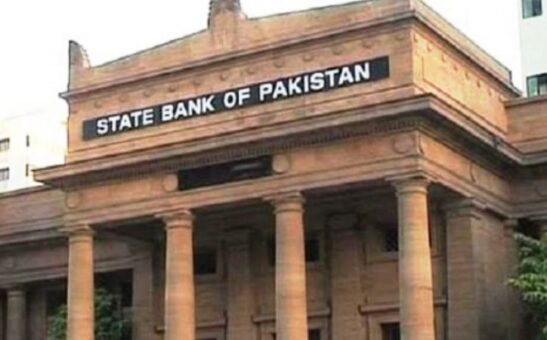
SBP expands economic refinance facility to existing projects
KARACHI: State Bank of Pakistan (SBP) on Friday expanded the economic refinance facilities to existing projects in order to provide relief the industry to dilute impact of coronavirus.
The SBP issued the scheme on March 17, 2020. On the basis of feedback from stakeholders, State Bank has decided to expand the scope of subject facilities.
Accordingly, in addition to the new projects, existing projects/ businesses are being allowed to avail financing under these Facilities for undertaking Balancing, Modernization and Replacement (BMR) and/or expansion of their projects/ businesses.
However, to ensure proper utilization of the Facilities, banks/ DFIs and borrowers are required to ensure the following:
As per TERF’s/ITERF’s eligibility criteria, financing for BMR/expansion will only be available for purchase of new imported and locally manufactured plant & machinery against foreign LC and inland LC, respectively. Second-hand machinery, land or civil works are not covered under the Facilities.
Banks/DFIs will be required to make disbursements to their customers on the basis of certificates of their Internal Audit confirming that financing is within the terms and conditions laid down in the Facilities. A copy of the said Internal Audit Certificate shall be submitted to the concerned office of SBP BSC (Bank) at the time of availing refinance for the first time for a project/ business while copies of certificates in respect of subsequent disbursements may be submitted at the time of availing last refinance for the same project/ business. In case of consortium finance the lead bank will be required to submit the certificate.
The borrowers concerned will be required to submit a report from PBA’s approved surveyors (acceptable to bank/DFI concerned) with regard to confirmation that the newly purchased plant & machinery has been installed as per their initial request/proposal for BMR/expansion. In case of installation/fixation in part, this report will be required at first and final installation of the plant/equipment.
-

Foreign exchange reserves increase by $292 million to $18.75 billion
KARACHI: Pakistan’s foreign exchange reserves of the country have increased by $292 million to $18.755 billion by week ended April 30, 2020, State Bank of Pakistan (SBP) said on Thursday.
The total foreign exchange reserves were at $18.463 billion a week ago.
The official reserves held by the central bank increased by $259 million to $12.329 billion by week ended April 30, 2020 as compared with $12.07 billion a week ago.
The reserves held by commercial banks also increased by $33 million to $6.426 billion by week ended April 30, 2020 as compared with $6.393 billion a week ago.
-
SBP introduces credit risk sharing mechanism to support employment
KARACHI: Ministry of Finance and State Bank of Pakistan (SBP) introduce risk-sharing mechanism to support bank lending to SMEs and small businesses to avail SBP’s Refinance Facility to Support Employment.
Taking cognizance of the SMEs finding difficulties in arranging adequate collateral and banks’ risk averseness in taking exposures for such lending under the SBPs Refinance Scheme to Support Employment and Prevent Layoff of Workers, Ministry of Finance has stepped forward to shoulder risk sharing with banks. Accordingly, the Federal Government has allocated Rs30 billion under a credit risk sharing facility for the banks spread over four years to share the burden of losses due to any bad loans in future. Under thisrisk sharing arrangement, Federal Government will bear 40% first loss on principal portion of disbursed loan portfolio of the banks.
This facility will incentivize banks to extend loans to collateral deficient SMEs and small corporates with sales turnover of upto Rs2 billion to avail financing under SBP refinance scheme.
Under the SBP’s Refinance Scheme to Support Employment and Prevent Layoff of Workers due to the impact of COVID-19, businesses that commit to not lay off workers in the next three months can avail credit through banks for the three months of wages and salaries expenses at a concessional mark-up rate.
The risk-sharing mechanism being introduced today, that is expected to increase the banks’ incentive to lend to SMEs and small corporate under this scheme, was developed on the basis of feedback received from relevant stakeholders and in collaboration between MOF and SBP.
Ministry of Finance’s swift approval of the subsidy to provide risk coverage to banks has made it possible for the SBP to launch this credit risk sharing facility for which relevant circular has been issued today.
SBP will continue to monitor the implementation of the scheme.
With a view to incentivize banks/DFIs for financing to SMEs and small corporates under above mentioned schemes, Government of Pakistan has approved budgetary allocation for ‘Risk Sharing Facility for State Bank of Pakistan (SBP) Refinance Scheme to Support Employment and Prevent Layoff of Workers’.
Accordingly, the risk sharing facility is being provided with immediate effect, with following key features.
S.No Particulars Key features 1 Eligibility The financing extended to businesses with maximum sales turnover of Rs 2 billion, under SBP refinance scheme to support employment and prevent layoff of workers is eligible for Risk Sharing Facility by the GOP. 2 Risk Coverage GoP will bear 40% first loss on disbursed portfolio (principal portion only) for eligible borrowers. Note: In case of non-repayments, after being classified as ‘Loss’ (as per the classification criteria laid down under respective SBP Prudential Regulations, credit loss subsidy claim will be paid by the GOP). 3 Security Requirements Security arrangements will be as per executing agency’s own credit policy after taking into account the factor of this risk sharing facility. Hence, banks are encouraged to facilitate collateral deficient borrowers. In any case, banks will not be asking for additional collaterals over and above 60% of the principal amount and markup thereon. 4 Executing Agency Banks and DFI assigned limits under SBP scheme will be eligible Executing Agencies (EAs). 5 Additional Measures EAs shall develop and implement robust mechanism to ensure that the loans are utilized for intended purpose only. 6 Administration Development Finance Support Department (DFSD), SBP BSC will manage operational aspects of the risk sharing facility. DFSD will submit data under the risk sharing facility on quarterly basis to the Finance Division. 7 Subsidy Payment EAs shall submit credit loss subsidy claims to DFSD on quarterly basis within 15 working days after the end of each quarter. DFSD after scrutiny of the claims shall submit the same to Finance Division, GOP. FD will release payment against submitted claims within 15 working days. Upon receipt of subsidy from GOP, SBP BSC Karachi will credit the account of EAs with the subsidy amount. The banks/DFIs are advised to ensure immediate implementation of ‘Risk Sharing Facility for SBP Refinance Scheme to support employment and prevent layoff of workers’ and facilitate the eligible businesses to avail financing under this facility.
-
SBP decides not to issue fresh currency notes for Eid ul Fitr
KARACHI: State Bank of Pakistan (SBP) on Monday said that it will not issue fresh currency notes on this Eid ul Fitr.
The decision has been taken due to measures taken by the government to prevent spread of COVID-19.
The SBP issued a notification suspending the issuance of fresh currency notes to public.
The SBP said that the bank’s management had taken multiple precautionary measures to ensure social distancing and mitigate the spread of COVID-19.
“These include but are not limited to performing of only essential / critical functions, making comprehensive work from home arrangements, ensuring workplace SOPs, issuance of medical advisories, etc.”
Accordingly, the bank’s COVID-19 committee had decided not to issue fresh notes to general public and employees / ex-employees of SBP and its subsidiaries on occasion of Eid-ul-Fitr 2020.
-
SBP allows circulation of quarantined infected banknotes
KARACHI: State Bank of Pakistan (SBP) has advised banks to use the infected banknotes that have completed 14 days quarantine period.
The SBP on Monday issued advisory for banks related to COVID-19 – Uninterrupted Supply of Disinfected Cash at Banks and ATMs.
The SBP previously issued a circular dated March 23, 2020 under which banks were advised to disinfect, seal and quarantine the cash collected from hospitals and clinics, until further orders. The banks were given credit for all such cash so quarantined and kept on behalf of SBP.
In the meanwhile, central banks’ practices on the matter have been reviewed which indicate that quarantine of cash for 14 days is sufficient to disinfect the banknotes, which can then be put back into circulation.
Similarly, the World Health Organization has also advised that the life of the virus on porous surfaces (such as paper banknotes) is lower, compared to other hard surfaces.
In view of the above, banks are allowed to use the quarantined cash, which have completed quarantine period of fourteen (14) days.
Consequently, the credit given to banks on account of quarantined cash would be reversed on the fifteenth (15th) day from each reported date.
However, the facility of same day credit for quarantined cash introduced via FD Circular No. 1/2020 dated March 23, 2020 shall continue with contra debit on 15th day, as stated above.
-
SBP enhances refinancing limits for hospitals
KARACHI: State Bank of Pakistan (SBP) on Friday increased the refinancing limits for hospitals and medical centers in the background of rising cases of COVID-19 in the country and with the need to strengthen health sector in fight against COVID-19.
The central bank enhanced financing limit of a single hospital/ medical center under its Refinance Facility for Combating COVID -19 (RFCC) from Rs. 200 million to Rs. 500 million.
RFCC is an emergency funding facility to support hospitals/medical centers to develop their capacities for treatment of infected patients of COVID-19.
The financing under this facility is being made available by State Bank at zero percent to banks that can charge a maximum rate of 3 percent per annum to hospitals/medical centers.
State Bank has been continuously improving features of this Facility to ensure timely financial support to hospitals/medical centers engaged in combating COVID-19.
So far, financing of Rs. 2.2 billion for 11 hospitals/medical centers has been approved whereas financing requests of Rs 3.6 billion for 23 hospitals/medical centers are being processed by the banks.
With today’s enhancement of financing limit, it is expected that large scale facilities will be created for treating COVID-19 patients by using subsidized funding being extended under this facility.
-
SBP extends date for exchange companies providing information
KARACHI: State Bank of Pakistan (SBP) on Thursday extended the date for exchange companies to submit information of customers related to anti-money laundering (AML) and Counter Financing Terrorism (CFT).
The central bank amended the Foreign Exchange Circular No. 04 dated October 14, 2019 in this regard.
The SBP said that in terms of instructions given in Para 5 (a) & (b) of the subject framework, authorized dealers in foreign exchange are required, inter alia, to complete the Risk Profiling of Customers and develop their distinct trade related Risk Profile by April 30, 2020.
In view of the prevailing circumstances due to COVID-19 outbreak and representation from the banking industry, it has been decided to extend the aforementioned deadline up to September 30, 2020.
Through the previous notification the SBP stated that in order to strengthen trade related Anti Money Laundering/Combating Financing of Terrorism (AML/CFT) regime and restrict possible misuse of banking channel, a comprehensive framework on the subject has been developed and attached herewith.
Accordingly, Authorized Dealers (ADs) are advised to upgrade their systems and controls and bring policies and procedures in line with the requirements of the framework to ensure meticulous compliance with the provisions thereof with immediate effect except as otherwise provided in the framework
The provisions of this framework are in addition to and not a replacement of already issued instructions on the subject of ML/FT risks.
Therefore, the compliance of the same shall not absolve ADs from their legal and regulatory obligations under prevailing AML/CFT laws/rules and regulations or any other relevant law in force.
ADs are also advised to educate their clients about their obligation of ensuring (a) correct declaration of particulars on the prescribed forms, (b) utilization of foreign exchange for the exact purpose for which it is acquired by them and (c) repatriation of foreign exchange that represents the full export value of goods. In the event, it is found that material information required to be submitted on the prescribed forms has been omitted or suppressed, foreign exchange is misutilized by a client of an AD or export proceeds repatriated by a client does not represent the full export value of goods, SBP shall initiate penal action against such delinquent parties under relevant provisions of the Foreign Exchange Regulation Act, 1947 (FERA).
Further, the matter shall also be reported to relevant stakeholders for necessary action under the laws being administered by them.
Failure to comply with the instructions on the subject and the regulatory obligations of AML/CFT may attract action against ADs under the FERA and other relevant laws.
-
Bank holiday announcement
KARACHI: Banks will remain closed on May 01, 2020 on the occasion of Labour Day as declared holiday by the government.
State Bank of Pakistan (SBP) on Tuesday issued a circular informing the presidents and chief executives of all banks, development financial institutions and microfinance banks that the central bank will remain closed on May 01, 2020 (Friday) on the occasion of Labour Day as declared by the government.
-
Banks to remain closed for Zakat deduction
KARACHI: Banks to remain closed for public dealing on Monday due to deduction of Zakat.
The State Bank of Pakistan (SBP) in a statement said that it will remain closed for public dealing on Monday, April 27, 2020, which shall be observed as “Bank Holiday” for the purpose of deduction of Zakat.
All banks / DFIs / MFBs shall, therefore, remain closed for public dealing on Monday, April 27, 2020.
However, all employees of the banks / DFIs / MFBs will attend to their official assignments (in-office or work-from-home, as designated under the current COVID-19 situation) on Bank Holiday treating it as a normal working day (except for public dealing).