Tag: SBP

  • SBP not to hold regular monetary policy committee meeting

    SBP not to hold regular monetary policy committee meeting

    KARACHI: State Bank of Pakistan (SBP) on Friday decided not to hold regular meeting of monetary policy committee meeting scheduled for July 2020.

    Given the number of MPC meetings that have taken place in recent months, and actions taken in those meetings, the MPC does not consider it necessary to hold the regular meeting of July 2020.

    The next regular meeting of the MPC will now be held in September 2020, the SBP said.

    The MPC continues to observe economic conditions and stands ready to take whatever further actions may become necessary in response to any adverse impact on the economy because of the pandemic or any other factor.

  • Foreign exchange reserves increase to $19.047 billion

    Foreign exchange reserves increase to $19.047 billion

    KARACHI: Pakistan’s liquid foreign exchange reserves have increased by $95 million to $19.047 billion by week ended July 17, 2020, State Bank of Pakistan (SBP) said on Thursday.

    The foreign exchange reserves of the country were at $18.952 billion by week ended July 10, 2020.

    The official reserves held by the central bank increased by $66 million to $12.121 billion by week ended July 17, 2020 as compared with $12.055 billion a week ago.

    Similarly, the foreign exchange reserves held by commercial banks improved by $29 million to $6.926 billion from $6.897 billion a week ago.

  • Complaints against banks double in four years: SBP

    Complaints against banks double in four years: SBP

    KARACHI: The State Bank of Pakistan (SBP) on Thursday said that complaints against banks have doubled in four years owing to effective dispute resolution and awareness of consumers.

    The SBP said that the complaints against banks during past four years have increased from 774,656 in 2016 to 1,549,837 in 2019.

    State Bank of Pakistan (SBP) has conducted a four year (2016-2019) review of complaints against Banks/MFBs/DFIs. The objective of the review was to gain insights on effectiveness of complaint management at banks.

    The salient features of the review are being published to emphasize SBP’s narrative that responsible complaint handling is the core element of Fair Treatment of Consumer (FTC).

    This review is conducted in addition to various regulatory measures to enhance consumer grievance handling in the industry including the issuance of detailed guidelines on complaint management at banks and self-assessment framework.

    It is pertinent to mention here that responsible banking conduct and FTC is one of the key regulatory agendas of the State Bank of Pakistan (SBP).

     SBP recognizes that effective and efficient consumer grievance handling mechanisms are crucial elements of FTC regime, therefore, it considers consumer complaints as an opportunity to improve banking services and increase customer satisfaction.

    This increase can be attributed to improved visibility and access of dispute resolution mechanism coupled with enhanced consumer awareness. Further, this is also due to the fact that number and value of banking transactions have increased substantially.

    For instance, the volume and value of ATM/debit card transactions have increased by 101 percent and 110 percent respectively over the reporting period.

    The number of deposit accounts per ATM and per branch shows increase of 62 percent and 81 percent respectively. Similarly, during 2016 to 2019, volume and value of E-banking transactions have substantially increased by 112 percent and 152 percent respectively on account of 71 percent increase in E-banking users.

    Moreover, credit card related transactions increased from 18 to 39 million showing an increase of 118 percent over a span of 4 years. Accordingly, the increase in complaints over the same period can be witnessed as concentrated in ATM/Debit Card, Account maintenance, E- Banking and Credit Cards.

    In terms of addressing the complaints, the resolution rate over the period 2016-2019 remained above 97 percent at each year’s end.

    The average time taken for resolution of complaints remained within regulatory turn around times. However, delays were observed in sending acknowledgments, interim and final responses.

    It may be mentioned here that banks being the first forum of redressal, have been handling 97 percent and above of the total complaints of the industry while less than 3 percent of complaints were escalated at higher levels including State Bank of Pakistan, Banking Mohtasib, and Pakistan Citizen Portal established by the Prime Minister Delivery Unit.

    In order to boost performance of complaint handling at banks and promote competition, SBP plans to further enhance the related disclosures which may include publishing of bank-wise complaint handling performance indicators in the near future by SBP.

    Currently, banks themselves are required to give disclosure about the complaint management in their annual audited account for public information.
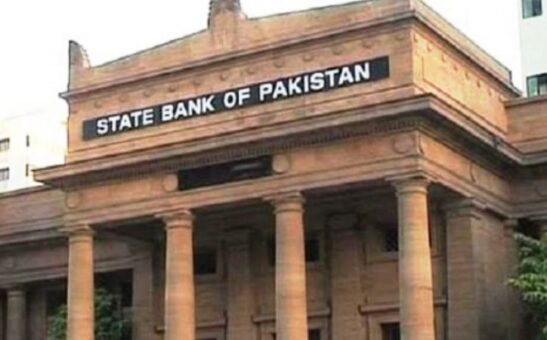

  • SBP enhances financing limit to Rs2 billion for renewable energy schemes

    SBP enhances financing limit to Rs2 billion for renewable energy schemes

    KARACHI: The State Bank of Pakistan (SBP) has increased cumulative financing limit to Rs2 billion and also enhanced project size to 5MW.

    According to a statement issued on Wednesday, the central bank said it had enhanced the scope of its Refinance Scheme for Renewable Energy by allowing financing under category III of the scheme to solar and wind based energy sale companies.

    In light of the feedback received from stakeholders, the size of the project established by vendor/ supplier/ energy sale company has been enhanced from 1 MW to 5 MW. Accordingly, the cumulative financing limit has also been increased from Rs.1 billion to Rs.2 billion.

    SBP Financing Scheme for Renewable Energy was announced in June 2016with an aim to help addressing the challenges of energy shortages and climate change in the country.

    The scheme comprised of two categories: Category 1 allowed financing for setting up of renewable energy power projects with capacity ranging from 1 MW to 50 MW for own use or selling of electricity to the national grid or combination of both.

    Category II allowed financing to domestic, agriculture, commercial and industrial borrowers for installation of renewable energy based projects/ solutions of up-to 1 MW to generate electricity for own use or selling to the grid/distribution company under net metering.

    Later, in July 2019, SBP introduced a new Category III for facilitating financing to vendors/suppliers for installation of wind and solar systems/solutions of upto 1 MW. SBP also launched a Shariah complaint version of the scheme in August 2019.

    Since the introduction of the scheme, total outstanding financing under the Scheme has reached to Rs.15.6 billion for 217 projects having potential of adding 292 MW of energy supply.

    This revision in the scheme is expected to not only attract fresh local and foreign investment in the sector but also facilitate production of clean energy in the country, helping in managing climate change.

  • Annual foreign direct investment grows by 88 percent

    Annual foreign direct investment grows by 88 percent

    KARACHI: Foreign Direct Investment (FDI) into the country registered 88 percent growth to $2.56 billion during fiscal year 2019/2020, State Bank of Pakistan (SBP) said on Friday.

    The FDI posted $1.198 billion increase during the fiscal year under review as compared with $1.36 billion in the preceding fiscal year i.e. 2018/2019.

    The inflows under the head of FDI grew by 18 percent to $3.285 billion during fiscal year 2019/2020 as compared with $2.78 billion in the preceding fiscal year. However, outflows recorded 49 percent decline to $724 million as against outflow of $1.42 billion in the preceding fiscal year.

    The portfolio investment registered 32 percent contraction in outflows during the period under review. The outflows from the capital market recorded $281.7 million during fiscal year 2019/2020 as compared with the outflow of $415 million in the preceding fiscal year.

    The total foreign private investment posted 140.7 percent growth to $2.279 billion during July-June 2019/2020 as compared with $947.2 million in the preceding fiscal year.

    The foreign public investment in debt securities witnessed outflow of 241.3 million during fiscal year 2019/2020 as compared with $1 billion in the preceding fiscal year.

    The total foreign investment including public and private rose to $2.038 billion during fiscal year 2019/2020 as compared with outflow of $54.8 million in the preceding fiscal year.

  • Foreign exchange reserves up by $163 million to $18.953 billion

    Foreign exchange reserves up by $163 million to $18.953 billion

    KARACHI: The liquid foreign exchange reserves of the country increased by $163 million to $18.953 billion by week ended July 10, 2020, the State Bank of Pakistan (SBP) said on Thursday.

    The foreign exchange reserves of the country were at $18.79 billion by week ended July 03, 2020.

    The official reserves of the SBP increased by $13 million to $12.055 billion by week ended July 10, 2020 as against $12.042 billion a week ago.

    The reserves held by commercial banks witnessed growth of $150 million to $6.898 billion by week ended July 10, 2020 as against $6.748 billion a week ago.

  • SBP fixes mandatory housing loan targets for banks

    SBP fixes mandatory housing loan targets for banks

    KARACHI: State Bank of Pakistan (SBP) on Wednesday fixed mandatory targets of housing loan disbursement for banks in order to promote housing and construction of buildings in the country.

    The central bank in a notification said that with a view to promote housing and construction of buildings (Residential and Non-Residential) in Pakistan, the SBP decided to advise mandatory targets to the banks.

    “Accordingly, each bank shall ensure that the financing for housing and construction of buildings (Residential and Non-Residential) shall be at least 5 percent of their domestic private sector credit by December, 2021,” the notification stated.

    The banks are advised to gear up their infrastructure and capacity to ensure compliance of meeting these targets.

    Accordingly, each bank is required to develop a concrete action plan with detailed measures and their timelines to achieve its housing and construction finance targets.

    This action plan should contain breakdown of overall targets into quarterly targets, development of suitable products, launching of media campaigns, development of internal technology, capacity building of staff, and other actions needed to ensure the 5 percent target is met.

    The SBP directed the banks to submit their concrete action plans to this department within 15 working days.

    Banks will be required to report data of approvals and disbursements against these targets on monthly basis starting from September 2020.

    The central bank said that it will keep a close monitoring of progress on the mandatory targets. Non-compliance in meeting the targets shall attract punitive action under the relevant provisions of the Banking Companies Ordinance, 1962.

  • SBP allows banks to verify customers through NADRA Verisys for record keeping

    SBP allows banks to verify customers through NADRA Verisys for record keeping

    KARACHI: State Bank of Pakistan (SBP) has allowed banks to retain digital record of identity i.e. NADRA Verisys of customers for record keeping requirements.

    In a statement issued on Monday, the central bank said that the banks and Development Financial Institutions (DFIs) may use the NADRA [National Database Registration Authority] Verisys in place of obtaining certified photo copies of required NADRA identity documents and bio metric verifications wherever required as per SBP AML/CFT Regulations including for request of activation of dormant account by customers.

    “They should retain the NADRA Verisys for record keeping requirements (digitally or hard copy).”

    The directives have been issued under measures taken to mitigate COVID-19 pandemic.

    Keeping in view the ongoing impact of COVID-19 pandemic in the country, it has been decided to extend the validity of the measures from June 30, 2020 to December 31, 2020.

    In addition, it has been observed that customers including (overseas Pakistani /walk in/ occasional) are experiencing problems with regard to operation in their bank accounts, ensuring execution of financial transactions by them and getting financial services from banks/DFI.

    The following revisions are being made in the existing AML/CFT requirements to facilitate such customers:

    Banks/DFIs may use the NADRA Verisys in place of obtaining certified photo copies of required NADRA identity documents and bio metric verifications wherever required as per SBP AML/CFT Regulations including for request of activation of dormant account by customers. They should retain the NADRA Verisys for record keeping requirements (digitally or hard copy).

    Banks/DFIs to update records of their customers with regard to their postal address or email address or register mobile number or land line number. They may use either of these medium for ensuring efficient and reliable communications with their customers including where ever customer request/instruction is desired as per requirement of AML/CFT regulation including for activation of dormant accounts.

    Further, the requirement of originator’s and beneficiary’s address in wire transfer vide Regulation-3, para (3c & 3e) of AML / CFT Regulations for Banks/ DFIs has been amended as below.

     Reference Existing Requirement Revised Requirement

    R-3 Para(3c & 3e)

    Bank/DFI shall include the following information in the message or payment instruction which should accompany or remain with the wire transfer throughout the payment chain:

    ( c )  the originator’s address and CNIC/ passport number (e) the beneficiary’s address and CNIC/ passport number

    Bank/DFI shall include the following information in the message or payment instruction which should accompany or remain with the wire transfer throughout the payment chain:

    ( c )  the originator’s CNIC/ passport number (e) the beneficiary’s CNIC/ passport number

    These instructions are enforceable with effect from July 01, 2020.

  • Record $2.46 billion as remittances received in June

    Record $2.46 billion as remittances received in June

    KARACHI: State Bank of Pakistan (SBP) on Monday said that the workers’ remittances rose by a significant 50.7 percent during June 2020 to reach record high $2.46 billion compared with $1.63 billion in June 2019.

    Similarly, on a cumulative basis, workers’ remittances increased to a historic high level of $23.12 billion during FY20, witnessing a growth of 6.4 percent over $21.74 billion during FY19.

    The significant increase in remittances during June 2020 can be attributed to a number of factors. Since many of the countries eased lockdown in June, overseas Pakistanis were able to transfer accumulative funds, which they were unable to send earlier.  Further, it is also believed that they sent remittances to support extended families and friends due to COVID-19.

    In addition to these, efforts by the Government and SBP also played their role in the increased inflow of workers’ remittances during FY20 in general and Covid-19 period, March till June 2020, in particular.

    Supportive government policies in terms of extension of Reimbursement of TT Charges Scheme (Free Send Remittance Scheme) to small remitters by reducing threshold from USD 200 to USD 100, as well as, broadening the scope of incentive scheme for marketing scheme for financial institutions increased the incentives for sending remittances through regular channels.

    Further, on-boarding of a large number of technology based money transfer companies by SBP and PRI also helped absorb the shock of lockdowns.

    Financial institutions were motivated to use effective marketing campaigns with particular focus on digital channels for sending and receiving remittances to promote the use of legal channels.

    It would also be pertinent to mention here that inflow of workers’ remittances registered an increase of a 7.8 percent during March-June 2020 pandemic period compared with the corresponding period of 2019.

    During June 2020, larger amounts of Workers’ Remittances are received from Saudi Arabia (US $ 619.4 million), USA (US $ 452.0 million), UAE (US $ 431.7 million) and UK (US $ 401.0 million) recording an increase of 42.0 percent, 7.1 percent, 33.5 percent and 40.8 percent respectively as compared to May, 2020.