Tag: SBP

  • SBP estimates lower GDP growth, high inflation

    SBP estimates lower GDP growth, high inflation

    KARACHI: State Bank of Pakistan (SBP) has projected the real GDP growth for fiscal year 2018/2019 would be around 3.5-4 percent much lower than the actual target of 6.2 percent.

    The central bank in State of Pakistan Economy, Second Quarterly Report for Fiscal Year 2018/2019, issued on Monday the SBP further projected that the inflation would further increased to 6.5-7.5 percent during the current fiscal year as compared with actual target of 6 percent.

    The GDP growth for fiscal year 2017/2018 was 5.2 percent and inflation for the same year was recorded at 3.9 percent.

    The central bank estimated that remittances would be above the target during the current fiscal year to $21.5 billion. However, estimates for exports are at $25.5-27 billion lower than the target of $27.9 billion. Meanwhile, the estimates for imports have also been lowered to $54-56 billion from actual estimate of $58.5 billion.

    The SBP estimated that the fiscal deficit would be around 6-7 percent against target of 4.9 percent. The fiscal deficit was at 6.6 percent last year. The current account deficit would stay around 4.5-5.5 percent of the GDP as against the target of 4 percent.

    The SBP said that real GDP growth during FY19 is likely to moderate significantly, mainly due to slowdown in the growth of the agriculture sector and stabilization measures taken to preserve macroeconomic stability.

    This is in line with a further contraction in LSM during Q2-FY19. Moreover, given that public development spending, a key driver for private sector industrial activities, is unlikely to pick up anytime soon, the full year outlook for manufacturing activities remains subdued.

    Furthermore, private consumption is going to remain lower due to tighter monetary policy and pass through of exchange rate depreciation that has resulted in both higher energy prices and core inflation.

    In addition, the prospects for the upcoming wheat crop remain subdued in terms of growth. All these aspects are going to constrain the services sector in the coming months as well.

    Regarding price pressures, inflation is expected to remain high in H2-FY19. This is due to the second round impact of recent exchange rate depreciations, an upward adjustment in gas and electricity prices and higher budgetary borrowing from SBP.

    However, the lagged impact of policy rate increases would be instrumental in keeping demand pressures in check. Acknowledging these risks, SBP continues to project average CPI inflation at 6.5-7.5 percent for the full year.

    As noted earlier, the primary deficit has increased further while there has been a sharp reduction in development expenditures in order to improve the fiscal position.

    This situation has become more challenging as the growth in current expenditure inched up to 17.3 percent during the first half as compared to 13.5 percent last year.

    On the contrary, revenue collection has contracted by 2.4 percent during the same period as compared to the growth of 19.8 percent last year.

    Since there is limited room to curtail government expenditures in the coming months, it is the growth in revenues that would be instrumental in determining the overall fiscal position for FY19.

    Incorporating the performance of revenue collection during the second half in the last four years, SBP projects fiscal deficit to further deteriorate by 0.5 percent of GDP, which brings it close to the same level as in FY18.

    As for the external sector, while the CAD has improved by USD 1.7 billion during the first seven months of FY19, it is still high at USD 8.4 billion.

    Some improvement is expected to continue in the remaining months as imports are likely to contract further on account of moderating domestic demand and relatively low international oil price as compared to that at the beginning of FY19.4 However, merchandize exports are expected to miss the target due to waning demand in certain export destinations.

    Additionally, this is compounded by the competitive pressures in the international arena and the lack of diversified and higher value

    added products that can effectively utilise the export quotas allowed under specific trade agreements.

    Meanwhile on the external financing front, the efforts of the government have started to materialize in the shape of bilateral inflows from Saudi Arabia, UAE and China. Some of these inflows have already been realized, while rest are due in H2-FY19.

    Along with the Saudi deferred oil payment facilities, these inflows have an important role in meeting the external financing gap for FY19; thereby, relieving pressure on the foreign exchange reserves and mitigating volatility in the FX market.

    Related Stories
    SBP stresses urgent need to initiate structural reform in economy

  • Prize bonds investment soars by 17.07 percent to Rs929.64bn

    Prize bonds investment soars by 17.07 percent to Rs929.64bn

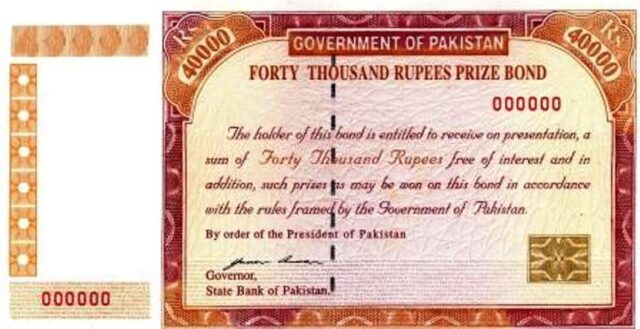
    KARACHI: The investment in prize bonds has soared to Rs929.64 billion by January 2019 as compared with Rs794.09 billion by the same month of the last year, showing an increase of 17.07 percent.

    According to statistics issued by State Bank of Pakistan (SBP), the savings mobilized through prize bonds had increased to Rs929.64 billion January 2019 through different categories of prize bonds.

    The statistics have shown the investment in higher denomination prize bonds increased more rapidly then the lower denomination.

    Following is the position of investments in different prize bonds:

    (Rs in million)

    S. No.Prize BondsJan 2019Jan 2018% Increase
    01Rs1009,7718,79511.09
    02Rs20029,32527,0768.30
    03Rs75098,59086,52013.95
    04Rs1,500105,01990,07816.58
    05Rs7,50096,22175,31727.75
    06Rs15,000173,803144,78020.04
    07Rs25,000156,923135,08016.17
    08Rs40,000259,130225,58614.86

     Related Stories
    Investment in registered prize bonds surges by 30pc

  • SBP directs banks to ensure OTC tax collection by March 27

    SBP directs banks to ensure OTC tax collection by March 27

    KARACHI: State Bank of Pakistan (SBP) on Friday directed all commercial banks to ensure receiving payment of duty and taxes through over the counter (OTC) channel.

    The SBP said that the finance department through circular on July 17, 2018 made it mandatory for banks to enable their Over-the-Counter (OTC) Channel for collection of taxes and duties.

    Complaints are pouring in from different quarters, regarding non-entertaining of tax payment requests through banks’ OTC Channel.

    So much so that Federal Board of Revenue (FBR) has formally launched a complaint that PSIDs generated by WeBOC system for payment of customs duty and other taxes especially the levy on Mobile devices are not being entertained, by the bank branches.

    In view of the above, all banks were advised vide email dated 15th March 2019 to improve their customer services in facilitating taxpayers with due courtesy.

    Despite the above-referred instructions, there is no visible improvement, as complaints from different quarters are still landing with us.

    It is therefore advised to share these instructions with all your branches across the country with the advice to ensure meticulous compliance and facilitate the taxpayers in payment of taxes and duties under the I Link’s OTC facility.

    The branches shall also prominently display on their respective Notice Boards that “Taxes and Duties are accepted here under the 1Link’s OTC facility”. Further, banks shall also ensure that the branch staff has adequate understanding of the mechanism for collection of taxes and duties under the said facility.

    The banks shall inform this department within 3 working days of the date of circular i.e. 27th March 2019 that these instructions have been communicated to all their branches for meticulous compliance and that the Notice Boards of branches are prominently displaying the message that “Taxes and Duties are accepted here under the 1Link’s OTC facility”.

  • Bank holiday

    Bank holiday

    KARACHI: State Bank of Pakistan (SBP) has announced bank holiday on March 23, 2019 on occasion of Pakistan Day.

    In a circular issued by the SBP said that the State Bank of Pakistan would remain closed on March 23, 2019 (Saturday) being public holiday on the occasion of “Pakistan Day” as declared by the Government of Pakistan.

  • Currency notes have braille features for visually impaired persons: SBP

    Currency notes have braille features for visually impaired persons: SBP

    KARACHI: The State Bank of Pakistan (SBP) on Thursday said that it noticed visually impaired persons find it difficult to recognize and distinguish amongst different Pakistani currency notes.

    SBP, for the information of the general public and specifically visually impaired persons, reiterates that Pakistani currency notes have specific features to help the visually impaired persons to identify the genuineness of currency notes and to distinguish between different denominations.

    All currency notes of Rs.20 and above contain braille features on its front side that help to determine the denomination of a currency notes. For this purpose, raised dots and small horizontal lines are printed on the left bottom corner just above the banknote serial number.

    This feature makes banknote denominations easily distinguishable by rubbing the thumb against these raised features.

    The braille features in each denomination appear in this manner: Rs.20 has one line, Rs.50 two lines and Rs.100 has three lines while other higher denomination notes have dots as braille feature. Specifically, Rs.500 has one dot; Rs.1000 two dots, and Rs.5000 three dots.

    All braille features on currency notes of all denominations of Rs. 20 & above are printed through Intaglio process, due to which they appear raised and on the front side of the note only.

    Thus, a visually impaired person can easily infer the denomination of the banknotes by feeling the raised printing as well as its genuineness.

    All Pakistani currency notes have denomination-wise tiered sizing. Each currency note has the same width of 65 mm whereas lengthwise, each banknote is exactly 08 mm longer than the preceding denomination.

    Thus the highest denomination banknote of Rs.5000 is 48mm longer than the lowest denomination currency note of Rs.10.

    The incorporation of a number of strong security features including braille features in banknotes are aimed at facilitating general public. To create awareness about currency note features among the masses, SBP provided complete details on its website

    Moreover, it has launched Videos and a Smartphone application on security features of currency notes which provide information on security features of currency notes both in descriptive and pictorial forms.

    It may also be mentioned that 16 field offices of SBP-BSC spread across Pakistan, conduct awareness campaigns all over the country. These sessions are usually arranged in high traffic areas and involve in depth briefing on currency note features.

    To augment the awareness of banknote features, SBP has mandated the prominent display through posters containing security features in every commercial bank branch under instructions to guide customers of the currency note features, as required.

    The SBP BSC field offices are also arranging special awareness sessions tailored towards the needs of visually impaired persons. These sessions will be organized in collaboration with social welfare organizations/trusts that are dedicated to serving different factions of the general public, especially the visually impaired who are an invaluable part of the Pakistani society.

    SBP also urges general public to educate visually impaired persons about features of Pakistani currency notes wherever possible.

  • Pakistan’s forex reserves increase to $15.71 billion

    Pakistan’s forex reserves increase to $15.71 billion

    KARACHI: Pakistan’s foreign exchange reserves have increased by $743 million to $15.709 billion with inflows of $1 billion from UAE.

    The total reserves of the country increased to $15.709 billion by week ended March 15, 2019 as against $14.966 billion a week ago, according to data of State Bank of Pakistan (SBP) issued on Thursday.

    During the week ending March 15, 2019, SBP received inflow of $1 billion from UAE as placement of funds.

    After taking into account outflows relating to external debt and other official payments, SBP reserves increased by $716 million during the week, SBP said.

    The official reserves of the central bank increased to $8.838 billion by week ended March 15 from the level of $8.122 billion a week ago.

    Similarly, the foreign exchange reserves held by commercial bank have increased by $27 million to $6.87 billion from previous week’s level of $6.843 billion.

  • SBP launches financing facilities for disable persons

    SBP launches financing facilities for disable persons

    KARACHI: State Bank of Pakistan (SBP) on Tuesday launches a concessionary Small Enterprise Financing and Credit Guarantee Facility for special persons.

    Tariq Bajwa, SBP, governor announced this special facility in the 7th meeting of the National Assembly Standing Committee on Finance, Revenue and Economic Affairs held at State Bank of Pakistan.

    Members of the Standing Committee and senior executives of State Bank of Pakistan were also present on the occasion.

    “Realizing the vulnerability of persons with disabilities in the country and cost associated with their exclusion for the economy, SBP in-line with its priority sector development has devised a scheme for special persons”, said Tariq Bajwa.

    This financing facility is expected to improve access to finance for special persons falling under Small Enterprise (SE) category at a concessional rate of 5 percent per annum.

    Under the scheme, banks and DFIs will provide financing facilities to special persons for establishing new business enterprises or for expansion of existing businesses.

    The SBP will provide refinance to banks/ DFIs up to 100 percent of finance extended by them.

    Special persons can avail financing up to Rs1.5 million for a maximum period of 5 years including grace period of 6 months.

    SBP will also provide risk coverage of 60 percent to banks/DFIs on their outstanding loans under the scheme. This financing facility has been issued with the main objective of improving the socio-economic life of special persons in Pakistan.

    Related Stories
    SBP launches three Sharia compliant refinancing schemes for SMEs

  • SCB Pakistan allowed Chinese Yuan clearing, settlement

    SCB Pakistan allowed Chinese Yuan clearing, settlement

    KARACHI: State Bank of Pakistan (SBP) has allowed Standard Chartered Bank, Pakistan to establish local Chinese Yuan Renminbi (CNY) clearing and settlement setup in the country.

    In a statement on Tuesday, the central banks said that Standard Chartered Bank (SCB) Pakistan can now open CNY accounts of the banks operating in Pakistan to facilitate settlement of CNY based transactions such as remittance to/from China.

    SCB can also provide CNY liquidity to the interbank market for the settlement of CNY based transactions.

    It may be mentioned here that over the years, the SBP has been at the forefront in providing a conducive policy and regulatory environment to encourage the use of local currencies in trade and financing transactions between China and Pakistan.

    Earlier, SBP had also permitted Industrial and Commercial Bank of China Limited (ICBC) Pakistan in 2015 and Bank of China Limited (BOC) Pakistan in 2018 to establish similar local CNY clearing and settlement mechanism in Pakistan.

    The expansion of local CNY clearing and settlement setup in Pakistan is expected to further improve efficiency of the local banking system in transacting in CNY, enhance market liquidity and facilitate rising trade and investment with China through fostering competition and increasing CNY resource avenues.


    Related Stories
    SBP directs banks to maintain depositor-wise database

  • Banks require to provide monthly report of foreign exchange transactions

    Banks require to provide monthly report of foreign exchange transactions

    KARACHI: Banks have been required to provide foreign exchange transactions in each currency to State Bank of Pakistan (SBP) on monthly basis.

    According to updated Foreign Exchange Manual – 2019, the SBP said that the banks should report to the central bank particulars of foreign exchange transactions effected by them i.e. all outward and inward remittances made whether through their accounts in foreign currencies or through the Rupee accounts of non-resident banks.

    For this purpose, Authorized Dealers should submit to the SBP-Banking Services Corporation a summarized statement of their transactions in each currency in which a position is maintained by them and also summary statement of transactions effected on the Rupee accounts of non-resident banks maintained with them for each month, reaching the respective area office of the Foreign Exchange Operations Department by the 5th of the following month from Head/Principal Offices of Authorized Dealers.

    The SBP said that reporting of transactions reports should be as follows:

     (i) EXPORTS

     a) Export bills drawn under irrevocable letters of credit.

    Transactions in respect of export bills negotiated by Authorized Dealers should be reported as purchases only at the time entries are made in the currency account duly supported by Schedule (A-1/A-2/A-3) and Forms ‘E’.

     b) Export bills drawn on collection basis.

    Sometimes Authorized Dealers also purchase export bills drawn on collection basis. Transactions relating to such export bills should be reported as an outright purchase against “Exports” in the summary statement after the transaction is put through the currency account on receipt of advice of realization of the export proceeds.

     (ii) OTHER RECEIPTS

    The procedure indicated in sub-paragraph (i) (a) above should also be followed with regard to D.Ds. and M. Ts. etc. In other words, purchases in respect of D.Ds. and M.Ts. etc. should be reported only when the transactions are put through the currency accounts.

     (iii) IMPORTS

     a) In case of import bills drawn under letters of credit, the foreign currency accounts of the Authorized Dealers are debited at the time of negotiation of documents by their foreign correspondents. Accordingly, sales on account of import bills drawn under confirmed and irrevocable letters of credit should be reported when the transaction is put through the currency account on receipt of import documents and not on the basis of retirement of bills by the importers.

     b) All sales on account of imports are required to be supported by the original copy of the Form ‘I’. In view of the time-lag between the date of receipt of the import bills and the date of their retirement by the importers, it may not be possible to submit original copy of Form ‘I’ duly signed by the importers. In such cases, Authorized Dealers should fill in the quadruplicate copy of the Form ‘I’ and submit it alongwith the relevant schedule and the summary statement. The original copy of the Form ‘I’ should be submitted after it has been signed by the importer, which will be at the time of retirement of the bill.

     c) Authorized Dealers will forward to the State Bank a monthly statement showing particulars of the Form ‘I’ originals of which have not been sent by them to the State Bank, giving reasons for their non-submission. These statements should reach the State Bank by the 5th of the following month and should bear running serial numbers.

     d) With regard to import bills received on collection basis, the transactions will be reported on Schedule E-2 supported by original Form ‘I’.

     (iv) OTHER PAYMENTS

     Transactions relating to D.Ds. and M.Ts. issued by the Authorized Dealers should also be reported only at the time entries are made in the currency accounts.

     Non-resident Rupee accounts of foreign banks and correspondents including barter accounts should also be reported by Authorized Dealers in the manner indicated in this para.