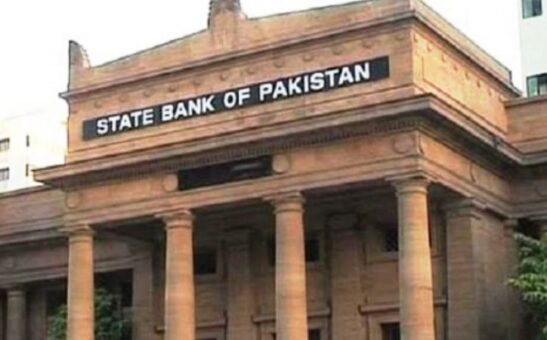
Tag: State Bank of Pakistan

  • Banks to observe extended working hours on Dec 31 to facilitate taxpayers

    Banks to observe extended working hours on Dec 31 to facilitate taxpayers

    KARACHI: State Bank of Pakistan (SBP) on Friday announced that banks will observed extended working hours to facilitate taxpayers in payment of duty and taxes on December 31, 2019.

    In order to facilitate the collection of government receipts / duties / taxes, it has been decided that authorized branches of National Bank of Pakistan (NBP) as well as field offices of SBP Banking Services Corporation (SBP-BSC) will observe extended banking hours up to 9:00 PM on December 31, 2019 (Tuesday).

    Accordingly, NBP branches will settle their transactions with respective SBP-BSC field offices on the same day i.e. December 31, 2019 for which purpose a special clearing has been arranged at 7:00 P.M. by the NIFT.

    All banks are, therefore, advised to keep their concerned branches open on December 31, 2019 (Tuesday) till such time that is necessary to facilitate the special clearing for Government transactions, the SBP said.

  • Pakistan’s weekly foreign exchange reserves slip by $60 million

    Pakistan’s weekly foreign exchange reserves slip by $60 million

    KARACHI: The liquid foreign exchange reserves of the country slipped by $60 million to $17.595 billion by week ended December 20, 2019, State Bank of Pakistan (SBP) said on Thursday.

    The foreign exchange reserves of the country were at $17.655 billion by week ended December 13, 2019.

    The foreign exchange reserves held by the SBP increased by $15 million to $10.907 billion by week ended December 20, 2019 as compared with $10.892 billion a week ago.

    The SBP said that on December 23, 2019, it received $452.4 million from International Monetary Fund (IMF) as second tranche under EFF program.

    These funds will be part of SBP weekly reserves data as of December 27, 2019, to be released on January 02, 2020.

    The foreign exchange reserves held by commercial banks fell by $75 million to $6.688 billion as against $6.763 billion a week ago.

  • SBP extends date for implementing machine authenticated Rs50 banknotes

    SBP extends date for implementing machine authenticated Rs50 banknotes

    KARACHI: State Bank of Pakistan (SBP) has extended the date for banks regarding issuance of machine authenticated Rs50 banknotes.

    In a notification issued on Thursday, the central bank said that considering the difficulties faced by banks in machine processing of lower denomination banknotes under the Currency Management Strategy (CMS), it had been decided to extend the effective date for issuance of machine authenticate Rs50 banknotes until January 4, 2021.

    The banks are however encouraged to gradually adopt machine processing and authentication of Rs50 banknotes.

    Earlier, the banks were required to process lower denomination banknotes under the CMS from January 02, 2020.

    The SBP on August 31, 2017 issued Currency Management System, which is as follow:

    Considering the various aspects of implementation and feedback of the stakeholders, the following changes have been made in the strategy:

    I. Sealed Cassettes based feeding of ATMs:

    The instructions contained at section C (iii) of FD Circular No.03/2015 dated August 26, 2015 regarding use of standardized purpose built cassettes for feeding of ATMs shall stand amended as under:

    a) The requirement of cassette based feeding of ATMs has been made optional for the time being. The banks are however encouraged to plan for gradual movement towards cassette based feeding to comply with our instructions. SBP will continue to monitor the situation on periodic basis for a policy decision.

    b) The banks may alternatively use sealed bags or trays for feeding of ATMs. However the banks shall ensure that sealing and unsealing of bags/trays and replenishment of ATMs is carried out under proper CCTV controlled environment.

    c) The on-site ATMs can be fed by their respective branches provided that the end to end process from cash processing to ATM feeding is covered by CCTV cameras.

    d) Other requirements as advised under section C of FD Circular No.03/2015 dated August 26, 2015 shall remain applicable.

    II. Application of Strategy on lower banknote denominations:

    The instructions contained at section-I of FD Circular No.01/2016 dated January 25, 2016 regarding implementation of phase-II of strategy for all denomination of banknotes w.e.f. 2nd January 2018 shall stand amended as under:

    a) The banks will start disbursing machine authenticated banknotes of Rs 100 w.e.f. 2nd January 2018 and Rs 50 w.e.f. 2nd January 2019 respectively.

    b) The lower banknote denominations of Rs 20 and Rs 10 have been excluded from Currency Management Strategy.

    III. Banknote Packing Instructions (BPI)

    The Banknote Packing Instructions issued vide FD Circular No.02/2017 dated March 10, 2017 shall stand amended as under:

    a) The effective date of instructions contained at section 1.2 and 1.3 of BPI has been extended from 3rd July 2017 to 1st December 2017.

    The banks may deposit the cash processed and packed by other bank(s) with SBP BSC or offer the same in IEC. The earlier requirement that the cash processed and packed by the depositing bank can only be deposited with SBP BSC or offered for exchange in IEC shall stand withdrawn. However, in case of any discrepancy, the bank which has processed and packed the cash shall be responsible.

  • Concentration of banks’ shareholding to few families against good governance practices: SBP governor

    Concentration of banks’ shareholding to few families against good governance practices: SBP governor

    KARACHI: Dr. Reza Baqir, Governor, State Bank of Pakistan (SBP) has said that concentration of banks’ shareholding to a few families and their nominees on the boards is against the good governance practices.

    Dr. Reza Baqir, Governor, State Bank of Pakistan during his inaugural address in a seminar on “Emerging Trends in Good Governance of Banking Sector” in SAARC countries highlighted the importance of efficient and robust governance structure in the banking industry for sustainable economic growth of a country, said a statement issued by the central bank on Tuesday.

    He said that concentration of banks’ shareholding to a few families and their nominees on the Boards is against the good governance practices and may adversely impact the effectiveness of the Board.

    Besides Pakistan, the seminar was attended by delegates from Afghanistan, Bangladesh, Bhutan, Sri Lanka and Nepal.

    While addressing to the participants from SAARC member countries at National Institute of Banking and Finance (NIBAF), Islamabad, Dr. Baqir said that corporate governance is corner stone for the success of any business entity.

    However, for financial institutions, the importance of corporate governance becomes even more critical as banks are highly leveraged entities facing a wide range of risks in their day-to-day operations.

    Therefore, the scope and approach to banks’ corporate governance requires a different and specific regulatory framework not only because of their leveraged business model but also due to diverse ownership and group structure.

    Dr. Baqir emphasized that boards of the banks with more gender diversity or female representatives and diversified experience in the fields of IT, risk management, finance and economics can play a more effective role in achieving the organization’s overall strategic objectives.

    Dr. Baqir further added that independent directors play an important role in banks by exercising their independent judgement and protect the interest of minority shareholders. He also mentioned that corporate governance practices in public sector banks are generally weak and less transparent due to likely political intervention in the affairs of these banks.

    Therefore, there is a need to rationalize the shareholding structure of these banks to minimize the undesirable role of governments in their affairs. Remuneration practices of Board members and compliance of AML/ CFT regime are also significantly important areas where the Boards need to assume enhanced responsibilities to meet the international best practices.

    He also cited few of SBP’s efforts such as Guidelines on Performance Evaluation of Board of Directors, Enterprise Technology Governance & Risk Management Framework, Governance Framework for Banks’ Overseas Operations, Compliance Risk Management and Internal Audit Function Guidelines and Streamlining the existing regulatory requirements on remuneration of Boards and management.

    In his closing remarks, he suggested that Terms of reference (ToRs) of SAARCFINANCE network may be revisited to align the same with emerging challenges being faced by central banks in the region. He further added that expanding business arenas, globalization of financial activities, emergence of new financial products and increased level of competition have not only opened up opportunities but also increased the potential risks from such developments.

    Therefore, such regional forums are very helpful in facilitating knowledge exchange and ongoing collaboration for resolution of region specific issues posing potential risks to the banking sectors in SAARC countries.

    The event was also attended by Dr. Ishrat Husain, Adviser to Prime Minister on Institutional reforms and Austerity and Ms. Tania Adruis, Head of Digital Pakistan Initiative. Both the keynote speakers emphasized upon further strengthening the culture of good corporate governance to achieve the desired strategic objectives.

    The second day of the seminar largely focused on governance practices in the SAARC region wherein foreign delegates and SBP presented their respective country practices in the subject area.

  • SBP includes Japanese Yen to Asian clearing union mechanism

    SBP includes Japanese Yen to Asian clearing union mechanism

    KARACHI: State Bank of Pakistan (SBP) on Monday announced to include Japanese Yen to Asian Clearing Union (ACU) mechanism.

    A statement issued by the central bank said that it had been decided to include ACU Japanese Yen as the third ACU currency along with USD & EURO with effect from January 01, 2020.

    The ACU Yen would be equivalent in value to one Yen. Accordingly, transactions under ACU Mechanism, in addition to ACU Dollar (ACUD) & ACU Euro (ACUE), may also be denominated and settled in ACU Yen (ACUY) from January 01, 2020.

    In this regard, ADs may establish ACUY accounts with their correspondents in ACU member countries and open their correspondents’ ACUY accounts with them.

    The transactions in ACUY would be reported by ADs to SBP and settled by SBP separately likewise in other two ACU currencies.

    Accordingly, three separate accounts will be maintained for the settlement of each ACU currency (ACU Dollar, ACU Euro and ACU Yen).

    Further, with a view to encourage ADs to maintain reasonable / sufficient balances in their accounts to ensure timely payments, the authorized dealers are permitted to pay / receive interest, at their discretion, on these (ACUD, ACUE & ACUY) accounts as per mutually agreed terms and conditions.

    The balances of ACUD, ACUE & ACUY accounts together with other FCY / Nostro accounts would however be subject to the overall exposure limits of ADs.

  • Bank holiday

    Bank holiday

    KARACHI: The State Bank of Pakistan (SBP) on Monday said that the central bank will remain closed on December 25, 2019 (Wednesday) on the occasion of Qauid-e-Azam Day and Christmas.

    In a circular issued to all the presidents and chief executives of banks, development finance institutions and microfinance banks, the central bank said that it will remained closed on December 25, 2019 (Wednesday) on the occasion of Qauid-e-Azam Day and Christmas, as declared by the government of Pakistan.

  • Pakistan’s forex reserves increase to $17.655 billion

    Pakistan’s forex reserves increase to $17.655 billion

    KARACHI: The liquid foreign exchange reserves of the country have increased by $1.607 billion, State Bank of Pakistan (SBP) said on Thursday.

    The foreign exchange reserves increased to $17.655 billion by week ended on December 13, 2019 as compared with $16.048 billion a week ago.

    The foreign exchange reserves of the central bank increased $1.659 billion to $10.892 billion by week ended December 13, 2019 as compared with $9.233 billion a week ago.

    The reserves held by the commercial banks declined nominally to $6.762 billion by December 13, 2019 as compared with $6.814 billion a week ago.

  • SBP directs banks to ensure facilitation in donations for Dam Fund

    SBP directs banks to ensure facilitation in donations for Dam Fund

    KARACHI: State Bank of Pakistan (SBP) on Wednesday directed banks to facilitate people in depositing their donations for Diamer-Bhasha and Mohmand Dam Fund.

    The SBP said that in compliance with the directives of the Supreme Court of Pakistan in the Constitution Petition No.57/2016, the State Bank of Pakistan (SBP) vide Circular No. 04 dated July 10, 2018 and Circular No. 07 dated September 7, 2018 prescribed the mode, manner and channels for collection and deposit of donations to the subject Fund.

    Specifically, following channels were made available to the domestic donors:-

    a) Counters of the banks: Donors may deposit their donations and contributions at the counters of any branch of any bank in Pakistan, including microfinance banks, and remittance of donation so deposited to the principal account of the Fund at SBP within 30 minutes through Pakistan Real- time Interbank Settlement Mechanism;

    b) Alternate Delivery Channels (ADCs): In order to facilitate donors and to obviate the need to visit the branches; Internet Banking, Automatic Teller Machines (ATM) and other ADCs were also activated for collection and subsequent remittance thereof to the Fund Account at SBP; and

    c) Branchless Banking: The commercial and microfinance banks offering Branchless Banking (BB) were directed to facilitate the donors in depositing donations through their BB agents.

    Similarly, Overseas donors were facilitated to deposit their donations by using any of the following channels:-

    a) Wire transfer to SBP Nostro account with NBP, New York;

    b) Transfer through Money Service Bureaus, Money Transfer Operators and Exchange Houses;

    c) Deposit of donations at Pakistan Missions and Embassies abroad;

    d) Deposit of donations at branches of domestic banks abroad; and

    e) Transfer through Debit/Credit Cards

    The apex court in its recent hearing observed that donors still encounter difficulties in depositing their donations, both locally and overseas.

    The banks are directed that instructions, so far issued on the subject, vide circulars referred above must be meticulously complied with especially with regards to display of banners and panaflex advertising “DONATIONS TO THE SUPREME COURT OF PAKISTAN AND PRIME MINISTER OF PAKISTAN’S DIAMER BHASHA AND MOHMAND DAMS FUND ARE ACCEPTED HERE”.

  • Bank deposits by wholesale trade sharply increase by 240%

    Bank deposits by wholesale trade sharply increase by 240%

    KARACHI: The bank deposits by wholesale trade sharply increased by 240 percent in November 2019 owing to higher interest rate and abolishing withholding tax rate on cash withdrawal, market sources said on Wednesday.

    According to data released by State Bank of Pakistan (SBP) on December 17, 2019, the bank deposits by wholesale trade increased to Rs511.45 billion by end of November 2019 as compared with Rs150.24 billion a month ago.

    The market sources said that the sharp increase in deposits by wholesale trade was mainly due to prevailing higher interest rate.

    The SBP in its monetary policy announcement on November 22, 2019 kept the policy rate unchanged at 13.25 percent.

    The sources said that the improvement in economic indicators also helped the confidence building of investors.

    This is also evident in the collection of withholding tax by Federal Board of Revenue (FBR) on profit on debt. The collection of tax from bank deposits registered increase by 204 percent to Rs21.6 billion during July – November 2019/2020 as compared with Rs7.1 billion in the corresponding period of the last fiscal year.

    The market sources also attributed to rise in bank deposits by wholesale trade to abolishing withholding tax on cash withdrawal by the government.

    The withholding tax at 0.3 percent which was applicable on the income tax return filers on withdrawal of cash above Rs50,000 in a day was abolished through Finance Supplementary (Second Amendment) Act, 2019.

    The sources said that majority of people making financial transactions had filed their annual returns to avoid paying withholding taxes or avail reduced rate of withholding tax.

    The filing of income tax returns has increased to record level of 2.71 million for tax year 2018.

    According to the SBP data the bank deposits of retail trade however slightly fell to Rs234.6 billion by end of November 2019 as compared with Rs241.25 billion in October 2019.

    The overall deposits under the head of wholesale and retail trade, repair of motor vehicles and motorcycles increased to Rs775.6 billion in November 2019 as compared with Rs419.6 billion in October 2019.