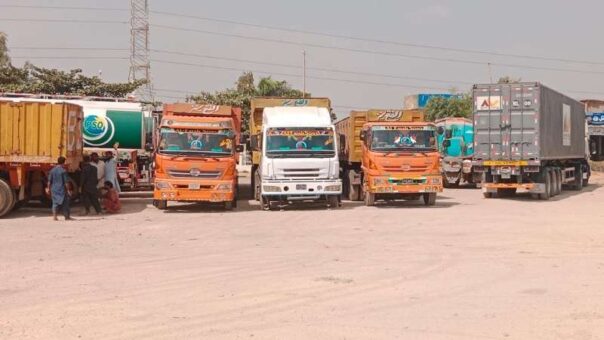
Pakistan’s strategic location makes it a vital transit corridor for regional and international trade. The Customs Act, 1969, through Sections 127 to 129A, provides a comprehensive legal framework governing the transit of goods within Pakistan and across Pakistan to foreign destinations, while ensuring revenue protection and regulatory control.
This article explains the law in plain language, highlights key conditions, and reflects the latest position for tax year 2026.
🔍 What Is Transit of Goods?
Transit of goods refers to the movement of imported or foreign goods:
• Through Pakistan, or
• Within Pakistan, or
• Across Pakistan to another country
👉 Without payment of customs duty, provided goods are not cleared for home consumption and all legal requirements are met.
📜 Legal Framework (2026)
| Section | Subject |
| Section 127 | Transit in the same conveyance |
| Section 128 | Transport through foreign territory |
| Section 129 | Transit across Pakistan to foreign territory |
| Section 129A | Levy of transit fee |
🚢 Section 127: Transit of Goods in the Same Conveyance
1️⃣ Transit Without Payment of Duty
Under Section 127(1):
• Goods imported in a conveyance (ship, aircraft, or vehicle)
• Clearly mentioned in the import manifest as “for transit”
• May be allowed to move:
o To another customs station in Pakistan, or
o To a destination outside Pakistan
• Without payment of customs duty at the transit station
✔ Subject to Section 15 and relevant rules
✔ Customs supervision remains applicable
2️⃣ Consumption of Stores and Provisions
Under Section 127(2):
• Stores and provisions imported on board a conveyance:
o Passing through Pakistan
o Headed to a foreign destination
• May be:
o Consumed on board
o Without payment of customs duty
📌 This applies only to on-board consumption, not off-loading.
🚛 Section 128: Transport of Goods Through Foreign Territory
Section 128 allows flexibility in inland movement:
• Goods may be transported:
o From one part of Pakistan to another
o Through foreign territory (e.g., via neighboring countries)
• Subject to:
o Prescribed rules
o Conditions ensuring due arrival at destination
✔ Often used for geographically efficient routing
✔ Security, tracking, and bonding requirements may apply
🌍 Section 129: Transit Across Pakistan to a Foreign Territory
Duty-Free Transit Across Pakistan
Under Section 129:
• Goods entered for transit across Pakistan:
o To a destination outside Pakistan
• May be allowed transit:
o Without payment of customs duty
o Subject to prescribed rules and safeguards
🚫 Government’s Power to Prohibit Transit
The Federal Government may:
• By notification in the official Gazette
• Prohibit:
o Certain goods
o Or classes of goods
• From being brought into Pakistan in transit, whether:
o By sea
o Land
o Air
📌 This power is usually exercised for:
• Security
• Public safety
• International obligations
💰 Section 129A: Levy of Transit Fee (2026)
• A transit fee may be imposed on:
o Goods in transit across Pakistan
• Fee rates are:
o Prescribed by the Federal Board of Revenue (FBR)
o Through official Gazette notifications
✔ Separate from customs duty
✔ Applicable even when duty is exempt
📊 Transit of Goods – Quick Comparison
| Category | Duty Payable | Fee Applicable | Key Condition |
| Same Conveyance Transit | ❌ No | Possible | Proper manifest |
| Transit to Foreign Country | ❌ No | ✔ Yes (129A) | Entry for transit |
| Through Foreign Territory | Depends on rules | Possible | Due arrival proof |
❓ Frequently Asked Questions (FAQs)
Q1: Are transit goods allowed to be sold in Pakistan?
No. Transit goods cannot be diverted or cleared for home consumption.
Q2: Is transit allowed without mentioning goods in the manifest?
No. Proper declaration in the import manifest is mandatory.
Q3: Can the government ban transit of certain goods?
Yes. Section 129 empowers the Federal Government to prohibit transit through notifications.
Q4: Is transit fee the same as customs duty?
No. Transit fee is a separate charge under Section 129A.
🚦 Why Transit Rules Matter in 2026
✔ Supports regional trade and connectivity
✔ Protects Pakistan’s customs revenue
✔ Ensures secure movement of foreign cargo
✔ Aligns with international transit conventions
🧠 Final Takeaway
Sections 127 to 129A of the Customs Act, 1969, as applicable in tax year 2026, provide a balanced legal framework—facilitating trade transit while safeguarding national and fiscal interests. With growing regional trade corridors, understanding transit provisions is essential for traders, carriers, and customs professionals.
⚠️ Disclaimer: This article is for general informational purposes only and does not constitute legal or tax advice. Readers should consult the Customs Act, 1969, relevant rules, and official FBR notifications or seek professional advice before relying on this information.