KARACHI: The Pak Rupee fell by two paisas against US dollar on Thursday in early day trading.
The dollar is being traded at Rs140.29 in Interbank Foreign Exchange Market. The foreign currency market last day ended at Rs140.27.
KARACHI: The Pak Rupee fell by two paisas against US dollar on Thursday in early day trading.
The dollar is being traded at Rs140.29 in Interbank Foreign Exchange Market. The foreign currency market last day ended at Rs140.27.
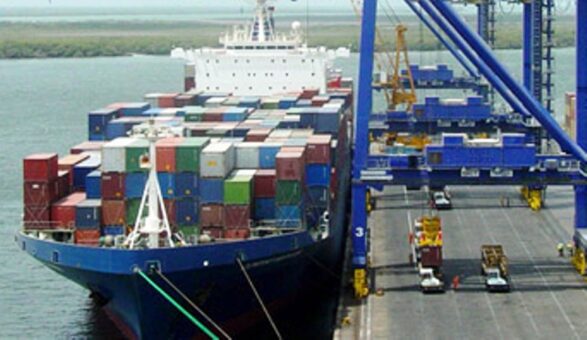
ISLAMABAD: The Economic Coordination Committee of the Cabinet (ECC) on Wednesday approved waiver of penal surcharges to the tune of Rs700 million on overstayed consignments at ports.
The ECC meeting which chaired by Finance Minister Asad Umar approved a proposal of Federal Board of Revenue (FBR) to waive the accumulated penal surcharges of Rs700 million off against overstayed consignments at ports.
The decision will enable importers to clear their overstayed cargoes and would also help reducing congestion at ports and bonded warehouses.
On a summary of the Petroleum Division, the ECC approved gas supply to Tall and adjacent areas of district Hangu, Khyber Pakhtunkhwa.
The Commerce Division gave a presentation about the significance of establishment of an Independent Insurance Regulator.
The ECC directed the Commerce Division to expedite the findings of the Commission, already formed on the subject, for making informed decision.
On a proposal of Petroleum Division regarding arrangements of additional 200 MMCFD of LNG from Qatar, the Committee directed Petroleum Division to carry out a comprehensive demand/supply analysis of LNG in the country, in consultation with stakeholders, including Law and Justice Division, and submit a summary to the Cabinet in this regard.
Maritime Affairs Division briefed ECC about the progress on new LNG Terminal.
The Finance Minister directed Maritime Division to expedite the process for establishment of new LNG terminal in view of the increasing demand for gas in the country.
On the issue of the submission of Pakistan Steels’ revival business plan, ECC directed the Ministry of Industries to submit its proposals within the next fortnight.
The Committee also accorded approval to the proposal of National Counter Terrorism Authority by granting it Technical Supplementary Grant of Rs133.156 million.
Later, the Finance Minister also presided over a meeting of the Cabinet Committee on Energy (CCoE) and reviewed various proposals about gas losses and power recovery plan presented by Petroleum and Power Divisions separately.
The Committee directed the Petroleum Division to take corrective measures to reduce gas losses.
It asked the Division to submit monthly report on Unaccounted for Gas (UfG) on the pattern of the report on electricity losses presented by the Power Division.
The Committee also directed both gas supply companies (SNGPL & SSGPL) to prepare a joint presentation, and present the same to Task Force on Energy before submission to CCoE in its next meeting.
In order to make recovery from the defaulters, CCoE directed Power Division to implement the Electricity Act in letter and spirit by disconnecting the connections of defaulters.
The Committee was briefed by the Power Division about the status on Efficiency Tests Report for Independent Power Producers (IPPs).
It was informed that the mandatory test had been carried out for all the seven units. The data analysis had been completed for five units while the same with regard to the remaining two units was presently underway.

ISLAMABAD: The Federal Board of Revenue (FBR) on Wednesday issued a notification regarding the transfers and postings of BS-18 and BS-19 officers of the Pakistan Customs Service (PCS).
(more…)
ISLAMABAD: IMF mission chief for Pakistan, Ernesto Ramirez-Rigo, visited Islamabad and Karachi during March 26-27, for introductory meetings with the authorities, said a statement on Wednesday.
Ramirez-Rigo assumed Pakistan mission chief responsibilities earlier this month. This was his first visit to the country.
In Islamabad, Ramirez-Rigo met with the Minister of Finance, Asad Umar, the Minister of Commerce, Razzak Dawood, the Minister of Power, Omer Ayub, the State Minister for Revenues Hammad Azhar, and several government senior officials, including the Finance Secretary, Younus Dagha, the Chairman of the Federal Board of Revenues, Jehanzeb Khan, and the Advisor to the Prime Minister on Institutional Reforms and Austerity, Ishrat Hussain.
In Karachi, he met with the Governor of the State Bank of Pakistan Tariq Bajwa and other senior officials from the State Bank of Pakistan.
Discussions focused on recent economic developments and prospects for Pakistan in the context of ongoing discussions toward an IMF-supported program.
ISLAMABAD: Federal Board of Revenue (FBR) has made special arrangements for income tax return filing on the last two days of this month falling on Saturday and Sunday (March 30 & 31), which are also last two days for filing deadline.
The FBR directed all Large Taxpayers Units (LTUs) and Regional Tax Offices (RTOs) to remain open and observe extended working hours till 10:00pm on Saturday March 30 and till 12:00 mid-night on Sunday March 31 to facilitate the taxpayers in payment of duty and taxes.
The FBR has extended the last date for filing income tax returns for tax year 2018 and March 31 is the last date for filing returns.
The FBR’s facilitation has been aimed to provide maximum support to taxpayers in fulfilling their liabilities.
The FBR directed chief commissioners to establish liaison with State Bank of Pakistan (SBP) and authorized branches of National Bank of Pakistan (NBP) to ensure transfer of tax collection by these branches to the respective branches of SBP on the same date so as to account for the same towards the collection for the month of March 2019.
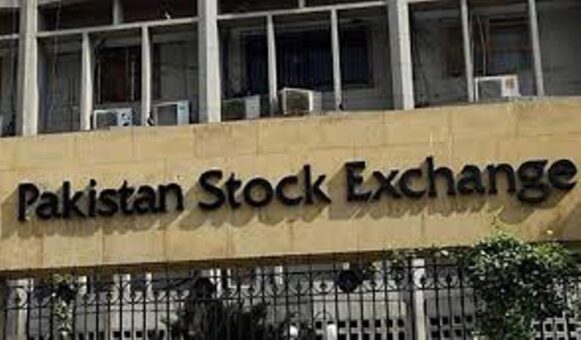
KARACHI: The equity market climbed up by 636 points on Wednesday following expectation of rate hike in monetary policy to be announced on March 29.
The benchmark KSE-100 of Pakistan Stock Exchange (PSX) closed at 38,965 points as against 38,329 points showing an increase of 636 points.
Analysts at Arif Habib Limited said that the market jumped consecutively on the second day, just before the announcement of Monetary Policy on March 29th.
Although rate hike expectations are talk of the town, market apparently didn’t pay heed to such warnings and buying activity was seen across the board.
Highlight of the volumes was UNITY’s right, which saw trading volume of 80M against total market volume of 228M shares (35 percent).
Cement sector led the volumes with 18M shares, resulting in DGKC, LUCK, and MLCF trading at and near upper circuits. Besides, WTL and BOP among Technology and Banking Sectors contributed significantly to trading volumes.
Sectors contributing to the performance include E&P (+118 points), Fertilizer (+99 points), Cement (+97 points), Banks (+67 points), O&GMCs (+59 points).
Volumes increased significantly from 86.4mn shares to 228.7mn shares (+165 percent DoD). Average traded value also increased by 73 percent to reach US$ 43.8mn as against US$ 25.3mn.
Stocks that contributed significantly to the volumes include UNITYR1, WTL, KEL, BOP and UNITY, which formed 55 percent of total volumes.
Stocks that contributed positively include PPL (+67 points), LUCK (+45 points), ENGRO (+36 points), UBL (+36 points), and OGDC (+33 points). Stocks that contributed negatively include NESTLE (-16 points), MCB (-13 points), MUREB (-5 points), HBL (-4 points) and INDU (-3 points).
KARACHI: The Pak Rupee ended flat against dollar on Wednesday despite recovery in the intra-day trading.
The rupee ended Rs140.28 to the dollar from previous day’s closing of Rs140.27 in interbank foreign exchange market.
The interbank foreign exchange market was initiated in the range of Rs140.10 and Rs140.20.
The market recorded day high of Rs140.29 and low of Rs140.20 and closed at Rs140.28.
The exchange rates in open market were remained unchanged.
The buying and selling of dollar was recorded at Rs140.50/Rs141.00, the same previous days level, in cash ready market.
ISLAMABAD: Federal Board of Revenue (FBR) on Wednesday notified promotion of 20 Inland Revenue Service (IRS) officers to BS-19 from BS-18 with immediate effect.
The following BS-18 officers of Inland Revenue Service are promoted to
BS-19 on regular basis with immediate effect :-
1. Ms. Kehkshan Khan
2. Mr. Tanveer Iqbal
3. Mr. Rais Humayun Abdul Hayee
4. Mr. Mukhtiar Ahmad Shar
5. Syed Arsalan Qudus Bukhari
6. Ms. Rukhsana Arif
7. Mr. Muhammad Umer Yunus
8. Mr. Riaz Khan
9. Mr. Muhammad Qasswar Hussain
10. Mr. Naheed Ahmad
11. Mr. Bilal Ahmed
12. Ms. Saher Aftab Butt
13. Mr. Muhammad Shakil Anwar
14. Mr. Ghulam Hussain
15. Mr. Usman Ahmed Khan
16. Mr. Sultan Muhammad Nawaz Nasir
17. Ms. Huma Sarwar
18. Mr. Bahader Sher Afridi
19. Mr. Amanullah Virk
20. Ms. Ayesha Ranjha
The officers at Sr. Nos. 03, 13, 19 & 20 will actualize their promotion from the date of their return from deputation and join FBR (HQ), Islamabad. 3. The officer at Sr. No. 01 is recommended for promotion to BS-19 on probation
for one year under Rule 6(2) of Civil Servants (APT) Rules, 1973 and subject to two special reports after every six months each from the date of her promotion.
The officer at Sr. No. 09 is promoted subject to completion of satisfactory PERs, without any adverse entry/remarks, for the period 25-11-2017 to 30-06-2018. 5. The officers who are drawing performance allowance will continue to draw the same after regular promotion to BS-19.
The officers already working in OPS as Additional Commissioner/Additional
Director/Secretary FBR (HQ), Islamabad will actualize their promotion against the present place of posting.
For actualization of promotion of the remaining officers, transfer/ posting
order will be issued separately.
FBR congratulates the aforementioned officers on their regular promotion
to BS-19.
ISLAMABAD: Federal Board of Revenue (FBR) on Wednesday announced promotion of Pakistan Customs Service (PCS) officers from BS-18 to BS-19 with immediate effect.
Following officers have been promoted on regular basis with immediate effect :-
1. Nawabzadi Aliya Dilawar Khanji
2. Dr. Salamat Ali
3. Ahmad Affan
4. Muhammad Ali Malik
5. Tahir Abbas
6. Kamran Ali Rana
7. Ansir Anise
8. Riaz Hussain
9. Tahir Habib Cheema
10. Saleha Zakir Shah
11. Saima Ayyaz
12. Kanwal Ali
13. Aftab Ullah Shah
14. Ali Zeb Khan
15. Naveed Abbas Memon
16. Imran Razzaq
The FBR said the officers at Sr. No. 1, 6 & 7 are promoted to BS-19 on probation for one year under Rule 6(2) of Civil Servants (APT) Rules, 1973 and subject to two special reports after every
six months from the date of their promotion.
The officers, who are drawing performance allowance, will continue to draw the same after promotion.
The officers appearing at Serial No. 5,7 & 9 will actualize their promotion from the date they return from deputation and join FBR.
The officers mentioned at Sr. No. 1, 2 & 3 may actualize their promotion against their present places of posting in BS-19.
KARACHI: The present drug policy is silent on adjustment of prices under foreign currency movement, State Bank of Pakistan (SBP) said in its latest report.
“The latest drug pricing policy does not say anything about the adjustment of prices under foreign currency movements. The policy becomes ineffective in mitigating the external risk, given the origin of imported raw material is mostly different from India and Bangladesh,” the SBP said.
Drug Regulatory Authority of Pakistan (DRAP) is the implementing body of the Drugs Act of 1976, which was promulgated to ensure availability of medicines at affordable prices.
DRAP exerts control over all the aspects of drugs market. While the current policy regime has kept prices mostly at par with inflation in the medium term, the pricing policy is the cause of disagreement between the private sector and the regulator.
The central bank said that pharmaceutical industry has extensive exposure to exchange rate risk. “Depreciation of the PKR has a direct impact on this industry. Its profitability gets squeezed, as producers are not allowed a timely and commensurable increase in the prices of their products,” the SBP added.
The dependence on imported materials is a critical factor in limiting the growth potential of the industry under lagged adjustment of prices, it added.
The SBP said that extensive delay in adjustment of prices has made investors, both foreign and domestic, wary of investing in pharmaceutical sector.
The government fixes the maximum price of medicines based on the respective cost of production of each drug. A generic case involves a lengthy regulatory procedure (typically taking 1-2 years) to determine the prices of medicines.
The process requires the eventual approval from the federal cabinet.
Retrospective analysis of prices reveals interesting insights to the patterns of price adjustments, i.e. prolonged periods of low medicinal inflation, followed by periods of significant adjustments. These price corrections have been more frequent in recent times.
In this regard, DRAP issued a new drug pricing policy in 2018. To overcome the lag issues, domestic price of medicines were linked with average price of the same dosage form and strength of the same brand in India and Bangladesh.
Moreover, the policy also allowed annual price increments equal to 70 percent of the annual inflation rate with a cap of 7 percent.
Whilst the latest policy has a more relaxed tone compared to the previous one, it still has some issues. First, it should be noted that compared to Pakistan, India has very different cost dynamics, as it is one of the largest producers and exporters of generic drugs and its raw material.
On the other hand, Pakistan’s pharma industry is heavily reliant on raw material imports and its industry is inward looking.
In addition to slow regulatory framework, another critical factor is the lack of government support for the industry, especially in R&D required for obtaining international certification from the US Food and Drug Administration (FDA).
This certification is a prerequisite for exporting medicines to developed countries where profit margins are higher. On the contrary, India has state of the art research labs.
It gains significant advantages by fast-tracking its FDA approvals as soon as patents expire. As a result, India’s pharmaceutical industry has not only attained economies of scale but helps in earning foreign exchange as well.