
KARACHI: Federation of Pakistan Chambers of Commerce and Industry (FPCCI) has proposed reducing sales tax to single digit from existing 17 percent. In its pre-budget conference on Wednesday, the apex trade body present its set of proposals for budget 2019/2020.
(more…)Month: April 2019
-
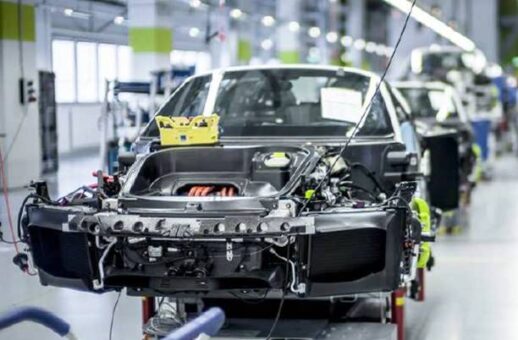
Car sales down 4 percent on economic slowdown, high prices
KARACHI: The sales of locally assembled cars have declined by 4 percent during first nine months (July-March) 2018/2019 owing to slowdown in economy and recent rise in car prices, analysts said on Wednesday.
The sales of locally assembled cars fell to 185,023 units during July – March 2018/2019 as compared with 192,734 units in the corresponding period of the last fiscal year, according to Pakistan Auto Manufacturers Association (PAMA).
Analysts at Topline Securities attributed the decline in car sales to slowdown in economy and rise in recent car prices.
Indus Motors (INDU) reported 11 percent YoY decline during March 2019 mainly on account of lower sales of Fortuner & Hilux, which were down 63 percent and 65 percent, respectively, YoY.
The analysts said that this was due to 10 percent Federal Excise Duty (FED) imposed on above 1700 CC engine cars.
Corolla sales posted growth of 2 percent YoY.
Pak Suzuki (PSMC) reported 23 percent YoY growth in sales led by growth in Wagon R with growth of 63 percent YoY.
Other major contributors in overall growth were Cultus, Bolan and Ravi, up by 17 percent, 38 percent and 36 percent YoY, respectively.
Swift was the only PSMC variant to record decline, down 16 percent YoY.
Honda cars (HCAR) sales fell 29 percent YoY in Mar 2019, steepest YoY decline during a month since May 2012. In addition to economic factors, decline in City and Civic variants is attributed to anticipation of a launch of new variant (Civic 1.5 Turbo new variant launched in April-19).
The analysts said that overall demand of automobiles is expected to remain subdued due to recent hike in policy rate (+475bps since Jan 2018 to 10.75 percent), resulting in higher borrowing cost for auto financing.
Furthermore, incremental cost as a result of rupee devaluation & increasing inflation has led to higher car prices, impacting purchasing power of car buyers.
To note, the government is mulling over removal of 10 percent FED on engines with 1700CC above, as per news reports.
However no official announcement has yet been made, adding to the uncertainty to the car sales with engine size of over 1700CC.
-
SBP sells treasury bills worth Rs415.72 billion at above 11pc cut-off yield
KARACHI: State Bank of Pakistan (SBP) raised an amount of Rs415.72 billion through sale of Market Treasury Bills (MTBs) at an auction held on Wednesday.
The SBP received bids for three- and six months securities at realized value of Rs2,730 billion at face value of Rs2,799 billion. The central bank did not receive bids for 12-month maturities.
The bids were mainly received in 3-moth MTBs at realized amount of Rs2,729 billion at face value of Rs2,798.74 billion. The central bank received bids for six-month treasury papers of Rs758 million at face value of Rs800 million.
The SBP accepted 3-month maturities at realized value of Rs415.58 billion at face value of Rs426.103 billion. The cut-off yield was at 11 percent.
The central bank accepted bids in six-month maturities of Rs142.14 million at face value of Rs150 million. The cut-off yield was at 11.0899 percent.
The SBP raised the funds above the auction target of Rs350 billion.
The cut-off yield is higher than the key policy rate of 10.75 percent.
Experts said that the banks were anticipating further hike in interest rate in upcoming policy. The expectation of increase in interest rates showed the interest of banks in short-term maturities.
-

Exxon Mobil to present progress report to PM on offshore drilling near Karachi
KARACHI: Exxon Mobil, an American multinational oil and gas corporation, will present progress report on offshore drilling near Karachi to Prime Minister Imran Khan.
(more…) -
Trade deficit contracts by 13.02 percent to $23.67 billion in nine months
ISLAMABAD: Pakistan’s trade deficit has contracted by 13.02 percent during first nine months (July – March) 2018/2019 due to significant decline in import bill in the same period, according to trade data released by Pakistan Bureau of Statistics (PBS) on Wednesday.
The trade deficit shrank to $23.67 billion during first nine months of current fiscal year as compared with the deficit of $27.21 billion in the corresponding period of the last fiscal year.
The import bill during the first nine months was declined by 8 percent to $40.75 billion as compared with $44.28 billion in the same period of the last fiscal year.
Experts said that the imposition of regulatory duty on luxury and non-essential items during the last budget and followed in the supplementary budget helped in curtailing import growth.
However, growth in exports was remained flat. The exports were at $17.08 billion during the period under review as compared with $17.06 billion in the same period of the last fiscal year.
The import bill sharply declined by 21 percent in the month of March 2019 to $4.15 billion as compared with $5.25 billion in the same month of the last fiscal year.
On the other hand the exports also fell by 11.13 percent in the month under review. The exports exhibited decline of 11.13 percent decline to $1.98 billion in March 2019 as compared with $2.28 billion in the same month of last year.
The reduction in import bill in March 2019 resulted in narrowed trade deficit for the month. The trade deficit was contracted by 28.07 percent to $2.17 billion in March 2019 as compared with $3.02 billion in March 2018.
-
Remittances increase to $16.1 billion in July – March
KARACHI: Overseas Pakistani workers have remitted $16.1 billion during first nine months (July – March) 2018/2019 as compared with $14.8 billion in the same period of the last fiscal year, showing 8.74 percent growth.
State Bank of Pakistan (SBP) on Wednesday said that during March 2019, the inflow of worker’s remittances amounted to US $1745.80 million, which is 10.73 percent higher than February 2019 and 3.20 percent lower than March 2018.
The country wise details for the month of March 2019 show that inflows from Saudi Arabia, UAE, USA, UK, GCC countries (including Bahrain, Kuwait, Qatar and Oman) and EU countries amounted to US $405.87 million, US $378.14 million, US $271.11 million, US $281.26 million, US $167.80 million and US $44.20 million respectively compared with the inflow of US $427.62 million, US $424.89 million, US $247.17 million, US $258.96 million, US $183.79 million and US $58.91 million respectively in March 2018.
Remittances received from Malaysia, Norway, Switzerland, Australia, Canada, Japan and other countries during March 2019 amounted to US $197.41 million together as against US $202.26 million received in March 2018.
-
KSE-100 index falls 33-month low on revision in growth forecast
KARACHI: The benchmark KSE-100 index of Pakistan Stock Exchange (PSX) plunged to 33-month low on Wednesday due to downward revision in growth forecast by IMF for Pakistan.
Analysts at Topline Securities said that KSE 100 index closed at 36,579 index level (-551 point or 1.5 percent) which is a 33-month low. Downward revision in growth forecast by IMF and pressure on cement stocks amid cut in cement bag prices led to selling pressure in the market.
As per IMF, Pakistan’s economy will grow at an average rate 2.5 percent during the next five years and its external imbalance will remain elevated; growth rate of 2.5 percent is the lowest economic growth rate predicted by any multilateral lender.
Cement sector continued its weak performance eroding 109 points from index.
Traded volume was down 12 percent to 141 million shares whereas trade value was down 30 percent to US$29.1 million.
-
Rupee makes gain against dollar
KARACHI: The Pak Rupee made slight gain against dollar on Wednesday amid lower demand for import and corporate payments.
The rupee ended Rs141.38 to the dollar from previous day’s closing of Rs141.39 in interbank foreign exchange market.
The interbank foreign exchange market was initiated in the range of Rs141.39 and 141.40.
The market recorded day high of Rs141.39 and low of Rs141.37 and closed at Rs141.38.
In open market the exchange rate was ended with 20 paisas gain in rupee value.
The buying and selling of dollar was recorded at Rs142.00/Rs142.50 in from previous day’s closing of Rs142.30/Rs142.70 in cash ready market.
Related Stories
Rupee ends firmer in rang bound trading -

FBR promotes 49 Inland Revenue Officers to Assistant Commissioner BS-17
ISLAMABAD: Federal Board of Revenue (FBR) o Wednesday promoted 49 officers of Inland Revenue from BS-16 to the post of Assistant Commissioner Inland Revenue (BS-17) with immediate effect.
Following are the officers, who are promoted by the FBR:
01. Farrukh Rehman, Regional Tax Office (RTO), Faisalabad
02. Amjad Ali Khan, Corporate RTO, Lahore
03. Kanwar Abdul Rahim, RTO Multan
04. Muhammad Akbar, RTO Multan
05. Iftikhar Ahmad Lali, RTO Faisalabad
06. Malik Muhammad Arshad, Corporate RTO, Lahore
07. Mehrur Rehman, RTO Peshawar,
08. Abid Hussain, RTO Peshawar
09. Fazl-e-Amin, RTO Peshawar
10. Asim Sana Naik, Corporate RTO Lahore
11. Khuda Bux Abbasi, RTO Sukkur
12. Tafukhur Zahoor, Directorate of Internal Audit (IR), Lahore
13. Muhammad Pervez Khan, Large Taxpayers Unit (LTU) Karachi
14. Darshan Lal, Corporate RTO Karachi
15. Muhammad Khan, Corporate RTO Lahore
16. Tauheed Raziq Khan, RTO Multan
17. Muhammad Humayun, RTO Peshawar
18. Aslam Pervez, RTO Peshawar
19. Qaisar Khan, RTO Peshawar
20. Mazhar Javed, RTO Sahiwal
21. Muhammad Zafar Iqbal, RTO Multan
22. Muhammad Mazhar Ejaz, RTO Faisalabad
23. Ashfaq Ahmed, LTU Karachi
24. Muhammad Yaqub Malik, RTO Islamabad
25. Akbar Ali Shad, Internal Audit (IR) Islamabad
26. Muhammad Mohsin, RTO-II Islamabad
27. Farasat Yar Khan, Corporate RTO Karachi
28. Ejaz Iqbal Raja, RTO Rawalpindi
29. Muhammad Asghar, RTO Faisalabad
30. Azizur Rehman Awan, RTO Quetta
31. Saleem Raza, RTO Sargodha
32. Abdul Qayyum, LTU Islamabad
33. Ansar Hussain, Internal Audit IR Rawalpindi
34. Zia Ahmad Butt, LTU Islamabad
35. Muhammad Rafiq Awan, LTU Karachi
36. Khalid Ali Siddiqui, LTU II Karachi
37. Muhammad Irfan Siddiqui, LTU Karachi
38. Mustafa Tayyab Ali, Corporate RTO Karachi
39. Muhammad Naeem Sialvi, RTO II Lahore
40. Aftab Ahmad Nasir, RTO Faisalabad
41. Javed Iqbal, RTO Faisalabad
42. Muhammad Altaf Anjum, RTO Faisalabad
43. Jamshed Khan, Directorate of Intelligence and Investigation, IR, Peshawar
44. Muhammad Zafar, RTO Islamabad
45. Ishtiaq Ahmed, RTO Gujranwala
46. Mehboob Ahmed, RTO Gujranwala
47. Mehboob Ahmad, RTO Gujranwala
48. Noor Muhammad Baloch, RTO III Karachi
49. Muhammad Shahzad, Corporate RTO Karachi
The FBR said that the promotion would take effect from the date of their joining, subject to the
conditions that no disciplinary proceedings are pending against them.
-
Sales Tax Act 1990: refund of input tax payable in 45 days
KARACHI: Federal Board of Revenue (FBR) is required to pay sales tax refunds to the taxpayers in 45 days from the date of filing claim.
According to recently updated Sales Tax Act, 1990 issued by the FBR, the Section 10 explained the refund of input tax.
Section 10: Refund of input tax
Sub-Section (1): If the input tax paid by a registered person on taxable purchases made during a tax period exceeds the output tax on account of zero rated local supplies or export made during that tax period, the excess amount of input tax shall be refunded to the registered person not later than forty-five days of filing of refund claim in such manner and subject to such conditions as the Board may, by notification in the official Gazette specify:
Provided that in case of excess input tax against supplies other than zero-rated or exports, such excess input tax may be carried forward to the next tax period, along with the input tax as is not adjustable in terms of sub-section (1) of section 8B, and shall be treated as input tax for that period and the Board may, subject to such conditions and restrictions as it may impose, by notification in the official Gazette, prescribe the procedure for refund of such excess input tax.
Provided further that the Board may, from such date and subject to such conditions and restrictions as it may impose, by notification in the official Gazette, direct that refund of input tax against exports shall be paid along with duty drawback at the rates notified in the such notification.
Sub-Section (2): If a registered person is liable to pay any tax, default surcharge or penalty payable under any law administered by the Board, the refund of input tax shall be made after adjustment of unpaid outstanding amount of tax or, as the case may, default surcharge and penalty.
Sub-Section (3): Where there is reason to believe that a person has claimed input tax credit or refund which was not admissible to him, the proceedings against him shall be completed within sixty days. For the purposes of enquiry or audit or investigation regarding admissibility of the refund claim, the period of sixty days may be extended up to one hundred and twenty days by an officer not below the rank of an Additional Commissioner Inland Revenue and the Board may, for reasons to be recorded in writing, extend the aforesaid period which shall in no case exceed nine months.