Day: May 18, 2019

  • Higher duty rates proposed for car, luxury items import

    Higher duty rates proposed for car, luxury items import

    KARACHI: The Federal Board of Revenue (FBR) has been suggested to impose higher rates of duties on import of non-essential and luxury items in order to reduce current account deficit.

    Association of Chartered Certified Accountants (ACCA) in its tax proposals for budget 2019/2020 said that tangible measures should be taken to reduce the import burden.

    “Heavy duties should be levied on all non-essential imports like expensive electronics, cars & luxury items.”

    In addition incentives should be announced for local industry to encourage domestic products, it suggested.

    In other key reforms, the ACCA said that agricultural sector needs to be re-evaluated.

    Being an agricultural country its GDP share must be according to its volume. Currently its share in GDP is 24 percent while it has the potential to reach up to 55 percent.

    Large landowners should be taxed at minimal rates i.e. 7 percent with that revenue used to subsidize seeds, fertilizers, water, electricity, fuel, etc. for the small farmers.

    Cheap and low quality smuggling and imports from India should be controlled.

    The ACCA said that for Pakistan, a country of 220 million people, human capital is a huge resource in new era, but unfortunately due to incompetent and poor policies we are unable to convert this power in to workable force, un-employment has increased to almost 6 percent and over 4 million people are unemployed.

    Keeping in view the above indicators the government needs to encourage services sectors, new industries and agriculture.

    Banking sector should be used to incentivize and promote a culture of entrepreneurship.

    Incentives must be announced for Services sectors particularly Telecom, home based industries, young entrepreneurship programs with special focus on women.

  • Tax amnesty scheme step in right direction: FPCCI

    Tax amnesty scheme step in right direction: FPCCI

    KARACHI: The members of Federation of Pakistan Chambers and Commerce of Industry (FPCCI) have unanimously declared the recently announced tax amnesty by the present government is step in right direction.

    The FPCCI held an emergent meeting of its members at its head office Karachi on Saturday under the chairmanship of Abdul Rauf Mukhtar, Acting President of FPCCI and reviewed/discussed the new tax amnesty scheme namely “Asset Declaration Scheme 2019” as announced by the PTI government which has come in to effect through a Presidential Ordinance.

    The meeting was attended by S.M. Muneer, leader of the Business Community and Former President of FPCCI; Dr. Mirza Ikhtiar Baig, Sr. Vice Presidents; Vice Presidents FPCCI Arshad Jamal, Muslim Muhammadi, Waqar Mehmood Khan and Noor Ahmed Khan, Zubair Tufail, Former President FPCCI, Former Sr. Vice Presidents FPCCI Khalid Tawab, Syed Mazhar Ali Nasir and Aamer Ata Bajwa, Former Vice Presidents Hanif Gohar, Shakil Dhingra, Akbar Abdullah and other representatives of trade and industry.

    FPCCI acting president Abdul Rauf Mukhtar termed the scheme as a right step in the right direction with the objective to bring the tax evaders under the tax net, enhancing the country’s revenue base, documentation of economy, curtailing the size of ever increasing black economy and to bring dead assets in the mainstream of economy and make them functional.

    He also urged the government to ensure complete secrecy and confidentiality of the declarants’ data to enhance the confidence of tax payers in the scheme- a pre-requisite for success for any scheme.

    Highlighting salient features of the scheme, the FPCCI Acting President informed, “The rates of tax imposed on undisclosed assets, sales and expenditures would be 4 percent on all assets; rate of tax would be 1.5 percent on domestic immovable properties; rates of tax would be 6 percent on foreign liquid assets not repatriated; rate of tax would be 4 percent on unexplained expenditure and rate of tax would be 2 percent on undisclosed sales.”

    The participants termed the 4 percent tax rate as attractive for legalisation of black money held in the form of expenditures, sales and assets including foreign assets; however, they said that duration of the scheme is relatively less as the scheme would offer a period of 45 days to people for declaration of their undeclared assets along with payment of taxes until June 30, 2019.

    They added that the PTI government announced its first tax amnesty scheme for whitening of undisclosed expenditures, sales and assets including foreign assets at nominal tax rates and were of the unanimous opinion that the time period of the scheme should be extended beyond June 30, 2019 up to December 31, 2019.

    They appreciated the FBR’s move to issue the scheme in Urdu language as well as in simplified declaration form.

    They were of the opinion that legalization of undeclared assets at 4 percent is very attractive although the rates are comparatively higher as compared to last amnesty scheme.

    They added for the first time lucrative rate of 1.5 percent has been offered for real estate sector.

    They, referring to the size of the parallel economy were of the opinion that resolution of real state and bearer instruments issues were necessary to clip the wings of grey economy otherwise these would be surfacing periodically in future and the government would have to offer amnesty scheme again and again.

    They also lauded government efforts to broadening the tax base and enhance tax to GDP ratio as it was one of the lowest in the world.

    The participants were of the opinion that this time the scope of the scheme would be for those avenues which were not covered in earlier ones like sales tax and benami assets especially benami bank accounts.

    The members urged the government to publicize the scheme rigorously because that one may who may not be aware the penalties associated with it for not availing the scheme, including confiscation and imprisonment, and that this is the very last chance to avail it.

    They also proposed that the limit of Rs5 million for gold jewelry be withdrawn and the condition of depositing cash in hand in bank to avail the scheme be also removed.

  • SBP may continue with monetary policy tightening; 100 basis points increase likely

    SBP may continue with monetary policy tightening; 100 basis points increase likely

    KARACHI: The State Bank of Pakistan (SBP) likely to increase key policy rate by 100 basis points in the next monetary policy announcement scheduled for May 20, 2019, analysts said.

    Analysts at Arif Habib Limited forecast another rate hike of 100bps in policy rate from 10.75 percent to 11.75 percent in the upcoming monetary policy.

    The aggressive monetary tightening is expected to continue by the central bank as it is going to be the seventh consecutive rate hike, they said.

    The monetary tightening is expected on the back of

    i) rising inflationary pressure due to rise in prices of petroleum products and essential food items coupled with continuous slide of PKR leading to surge in prices of imported and local products (sold on import parity),

    ii) mounting Fiscal Deficit despite sharp cut in PSDP and rationalization of tariffs and duties, and

    iii) narrowing real interest rate as it declined to 1.66% in May’19 compared to last four year average of 2.75%.

    The analysts believed the SBP is adopting a proactive stance to increase policy rate on account of higher inflation in upcoming months alongside attempting to curtail the current account deficit.

    Since October 2011, the analysts observed that during International Monetary Fund (IMF) period real interest rate (RIR) has always remained on the higher side at an average of 3.1 percent compared to an average of 2.2 percent in non-IMF period.

    “This depicts that the IMF expects an increase in discount rate for sustainability despite lesser CPI during the period,” they added.

    Furthermore, it seems like the money market has already incorporated the rate hike which is essential to fulfill the gap of 61bps between 12-M T-Bills (11.86 percent) and Discount Rate (11.25 percent).

    The analysts conducted a short survey with institutional investors regarding their view on 1) interest rate in the upcoming Monetary Policy Statement (MPS) and 2) outlook on interest rates going forward.

    Majority of the respondents (53 percent) are of the view that the interest rates are likely to see a 100 bps spike in the upcoming MPS.

    Only 12 percent of the respondents opined that the rates may see a 150 bps surge.

    With regards to whether interest rates have peaked, 71 percent of the respondents are of the view that the rate hike era is yet to halt and will see further hikes going forward.

    It is asked the poll respondents about their 1-Yr forward view on the interest rate cycle. About 48 percent of the respondents are of the view that interest rates will see a surge of 50-100 bps in the next one year.

    Around 29 percent of the respondents do not see any further rate hike following the upcoming MPS.

    The analysts believed that May 2019 inflation to settle at 9.59 percent YoY compared to 4.19 percent in May 2018 and 8.82 percent in April 2019, respectively.

    They said inflation to continue its upward trajectory in upcoming months amid low base effect of last year, sharp increase in prices of perishable goods (fresh vegetables and fresh fruits), lagged impact of adverse exchange rate movements and gradually increasing international oil prices which may result in higher prices of local petroleum products (MoGas and HSD). This may keep inflation in the range of 9.0-9.5 percent for the next four months.

  • FBR chairman agrees on abolishing withholding tax on raw materials

    FBR chairman agrees on abolishing withholding tax on raw materials

    KARACHI: Shabbar Zaidi, Chairman, Federal Board of Revenue (FBR) on Saturday asked business community to provide list of raw material for reducing tax rates on import stage.

    Addressing the business community at Karachi Chamber of Commerce and Industry (KCCI), Shabbar Zaidi agreed with the business community that there should not be withholding tax on import of raw material.

    The KCCI members raised the issue that withholding tax rates ranging 3 percent to 6 percent were imposed on import of raw materials.

    “Yes. There should not be withholding tax on raw material,” Zaidi said and asked the KCCI to provide list for taking action before the next budget.

    Talking on Amnesty Scheme – 2019, the chairman said that the asset declaration scheme was clear and there was no ambiguity.

    He said that the scheme would be part of the Finance Bill for formal approval from the parliament and it would be the same as promulgated through the presidential ordinance.

    The chairman said that the rules were being formulated for intending declarants.

    Shabbar Zaidi also talked about smuggling and misuse of tax concessions.

    He said that tax relief may be given to small number of raw materials but it cannot be extended to all imported goods.

    He said that Afghan Transit Trade was used for smuggling into Pakistan. “But there are other ways to import illegal goods into the country,” he added.

    The chairman asked the business community that once they declare the smuggled goods were illegal for selling in the local market. “If the business community support and promise there will be no protest then the raids against illicit goods will be launched from tomorrow,” the chairman added.

  • Rupee falls by 4.58 percent against dollar in a week

    Rupee falls by 4.58 percent against dollar in a week

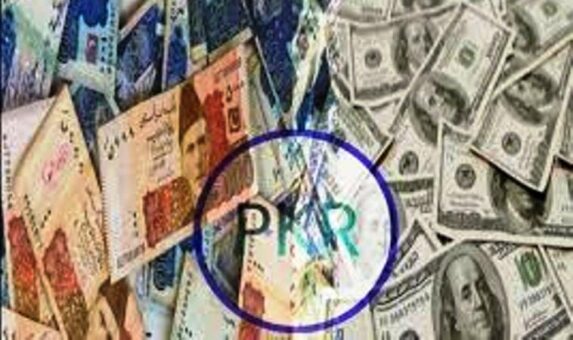
    KARACHI: The rupee fell by 4.58 percent against dollar during the last week in interbank foreign exchange market. The fall mainly attributed to IMF loan program which was recently agreed by Pakistan.

    The dollar reached to record high by end of last weekly trading day on Friday. The interbank foreign exchange market ended Rs148.00 to a dollar.

    The country had agreed to the conditionalities involved in IMF’s Extended Fund Facility during this week. Since the initial agreement to the IMF program the financial markets of Pakistan had crashed mercilessly.

    Currency analysts said that the dollar appreciated by Rs6.48 during last trading week. The exchange rate was started the week at Rs141.40 and ended at Rs148.00 to the dollar in interbank foreign exchange market.

  • Weekly Review: Monetary policy to set market trend

    Weekly Review: Monetary policy to set market trend

    KARACHI: The change in key policy rate to be announced by the State Bank of Pakistan (SBP) on May 20 will set the market trend during the next week.

    “With monetary policy to be announced in the coming week investors are most likely to have a cautious approach and bearish sentiments may persist,” analysts at Arif Habib Limited said on Saturday.

    Given uncertainty in PKR/USD parity, macro-economic concerns and lack of positive triggers we expect the market to trade range bound. However, attractive valuation may revive investor sentiments.

    The analysts said that the market continued to bleed this week, commencing on a negative note.

    The expectation of positive sentiments upon agreement of IMF Program did not materialize.

    Investors remained cautious due to tough measures attached with the program.

    However, investors took a sigh of relief mid-week owing to Pakistan’s emerging market status being retained, positive news regarding offshore drilling (final stages) and approval of amnesty scheme by the cabinet.

    The momentum, however, was short lived as the Pak Rupee witnessed depreciation against the USD and concerns persisted over a significant rate hike in the upcoming monetary policy statement.

    The market shed 1,550 points (down by 4.5 percent) WoW, closing at 33,166 points.

    Negative sector-wise contributions came from i) Fertilizers (335 points), ii) Cements (237 points), iii) Commercial Banks (229 points), iv) Oil & Gas Marketing Companies (219 points) and v) Pharmaceuticals (92 points).

    Whereas, sectors that contributed positively include i) Oil & Gas Exploration Companies (83 points) and ii) Power Generation (19 points).

    Scrip-wise negative contributions came from FFC (161 points), PSO (85 points), ENGRO (80 points) and HBL (76 points). Whereas, positive scrip-wise contributions came from PPL (109 points), HUBC (84 points), and POL (49 points).

    Foreign buying continued this week clocking-in at USD 8.2 million compared to a net buy of USD 10.4 million last week. Buying was witnessed in Commercial Banks (USD 8.2 million) and Cement (USD 5.6 million).

    On the domestic front, major selling was reported by Mutual Funds (USD 19.1 million) and Insurance Companies (USD 2.4 million). Average Volumes settled at 107 million shares (up by 46 percent WoW) while value traded clocked in at USD 29 million (up by 29 percent WoW).

  • PTBA suggests 5-year policy for gradually reducing sales tax rate

    PTBA suggests 5-year policy for gradually reducing sales tax rate

    KARACHI: Pakistan Tax Bar Association (PTBA) has suggested gradually reduction of sales tax rate under five-year policy and for first year the sales tax rate should be brought down to 15 percent from next fiscal year.

    In its budget proposals for 2019/2020, the PTBA said that present rate of Sales Tax at 17 percent with 3 percent value addition tax on commercial importers is too high.

    It said that there is a narrow tax base due to the high rate which induces tax evasion, under invoicing, corruption and smuggling.

    The PTBA proposed that this year as a first step Sales Tax Rate may be brought down to 15 percent and five year policy may be announced for reduction of rate of tax by 1 percent every year.

    Moreover, same rate of value addition tax (i.e., 3 percent) may be levied on luxury goods which are expected to be sold at a higher value addition in the local market as compared to other goods.

    “Higher value addition tax should be levied on import of luxurious items such as cosmetics, shampoos, cars, etc.”

    It said that the proposed amendments would assist in the expansion of tax base, reduction in smuggling and corruption, rise in government revenues and increased competitive edge and promotion of documentation of economy.

    Furthermore, the reduced tax rate will encourage the unregistered persons to get themselves registered, resulting in broadening of tax base.

    Higher value addition tax on luxury goods will not only generate additional revenue but will discourage import and also support the local industry.

  • Exemption on import of telecom equipment demanded to encourage investment

    Exemption on import of telecom equipment demanded to encourage investment

    KARACHI: Foreign and multinational companies have demanded the Federal Board of Revenue (FBR) to exempt sales tax and customs duty on import of telecom equipment in order to encourage investment in this sector.

    The Overseas Chamber of Commerce and Industry (OICCI) in its proposals for budget 2019/2020 said that telecom was very investment intensive sector and it should be given concessions in terms of reduced rates of customs duties and exemption of sales tax against import of telecom equipment.

    The exemption and concessions are important to promote the teledensity throughout the country especially in far flung areas so that the benefits of next generation mobile services can be reached to the masses living in backward areas, said the OICCI – the representative body of foreign investors and multinational companies in Pakistan.

    Previously, telecom sector was importing telecom equipment at 5 percent customs duty and zero percent sales tax under SRO 575, however, through Finance Act, 2015, this SRO was rescinded and consequently, the customs duties on network equipment have been increased from 5 percent to 20 percent and sales tax exemption has been removed.

    “The increase in custom duty and levy of sales tax has badly affected the pace of growth and digital inclusion as the cost of doing business has been significantly increased which is an additional barrier to network coverage in Pakistan,” the OICCI said.

    The roll out of 3G/4G network is still very much at the early stages and reduction in customs duties and restoration of sales tax exemption will help the operators to sustain the necessary investments.

    Therefore, the OICCI recommended to reinstate the concessionary custom duties/ exemption of sales tax (refer SRO 575) to encourage investments in IT/ telecom infrastructure.

  • Elimination of regulatory duty, additional customs duty on essential raw materials recommended

    Elimination of regulatory duty, additional customs duty on essential raw materials recommended

    KARACHI: Federal Board of Revenue (FBR) has been suggested to eliminate additional customs duty and regulatory duty on essential raw materials.

    The Overseas Investors Chamber of Commerce and Industry (OICCI) in its tax proposals recommended tariff rationalization in the forthcoming for budget 2019/2020.

    It recommended elimination of additional custom duty and regulatory duty on essential raw materials, which are either not locally available or in limited supply, used for local manufacturing.

    The OICCI – the representative body of foreign investors – also suggested bringing illicit trade into tax ambit.

    It said that on the basis of survey conducted by OICCI amongst its members, losses to the government exchequer due to Illicit trade (business in products which are either smuggled, counterfeit, under-invoiced imports, sold by unregistered manufacturer/seller, etc.) is estimated at Rs200 billion (tobacco alone estimated at Rs63 billion only).

    In order to control the Afghan Transit Trade, it recommended:

    Harmonize duty and tax rates to remove the incentive for evasion.

    Fix quantitative limits for imports based on genuine Afghan needs and size of population.

    Establish a basis of collecting duty/taxes at the point of entry into Pakistan for the account of the Afghanistan Government

    Fix import value in consultation with the brand owner in Pakistan.

    Customs procedures and Cross-border rules should be published for transparency.

    Containers coming back from Afghanistan should be checked by customs.

    There should be a negative list of items which are not utilized in Afghanistan; yet are imported and make their way into Pakistan.

    Streamlining of border crossing procedures on financial guarantee by banks and anti‐corruption measures.

    Export to Afghanistan be facilitated with simplified procedure by FBR and border control authorities.

    For stringent controls illicit trade, it recommended:

    Introduce tighter penalties for illicit trade across categories, including criminal liability across the value chain, including retailers, distributors and manufacturers

    Introduce a special division/ task force to raid retailers and manufacturers to confiscate and destroy illicit stocks

    Launch a media campaign to increase awareness in consumers of the harms of illicit products and discourage them from purchasing such products

    The OICCI suggested structural reforms in the customs:

    Do a thorough review of the custom regime, in consultation with brand owners, to address issues of counterfeiting, smuggling, and rationalization of duty structure and fixing of import Tariff prices.

    Custom valuation should be done on modern lines through online search and matching international and regional pricing and taking local legal importers of items on board.

    IPR (Intellectual Property Rights) laws implementation in Pakistan need to be strengthened. Special IPR tribunals may be formed for speedy trials leading towards IPR compliance at par with international standards of IPR enforceability.

    Unauthorized imports of counterfeit products should be effectively checked through registration of brands with the custom authorities in coordination with the original brand owner/ registered in Pakistan.

    Valuation ruling should be issued in consultation with the owner of the brand or its authorized representative.

    The data of import should be public (restrictively) to ensure transparency and this will also help in taking over of goods under section 25A of the Custom Act, 1969.

    Related Stories

    FBR notifies elimination, reduction of regulatory duties on several raw materials; issues SRO