Day: August 8, 2019

  • SBP imposes penalty on four banks for violating AML/KYC

    SBP imposes penalty on four banks for violating AML/KYC

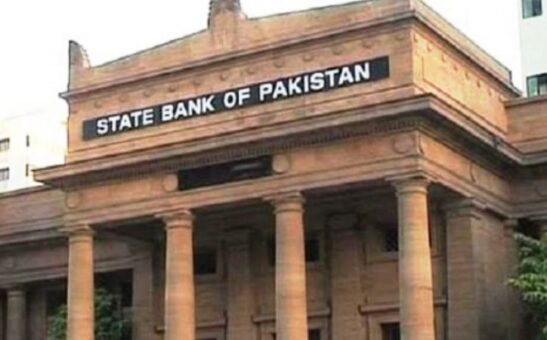
    KARACHI: The State Bank of Pakistan (SBP) has imposed penalty of Rs184.64 million upon four commercial banks for violating laws related to Anti-Money Laundering (AML)/Know Your Customer (KYC).

    The central bank on Thursday said that these penalty amount was imposed during the month of July 2019 against banks included: The Bank of Punjab; JS Bank Limited, Bank Al Habib Limited and Soneri Bank.

    The SBP imposed penalty of Rs13.072 million against The Bank of Punjab on July 15, 2019 for violating in areas of foreign exchange operations.

    In addition to penal action, the bank has been advised to improve its internal processes, the SBP said.

    The Bank of Punjab was again penalized with Rs16.119 million on July 18, 2019 for violating in areas of AML/KYC, unclaimed deposits.

    In addition to penal action, the bank has been advised for improvements in the areas of AML/KYC, the central bank added.

    The SBP penalized JS Bank Limited with penalty amount of Rs48.211 million on July 23, 2019 for violating in areas of AML/KYC.

    In addition to penal action, the bank has been advised to conduct a thorough review of relationship accounts, the SBP said.

    The SBP imposed penalty of Rs51.75 million upon Bank Al Habib Limited on July 25, 2019 for violating in areas of AML/KYC, FX Operations.

    In addition to penal action, the bank has been advised to update its systems and processes, and provide appropriate trainings to the concerned officials, the SBP said.

    The SBP imposed penalty of Rs55.48 million upon Soneri Bank Limited on July 25, 2019 for violating in areas of AML/KYC, Asset Quality, FX Operations.

    In addition to penal action, the SBP advised the bank to improve areas of AML/KYC and credit risk monitoring.

  • FBR defers action against traders till September 30

    FBR defers action against traders till September 30

    ISLAMABAD: Federal Board of Revenue (FBR) has decided not to take any adverse action under tax laws against traders till September 30, 2019 regarding information obtained through Computerized National Identity Card (CNIC).

    FBR Chairman Shabbar Zaidi held a meeting with all groups of traders of Pakistan on Thursday at FBR and discussed various issues about the traders.

    It has been agreed with consensus that no adverse action under the Income Tax Ordinance 2001 and Sales Tax Act, 1990 will be undertaken against the traders merely on the basis of information emanating from providing of CNIC under the Sales Tax Act, 1990 as required under the Finance Act, 2019 for traders till September 30, 2019.

    There will be discussion between the associations and bodies of the traders for the finalization of Scheme for small shopkeepers for which drafts have been furnished by various trade bodies which will be taken into consideration by the FBR.

    The condition of obtaining CNIC number for unregistered persons at the time of supplies by registered person was to applicable from August 01, 2019.

    The condition has been proposed to be applicable from July 01, 2019 through Finance Bill 2019.

    However, through Finance Act, 2019 this condition was to applicable from August 2019.

    An amendment has been introduced through Finance Bill 2019 to Section 23 of Sales Tax Act, 1990 under which it was now required specifically to mention particulars on invoices in Urdu or English language.

    Tax Invoice is also required to reflect CNIC Number of recipient in case supplies are made to unregistered person.

    The Finance Bill 2019 also proposed to require a supplier of textile yarn and fabric to mention count, denier and construction, in addition to description, on tax invoice at the time of making taxable supply.

  • Share market ends down by 539 points on border, political conflicts

    Share market ends down by 539 points on border, political conflicts

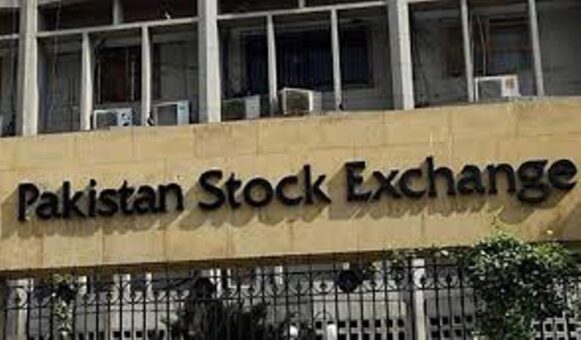
    KARACHI: The share market witnessed another decline of 539 points on Thursday amid escalating conflict between Pakistan and India and arrest of PML-N leader by National Accountability Bureau (NAB).

    The benchmark KSE-100 index closed at 29,738 points as against 30,277 points showing a decline of 539 points.

    Analysts at Topline Securities attributed the decline to the latest development amid escalating conflict between Indo-Pak, Pakistan has suspended all bilateral trade with India and has also resolved to downgrade its diplomatic relations with the neighboring country.

    Furthermore Political noise remained high after the arrest of PML-N leader Maryam Nawaz by National Accountability Bureau (NAB) in an alleged corruption scandal.

    Analysts at Arif Habib Limited said that as soon as the market opened, the Index went straight to the negative territory, diminishing the hopes of a technical pull back anticipated by Technical chartists.

    Confrontation at the border took the center stage not only in the Parliament but also at the bourse, denting investor sentiment.

    Persistent across the board selling from mutual funds has been a major problem for local investors, which have seen foreigners selling since past three years and now from local Funds.

    E&P, Autos, Banks and Cement Sectors again caused the onslaught and remained on the negative side. Cement sector led the volumes table with 15.2 million shares, followed by Power (14 million) and Banks (13.5 million). KEL remained on top with 10.3 million shares, followed by UNITY (7.8 million) and MLCF (6.7 million).

    Sectors contributing to the performance include Banks (-213 points), E&P (-150 points), Power (-62 points), Cement (-34 points), Fertilizer (-28 points), and Food (+17 points).
    Volumes increased significantly from 65.3 million shares to 108.7 million shares (+66 percent DoD). Average traded value also increased by 58 percent to reach US$ 27.4 million as against US$ 17.4 million.

    Stocks that contributed significantly to the volumes include KEL, UNITY, MLCF, LOTCHEM and ISL, which formed 31 percent of total volumes.

    Stocks that contributed positively include EFERT (+24 points), NESTLE (+14 points), PSO (+6 points), SHFA (+5 points) and KTML (+4 points). Stocks that contributed negatively include HBL (-55 points), POL (-54 points), OGDC (-53 points), MCB (-51 points) and HUBC (-43 points).

    Related Stories

    Stock market plunges by 723 points on weak financial results

  • Foreign exchange reserves fall by $41 million to $15.02 billion

    Foreign exchange reserves fall by $41 million to $15.02 billion

    KARACHI: The liquid foreign exchange reserves of the country fell by $41 million to $15.02 billion by week ended August 02, 2019 as compared with $15.061 billion a week ago, State Bank of Pakistan (SBP) said on Thursday.

    The foreign exchange reserves held by the SBP fell by $38 million to $7.729 billion by week ended under review as compared with $7.767 billion by week ended July 26, 2019.

    The SBP said that its official reserves were declined due to external debt servicing and other official payments.

    The foreign exchange reserves held by commercial banks were flat at $7.291 billion by week ended August 02, 2019 as compared with $7.294 billion a week ago.

    Related Posts

    Foreign exchange reserves increase to $15.062 billion

  • Rupee ends unchanged against dollar

    Rupee ends unchanged against dollar

    KARACHI: The Pak Rupee ended unchanged against dollar on Thursday despite inflows of remittances and export receipts.

    The rupee ended Rs158.25 to the dollar, the same previous day’s closing, in interbank foreign exchange market.

    The rupee earlier in the day gained 40 paisas to the dollar to make day’s low of Rs157.85. However, the local unit failed to sustain the level against the greenback.

    Currency experts said that demand for import payments offset the inflows. They said that long holidays including weekly holidays and then Eid holidays from August 12 to 15, 2019 encouraged the advance payment for future imports.

    The exchange rate in open market, however, witnessed gain in rupee value. The buying and selling of dollar was recorded at Rs157.40/Rs158.40 from previous day’s closing of Rs157.50/Rs158.50 in cash ready market.

    Related Posts

    Rupee continues to make gain against dollar on eighth consecutive trading day

  • Procedure issued to sanction sales tax refund claims of importers

    Procedure issued to sanction sales tax refund claims of importers

    ISLAMABAD: Federal Board of Revenue (FBR) issued procedure for sanctioning refund claims on sales tax collected against imported goods.

    The FBR issued SRO 918(I)/2019 on Thursday to amend Sales Tax Rules, 2006.

    A new rule 34A is inserted related to sanction of refund claims of import-related sales tax by the collectorates of customs.

    The FBR said that sales tax refund filed by an importer for import-related sales tax paid in excess due to inadvertence, error or misconception, or as result of a competent adjudication or appellate authority, claimed within the period as prescribed under section 66 of the Act, may be decided and allowed by the concerned officer of Customs, not below the rank of an Assistant Collector subject to sub-rules (2) and (3) below.

    (2) In the case of registered person while applying for refund to the concerned Customs Collectorate, the applicant must endorse a copy of the refund application to the Refund Division of the concerned RTO or LTU. The concerned Collectorate of Customs shall not process the claim unless a confirmation from suchInland Revenue office, that no adjustment or payment of the amount claimed in refund has been made, has been received.

    The concerned RTO or LTU on receipt of a reference from Collectorate of Customs shallcommunicate such confirmation, or otherwise, within thirty days of receipt of the reference.

    (3) In case of an unregistered importer, the refund shall be processed by the concerned Customs Collectoratewithout prior reference to RTO or LTU.

    (4) The sales tax refund files after issuance of refund payment order by the relevant Customs officer shall be sent through proper channel, in the case of registered person to the RTO or LTU concerned, and in the case of unregistered person to the nearest RTO where the customs station is located. The refund sanctioning authority of the Customs Collectorate shall mention the number and date, etc. of RTO’s or LTU’s confirmation of regarding non-adjustment of tax involved or non-payment of refund, if applicable, in his sanction order.

    (5) On receipt of such sanction order from Customs Collectorate by the concerned officer-in-charge in RTO or LTU, he shall make the entry of the sanction order in the Computerized System, and after obtaining permission of the Commissioner concerned, generate RPO of the sanctioned amount for electronic transmission to CSTRO. The amount of such sales tax refund shall be debited from the head of sales tax (on imports).

  • FBR issues procedure for zero-rated supplies to Duty Free Shops

    FBR issues procedure for zero-rated supplies to Duty Free Shops

    ISLAMABAD: Federal Board of Revenue (FBR) has issued procedure for zero-rated sales tax supply to duty free shops.

    The FBR on Thursday said that a duty free shop (DFS), duly licensed by the Customs authorities, and entitled to receive zero-rated supplies under serial No. 3 of the Fifth Schedule to the Act, for the purpose of making supplies to the passengers in terms of Customs baggage rules, may observe the following procedure for making zero-rated purchases:−

    (a) The DFS shall get itself registered under the Act, furnish monthly returns and maintain records as stipulated under the Act.

    (b) The DFS will apply to the respective Commissioner Inland Revenue for grant of authorization for taking sales tax free delivery of the goods intended to be purchased from a specified registered manufacturer. In the application DFS will exactly specify the description and quantity of goods besides particulars including sales tax registration number of the manufacturer-cum-supplier.

    Only such goods shall be included in the application as DFS intends to sell against duty free allowances under different baggage concessions.

    (c) At the time of filling application under (a) above, DFS will furnish an indemnity bond in a proper form to the effect that in case goods intended to be purchased free of sales tax are used for the purpose other than the purpose of supplying the same against duty free allowance under different baggage concessions, DFS shall pay the amount of sales tax invoiced in such goods besides additional tax payable under section 34 of Sales Tax Act, 1990.

    Original indemnity bond shall be retained under safe custody in the concerned RTO or LTU and two attested photocopies of the accepted indemnity bond shall be given to DFS and DFS shall give one copy to the concerned manufacturer.

    (d) on the basis of authorization given by the Commissioner Inland Revenue, after acceptance of the indemnity bond furnished by DFS as aforesaid, the manufacturer shall deliver the goods against a zero-rated invoice issued in the name of DFS and quote the reference number and date of authorization issued by the Commissioner Inland Revenue.

    The zero-rated invoice shall show the value of goods in rupees as well as in US dollar. The goods shall be delivered to DFS only after affixing irremovable sticker containing a caution to the effect that it is meant exclusively for supply to and sales by DFS under customs baggage rules.

    (e) DFS shall pay price of the goods in foreign currency (US dollars) which shall be surrendered by the manufacturer to the State Bank of Pakistan and manufacturer shall receive the payment in Pak rupees as per the prevailing State Bank of Pakistan’s procedures and foreign exchange regulations.

    (f) on receipt of goods DFS shall issue a certificate of receipt indicating the reference number and date of the aforesaid authorization and serial number and date of zero-rated invoice.

    This certificate shall be duly attested by the customs staff posted at duty free shops. A copy of this certificate shall be sent each to the manufacturer as well as to the Commissioner Inland Revenue.

    (g) DFS shall maintain proper separate records of the zero-rated purchases and sales of goods purchased under this rule. Full particulars of the passengers buying these goods under baggage rules shall be invariably mentioned in the records. Similarly, the manufacturer shall maintain proper record relating to the supplies made to DFS without payment of sales tax. Both DFS and the manufacturer shall present these records to the sales tax staff for inspection or audit as and when required.

    (h) the said documents shall be furnished in original with a set of photocopies and returned to the manufacturer after tallying an endorsement of verification on the photocopies by the officer-incharge of Refund Division of the Regional Tax Office (RTO).

    Refund shall be processed and sanctioned in accordance with chapter V of the Sales Tax Rules, 2006 treating the claimant as manufacturer-cum-exporter.

    (i) DFS shall procure goods under this order to meet its requirements for a period not exceeding three months and shall ensure that these goods do not find way in the local market. DFS shall be responsible to pay sales tax and additional tax in case any such goods are found being sold in the local market.

    (j) the indemnity bond furnished by DFS shall be released by the Commissioner Inland Revenue only after satisfying himself either through audit or otherwise that goods have been sold by DFS only against duty free allowances under the relevant baggage concessions.

  • HBL declares 51 percent decline in net profit during first quarter

    HBL declares 51 percent decline in net profit during first quarter

    KARACHI: Habib Bank Limited (HBL) on Thursday declared 51 percent decline in net profit during the first half ending June 30, 2019.

    The profit after tax of the bank declined to Rs3.927 billion during first half (January – June 2019) as compared with Rs8.128 billion in the corresponding half of the last year.

    According to half yearly financial results submitted to Pakistan Stock Exchange (PSX), the bank said that its results for the first half 2019 were impacted by two specific market events.

    The further 15 percent depreciation in the value of rupee, which was impacted Rs 6 billion.

    A 9 percent fall in the continuously declining PSX, which was impacted Rs1.9 billion.

    The incremental impact of these, compared to the first half of 2018, is Rs4.8 billion. “Resultantly, reported profit before tax of Rs9.9 billion for first half 2019 is Rs4.2 billion or 30 percent lower than for the same period last year.”

    The bank further said that the retrospective imposition of super tax on 2017 earnings has increased the effective tax rate for the half year to 60 percent.

    Profit after tax for the first half 2019 is therefore Rs3.9 billion compared to Rs 8.1 billion for the first half of 2018.

    Earnings per share for the period under review are at Rs 2.53.

    The bank said that its core domestic business continued to grow steadily. Total deposits increased by 6.8 percent, crossing the Rs. 2.0 trillion mark, with half the growth coming from current accounts.

    The domestic mix of current accounts improved by 66bps to 38.2 percent while the CASA ratio of 85.2 percent was just below December 2018 levels of 85.4 percent.

    Domestic advances increased marginally over December 2018 levels but the strong run-up in 2018 resulted in average advances for the first half 2019 being 25 percent (Rs 180 billion) higher than in the first half of 2018.

    The Consumer business continued its steady growth with average consumer loans increasing by 17 percent over the first half of 2018.

    Overseas deposits and advances both increased in US dollar terms with the impact more pronounced in Rupees.

    HBL’s total deposits thus grew by 7.8 percent over December 2018 to Rs 2.3 trillion with net advances of the Bank up by 5 percent to Rs 1.1 trillion.

    Average domestic deposits, driven by Rs 62 billion growth in average current accounts, increased by around Rs 100 billion.

    The average balance sheet thus increased by Rs 135 billion (6 percent). The net interest margin in the domestic business improved by 59 bps as earning asset yields improved significantly due to re-pricing of loans and rollover of maturing investments at higher rates.

    Domestic net interest income for the first half of 2019 is thus 18 percent higher than for the same period last year.

    With a 14 percent improvement from the international business in Dollar terms, total net interest income for HBL increased by 20 percent, to Rs 47.7 billion.

    Fee income continued to improve, increasing by 16 percent over the first half 2018, to Rs 10.7 billion as international fees were restored to their prior year levels.

    Domestic fee growth of 15 percent was robust, achieved due to strong performances from the card related business, trade fees and investment banking income.

    The sale of previously impaired equities resulted in a realized capital loss of Rs 1.8 billion, but with no overall P&L impact.

    “Excluding this, income from treasury related activities increased to Rs 3.4 billion in the first half of 2019 compared to Rs 2.8 billion in the same period last year,” the bank said.

    Core non mark-up income for the first half of 2019, excluding the revaluation loss on the Bank’s open position and the capital loss described above, increased by 13 percent YoY to Rs 15.8 billion.

    Headline administrative expenses for the first half of 2019 increased by 24 percent to Rs 45.0 billion. This was largely driven by an increase in the ongoing remediation, legal and regulatory costs related to the Bank’s New York branch.

    The substantial impact of Rupee depreciation on international expenses and the incremental cost of HBL’s new office building also contributed to the expense growth.

    Excluding these major items, expenses increased by 11 percent.

    Total provisions for the first half of 2019 are Rs 511 million. Net reversals in the domestic business continue, although they are considerably lower, notwithstanding an improved recovery performance.

  • Rupee gains 40 paisas in early trade

    Rupee gains 40 paisas in early trade

    KARACHI: The Pak Rupee continued appreciation against dollar as the local unit gained 40 paisas in early trade on Thursday.

    The US dollar is being traded at Rs157.85 in interbank foreign exchange market. Last day the rupee was ended at Rs158.25 to the dollar.

    Currency experts said that the inflows of home remittances related to Eid-ul-Azha helped the rupee to gain against the greenback.

    Further the improved exports receipts also helped the rupee to gain value.

    Prime Minister’s Advisor on Commerce, Textile, Industries and Production and Investment Abdul Razak Dawood a day earlier said that Pakistan’s exports had increased by 14.23 percent in July, 2019 as compared to same month of last year.

    He further said that Pakistan’s imports from other countries also reduced by 18.39 percent during the month.

  • KSE-100 falls below 30,000 points, sheds 433 points in early trade

    KSE-100 falls below 30,000 points, sheds 433 points in early trade

    KARACHI: The benchmark KSE-100 index of Pakistan Stock Exchange (PSX) fell below the psychological barrier of 30,000 points and trading at 29,844 points on Thursday morning.

    The KSE-100 index lost 433 points in less than one hour trading at 10:13AM Thursday August 08, 2019. The stock market was ended at 30,277 points on Wednesday.

    Stock analysts said that the ongoing Kashmir issue and FATF action plan resulted in negative sentiments of investors.

    The market today recorded high of 30,277 points and low of 29,843 points.