Month: September 2019

  • SBP keeps policy rate unchanged at 13.25 percent for next two months

    SBP keeps policy rate unchanged at 13.25 percent for next two months

    KARACHI: The State Bank of Pakistan (SBP) on Monday kept the policy rate unchanged at 13.25 percent for next two months considering the present discount rate to help in reducing inflation in next two years.

    The Monetary Policy Committee (MPC) of the SBP on Monday decided to leave the policy rate unchanged at 13.25 percent.

    “The decision reflected the MPC’s view that inflation outcomes have been largely as expected and inflation projections for FY20 have remained unchanged since the last MPC meeting on 16th July, 2019.

    The MPC also viewed that, based on available information, the current stance of monetary policy was appropriate to bring inflation down to the target range of 5 – 7 percent over the next twenty-four months.”

    In reaching this decision, the MPC considered key economic developments since the last MPC meeting, developments in the real, external and fiscal sectors, and the resulting outlook for monetary conditions and inflation.

    The MPC noted two key developments since the last MPC meeting. First, the interbank foreign exchange market had adjusted relatively well to the introduction of the market-based exchange rate system.

    The initial volatility and associated uncertainty in the exchange market had subsided. Reflecting these improved sentiments and continued adjustment in the current account, the rupee had strengthened modestly against the US dollar since the last MPC, unlike its previous trend.

    Second, on the external front, the US Fed, as anticipated, reduced its policy rate by 25 basis points (bps), followed by policy rate cuts by other major central banks around the world.

    This would help in lowering pressures on emerging markets’ currencies and potentially increase financial inflows.

    Recent economic activity indicators show a gradual slowdown, in line with earlier expectations, and the MPC continued to expect average growth in FY20 of around 3.5 percent.

    The slowdown is more pronounced in domestic oriented industries such as automobiles and steel. This trend is also reflected in the Large-scale Manufacturing (LSM) index which contracted by 3.6 percent in FY19, somewhat more than earlier expectations.

    On the other hand, the MPC noted that the LSM index does not fully capture activity in some key industries such as high value-added textile products.

    Export volumes have been growing briskly even though the growth in export dollar proceeds has been less pronounced due to declining international unit prices. The MPC also noted that the SBP-IBA Consumer and Business Confidence Surveys conducted during August-September 2019 show a modest improvement in the outlook for the economy.

    The outlook for agriculture and the services sectors was largely unchanged from the time of the previous MPC meeting. The agriculture sector growth is expected to improve considerably in FY20 over the last fiscal year while growth in services is expected to moderate gradually. In sum, the MPC continued to expect that economic activity would gradually turn around as business sentiment improves.

    The external sector continued to show significant improvement with a sizeable reduction of around 32 percent (or 1.5 percent of GDP) in the current account deficit during FY19. The trend continued in the first month of FY20 as well.

    Specifically, driven by an encouraging 11 percent growth in exports and a contraction of 25.8 percent in imports, the current account deficit declined to US$ 579 million in July 2019 compared to US$ 2,130 million in the same period last year.

    “This, together with the disbursement of program related inflows and activation of the Saudi oil facility, helped to build SBP’s foreign exchange reserves, which as of 6th September 2019, stood at US$ 8.46 billion. This is an increase of around US$ 1.18 billion from the end June FY19 level.”

    The improvements in the balance-of-payments and market sentiment allowed SBP to reduce its forward short liability position and hence increase its net international reserves.

    Recent developments in the fiscal sector had been mixed. On the one hand, revised figures showed that fiscal policy had been considerably more expansionary in FY19 than earlier expected with a primary deficit of 3.5 percent of GDP and an overall fiscal deficit of 8.9 percent of GDP.

    On the other hand, tax revenues (net of refunds) had grown considerably in July and August of FY20 which suggested that the economic slowdown may not be as pronounced as may have been feared. The MPC noted that fiscal prudence and meeting the program targets is essential to sustaining the improvement in macroeconomic stability.

    On a cumulative basis, private sector credit (PSC) contracted by 1.3 percent in Jul-Aug FY20 showing the results of previous monetary tightening.

    The MPC noted that inflation developments were broadly similar between the new and the old base CPI: inflation had gradually risen over the previous months and remained high in both year-on-year and month-on-month terms. Core inflation had also risen in recent months.

    These developments were in line with the SBP’s earlier projections and reflected the pass-through of earlier exchange rate depreciation, adjustment in utility prices, and an increase in food prices.

    In sum, the MPC expected inflation to average 11 – 12 percent in FY20.

    The MPC also considered risks to the inflation outlook. On the one hand, inflation could rise above the baseline projections in case of fiscal slippage or other adverse developments.

    On the other hand, inflation could begin to fall earlier than expected if oil prices decline, aggregate demand slows faster than expected, or the exchange rate appreciates.

    Related Stories

    SBP increases key policy rate by 100bps to 13.25 percent

  • Strike on Saudi’s ARAMCO: Pakistan’s oil bill may rise

    Strike on Saudi’s ARAMCO: Pakistan’s oil bill may rise

    Recent drone attacks on Saudi Arabia’s largest oil facilities have sparked concerns about their potential impact on Pakistan’s oil import bill. The attacks targeted the Abqaiq and Khurais oil fields, causing substantial disruptions in oil production. Approximately 5.7 million barrels per day, representing about 50% of Saudi Arabia’s total oil output and 5% of global production, have been halted.

    (more…)
  • Determination of values for imports and exports under Customs Act

    Determination of values for imports and exports under Customs Act

    The Federal Board of Revenue (FBR) has recently issued updates to the Customs Act, 1969, incorporating changes introduced through the Finance Act, 2019. The amendments primarily focus on the determination of customs values for the collection of duties and taxes on imports or exports of goods under Section 25 of the Customs Act.

    (more…)
  • Privatization of National Bank, State Life Insurance under consideration: Dr. Hafeez Shaikh

    Privatization of National Bank, State Life Insurance under consideration: Dr. Hafeez Shaikh

    ISLAMABAD: The government is considering privatization of big entities such as National Bank of Pakistan (NBP) and State Life Insurance Corporation for better results.

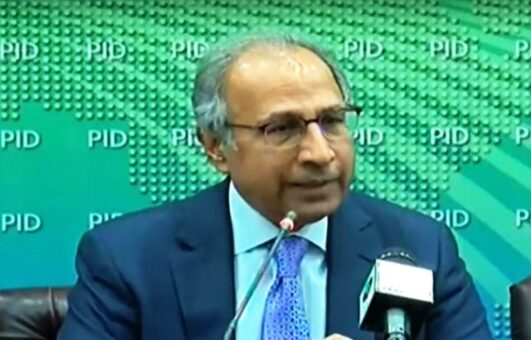
    Addressing a news conference in Islamabad on Sunday Prime Minister’s Advisor on Finance Dr. Abdul Hafeez Shaikh said that the government had begun to focus on improving the performance of institutions which were not properly functioning and have made decisions in this regard.

    The organizations which the public sector is unable to run will be handed over to the private sector in a transparent manner. So we have injected new energy into privatization.

    New companies have come forth and expressed their interest in privatization and their advertisements have been placed. We aim at fast-tracking these developments so productivity is increased.

    Furthermore, for state-owned companies which need to be revamped, an organization ‘Sarmaya Pakistan’ has been activated and 20 companies have been selected for restructuring on a fast-track basis.

    Shaikh also said that electricity distribution companies where many problems have arisen out of operating under the state will also be prepared for privatization.

    He said that PTI government had succeeded in reducing the circular debt to less than Rs10 billion rupees.

    He said when PTI government came into power the country was heading towards bankruptcy, but under the objective of economic stability, a number of steps were taken to control our Dollar Reserves.

    The advisor said government expenses were reduced through austerity measures and current account deficit was also reduced over 70 percent.

    Dr Hafeez Shaikh said six hundred thousand additional tax payers were registered. He said a new system has been introduced since 23rd of the last month under which speedy refunds are given to the business community. Now, refunds will be automatically ensured on 16th of every month.

    The advisor said the process of privatization has been expedited and state owned enterprises will be restructured on fast track basis to improve their performance.

    The advisor said value of rupee has improved resulting in a benefit of Rs246 billion in loans. He said Rs250 billion have been allocated for the development of agriculture sector.

    Dr Abdul Hafiz Shaikh said the government fixed the economic growth target of 2.4, which will be achieved easily due to prudent economic policies of the government.

    To a question, Dr Abdul Hafeez Shaikh said ease of doing business is top priority of the government.

    He said government is providing loans and subsidy to the business community on gas, electricity, due to which exports are on the rise. Businessmen are important for the government, who are vital in provision of jobs. He also made it clear that there was no tax on food items.

    The Finance Advisor said the government expects to collect over Rs1000 billion additional revenue through tax and non-tax resources in the current fiscal year. He said Rs140 billion have been received from two cellular companies and Rs370 billion is expected to be received in future from other resources.

    He said the economy of the country is rapidly moving toward stability due to effective policies of the government and economic indicators are positive as stock market and value of rupee are stable.

  • Auction of confiscated diesel oil, heavy motor cycles on Sept 17 at Sukkur

    Auction of confiscated diesel oil, heavy motor cycles on Sept 17 at Sukkur

    KARACHI: Pakistan Customs has announced auction of confiscated high speed diesel oil and heavy motor cycles on September 17, 2019 lying at State Ware House, Sukkur.

    The customs authorities announced to auction of 250,280 liters confiscated high speed diesel oil, which is available in 15 different lots.

    The authorities also announced the auction of following heavy motor cycles and dismantled motor vehicles:

    01. Honda Sports Motor Cycle 1137CC Model 2004

    02. HYONSUNG heavy motor cycle 250CC Model 2007 (Made in USA)

    03. SUZUKI Heavy Motor Cycle GSX-R1000 (Made in Japan) 1000CC, Model 2017

    04. KAWASAKI Heavy Motor Cycle 399CC Model 2010

    05. YAMAHA Heavy Motor Cycle 649CC Model 2003 (Made in Japan)

    06. Suzuki Scooty Model 2002

    07. Mitsubishi Pajero Jeep (Dismantled)

    08. Toyota Hiroof Vagan (Dismantled)

    09. Honda Scooty Motor Cycle Model 2004 (02)

    10. Suzuki Scooty (02)

    11. Different parts of Suzuki Sierra Jimmy Jeep.

    12. HARLEY DAVIDSON (Japan) Heavy Motor Cycle

    Related Stories

    MCC Appraisement West announces auction of old, fresh vehicles on Sept 16

  • MCC Appraisement West announces auction of old, fresh vehicles on Sept 16

    MCC Appraisement West announces auction of old, fresh vehicles on Sept 16

    KARACHI: Model Customs Collectorate (MCC) Appraisement West announced auction of used vehicles on September 16, 2019 to be held at Al-Hamd International Container Terminal (AICT).

    The collectorate to offer following vehicles for auction:

    01. Toyota Hilux 3000CC Model 2009

    02. Toyota Land Cruiser VX (V8) Armored 2779CC Model 2000

    03. Toyota Hilux Pickup Double Cabin 2779CC Model 2008

    04. Volkswagen AG Car 999CC Model 2013

    05. Toyota Aqua Hybrid Car 1496CC Model 2014

    06. Toyota Ambulance 3378CC, Model 2004

    07. Toyota Ambulance 4WD full time 3378CC, Model 2005

    08. Mitsubishi EK Space Customs Car Model 2017

    09. Nissan Dayz Car Model 2017

    10. Toyota Aqua Hybrid Car 1496ml, Model 2017

    11. Toyota Hiace 1988CC Model 2016

    12. Cast Daihatsu Car 658CC Model 2017

    13. Mira 658CC Model 2017

    14. Nissan Dayz ROOX 658CC Model 2016

    15. Nissan Dayz Car, Model 2016

    16. Honda N-Wagon Model 2016

    17. Suzuki Swift RS Car Model 2017

    18. Daihatsu Mira ES Car 658CC Model 2017

    19. Nissan Dayz Car, Model 2016 (02 pc bumper extra)

    20. Nissan Dayz Car, Model 2016

    21. Suzuki Wagon-R Stingray Model 2016

    22. Honda N-WGN Model 2016

    23. Passo Car (MODA) 996CC, Model 2016

    24. Toyota NOAH Hybrid Van 1797 mL, Model 2015

    25. Toyota AQUA Hybrid 1496mL, Model 2015

    26. Suzuki Every, Model 2014

    27. Toyota AQUA Hybrid Car 1496mL, Model 2016

    Related Stories

    MCC Preventive Peshawar announces auction of confiscated vehicles on Sept 11

  • Traders criticizes FBR for early implementation of CNIC condition

    Traders criticizes FBR for early implementation of CNIC condition

    KARACHI: Traders have strongly criticized Federal Board of Revenue (FBR) for applying condition of Computerized National Identity Card (CNIC) for sales tax invoices much before its promised date of September 30, 2019.

    Javed Shams, President, Anjuman e Tajiran, Sindh, Karachi Division urged the FBR to allow sales tax transactions without the condition of CNIC till September 30, 2019.

    He said that in a meeting on August 07, 2019 with FBR chairman Shabbar Zaidi it was agreed that retailers would not asked for CNIC from its customers. Besides it was also agreed that company and distributors would also not demand for CNIC from their customers.

    Javed Shams further said that it was agreed that the transactions would not be documented till FBR and traders associations were not reached on an agreement. Instead the FBR portal is not accepting sales tax return for the month of August 2019 without CNIC.

    He urged the FBR to withdraw the condition till September 30, 2019 and allow taxpayers to file their returns for the month of August without condition of CNIC.

    He said that such steps of the FBR would not augur well for the economy.

  • Salary persons should obtain withholding income tax deduction certificates to get refund/adjustment

    Salary persons should obtain withholding income tax deduction certificates to get refund/adjustment

    KARACHI: Salary persons having above threshold income for tax year 2019 should obtain certificates of withholding tax in order to get refund / adjustment after filing annual income tax returns.

    There are many provisions of withholding taxes under Income Tax Ordinance, 2001 where withholding agents deduct tax, which are adjustable against tax liability of taxpayers.

    In those cases where salaried persons driving income less than threshold income are also required to file income tax returns to claim their refunds against tax deducted under withholding provisions.

    For tax year 2019 the income tax return filing date is due on September 30, 2019 for salaried persons, business individuals and association of persons.

    The salaried persons driving income above threshold income i.e. above Rs400,000 are required to file income tax return electronically.

    For the tax year 2019, the total tax amount is Rs1,000 for full year where the taxable income exceeds Rs400,000 but does not exceed Rs800,000.

    Similarly, the tax amount is Rs2,000 for full year where the taxable income exceeds Rs800,000 but does not exceed Rs1,200,000.

    The FBR also prescribed tax rate for other slabs of income of salaried persons.

    The FBR collect withholding tax through withholding tax agents from persons filing or not filing income tax returns. However, tax rates higher for persons those are not filing income tax returns. But in case a person is non-filer paid higher amount as withholding tax can claim refund or adjustment after filing income tax return for the tax year in which the deduction was made.

    The FBR collects billions of rupees as adjustable withholding tax and it deposited in national kitty as taxpayers do not bother to claim.

    A taxpayer can claim all those tax deduction, which are adjustable, but after filing annual income tax return.

    A person can claim refund / adjustment on tax deducted under major provisions of Income Tax Ordinance, 2001:

    Section 155: tax paid made on account of rent of immovable property.

    Section 156B: tax paid on withdrawal of balance under pension fund.

    Section 231A: tax paid on cash withdrawal from banks

    Section 231B: advance tax paid on purchase or lease of motor vehicles.

    Section 235A: tax paid on electricity consumption by domestic consumers

    Section 236: advance tax paid to phone company or internet service provider

    Section 236B: advance tax paid on purchase of domestic air ticket.

    Section 236C: advance tax paid at the time of sale of immovable property.

    Section 236D: advance tax paid on organizing function or gathering.

    Section 236I: advance tax paid while paying fee to educational institutions.

    Section 236K: advance tax paid on purchase of immovable property.

    Section 236L: Advance tax on purchase of international air ticket.

    Section 236P: Non-filer who paid tax on non-cash banking transactions can avail adjustment on filing income tax return.

    Section 236R – advance tax paid on education related expenses remitted abroad.

    Section 236U – advance tax on insurance premium

    Section 236 Y – Advance tax on persons remitting amount abroad through payment of debit or credit card.

  • Weekly Review: market to move on policy rate decision, IMF visit

    Weekly Review: market to move on policy rate decision, IMF visit

    KARACHI: The stock market will move with the outcome of monetary policy announcement scheduled for Monday September 16, 2019 and expected visit of a delegation of International Monetary Fund (IMF) next week.

    Analysts at Arif Habib Limited said that the monetary policy committee is scheduled to convene on Monday September 16, 2019 and it is expected that the State Bank of Pakistan (SBP) to announce a 25 basis points cut which should relieve levered sectors such as Cements, Steel and select Automobile and Oil Marketing Companies.

    In addition, the staff-level delegation of the IMF is expected to visit Pakistan next week to review the county’s economic performance and any development in this regard will have implications for the stock market.

    Whereas, Prime Minister Imran Khan is scheduled to travel to Saudi Arabia on September 19, 2019 to discuss the Indo-Pak tensions over Kashmir.

    The benchmark KSE-100 index of Pakistan Stock Exchange (PSX) is currently trading at a PER of 5.6x (2020) compared to Asia Pac regional average of 13.1x and while offering DY of ~9.8 percent versus ~2.4 percent offered by the region.

    The analysts said that the incumbent government adopted a stringent monetary policy in the past year to fix external imbalances but with good, comes the bad; this also dampened domestic demand and added to the companies’ financial woes.

    Albeit, the market demonstrated a stunning rally in the outgoing week with market participants anticipating a cut in the State Bank of Pakistan’s benchmark policy rate, post rebasing of CPI.

    Moreover, buying by certain provincial funds also garnered positivity at the index. The market closed at 31,481 points (up by 1,014 points / 3.3 percent WoW).

    Sector-wise positive contributions came from i) Commercial Banks (270 points), ii) Oil & Gas Exploration Companies (213 points), iii) Fertilizers (196 points), iv) Power Generation & Distribution (95 points), and v) Cement (86 points). Scrip-wise positive contributions were led by PPL (122 points), OGDC (89 points), LUCK (84 points), UBL (75 points) and FFC (72 points).

    Foreign buying was witnessed this week clocking-in at USD 1.01 million compared to a net sell of USD 5.32 million last week. Buying was witnessed in E&P (USD 1.4 million) and Cement (USD 1.0 million).

    On the domestic front, major selling was reported by Individuals (USD 4.8 million) and Banks / DFIs (USD 4.5 million). Average Volumes settled at 130 million shares (up by 39 percent WoW) while average value traded clocked-in at USD 38 million (up by 70 percent WoW).

  • FBR to retest shorthand, typing speed of officials; gives 60 days deadline

    FBR to retest shorthand, typing speed of officials; gives 60 days deadline

    ISLAMABAD: Federal Board of Revenue (FBR) has observed that lethargy of officials working as assistant private secretaries and steno typists is causing problems in speedy and efficient disposal of work.

    The FBR said that during a drive to check the efficiency of Assistant Private Secretaries (BS-16) and Steno typists (BS-14), working in Inland Revenue field formation it had been observed that shorthand and typing speed had declined far below the prescribed standard threshold.

    “This lethargy on part of the officials is causing problems in speedy and efficient disposal of official work,” the FBR said.

    An official memorandum sent to all the heads of IR offices, said that in terms of recruitment rules for the said posts following criteria was laid down for shorthand and typing:

    Assistant private secretary – minimum shorthand speed 100 words per minute (WPM) and minimum typing speed 50 WPM.

    Steno typists – minimum shorthand speed 80 WPM and minimum typing speed 40 WPM.

    Considering the present situation, the FBR has decided that all assistant private secretaries / steno typists Inland Revenue field formations will undergo the shorthand and typing speed test to be conducted by all the heads of Inland Revenue field formation after 60 days from issuance of this memo i.e. August 30, 2019.

    The FBR further said that the results of the test would be shared with the board which would be incorporated in the personal dossiers of the respective officials and would also have a bearing on the performance allowance.