Day: October 9, 2019

  • RTO-II Karachi to assess incomes of lawyers, doctors, CAs, other professionals

    RTO-II Karachi to assess incomes of lawyers, doctors, CAs, other professionals

    KARACHI: Regional Tax Office (RTO) – II Karachi has been authorized to assess incomes of professionals including lawyers, doctors, chartered accountants etc. for assessment of their incomes and enforce income tax returns.

    The Federal Board of Revenue (FBR) has revised jurisdiction of Chief Commissioner and Commissioners of Inland Revenue, RTO-II Karachi.

    The Zone-I of the RTO-II, Karachi has been assigned jurisdiction over: (i) lawyers, advocates, auditors and chartered accountants, legal consultants, architects and engineers; (ii) doctors, hakeems, homeopathic, doctors, hospitals, clinics, laboratories, diagnostic centers, X-Ray centers, CT-Scans centers, MRI centers, ultrasound centers, nursing homes etc.

    Under Section 114 of Income Tax Ordinance, 2001 the filing of income tax returns is mandatory for persons registered with any chamber of commerce and industry or any trade or business association or any market committee or any professional body including Pakistan Engineering Council, Pakistan Medical and Dental Council, Pakistan Bar Council or any Provincial Bar Council, Institute of Chartered Accountants of Pakistan or Institute of Cost and Management Accountants of Pakistan.

    The zone has also been assigned jurisdiction over: (iii) chemicals and dyes manufacturers, importers, exporters, distributors and wholesalers; (iv) pharmaceutical manufacturers, importers, distributors/wholesalers including drug stores and chemists.

    The FBR said that the commissioner of Zone I of RTO-II Karachi would have jurisdiction over all cases or classes of cases, persons or classes of persons of non-corporate sector including individuals and association of persons (AOPs) of mentioned above sectors other than those specifically assigned to Large Taxpayers Unit (LTU)/LTU-II Karachi, Corporate RTO Karachi or RTO-III or any other zone of RTO-II Karachi whose place of business is situated in the areas falling within the limits of former Baldia Town, Jamshed Town, Liaquatabad Town, Orangi Town, Saddar Town, SITE Town and within the limits of Clifton Cantonment, Karachi Cantonment, Kimari Cantonment and Manora Cantonment.

    The Zone-III of the RTO-II, Karachi has been assigned jurisdiction over falling under: education/training/vocational institutions; real estate developers, contractors, dealers builders and cooperative housing societies; travel agents, hajj and umrah operators and visa and immigration consultants.

    The FBR has also assigned jurisdictions on various sectors to remaining zones of the RTO-II Karachi.

  • APTMA praises policies to make textile industry viable after 10 red years

    APTMA praises policies to make textile industry viable after 10 red years

    KARACHI: As a result of the progressive policies and personal interest of the Prime Minister especially by providing regionally competitive energy tariffs the textile industry has become viable after remaining in the red for 10 long years, All Pakistan Textile Mills Association (APTMA) said in a press release on Wednesday.

    The textile industry has achieved a record increase of 26 percent growth in quantitative terms although this did not directly reflect in the dollar amounts due to a substantial worldwide decrease in textile prices.

    However if this 26 percent increase in quantity had not been achieved the exports would have been less than $ 8.5 billion, the international prices have now recovered. As per records, profits of the companies were over 5 percent.

    The companies have posted a turnover of $ 16 billion out of which $ 13.3 billion was exported and $ 2.8 billion were sold in the domestic market.

    Industry has contributed to the exchequer through income tax of Rs. 40 billion as well as various other indirect taxes and levies of over Rs. 35 billion. The importance of the industry can be assessed from the fact that it also employs over 10 million workers with many more dependents.

    As a result of the confidence reposed by the Prime Minister in the industry and the appointment of a dedicated Task Force to not only formulate but ensure implementation of a progressive textile policy, Industry is all poised to take off and double exports in the next four years. Industry as a result of the profits posted has strong balance sheets and an equity fund of US $ 1 billion earned directly from the international market. These funds can be leveraged to invest at least $ 4 billion in the next year alone.

    “We profusely thank the Prime Minister for having taken personal ownership and stewardship of the industry and chaired over a dozen meetings with the industry during this last year to resolve their issues,” the association said.

  • Reforms showing improvement in economy: SBP governor

    Reforms showing improvement in economy: SBP governor

    KARACHI: The reforms to address the macroeconomic challenges faced by the economy are now beginning to bear fruit and improvement in the external sector has become visible, said Dr. Reza Baqir, Governor, State Bank of Pakistan (SBP).

    “Restoring stability will promote investment in the country and thus economic growth,” the SBP governor said during an interactive session with leading foreign investors at the Overseas Investors Chamber of Commerce and Industry (OICCI). Governor was accompanied by the senior leadership of the SBP.

    The SBP governor noted that the bold measures taken in recent past were painful but necessary.

    He elaborated that the average monthly current account deficit, which has been a prime concern for the economy, has halved, export volumes have been growing, non-borrowed foreign exchange reserves have stopped falling and in fact begun to grow, and pressures on inflation are expected to recede from the second half of the current fiscal year.

    President OICCI, Shazia Syed, Vice President OICCI, Shazad G. Dada and Secretary General OICCI, M. Abdul Aleem, highlighted the significant economic contribution of foreign investors at OICCI, who are among the largest economic stakeholders and have invested over $13 billion in the past seven years and continue to have a positive view of the opportunities for investment despite the ongoing challenging economic environment in the country.

    OICCI shared with Dr. Reza Baqir the key highlights of its annual survey on remittances and complimented the Governor that despite extreme pressure on the FX reserves in the past twelve months, the SBP did not delay the remittance of profit, which was appreciated by the foreign investors.

    However, concerns on some other areas were raised and OICCI sought Governor’s support in facilitating different matters in the light of its policies towards improving ease of doing business in Pakistan.

    OICCI members presented a comprehensive list of recommendations to facilitate doing business in Pakistan including proposal for doing away with additional approvals for remittance which are as per registered contract, and proposed that an online portal be established allowing banks to upload the request and supporting documents.

    Dr. Reza Baqir appreciated the contribution of OICCI members to the national exchequer and announced various measures to further streamline the processes for improving ease of doing business.

    “SBP is moving towards digitalization and proactive engagement that will address the major issues systematically,” informed the Governor.

    He promised to consider various OICCI recommendations and agreed on the need for continuous dialogue with the OICCI members inviting the Managing Committee to meet the SBP’s leadership at regular intervals for timely resolution of the issues.

  • Stock market gains 47 points in narrow band trading

    Stock market gains 47 points in narrow band trading

    KARACHI: The stock exchange ended with gain of 47 points on Wednesday as market traded in narrow band.

    The benchmark KSE-100 index of Pakistan Stock Exchange (PSX) closed at 33,524 points as against 33,477 points showing an increase of +47 points.

    Analysts at Arif Habib Limited said that the market continued trading in a narrow band between +128 points and -137 points and closed the session +47 points.

    Chemical sector contributed positively to the index, whereby LOTCHEM, EPCL, DOL hit upper circuits due to better expectation of financial results of the outgoing quarter.

    Quarterly financial results are due to be announced in October. Besides, buying activity was also observed in O&GMCs and small cap banks.

    The index braced selling pressure largely from Steel and Cement sectors, which are the subject of profit booking and have shown decent price growth since recent lows.

    Chemical sector topped the volumes with 48.7 million shares, followed by Cement (26.8 million) and Vanaspati (26.1 million). Among scrips, LOTCHEM led the volumes with 27 million shares followed by UNITY (26 million) and BOP (14 million).

    Sectors contributing to the performance include Pharma (+28 points), E&P (+23 points), Banks (+17 points), Power (+16 points), Chemical (+10 points) and Cement (-48 points).

    Volumes declined further from 243 million shares to 237.4 million shares (-2 percent DoD). Average traded value declined from US$ 56.9 million to US$ 40.9 million (-28 percent DoD).

    Stocks that contributed significantly to the volumes include LOTCHEM, UNITY, BOP, KEL and EPCL, which formed 36 percent of total volumes.

    Stocks that contributed positively include HUBC (+27 points), MARI (+24 points), HBL (+18 points), UBL (+14 points) and POL (+13 points). Stocks that contributed negatively include LUCK (-23 points), MCB (-17 points), DGKC (-14 points), OGDC (-12 points), and NBP (-12 points).

  • Rupee gains 16 paisas on improved dollar inflows

    Rupee gains 16 paisas on improved dollar inflows

    KARACHI: The Pak Rupee gained 16 paisas against dollar on Wednesday owing to inflows of export receipts and workers’ remittances, dealers said.

    The rupee ended Rs156.32 to the dollar from previous day’s closing of Rs156.46 in interbank foreign exchange market.

    Currency dealers said that the market was opened on the higher demand for dollar. However, improved supply of dollar through export receipts and remittances helped the rupee to gain the value.

    The foreign currency market was opened in the range of Rs156.40 and Rs156.44. The market recorded day high of Rs156.45 and low of Rs156.32 and closed at Rs156.32.

    The exchange rate in open market also witnessed appreciation in rupee value. The buying and selling of dollar was recorded at Rs156.00/Rs156.50 from previous day’s closing of Rs156.10/Rs156.60 in cash ready market.

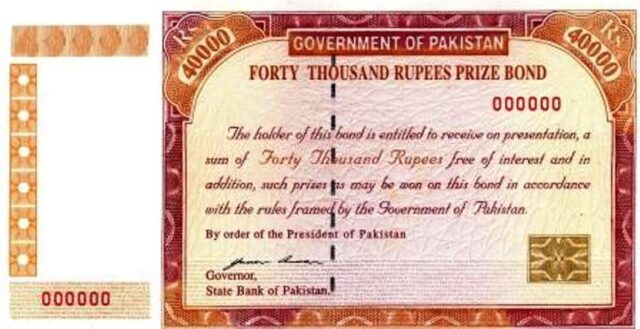
  • Investment in premium Rs40,000 prize bonds surges by 156 percent

    Investment in premium Rs40,000 prize bonds surges by 156 percent

    KARACHI: The investment in premium prize bonds of Rs40,000 denomination has sharply increased by 156 percent to Rs14.84 billion by August 2019 as compared with Rs5.78 billion in the same month of the last year.

    The significant increase in registered prize bonds of Rs40,000 denomination has been attributed to the announcement of the government to seize the issuance of unregistered instrument to stop expansion of black economy.

    In February this year the central bank stopped the issuance of Rs40,000 denomination prize bonds from its offices. The SBP also advised the Central Directorate of National Savings (CDNS) to stop printing the unregistered Rs40,000 prize bonds.

    A member of Tax Reform Committee (TRC), which was constituted by the former government in 2014 said that it was recommendation of the TRC to stop the circulation of high denomination prize bonds.

    The member said that the committee had presented its report in May 2015 and advised the then finance minister the high denomination prize bonds were major source for expansion of black economy.

    The TRC had recommended to document high denomination prize bonds of Rs25,000 and Rs40,000 and should be issued against CNICs of individuals.

    The government on June 24, 2019 announced to discontinue the circulation of Rs40,000 denomination bearer prize bonds.

    In compliance to the government announcement the SBP also issued instructions to banks. The central bank issued procedure for the banks to facilitate general public in exchanging the unregistered prize bonds with three different modes.

    The SBP said that the bearer prize bonds of Rs40,000 cannot be exchanged against cash. However, it can be redeemed against registered prize bonds or can be converted into national saving schemes or face value (direct transfer to the bank account of bond bolder).

    The SBP informed the banks that such prize bonds would not be sold after June 24, 2019 and will not be encashed/redeemed after March 31, 2020. No further draws of Rs40,000 denomination national prize bonds shall be held.

    The government is intending to expand the documented prize bonds in other denomination as well on the recommendations of the TRC, the member said.

    The TRC in its report pointed out: “Issuance of prize bond of Rs 25,000 or Rs 40,000 should be discontinued as these high denomination bearer instruments fuel corruption and tax evasion.”

  • Tax rate on interest income for Tax Year 2020

    Tax rate on interest income for Tax Year 2020

    KARACHI: Federal Board of Revenue (FBR) issued tax rate to be imposed on interest income during Tax Year 2020.

    The FBR issued Income Tax Ordinance, 2001 updated up to June 30, 2019 incorporating changes brought through Finance Act, 2019.

    The Section 7B of the Income Tax Ordinance, 2001 explained the application of income tax on profit on debt derived by a person during a tax year.

    Section 7B: Tax on profit on debt

    Sub-Section (1): Subject to this Ordinance, a tax shall be imposed, at the rate specified in Division IIIA of Part I of the First Schedule, on every person, other than a company, who receives a profit on debt from any person mentioned in clauses (a) to (d) of sub-section (1)of section 151.

    Sub-Section (2): The tax imposed under sub-section (1) on a person, other than a company, who receives a profit on debt shall be computed by applying the relevant rate of tax to the gross amount of the profit on debt.

    Sub-Section (3): This section shall not apply to a profit on debt that –

    (a) is exempt from tax under this Ordinance; or

    (b) exceeds thirty six million Rupees.

    Division IIIA of Part I of the First Schedule for the rate of tax for profit on debt imposed under section 7B shall be—

    1. Where profit on debt does not exceed Rs.5,000,000: the tax rate shall be 15 percent

    2. Where profit on debt exceeds Rs.5,000,000 but does not exceed Rs.25,000,000: the tax rate shall be 17.5 percent

    3. Where profit on debt exceeds Rs.25,000,000 but does not exceed Rs. 36,000,000: the tax rate shall be 20 percent

    Section 151 explains persons receiving profit on debt


    Section 151: Profit on debt:

    Sub-Section (1) Where –

    (a) a person pays yield on an account, deposit or a certificate under the National Savings Scheme or Post Office Savings Account;

    (b) a banking company or financial institution pays any profit on a debt, being an account or deposit maintained with the company or institution;

    (c) the Federal Government, a Provincial Government or a Local Government pays to any person profit on any security other than that referred to in clause (a) issued by such Government or authority; or

    (d) a banking company, a financial institution, a company referred

    to in sub-clauses (i) and (ii) of clause (b) of sub-section (2) of section 80, or a finance society pays any profit on any bond, certificate, debenture, security or instrument of any kind (other than a loan agreement between a borrower and a banking company or a development finance institution) to any person other than financial institution.

  • Refunds of customs duties to be claimed within one year

    Refunds of customs duties to be claimed within one year

    KARACHI: Federal Board of Revenue (FBR) has said that the refunds against customs duties would be paid if claims have been made within one year.

    The FBR issued Customs Act, 1969 updated till June 30, 2019 incorporating changes brought through Finance Act, 2019.

    The FBR explained through Section 33 of the Act that refunds f customs duties would be paid if claims had been made within one year.

    Section 33: Refund to be claimed within one year.

    Sub-Section (1): No refund of any customs-duties or charges claimed to have been paid or over-paid through inadvertence, error or misconstruction shall be allowed, unless such claim is made within one year of the date of payment.

    Sub-Section (2): In the case of provisional payments made under section 81, the said period of one year shall be reckoned from the date of the adjustment of duty after its final assessment.

    Sub-Section (3): In the case where refund has become due in consequence of any decision or judgment by any appropriate officer of Customs or the Board or the Appellate Tribunal or the Court, the said period of one year shall be reckoned from the date of such decision or judgment, as the case may be.

    Sub-Section (3A): The claim filed under this section shall be disposed of subject to pre-audit within a period not exceeding one hundred and twenty days from the date of filing of such claim:

    Provided that the said period may, for reasons to be recorded in writing, be extended by the Collector of Customs for a period not exceeding ninety days.

    Sub-Section (4): No refund shall be allowed under this section, if the sanctioning authority is satisfied that the incidence of customs duty and other levies has been passed on to the buyer or consumer.

    Sub-Section (5): For the purpose of this section, the Board may, by notification in the official Gazette, specify the jurisdiction and powers of the officers of Customs to sanction refund in terms of amount of Customs duty and other taxes involved.

    Section 34: Power to give credit for, and keep account-current of duties and charges.

    An officer of customs, not below the rank of Assistant Collector of customs may, in the case of any mercantile firm or public body, if he so thinks fit, instead of requiring payment of customs duties or charges as and when they become due, keep with such firm or body an account-current of such duties and charges, which account shall be settled at intervals of not exceeding one month, and such firm or body shall make a deposit or furnish a security sufficient in the opinion of that officer to cover the amount which may at any time be payable by it in respect of such duties or charges.