Month: October 2019

  • FBR bars officials from interacting with taxpayers; notification issued

    FBR bars officials from interacting with taxpayers; notification issued

    ISLAMABAD: As per the directives of Syed Shabbar Zaidi, chairman, Federal Board of Revenue (FBR), an official notification has been issued on Monday to bar tax officials from direct interaction with taxpayers.

    The official memorandum sent to offices of Inland Revenue and Pakistan Customs, the FBR said that the ban has been imposed keeping in view the prevailing perception of FBR and also to do away with fake communication from some quarters and to build the confidence level taxpayers.

    It has been decided that no officer/official of the FBR Headquarters or its field formation will contact any taxpayer or businessman in any form i.e. physical visit, telephonic/mobile calls, SMS or email etc. except when legally authorized to do so. However, the authorized communication will only be made through legal notice or official communication with QR Code/Bar code, the FBR added.

    The FBR said that the policy would come into force from November 01, 2019 and any officer/official found indulged in such activities would be proceeded under the Government Servant (Conduct) Rules, 1964 read with Government Servant (E&D) Rules, 1973.

    The notification said that the directives would apply to all formations of FBR being Inland Revenue (Income Tax, Sales Tax and Federal Excise Duty) and Customs.

    The FBR advised taxpayers, business community and trade bodies to assist in implementing the policy by reporting to FBR any contravention of these directives.

  • Stock market gains 204 points in mixed trading activities

    Stock market gains 204 points in mixed trading activities

    KARACHI: The stock market gained 204 points on Monday in mixed trading activities during the day.

    The benchmark KSE-100 index of Pakistan Stock Exchange (PSX) closed at 33,862 points as against 33,657 points showing an increase of 204 points.

    Analysts at Arif Habib Limited said that end of rollover week saw market activity picking pace with the benchmark index trading near 34,000 level after an initial jolt of 85 points earlier in the session.

    At a time, market went up by 350 points (crossing 34k level briefly) and ended the session +204 points.

    Cement sector performed well due to the news of deferment of axle load policy for a year, resulting in cement sector scrips trading at and near upper circuit, although recently announced financial results were poorer than expectation. Mainly fertilizer and banking sector scrips saw selling activity.

    Cement sector led the volumes table with 22.7 million shares followed by Transport (15.1 million) and Engineering (14.4 million).

    Among scrips, PIBTL led trading volumes with 12.7 million shares, followed by TRG (7.6 million) and FCCL (7 million).

    Sectors contributing to the performance include Cement (+72 points), Banks (+66 points), O&GMCs (+32 points), Pharma (+17 points), Power (+15 points), E&P (-23 points) and Fertilizer (-20 points).

    Volumes declined from 170.9 million shares to 135.5 million shares (-21 percent DoD). Average traded value, on the other hand, registered a slight increase of 2 percent DoD to reach US$ 26.3 million as against US$ 25.8 million.

    Stocks that contributed significantly to the volumes include PIBTL, TRG, FCCL, HASCOL and UNITY, which formed 29 percent of total volumes.

    Stocks that contributed positively include LUCK (+29 points), HBL (+27 points), BAHL (+21 points), PSO (+16 points) and FCCL (+14 points). Stocks that contributed negatively include FFC (-17 points), COLG (-12 points), MARI (-10 points), BAFL (-10 points), and PPL (-10 points).

  • Rupee gains four paisas amid dollar demand

    Rupee gains four paisas amid dollar demand

    KARACHI: The Pak Rupee gained four paisas against dollar on Monday amid higher demand for import and corporate payments.

    The rupee ended at Rs155.85 to the dollar from last Friday’s closing of Rs155.89 in interbank foreign exchange market.

    Currency experts said that the rupee was under pressure during the day owing to higher demand for the greenback due to past two weekly holidays.

    However, supply from workers’ remittances and export receipts helped the rupee to make gain at the end of the day.

    The exchange rate in open market however witnessed stable rupee value. The buying and selling of dollar was recorded at Rs155.80/156.10, the same last Friday’s closing, in cash ready market.

  • PPL announces highest-ever Rs61.6 billion after tax profit with record 11 discoveries

    PPL announces highest-ever Rs61.6 billion after tax profit with record 11 discoveries

    KARACHI: Pakistan Petroleum Limited (PPL) has posted the highest-ever Rs61.6 billion after tax profit with a record number of 11 discoveries during financial year ended June 30, 2019.

    This was disclosed at the 68th Annual General Meeting of PPL that was held on Monday.

    Members approved financial statement for the fiscal year ended June 30, 2019 together with auditor’s report.

    Final Cash Dividend of 20 percent on ordinary and convertible preference shares besides 20 percent bonus shares to ordinary shareholders and 10 percent to convertible preference shareholders was also approved.

    Shamsul Islam, Chairman, BOD presided over the proceedings and shared that PPL continued to strengthen its position as a leading oil and gas company and created healthy returns for all stakeholders.

    Moin Raza, Managing Director and Chief Executive Officer of the company highlighted PPL’s progress during 2019/2019, and said that the most significant was the highest ever profit after tax of Rs61.6 billion along with a record number of 11 discoveries in a year in company and partner-operated assets.

    The company also drilled the first ever international exploratory well, Madain – I, in operated Block 8, Iraq, a first for a national company.

    Focusing on key operational highlights, Khan mentioned drilling of 30 exploratory and development wells, including Kekra-1 in partner-operated offshore Indus G Block which encountered excellent quality reservoir but was aborted due to difficulty in locating hydrocarbons.

    He also shared ongoing efforts for expanding the company’s exploration portfolio through farm in/out and acquisition of two new blocks at the recent bidding round, making a total of 47 blocks.

    The company continued development activities to optimize production from existing fields that led to an average production of 977 MMscfde in 2018/2019. In this, he also mentioned commissioning of GPF-IV during phase I at Gambat South and Nashpa LPG plant as well as the highest-ever production of 228,310 tons barites from Bolan Mining Enterprises.

  • Income tax return filing rises to record high of 2.66 million

    Income tax return filing rises to record high of 2.66 million

    ISLAMABAD: The income tax return filing has increased to record high of 2.66 million for tax year 2018, according to returns filed up to October 27, 2019 for the said tax year.

    Officials of Federal Board of Revenue (FBR) attributed the record high to 100 percent higher withholding tax imposed on persons not appearing on Active Taxpayers List (ATL).

    The official said that around 150,000 – 200,000 returns, which were filed manually, were still not added to the ATL. The addition of these returns will further increase the total number of filed returns for tax year 2018.

    The FBR received around 1.84 million annual income tax returns for tax year 2017. This means the return filing registered 45 percent so far for tax year 2018.

    Through Finance Act, 2019 the Tenth Schedule was introduced to Income Tax Ordinance, 2001 under which persons not appeared on the ATL, even filed the return, would liable to pay 100 percent more withholding tax amount.

    The FBR issues ATL on every year on March 01 on the basis of return filed by taxpayers by due date for relevant tax year.

    The FBR issued latest ATL on March 01, 2019 on the basis of returns filed for tax year 2018. Since the date for filing returns extended up to August 09, 2019 for tax year 2018, the names of those return filers were added to the updated ATL.

    By August 09, 2019 the number of return filers was increased to 2.5 million. However, additional 0.16 million returns were been filed after payment of late filing surcharge.

    The FBR in an explanatory note said that restriction on including a person’s name on ATL, if the person has not filed Tax Return by the due date specified by Income tax authorities was introduced through Finance Act, 2018.

    However, through Finance Act, 2019 a person’s name can be part of ATL, even if the person has filed Tax Return after the due date specified by Income Tax authorities, the FBR said.

    Furthermore, it added, a surcharge for placement on ATL after due date of filing of Tax Return will be charged at Rs1,000 from individuals, Rs10,000 from Association of Persons (AOPs) and Rs20,000 from companies.

    FBR officials said that people were filing their income tax returns for tax year 2018 along with late surcharge, despite the due date for tax year 2019 had been prescribed, for avoiding 100 percent withholding tax rates.

    They said that the current ATL would remain applicable till February 29, 2020 as new ATL on the basis of return filed for tax year 2019 would be issued on March 01, 2020.

  • SBP issues common red flag indicators for trade based money laundering

    SBP issues common red flag indicators for trade based money laundering

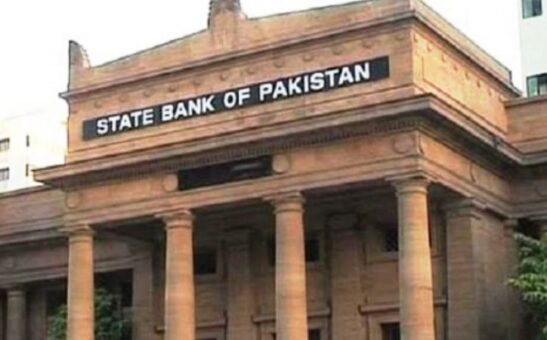
    KARACHI: State Bank of Pakistan (SBP) has issued common red flag indicators for banks to take care in avoiding trade based money laundering and terrorist financing.

    Following are the common Red Flag indicators:

    i. Obvious over or under/over pricing of goods (significant discrepancies appear between the value of the goods reported on the invoice/EIF/MIF, EFE/MFE, Advance Payment Voucher and the known fair market value of the goods).

    ii. The description of goods on the Goods Declaration Form/Transport documents significantly varies from the description declared on EIF/MIF, EFE/MEF or underlying contract.

    iii. Significant variation is found between the description of the goods on the bill of lading and the invoice.

    iv. There are indications that the description of the goods is disguised.

    v. The tenor of the transaction does not commensurate with the nature of the underlying goods – for example perishable goods are traded on terms involving lengthy usance period.

    vi. Documents such as a letter of credit is received through unverified channels such as unauthenticated SWIFT message.

    vii. The type of goods being shipped appears to be inconsistent with the exporter’s or importer’s regular business activities.

    viii. The size of the shipment does not commensurate with the size of the exporter’s or importer’s regular business activities.

    ix. The packaging of goods is inconsistent with the commodity or shipping method.

    x. The goods are transshipped through one or more countries/jurisdictions for no apparent economic or logistical reason.

    xi. The country from which goods are being shipped is designated as “high risk” for money laundering activities.

    xii. The transaction involves the receipt of payments from third parties that have no apparent connection with the transaction.

    xiii. The method of payment apparently does not commensurate with the risk characteristics of the transaction e.g. the remittance of funds in advance payment for a shipment from a new supplier in a high-risk country.

    xiv. The transactions involving consecutive trade discount offered by exporters to the same importer.

    xv. The transaction involves repeatedly amended or frequently extended letters of credit.

    xvi. An exporter receives advance payment(s) but does not make shipment(s) there against.

    xvii. An Importer remits advance payment(s) but does not receive shipment(s) there against.

    xviii. The transaction appears to involve use of front or shell companies for the purpose of hiding the true parties involved.

    xix. The transaction involves import/export of dual use goods.

    xx. The item ordered is incompatible with the technical level of the country to which it is being shipped, such as semiconductor manufacturing equipment being shipped to a country that has no electronics industry.

    xxi. Where important details are missing on commercial invoice(s) or mentioned vaguely.

    xxii. Where some of the shipping documents are provided in photocopies instead of original against the regularity instructions or against normal business scenarios.

    xxiii. Where goods declarations in commercial invoice(s) are not proper, incomplete or otherwise not mentioned at all to conceal the facts.

    xxiv. Receipt of proceeds from non-cooperative countries as per FATF list against the shipment made to a third country.

    xxv. Where export proceeds are received from unrelated/third party with differing nature of business from that of exporter.


  • FBR may get trade details of past five years from customs clearing agents

    FBR may get trade details of past five years from customs clearing agents

    In a bid to strengthen efforts against money laundering and enhance transparency in trade transactions, the Federal Board of Revenue (FBR) is reportedly considering a directive to customs clearing agents to furnish details of importers and goods declarations filed over the past five years.

    (more…)
  • Purchase of assets made must through banking instruments

    Purchase of assets made must through banking instruments

    KARACHI: Federal Board of Revenue (FBR) has made mandatory purchase of assets of certain amounts through banking instruments, including crossed cheque or crossed pay order.

    FBR sources said that in order to discourage undocumented economy the government had made changes in Income Tax Ordinance, 2001 through Finance Act, 2019.

    A new Section 75A to the Income Tax Ordinance, 2001 has been inserted under which:

    (1) no person shall purchase-

    (a) immovable property having fair market value greater than five million Rupees; or

    (b) any other asset having fair market value more than one million Rupees,

    otherwise than by a crossed cheque drawn on a bank or through crossed demand draft or crossed pay order or any other crossed banking instrument showing transfer of amount from one bank account to another bank account.

    (2) For the purposes of this section in case of immovable property, fair market value means value notified by the Board under sub-section (4) of section 68 or value fixed by the provincial authority for the purposes of stamp duty, whichever is higher.

    (3) In case the transaction is not undertaken in the manner specified in sub-section (1),

    (a) such asset shall not be eligible for any allowace under sections 22, 23, 24 and 25 of this Ordinance; and

    (b) such amount shall not be treated as cost in terms of section 76 of this Ordinance for computation of any gain on sale of such asset.

    The FBR officials said that any person who purchases immovable property having fair market value greater than rupees five million through cash or bearer cheque then such person shall pay a penalty of five percent of the value of property determined by the Board under sub-section (4) of section 68 or by the provincial authority for the purpose of stamp duty, whichever is higher.

  • Tourists allowed temporary import of vehicles

    Tourists allowed temporary import of vehicles

    KARACHI: Tourists visiting Pakistan are allowed to import vehicles temporarily with certain conditions under Customs Rules 2001.

    According to the customs rules, a tourist who imports a vehicle against carnet-de-passage or a bank guarantee may be given delivery thereof by the officer-in-charge of the Customs station of entry without payment of customs-duties for its retention in Pakistan for a period of three months.

    However, such tourist is required to make a declaration at the Customs-station of entry to the effect that he will not constructively or substantially transfer the ownership of the vehicles to any other person during his stay in Pakistan:

    Provided that if it is not practicable for the tourist to export such vehicle within the said period and he makes an application to the Federal Board of Revenue (FBR) before the expiry of that period to this effect, the FBR may extend that period not exceeding three months:

    Provided further that if the same vehicle re-enters Pakistan within one year after its exit, whether in the name of the same tourist (non-Pakistani) or in the name of somebody else (non-Pakistani) temporary release shall not be allowed against carnet-de-passage or a bank guarantee for more than fourteen days except for vehicles operated by recognized foreign tour agencies which shall be allowed re-entry within one year for a period not exceeding three months at one point of time.

    Where the export of such vehicle is not possible on grounds of health of the importer, or in circumstances beyond his control, or because of an accident in which the vehicle is involved, the FBR may extend the period not exceeding six months, in which case a fresh bank guarantee shall be furnished if the existing bank guarantee does not cover the period of extension:

    Provided that if the importer wishes to retain such vehicle beyond period for which permission for retention has been allowed, he shall obtain an import permit from the Ministry of Commerce and shall pay the Customs-duties and taxes leviable thereon on the date of its import.

    If a tourist imports a vehicle for passage through Pakistan to a foreign destination, the officer-in-charge of the Customs-station of entry may, in the absence of carnet-de-passage or a bank guarantee, allow the vehicle to pass through Pakistan without payment of customs duties under escort form the Customs station of entry to the Customs-station of exit on payment of escort charges to be determined by the respective Collector.

    The particulars of the vehicle so allowed to pass through Pakistan shall be endorsed on the passport of the importer.

  • Business community resents detaining export containers ahead of political dharna

    Business community resents detaining export containers ahead of political dharna

    KARACHI: Business community has resented the government move to detain export containers ahead of political rally and Dharna (sit-in) and said it will result in massive trade loss.

    Muhammad Jawed Bilwani, Chairman Pakistan Apparel Forum stated that the country’s politics must not affect the trade and exports of Pakistan all the exports and cargo containers must not be detained.

    All the containers already detained by the Government must immediately be released without any delays to avoid fiscal and trade losses.

    While expressing deep concern over seizure of huge number of containers loaded with export consignments in Punjab province, Bilwani said that these cargo containers, reportedly detained for the purpose to block all roads heading towards Islamabad to prevent political elements and their supporters from entering into the federal capital city where they want to stage sit-in but the authorities have ignored the fact that most of these containers were loaded with export consignments.

    If export containers not released, this will lead to cancellation of precious orders which will not only be a great loss to the exporters but also the nation in the current crucial times.

    The government must realize that any loss to business people will also have a severe impact on the economic performance of the country.

    He added that the situation would also send a very negative signal abroad when the export consignments would not be delivered to the buyers as per commitment whereas the local markets might also experience severe shortage of numerous goods and commodities. In view of tense situation, transporters were unwilling to carry goods to the upcountry.

    Bilwani was of the view that instead of engaging exporter’s containers and disturbing business activities, the Federal and Provincial governments should purchase their own damaged / defected containers to block all roads in the best interest of our nation’s export and economy.

    It is the responsibility of every Pakistani citizen including those who are in the Government or in the Opposition not to disturb the country’s exports and ensure that export containers enroute to Karachi and further abroad must not be hold or detained in the national interest.