Day: May 12, 2020

  • FBR urged to reduce regulatory duty on lighting fittings

    FBR urged to reduce regulatory duty on lighting fittings

    KARACHI: Federal Board of Revenue (FBR) has been urged to reduce regulatory duty on lighting fittings in alignment with LED bulbs and LED tubes.

    The Overseas Investors Chamber of Commerce and Industry (OICCI) in its proposals for budget 2020/2021 submitted to the FBR, stated that current regulatory duty on lighting fittings with fixed / fitted LED under HS code 9405.1030 and 9405.4020 is 30% whereas on LED bulbs (HS code 8539.5010) and LED tubes (HS code 8539.5020) the same is 2 percent.

    Therefore, it is recommended that regulatory duty should be reduced on Lighting fittings with fixed / fitted LED under HS code 9405.1030 and 9405.4020 in alignment with LED bulbs and LED tubes.

    Consequent to amendments in law relating to IOCO arrangements, sales tax (including duties) is exempt under fifth schedule of Customs Act under serial no 23 on all type of housing i.e. ‘’Housing/Shell, shell cover and base cap for all kinds of LED Lights and Bulbs under respective headings.

    Accordingly, sales tax should have been exempt on said product under sixth schedule of STA 1990. However, this is not the case as related amendment in sixth schedule of STA 1990 was not made.

    To align with amendment in fifth schedule of Customs Act under serial no 23, consequent amendment be made in serial no. 15A of sixth Schedule of STA 1990 for description of goods for HS code 9405.1090 be changed from Aluminum Housing /shell for LED (LED Light Fixture) to Housing/Shell, shell cover and base cap for all kinds of LED Lights and Bulbs as.

    The OICCI said that through Finance Supplementary (Amendment) Act October 2018, Energy Saving Tubes under HS code 8539.3120 are exempted from sales tax (including duties) under serial no. 22 (xiii) of fifth Schedule of Customs Act 1969. However, related amendments are not made in table 3, serial no. 15 of sixth Schedule of STA 1990.

    To align with amendment in fifth schedule of Customs Act under serial no 22 (xiii), consequent amendment be made in serial no. 15 in table 3 of sixth Schedule of STA 1990 by addition of HS code 8539.3120.

    Taxation of Export of Services and Execution of Contracts outside Pakistan: As per Clause (3) of Part II of second schedule of ITO, the rate of tax has been increased from 1 percent to 3.5 percent and 4 percent on account of execution of contract outside Pakistan and export of services respectively. This significant increase in Finance Act 2016 has adversely affected the export business of companies.

    The rate of tax needs to be reverted back to 1 percent.
  • Not a single car sold in April 2020

    Not a single car sold in April 2020

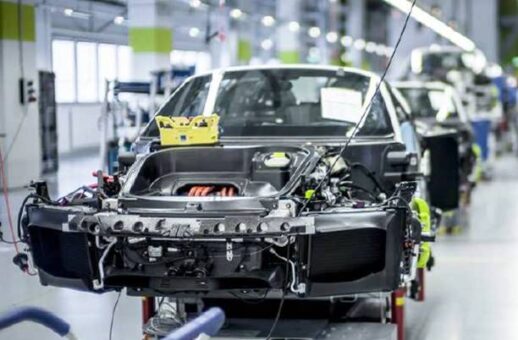
    KARACHI: Automobile manufacturers have witnessed worst-ever month as not a single car was sold during April 2020 owing to lockdown imposed by the federal and provincial governments to prevent coronavirus pandemic.

    The lockdowns due to COVID-19 imposed by the Federal and Provincial governments in the later half of Mar-2020 till date has resulted in no car sales during Apr-2020, as reported by Pakistan Automobile Manufacturers Association (PAMA).

    The lockdowns has resulted in closure of plant operations along with car dealerships across the country.

    As a result, in 10MFY20 car sales have declined by 52 percent YoY.

    Honda Car (HCAR) sales are down by 64 percent YoY, followed by Indus Motors (INDU) and Pak Suzuki Motor Company (PSMC) with declines of 54 percent YoY and 47 percent YoY, respectively.

    ATLH (motorbikes) too recorded nominal sales of 2,783 units compared to pre-COVID sales of around 100k units.

    Keeping in view the importance of the Wheat harvesting season, the governments allowed the tractor industry to resume their operations in mid-April-2020.

    The tractor sales during Mar-2020 recorded a decline of 63 percent YoY and 30 percent MoM.

    Al Ghazi Tractors (AGTL) reported an increase of 19 percent MoM in its sales, while Millat Tractors (MTL) sales declined by 51 percent MoM. Last month, MTL sales were up MoM (+2 percent) whereas AGTL recorded a MoM decline (-22 percent MoM).

  • Equity market gains 319 points on policy rate cut hope

    Equity market gains 319 points on policy rate cut hope

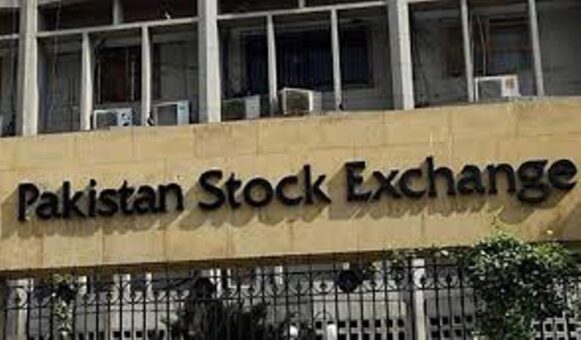
    KARACHI: The equity market recorded increase of 319 points on Tuesday on expectation of cut in policy rate to be announced this week.

    The Index closed at 33,603 points as against 33,284 points showing an increase of 319 points.

    Analysts at Arif Habib Limited said that the market went positive on the prospect of rate cut for which the State Bank of Pakistan (SBP) will be taking decision by end of week, besides the government’s stance on construction of Dams that is likely to generate demand for Cement and Steel.

    Resultantly, Cement and Steel sectors ruled the index, mostly trading near upper circuits and generating high trading volumes. Banking and Oil & Gas sector stocks couldn’t generate much interest amongst investors.

    Cement sector topped the index with 75.8 million shares, followed by Technology (28.6 million) and Vanaspati (23.1 million). Among scrips, MLCF realized trading volumes of 28.4 million shares, followed by UNITY (23.1 million) and FCCL (19.1 million).

    Sectors contributing to the performance include Cement (+150 points), Banks (+67 points), Fertilizer (+62 points), E&P (+28 points), Power (+24 points) and O&GMCs (-16 points).

    Volumes increased further from 198.2 million shares to 224.5 million shares (+13 percent DoD). Average traded value also increased by 68 percent to reach US$ 45.9 million as against US$ 27.4 million.

    Stocks that contributed significantly to the volumes include MLCF, UNITY, FCCL, WTL and HASCOL, which formed 42 percent of total volumes.

    Stocks that contributed positively to the index include LUCK (+50 points), ENGRO (+31 points), HBL (+29 points), MCB (+28 points) and DGKC (+26 points).

    Stocks that contributed negatively include SNGP (-20 points), BAHL (-9 points), PMPK (-8 points), DAWH (-7 points), and AICL (-6 points).

  • Rupee falls by 38 paisas against dollar

    Rupee falls by 38 paisas against dollar

    KARACHI: The Pak Rupee fell by 38 paisas against dollar on Tuesday owing to reports the government is going to hedge oil.

    The rupee ended Rs160.46 to the dollar from previous day’s closing of Rs160.08 in interbank foreign exchange market.

    Currency experts said that the rupee was witnessing deterioration in its values against dollar as the government was mulling to hedge oil to get benefit of lower prices in international market.

    The experts said that the lower import bill however support the local currency to gain values.

    The trade deficit shrank by 25.68 percent to $19.49 billion during July – April 2019/2020 as compared with the deficit of $26.23 billion in the same period of the last fiscal year.

    The exports in first ten months (July – April) 2019/2020 also fell by four percent to $18.41 billion as compared with $19.16 billion in the corresponding period of the last fiscal year.

  • Uniform tax rate suggested on rental income

    Uniform tax rate suggested on rental income

    KARACHI: The tax rate on rental income should be made uniform for individual, Association of Persons (AOPs) and company at 15 percent.

    Federation of Pakistan Chambers of Commerce and Industry (FPCCI) in its proposals for budget 2020/2021, recommended to bring uniformity in taxing the rental income.

    The FPCCI said that at present for every person except companies the income from property is chargeable to tax at the rate specified in Division (VIA) of Part I of the First Schedule to the Ordinance, which is considered to be their final tax liability and they are not allowed any expenditure against gross rent, except option provided under sub-section (7) of section 15A of the Ordinance, in case income exceeds Rs.4 Million. Whereas, the companies are required to pay normal tax (current at 29 percent) on such income after adjustment of admissible expenditure out of gross rent.

    The tax rate on rental income has now been gradually increased from 20 percent to 35 percent for individuals and AOPs though the Finance Act, 2019.

    Apart from that the lessor is also required to pay Sindh Sales Tax at the rate of 3 percent to Sindh Revenue Board (SRB), which makes the total tax impact very unfair and exorbitant and lead towards un-documented business.

    The present scheme of taxation on rental income resulted the rents of warehouses had increased exorbitantly and the exporters who warehoused their exportable goods are financially hurt.

    Moreover, it has also distorted the income of the senior citizens, retired persons, pensioners, widows etc., whose livelihood solely depends upon rent of their property, made from their income in good old days.

    The FPCCI made following proposals:

    i) The rental income from property, AOP or individual and company be taxed at a uniform rate of 15% of the Gross Rent as full and final discharge of tax liability.

    ii) Rental income taxable under Normal Tax Regime should be allowed to be adjusted against business loss. The restriction imposed through Finance Act, 2013 needs to be reconsidered.

    Giving the rationales to the proposals, the FPCCI said:

    i) The impact of taxes (direct and indirect) on rental income will be rationalized.

    ii) Investors will be encouraged to declare their genuine rental income.

  • Premium prize bonds get Rs19.21 billion investment; grow by 228 percent

    Premium prize bonds get Rs19.21 billion investment; grow by 228 percent

    KARACHI: The investment in premium prize bonds has surged by 228 percent to Rs19.21 billion by March 2020 as compared with Rs5.86 billion by the same month a year ago.

    (more…)
  • Tariff Policy Board discusses budget proposals

    Tariff Policy Board discusses budget proposals

    ISLAMABAD: The Tariff Policy Board (TPB) on Monday discussed budget proposals submitted by various stakeholders.

    Advisor to the Prime Minister on Commerce Abdul Razak Dawood chaired the meeting.

    The advisor said that the budget proposals, forwarded by different stakeholders, would be given due consideration by the TPB so that economy of the country could be revitalized at this difficult juncture.

    The meeting was attended by the Secretary Ministry of Commerce, Chairperson National Tariff Commission (NTC), Member Customs Federal Board of Revenue (FBR) and other senior officials of the ministries concerned.

    During the meeting, Abdul Razak Dawood emphasized that the maximum benefits would be given to the industry and the lowest strata of society, as per instructions of the Prime Minister Imran Khan, so that maximum job opportunities could be generated in the shortest possible time.

    In the meeting, the tariff related proposals pertaining to different sectors of the economy, for improving the competitiveness of Pakistan’s exports and giving new impetus to the process of industrialization, were discussed at length.

    The recommendations of TPB on tariff structure would be incorporated in the fiscal budget for the year 2020-2021.

    It was decided by the TPB that the meetings of the Sub-Committee of the board would be convened regularly and the recommendations of the Sub-Committee would be placed before the Tariff Policy Board for deliberations and taking informed decisions thereon.

    The next meeting of the Tariff Policy Board will be held by the end of this week.