
The Karachi Stock Exchange (KSE) experienced an extraordinary surge in April 2020, recording an impressive increase of 4,880 points. This translates into a return of +16.7 percent Month-on-Month (MoM) and +21.5 percent in USD terms, marking the best-performing month since March 2009.
(more…)Month: May 2020
-

Rupee gains 26 paisas against dollar on IMF inflows
KARACHI: The Pak Rupee gained 26 paisas against dollar on Monday owing to inflows of IMF loan payment.
The rupee ended Rs159.91 to the dollar from previous close of Rs160.17 on April 30, 2020.
Currency experts said that the rupee appreciated due to inflows of IMF funds and decline in international oil prices.
They said that local currency would gain in coming trading days due to fall in international oil prices and improved external accounts.
They said that that improved foreign direct investment and shrinking current account deficit helped the local currency to make gain.
The inflow of Foreign Direct Investment (FDI) into Pakistan has witnessed sharp growth of 137 percent during first nine months (July – March) 2019-2020.
The FDI increased to $2.15 billion during first nine months of current fiscal year as compared with $905 million in the corresponding period of the last fiscal year.
Current account deficit (CAD) has contracted by 73 percent during first nine months (July – March) 2019/2020 due to significant decline in import bill.
The current account deficit fell to $2.77 billion during first nine months of current fiscal year as compared with $10.28 billion in the corresponding period of the last fiscal year.
-

Misuse of Afghan transit trade should be checked
KARACHI: Smuggling through Afghan Transit Trade has always been the biggest threat for economic growth and hardly any sector has been left untouched by this menace.
Pakistan Business Council (PBC) in its proposals for budget 2020/2021 said that smuggled goods through the borders of Afghanistan, Iran China, India and the Afghan Transit Trade form a chunk of the informal economy, volume of which ranges between 50 to 60 percent of the formal economy.
It is costing the national exchequer in billions. Markets across the country are flooded with smuggled goods and local industries are struggling for survival as smuggled goods are not only easily available everywhere but are also attracting the buyers who prefer foreign merchandise Goods moving under ATT from Pakistan to Afghanistan should be charged with duties and taxes under the Pakistani laws and the same should be transferred to Afghan Government.
Secondly, the duties/taxes so paid should be deposited with State Bank in USD.
A quantitative restriction should be applied on goods moving under ATT on the basis of consumption.
Allow industry to fairly compete with unscrupulous imports, Government to benefit from increased revenue.
-
Curtailing powers of tax officers in recovery, entering premises suggested
KARACHI: Business community has suggested curtailing powers of tax officers while invoking provisions of sales tax laws.
(more…) -
Sales tax rate reduction: Think tank to discuss with FBR
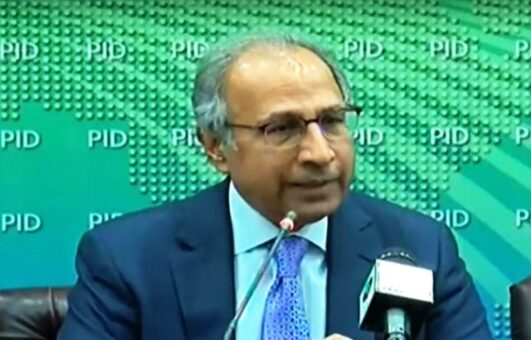
Islamabad – The Federal Government’s think tank convened its third meeting on Sunday to deliberate on fiscal measures, including sales tax, aimed at mitigating the economic challenges arising from the COVID-19-induced slowdown. The discussion, chaired by Advisor to the Prime Minister on Finance and Revenue, Dr. Abdul Hafeez Shaikh, emphasized the critical role of sales tax adjustments in spurring consumer spending and economic recovery.
(more…) -

Sindh allows property registrations; issues SOPs
KARACHI: The Sindh government has allowed registration of properties from Monday May 04, 2020 with certain restriction to ensure compliance of lockdown to prevent spread of coronavirus.
The provincial government has permitted Board of Revenue (BOR) to allow functioning / opening of the offices of sub-registrars in Karachi Division with effect from May 04, 2020 with the condition of strict observance of Standard Operating Procedures (SOPs).
The Sindh government issued following SOPs for functioning of sub-registrar offices:
01. The offices of sub-registrars shall start functioning from 10:00 am daily on all working days and close at 4:00 pm during Ramazan ul Mubarak and on the notified office timings of the government of Sindh in the subsequent months;
02. Each aspirant for registration of document shall contact the concerned sub-registrar through one of the messaging services (SMS/Whatsapp) to get an appointment of a fixed time reserved for execution of his/her documents;
03. Each party shall get a fixed time of 20 minutes, and the party concerned shall be obligated to reach within the office premises at least five minutes earlier, and get their presence acknowledged by the concerned officials/ peshkar;
04. No person shall be allowed to enter the office without demonstrable message of appointment;
05. Only actual executants and identifiers shall be permitted to enter the office who all shall make sure that they present themselves in the office at the fixed time;
06. If any one of the mandatory signatories is missing, the documents shall not be received, and a new time shall be given;
07. The executants shall bring along their hand sanitizers; sanitize their hands before and after execution/registration of the document; wear a recommended face mask; maintain social distancing among themselves and with the staff;
08. No executants/identifier shall be allowed entry in the office premises unless he/she has adopted the above protective measures;
09. The executants and identifiers shall stand in a queue at their designated spot marked by the sub-registrars at three feet distance for each person;
10. The entire job shall be completed within 20 minutes where after the parties shall leave the office, and the next party shall be called in;
11. For the party in waiting, there shall as well be markings at three feet distance for each individual in the corridor or other appropriate place to be identified by the sub-registrar concerned. Such notices shall be displayed at conspicuous places for public information;
12. No hand shake or other means of body touch shall be permissible;
13. It shall be lawful for the sub-registrar to defer registration by putting a specific note about violation of these SOPs and / or other relevant SOPs notified by the Home Department Government of Sindh by any one or more persons from amongst the executing parties;
14. Minimum nuclear staff shall be called for duty;
15. The sub-registrar shall be duty bound to follow and implement the SOPs.
16. The sub-registrar shall keep his office, record etc. disinfected continually;
17. The entire staff shall put on face mask and hand gloves of appropriate specifications;
18. The district registrar shall constitute monitoring team, and shall himself carry out surprise visits to the office of sub-registrars to check whether the SOPs are being followed in letter and spirit;
19. A daily log of inspections along with a brief account of the observations shall be submitted to the inspector general of registration Sindh and Member RS&EP Board of Revenue Sindh;
20. The concerned deputy commissioner/assistant commissioner shall carry out surprise inspection of the offices of sub-registrars to monitor implementation of the SOPs and upon finding any violation, the deputy commissioner shall immediately generate a report for senior member board of revenue for criminal/departmental action;
21. No private person shall be allowed entry in the scanning or audit office;
22. All the relevant SOPs notified by the Home Department shall be additionally followed in letter and spirit; and
23. The sub-registrar shall cause these SOPs to be conspicuously displayed in and outside his office.
-
Withholding tax rate should be increased for immovable property purchase by non-filer
KARACHI: The withholding tax rate should be enhanced to 10 percent for non-filer purchaser of immovable property in the budget 2020/2021.
Pakistan Business Council (PBC) in its budget proposals 2020/2021 recommended to increase the rate of withholding tax for unregistered and non-filers of income tax returns.
The PBC recommended that advance income tax is collected on sales of immovable property under section 236C, which is 1 percent for both filers and non-filers, should be increased for non-filers to 10 percent for properties of 900 square yards or more.
The PBC said that the concept of separate withholding tax rates for filers & non-filers was introduced as a measure for increasing documentation of the economy.
Though large amounts are being collected from non-filers, no effort has been made to increase the tax base.
The non-filers for the most part have built the cost of this government levy into pricing and passed it on to their customers.
In order to broaden the tax base and to achieve increase in overall tax collection without burdening existing tax payers, the policy to increase tax on non-filers / unregistered persons should be implemented specifically in the following cases:
a) unregistered industrial / commercial entities (not having STRN) having bill amount in excess of Rs. 20,000 per month, extra sales tax should be increased from 5 percent to 20 percent.
b) After collection of extra tax as referred above for a continuous period of 6 months, all these connections should be provisionally converted into NTN and STRNs and return filings from these connections should be enforced.
c) In case of provisional registration as above, utility companies be directed to issue show cause notices where annual billing amount exceeds Rs.2.4 million and directing provisionally registered persons to obtain permanent registration. In case of non-compliance, utility companies be directed to disconnect utility connections.
d) Moreover, in order to bring all commercial / industrial users in the tax net and to verify filer status, Electric distribution companies should provide one year to all such consumers to get their NTN registered with electricity distribution companies. In case of failure to provide NTN, electricity connection should be disconnected. Considering the fact that all industrial / commercial connections will be linked with NTN, the tax department will then be in a better position to assess the electricity consumed by commercial / industrial users and corroborate the same with amount of sales / production etc. reported in sales tax / income tax return
e) in order to bring all commercial / industrial users in the tax net and to verify filer status, electric distribution companies should provide one year to all such consumers to get their NTN registered with them. Thereafter, such commercial/industrial consumers without NTN should be charged advance income tax @ 30 percent (from existing 12 percent) on their utility bills. Those with NTN but non-filer status be charged at 20 percent WHT.
f) Residential consumers be made liable to provide NTN in case electricity bill amount exceeds Rs.1.2 million per year or levy advance income tax withholding of 20 percent.
g) All exemptions (like exemption on agricultural income) under the Income Tax Law should only be made available to filers so that exempt income is also reported and wealth is reconciled.
h) Withholding tax on International business class tickets under section 236L is same Rs. 16,000 for filer and non-filer, it should be increased to Rs. 50,000 for non-filers.
i) Withholding tax @ 5 percent or Rs. 20,000, whichever is higher, is applicable under section 236D on all functions organized by filers as well as nonfilers. Rate of withholding be increased for non-filers to Rs. 100,000 as minimum and no WHT from filer.
j) Function halls withholding tax on electric bills should be 30 percent which can be adjusted against tax liability by providing proof of tax deducted from their customers.
k) Withholding income tax on interest income u/s 151 is 15 percent for filer and 30 percent for non-filer. Rate should be increased to 50 percent for non-filers in case interest income is more than Rs.2,000,000/-
l) Annual private motor vehicle tax u/s 234 for non-filers is Rs. 9,000 for 1600cc-1999cc and Rs. 20,000 for 2000 cc and above. Rate for non-filers should be increased to Rs. 50,000 for 1600cc-1999cc and Rs. 200,000 for 2000 cc and above
m) Advance income tax is collected on sales of immovable property under section 236C, which is 1 percent for both filers and non-filers, should be increased for non-filers to 10 percent for properties of 900 square yards or more
n) Holding of land by non-filers should be made more expensive by asking those authorities collecting property tax (cantonment boards / societies/ registrar) to collect adjustable advance income tax, from non-Filers, on behalf of the Federal Government as follows:
o) Rs. 500,000 per year for 800 yards or more but less than 1800 yards
p) Rs. 1 million per year for 1800 yards and above.
-

Massive under-invoicing by commercial importers destroying domestic industry: PBC
KARACHI: Pakistan Business Council (PBC) has said that massive under-invoicing especially by commercial Importers is destroying domestic industry.
In its budget proposals for fiscal year 2020/2021, the PBC said that across the board massive under invoicing and dumping of imported products has been increasing.
Information regarding values at which various custom check posts clear import consignments is not publicly available.
“This encourages unscrupulous importers to under-declare the value of consignments to evade government revenues.”
There are massive leakages in the Afghan Transit Trade (ATT) and smuggled goods are being openly sold in all major shopping centers of the country.
“Customs however is not willing to act against smuggled products citing lack of cooperation from local authorities.”
In order to resolve the problems, the PBC proposed following:
a) Values at which import shipments are cleared through PRAL or CARE need to be publicly available.
b) The Government of Pakistan must insist of Electronic Data Interchange (EDI), for both FTA and non-FTA imports from China. In future the requirement of EDI should be made compulsory for imports from FTA / PTA partner countries.
c) Depending on industry, the Import Trade Price (ITP) be fixed e.g. on the basis of country of origin, weight, volume etc. after discussion with stakeholders. ITP’s may be fixed for most items prone to mis-declaration such as consumer goods and margins of commercial importers be monitored to assess the value of subsequent supply of imported goods. A certificate to this effect should be issued by auditors of commercial importers.
d) For items, prone to under invoicing and mis-declaration, FBR should designate one or two ports (including the dry ports) for clearing of import consignments. This will allow better monitoring of the import consignments where chances of mis-declaration are on a higher side.
e) Additionally, the old Customs General Order 25 needs to be revived with a provision that local manufacturers be given the option to buy at a 15 percent premium, any consignment which appears undervalued.
f) Taxes and duties deposited by local manufacturers and commercial importers should be published.
g) The rate of tax collected from commercial importers be increased by at least by 2 percent. Presently, tax collected from commercial importers is treated as an advance tax. Final Tax.
h) In order to allow commercial importers to claim adjustment of taxes deducted at import stage, commercial importers should be asked to present certificate from auditors that at least 70 percent of imported items have been exported or sold to registered manufacturers. This will also help increase the overall tax base.
i) Monthly sales declared by commercial importers should be matched with sales declared in annual income tax return as well as the credit entries in all business bank accounts. In case of any discrepancy, a reconciliation with justifiable reasons should be submitted by the commercial importers
j) Online CREST system must be amended in a way to trace sales along with value addition thereon of person to whom supplies were made by Commercial importers.
Transparency in collection of taxes will discourage mis-declaration, measures to discourage evasion of taxes and duties will help industry to fairly compete with unscrupulous imports and also Government stands to benefit from the increased indirect taxes revenues.
It will also help in accountability of the customs staff and will reduce the incidence of Customs Duty & Sales Tax evasion and increase government revenues.
The proposed change will help in boosting the manufacturing base of Pakistan, the PBC added.
-
One percent sales tax proposed on every stage of supply chain
KARACHI: Business community has proposed imposing one percent sales tax on every stage of supply chain of five export oriented sector without input adjustment.
Federation of Pakistan Chambers of Commerce and Industry (FPCCI) in its budget proposals for fiscal year 2020/2021 said that Finance Act, 2019 abolished zero rating regime extended to five major export sectors i.e. textile, leather, carpets, sport goods and surgical goods by rescinding SRO 1125(I)/2011.
Sudden removal of zero rating for export oriented sectors has proved fatal for already struggling export oriented sector as the same has resulted accumulation of huge refunds, which in turn has forced genuine taxpayers to knock the doors of tax officers for issuance of their RPOs, which has further promoted harassment and opened up a new window of bribery.
Withdrawal of zero rating has caused liquidity issues even for large exporters.
The removal of zero rating has made it almost impossible for exporters to stand anywhere near global competitors.
Moreover, in order to get maximum possible input tax adjustment, suppliers who are able to supply locally as well as in international markets are preferring local sales at the cost of exports to get maximum possible input tax adjustment.
This has resulted in visible decline in quantitative exports of these sectors, damaging foreign exchange reserves and worsening current account deficit.
The FPCCI proposed that Sales Tax at one percent on total value of supply may be charged at every stage in supply chain of these sectors without any input adjustment.
An example of finished garment chain is given as follows:
i. import or local purchase of fiber – 1 percent
ii. ginning – 1 percent
iii. spinning – 1 percent
iv. knitting/weaving – 1 percent
v. dying – 1 percent
vi. cloth – 1 percent
vii. garment stage – 1 percent
In this way, say in case of a finished garment product, exchequer will collect 7 percent sales tax.
All the raw materials including chemicals and dyes which were included in the erstwhile SRO 1125(I)/2011 dated 31-12-2011 be also subject to 1 percent Sales Tax without adjustment as it will incur no loss to the government exchequer.
The above sales tax in the value chain without input tax adjustment will provide the required revenue to exchequer on one hand, while on the other, the same will relieve the taxpayers of liquidity issues being faced by them in form of huge refunds.
This will also save administrative costs and time of the Board, enabling the force field force to focus on broadening tax base and real revenue collections.
-

FPCCI suggests introducing taxpayers’ bill of rights
KARACHI: Federation of Pakistan Chambers of Commerce and Industry (FPCCI) has recommended introducing taxpayers’ bill of rights in the forthcoming budget.
The apex trade body in its proposals for budget 2020/2021, said that the present situation of antagonism between the tax collection agencies and taxpayers needs to be reconciled through a democratic process and implementation of Taxpayers’ Bill of Rights.
The goals fixed under Pakistan Raises Revenue (PRR) Project, estimated at US $1.6 billion, of which financing by World Bank is $400 million, cannot be achieved through handpicked experts (mostly coming on donors’ dictates) who are completely oblivious to the mundane realities of Pakistan.
The bad faith, antagonism and mistrust prevailing between the government and taxpayers can only be removed through a process ensuring a just and fair tax system in Pakistan for which the blueprint and roadmap is available, and we need no foreign funding.
The only thing lacking is political will to debate, promote research on the various challenges and find out workable solutions. This process will certainly require some time.
Meanwhile, PTI Government in order to restore the confidence of the taxpayers should immediately start the process of enactment of Taxpayers’ Bill of Rights.
The draft of Taxpayers’ Bill of Rights was prepared for the first time in 2014 by a sub-committee, constituted by the Federal Tax Ombudsman (FTO), in which Dr. Ikram Ul Haq had put in his best skill to suggest the balance between the rights of taxpayers and authority of tax collectors.
Thereafter, the Tax Reforms Commission (TRC), after 18 months of its establishment, also presented the same in its final report submitted in February 2016. However, until today no practical step has been taken to implement it.
It is high time that the incumbent Government should introduce the Taxpayer Bill of Rights in the finance bill 2020-21
The FPCCI further said that it is a time that we should focus on macroeconomic management issues including budgetary consideration which can have positive effect on long term business efforts towards capital formations and investment of trust and justice in the tax policies and obligations of tax statutes.
Independent Tax Adjudication System, which was promised two decades back during the period of General Parvez Musharraf be included in the ensuing Finance Bill, 2020. Some of the actions were taken but un-sustainability and cascaded developments remain absent. The prosecutors continue to remain adjudicators in the system.