Month: July 2020

  • SBP slashes refinance rate to five percent for temporary, long term schemes

    SBP slashes refinance rate to five percent for temporary, long term schemes

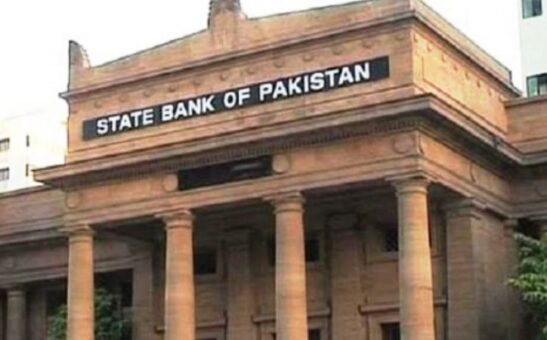
    KARACHI: State Bank of Pakistan (SBP) has decided to reduce the mark up rates on temporary economic refinance facility (TERF) to five percent from 7 percent and on long term financing facility (LTFF) from non-textile sector to five percent from six percent.

    The central bank on Wednesday said that taking cognizance of the negative fallout of COVID-19 Pandemic for the economy, SBP has been constantly taking steps to safeguard the businesses and households and a reduction in the policy rate has been a key step since March 2020.

    SBP has reduced the policy rate by 625 basis points since 17th March, 2020 to 7 percent.

    To extend the benefits of this reduction in the policy rate to the users of its refinance schemes, SBP has now decided to align the end user markup rates on two of its refinance schemes for promoting investment in the country.

    Temporary Economic Refinance Facility (TERF): SBP introduced this facility to provide stimulus to the economy by supporting new investment and balancing, modernization and restructuring (BMR) of the existing projects.

    To further improve the incentive under the scheme, SBP has lowered the end user mark-up rates from existing 7 percent to 5 percent.

    SBP will now be providing refinance to banks at 1 percent with banks’ maximum margin of 4 percent. Further, SBP has also allowed the TERF facility in cases where LCs/Inland LCs were opened prior, but retiring after the introduction of the scheme on March 17, 220.

    These measures, in the backdrop of earlier policy action of allowing BMR under TERF, are expected to further support the economic activity, new long term investment and employment generation.

    Under this scheme, up till 2nd July 2020, Rs10.5 billion have been approved by banks for 21 projects.

    Long Term Financing Facility (LTFF): LTFF is one of the oldest refinance schemes of SBP under which financing is available for export-oriented projects for purchase of imported and locally manufactured new plant and machinery.

    In March, 2020 SBP opened the LTFF to all sectors across the board. Earlier the end user markup rate under this scheme were 5 percent for textile sector and 6 percent for non-textile sectors.

    State Bank has now reduced its refinance rate for non-textile sector by 1 percent and therefore the end user rate for all sectors across the board will be 5 percent.

    It is expected that the above measures will help facilitate long term investment in both domestic and export market.

  • SBP appoints 12 primary dealers for government securities

    SBP appoints 12 primary dealers for government securities

    KARACHI: State Bank of Pakistan (SBP) has appointed 12 financial institutions as primary dealers for government securities for the fiscal year 2020/2021.

    The central bank said that applications were invited for selection of primary dealers for the Financial Year (FY) 2020-2021 vide DMMD Circular Letter No. 01 dated May 15, 2020 from all Banks, Development Finance Institutions, Investment Banks and Listed Brokerage Houses.

    The central bank received twelve applications for appointment of Primary Dealers of Government Securities (PIB & MTB).

    Upon evaluation of each applicant’s performance under the criteria laid down in the aforesaid rules, the following institutions have been selected as Primary Dealers of Government Securities (PIBs & MTBs) for FY 2020-2021

    1. HABIB BANK LIMITED

    2. NATIONAL BANK OF PAKISTAN

    3. BANK AL-FALAH LIMITED

    4. JS BANK LIMITED

    5. ALLIED BANK LIMITED

    6. PAK OMAN INVESTMENT COMPANY LIMITED

    7. MCB BANK LIMITED

    8. UNITED BANK LIMITED

    9. FAYSAL BANK LIMITED

    10. STANDARD CHARTERED BANK (PAKISTAN) LIMITED

    11. CITI BANK N.A (PAKISTAN OPEARTIONS)

    12. THE BANK OF PUNJAB

    Top three performing PDs during FY 2019-2020 are as under:

    Habib Bank Limited

    National Bank of Pakistan

    Bank Al-Falah Limited

  • Bank deposits reach record high at Rs16.23 trillion

    Bank deposits reach record high at Rs16.23 trillion

    KARACHI: The deposits of banking systems have reached record high at Rs16.23 trillion by end of June 30, 2020, according to data released by State Bank of Pakistan (SBP) on Tuesday.

    The deposits of baking system registered 12.24 percent growth by end of June 2020 as compared with Rs14.46 trillion by end of same month last year.

    Analysts at Topline Securities explained that during second quarter of 2020, the deposits have increased by higher-than-largely-expected 7 percent, as Net Domestic Assets (NDA) of the Banking System increased by 6 percent during this period, on the back of 11 percent increase in the government borrowings for budgetary support.

    Investments have grown by 40 percent YoY and 3 percent MoM to Rs10.68 trillion by end June 2020. The same is up 21 percent YTD (vs. 6 percent YTD growth by end March 2020).

    As a result, IDR has increased to 66 percent in June 2020 from 53 percent in June 2019 and 61 percent in March 2020.

    On the other hand, Advances have grown by just 1 percent YoY, and have actually declined by 2 percent MoM in June 2020 despite the aggressive cuts in interest rates by the Pakistan Central Bank since March 2020.

    This is due to the impact of the pandemic COVID-19, which has caused the overall slowdown in the economic activity. In YTD 2020, advances are up 1 percent.

    As a result, ADR has dropped to 51 percent in Jun-2020 from 56 percent in Jun-2019 and 55 percent in March 2020.

    The Currency in Circulation (CIC) has increased by 17 percent in YTD 2020 to Rs6.19 trillion, with CIC as a percentage of M2 clocking in at 31 percent, above past 5-year average of 27 percent.

    Going forward, the analysts expect deposit growth in the range of 10-11 percent during 2020 (vs. historical 3-year average growth of 11 percent), while they expect advances to grow by around 5 percent during the year (vs. historical average 3-year growth of 14 percent).

  • Finance Act 2020: wealth statement cannot be revised after five years

    Finance Act 2020: wealth statement cannot be revised after five years

    ISLAMABAD: A wealth statement cannot be revised after the expiry of five years from the date of filing of income tax return, officials at Federal Board of Revenue (FBR).

    The amendment has been approved by the National Assembly by passing the Finance Act, 2020. The amendment has been introduced in sub-section 3 of Section 116 to Income Tax Ordinance, 2001.

    The sources said that under Income Tax Ordinance, 2001 taxpayers had already been allowed to revise their wealth statement by providing reasons for the revision and before any notice issued by a tax office in this regard.

    However, through amendment Commissioner Inland Revenue has been empowered to declare the revised wealth statement if he found any ill intention of the taxpayer.

    According to the amendment: “Provided that where the commissioner is of the opinion that the revision under this sub-section is not for the purpose of correcting a bona fide omission or wrong statement, he may declare such revision as void through an order in writing after providing and opportunity of being heard.”

    An explanation has also been included through amendment which said: “For the removal of doubt it is clarified that wealth statement cannot be revised after the expiry of five years from the due date of filing of return of income for the tax year.”

    A taxpayer is required to file wealth statement under Section 116 along with annual income tax return by providing particulars included:

    (a) the person’s total assets and liabilities as on the date or dates specified in such notice;

    (b) the total assets and liabilities of the person’s spouse, minor children, and other dependents as on the date or dates specified in such notice;

    (c) any assets transferred by the person to any other person during the period or periods specified in such notice and the consideration for the transfer;

    (d) the total expenditures incurred by the person, and the person’s spouse, minor children, and other dependents during the period or periods specified in the notice and the details of such expenditures; and

    (e) the reconciliation statement of wealth.

  • Corporate RTO Karachi to hold e-Katcheri

    Corporate RTO Karachi to hold e-Katcheri

    KARACHI: Corporate Regional Tax Office (CRTO) Karachi to conduct public e-Katcheri for efficient service delivery and ensure public trust, sources said on Tuesday.

    The program has been launched in compliance with the directive of the prime minister to conduct E-Khuli Katcheri to stay in contact with the public by all available means and provide them accessible platform to raise their issues for timely resolution.

    In this regard Chief Commissioner Inland Revenue, CRTO Karachi will conduct E-Khuli Katcheri on Friday of every second week of the month from 11:00 AM to 12:00 noon through Whatsapp.

    The taxpayers facilitation wing of the FBR recently circulated about the program directing that E-Katcheri would be conducted by every tier of FBR in the second week of every month on regular basis.

    The FBR directed all the tax offices to ensure that all proceedings of the E-Katcheri are property recorded and tasks should be assigned to concerned officers accordingly.

    The tax offices have also been directed to submit performance report on the outcome of the meeting with public.

    In the wake of COVID-19, the tax authorities shall conduct one E-Katcheri at all tiers of FBR in the second week of every month. In the backdrop of COVID-19, only E-Katcheris shall be conducted for the time being until normalcy of the situation.

  • FBR appreciates services of Nausheen Amjad

    FBR appreciates services of Nausheen Amjad

    ISLAMABAD: Senior officers of the Federal Board of Revenue (FBR) gathered on Tuesday to commend the contributions of Ms. Nausheen Javaid Amjad, who recently stepped down from her position as FBR Chairperson.

    (more…)
  • SBP extends deferment of principal amount facility till September 30

    SBP extends deferment of principal amount facility till September 30

    KARACHI: State Bank of Pakistan (SBP) has decided to extend the deferment of principal amount facility up till September 30, 2020, a statement said on Tuesday.

    The central bank said that considering the fact that COVID-19 pandemic is continuing to stress the cash flow of small and medium sized businesses and households, SBP has decided to extend the Deferment of Principal Amount facility up till September 30, 2020.

    This facility will however be available for Small & Medium Enterprise Financing, Consumer Financing, Housing Finance, Agriculture Finance and Micro financing only.

    The facility is not being extended to corporates and commercial borrowers since a significant amount of their loans and advances has already been deferred.

    It is expected that more businesses and households, who were not able to avail the facility, will benefit from this extension.

    On March 26, 2020, amid growing concerns about the potential economic impact of the COVID–19 pandemic, SBP with the collaboration of Pakistan Banks Association (PBA) announced a comprehensive set of measures to help businesses and households to manage their finances.

    Among these, a key measure was the deferment of principal amount of loans and advances by banks and DFIs.

    Under this facility, businesses and households could request for the deferment of their loans and advances for a period of one year, albeit continuing to service the mark-up amount.

    The measure also ensured that the deferment of principal will not affect borrower’s credit history and such facilities will not be reported as restructured/rescheduled in the credit bureau’s data.

    This measure proved extremely helpful for borrowers and is evident from the fact that up till 3rd July 2020, banks deferred Rs593 billion of principal amount of loans of over 359 thousand borrowers.

    A very large number of borrowers— 95 percent of total beneficiaries of this scheme, as of July 3, 2020 have been small borrowers including SMEs, consumer finance, and microfinance.

  • FBR extends date for submitting Annex-H  to claim refund

    FBR extends date for submitting Annex-H to claim refund

    ISLAMABAD: Federal Board of Revenue (FBR) on Tuesday allowed taxpayers to submit their stock position for the period July–January 2019/2020 up to July 31, 2020 in order to claim sales tax refunds under newly only verification and issuance system.

    In an official memorandum issued, the FBR extended the time limit for filing of Annexure – H for the tax period July – January 2019/2020 up to July 31, 2020.

    Annexure-H is a statement for providing stock position by taxpayers along with monthly sales tax return.

    The FBR from July 01, 2019 introduced expeditious payment of sales tax refunds within 72 hours subject to the true filing of Annexure – H.

    As per the Rules, refund will be treated as having been filed only after filing of Annexure H of the Sales Tax return, for which deadline of 120 days has been prescribed in the Rules and the same can be extended for a period of 60 days on the basis of approval from the Commissioner.

  • Share market gains 171 points in mixed trading activity

    Share market gains 171 points in mixed trading activity

    KARACHI: The share market gained 171 points on Tuesday in a mixed trading activity during the day.

    The benchmark KSE-100 index of Pakistan Stock Exchange (PSX) closed at 35,373 points as against 35,203 points showing an increase of 171 points.

    Analysts at Arif Habib Limited said that the market continued ascent today with the benchmark index posting gains of 270 points during the session and closed +171 points.

    E&P, OMCs, Cement and Banking sector remained in the limelight. Banking sector has lately seen improvement of investor sentiment. Refinery and Chemical sector stocks saw profit booking after yesterday’s performance.

    Cement sector has also seen traction on the back of improved dispatches as well as better outlook on construction of hydel power and CPEC projects. Cement sector led the volumes with 46.7 million shares, followed by Technology (38.6 million) and Cable (36.4 million). Among scrips, PAEL topped with 32.9 million shares, followed by HASCOL (31.5 million) and LOTCHEM (24.1 million).

    Sectors contributing to the performance include Banks (+61 points), Autos (+43 points), Cement (+41 points), Pharma (+25 points), E&P (+15 points), Power (-24 points), and Fertilizer (-17 points).

    Volumes posted a slight increase of 0.4 percent DoD to reach 333.9 million as against 32.2 million. Average traded value, however, increased by 9 percent to reach US$ 73.2 million as against US$ 66.9 million.

    Stocks that contributed significantly to the volumes include PAEL, HASCOL, LOTCHEM, PIBTL and MLCF, which formed 40 percent of total volumes.

    Stocks that contributed positively to the index include INDU (+23 points), BAFL (+20 points), UBL (+15 points), HINOON (+12 points) and AICL (+11 points). Stocks that contributed negatively include HUBC (-24 points), ENGRO (-16 points), NESTLE (-10 points), TRG (-10 points), and EFERT (-7 points).

  • Rupee weakens by 23 paisas on demand for import payments

    Rupee weakens by 23 paisas on demand for import payments

    KARACHI: The Pak Rupee weakened by 23 paisas on Tuesday owing to demand for import and corporate payments.

    The rupee ended at Rs166.95 to the dollar from previous day’s closing Rs166.72 in interbank foreign exchange market.

    Currency experts said that due to enhanced economic activities after ease in lockdown the importers were seen active to purchase currency for foreign buying.

    Further, they said that the demand for foreign currency was also seen from multinational and foreign companies to repatriate their profits after close of fiscal year ended June 30, 2020.

    The rupee depreciated by around 74 paisas against dollar during first two days of this week.