Day: August 20, 2020

  • FBR asks exporters to resubmit claims for stuck-up refunds

    FBR asks exporters to resubmit claims for stuck-up refunds

    ISLAMABAD: Federal Board of Revenue (FBR) on Thursday offered exporters to resubmit their refund claims which were stuck up due to any reason.

    The FBR said that sales tax refund claims of exporters, which were stuck up at pre-processing stage in Fully Automated Sales Tax e-Refund (FASTER) system due to any reason including erroneous filing stand rolled back to provide an opportunity to exporters to review and resubmit their claims after removing shortcomings by September 20, 2020.

    All such refund claimants have also been informed electronically, the FBR added.

    Two days ago, the FBR issued instructions to all chief commissioners Inland Revenue regarding sales tax refunds.

    The FBR said that it had been observed that sales tax refund claims prior to July 2019 were pending for first processing as well as deferred processing, requiring over-ruling of objections raised by Risk Management System (RMS).

    In order to liquidate the pendency of deferred claims, the FBR has already issued circular No. 01/2020 dated August 04, 2020 for rule-based over-ruling objections. “The purpose of circular is to bring uniformity into the system, and to avoid discretion and delay in processing of refunds,” the FBR added.

    The FBR also informed the chief commissioners that processing of refunds should not be stopped on pretext that some case is pending against the claimant at any adjudication or appellate forum unless there is specific stay against processing of refunds. “In cases where the discrepancies pointed out by the department relating to refund claims are held twice in favor for the claimant, refunds be processed even if field office has preferred further appeal, unless specifically barred by the appellate forum or the board.”

    The FBR directed that field formations should ensure that pending refunds of claimants are processed in routine on the basis of Circular No. 01/2020.

  • Sindh EPA takes measures to control Industrial, vehicular emissions

    Sindh EPA takes measures to control Industrial, vehicular emissions

    KARACHI: Sindh Environmental Protection Agency (SEPA) has taken major steps to control industrial and vehicular emissions and retain 40 percent improvement in air quality.

    The air quality of Karachi city has improved by 40 percent after imposition of lockdown to contain spread of COVID-19.

    In this regard, SEPA issued directives to all industrial associations to conduct air quality monitoring in their industrial areas to check air quality degradation and plant saplings in huge number in and around their factories.

    Industries have been asked to submit their tree plantation plan within one week into the office of SEPA.

    Industries have also been directed to improve the conditions of their buses of shuttle service to control their air emissions and take practical measures to facilitate smooth plying of vehicles in and around their factories.

    Moreover, SEPA is also re-launching its vehicular emission control campaign throughout the city to fine/penalize smoke-emitting vehicles with the help of traffic police.

    In this regard an emergency meeting of all industrial associations of the city including Federal B Area, North Karachi, SITE, and Super Highway was held under the chairmanship of Director General SEPA Naeem Ahmed Mughal at the office of SITE Association.

    The meeting was attended by Sulaiman Chawla President SITE Association, Shaheen Ilyas President Super Highway, Nasim Akhtar President North Karachi Industrial Association, Noman Yaqoob President Landhi Association, Abdullah Abid F.B.Area Industrial Association, Sheikh Umer Rehan President Korangi Association of Trade and Industry, Naveed Shakoor President Bin Qasim Association besides prominent industrialists Zubair Motiwala, Salim Pareekh and Javed Balwani.

    Representatives from SEPA were Director Regional Office Karachi Aashiqui Langha, Deputy Directors Waris Gabol and Imran Sabir besides DG SEPA.

    Addressing the meeting, the DG SEPA Naeem Ahmed Mughal said that for the vigorous enforcement of environmental laws all necessary measures are being taken by the environmental watchdog on priority basis.

    He informed the participants of the meeting that SEPA had conducted a comparative study of air quality of Karachi prior to lock-down and during the lock-down; which revealed a 40 per cent improvement in air as a result of lock-down.

    He pointed out that deteriorating air environment is equally a matter of grave concern for all of us and its control is possible with the collective efforts of all stakeholders including industries and vehicle owners/transporters.

    He further said that to improve the air quality in the city all the industrial associations should start beautification campaigns at the major roundabouts in their areas along with plantation at the open spaces to improve the air quality parameters.

    DG SEPA further directed that all the industrial associations should conduct an air quality study in Karachi to analyze the present air quality with regard to its improvement.

    He also underscored the need of environment-friendly transport for commuting the industrial workers to help mitigate their air emissions.

    The DG SEPA specifically directed for the proper disposal of solid waste being generated by the industries which includes both hazardous and non-hazardous industrial waste.

    “Wastewater treatment plants should be installed as per the directives of Water Commission and in case of any negligence on this score, SEPA will take stern action’, he warned.

    He further said that the culprits who are responsible for the burning of solid waste in any area will be dealt with iron hand. SEPA simply needs cooperation of public in this regard to complain us as and when any such incident occurs in their area.

    At the end, he vowed to provide technical assistance to industries with regard to industrial pollution control.

    It may be recalled that according to data collected in April 2020 during the lock-down by SEPA from different locations of six districts of Karachi the average particulate matter 2.5 (PM 2.5) – the most lethal and stubborn air pollutant – was improved by 39 percent as compared to the same data taken from 76 locations of the city in February 2020 before the lock-down. Likewise, the noise level of the city was also improvement by 19 percent during the lock-down.

    The district-wise details of the data revealed that air quality of districts Central, East, South, West, Malir and Korangi was improved by 8, 61, 40, 37, 25 and 54 percent respectively while an improvement in the noise level of Central 42, East 20, South 15, West 17, Malir 2 and Korangi 26 percent occurred during the lock-down as compare to before lockdown.

  • SBP allows extension in foreign currency loan settlement

    SBP allows extension in foreign currency loan settlement

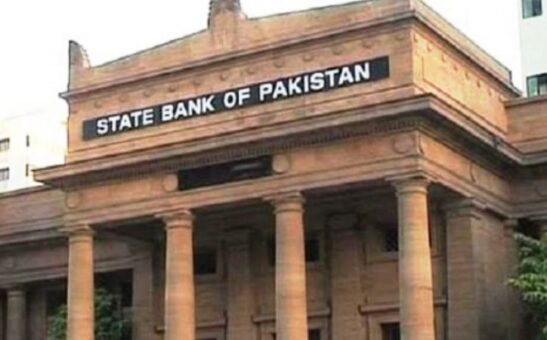
    KARACHI: State Bank of Pakistan (SBP) has allowed extension in settlement of foreign currency loans to facilitate exporters and importers in wake of coronavirus pandemic.

    In a statement issued on Thursday, the SBP said that continuing with its commitment to support the industry amid COVID-19 pandemic, the central bank further facilitated the exporters and importers by allowing extension up to 180 days in settlement of their export and import loans under FE-25 Scheme.

    Banks can now allow extension up to 180 days to exporters in settlement of their FE-25 loans in case they are facing delay in realization of export proceeds due to COVID-19.

    Moreover, banks can also allow settlement of FE-25 loans to exporters through substitute contract during the extended period of 180 days where the original export contract has been cancelled due to COVID-19.

    Likewise, SBP has also allowed the bank to extend the maturity of FE-25 import loans by 180 days.

    This facilitation has been provided to exporter and importers for their foreign currency loans maturing up to September 30, 2020.

    State Bank reiterates its unflinching resolve to continue working with all stakeholders to provide all needed facilitation in these uncertain times in the larger interest of people of Pakistan.

  • Foreign exchange reserves increase to $19.655 billion

    Foreign exchange reserves increase to $19.655 billion

    KARACHI: The liquid foreign exchange reserves of the country increased by $137 million to $19.655 billion by week ended August 13, 2020, State Bank of Pakistan (SBP) said on Thursday.

    The foreign exchange reserves of the country were at $19.518 billion by week ended August 07, 2020.

    The foreign exchange reserves held by the central bank also increased by $139 million to $12.608 billion by week ended August 13, 2020 as compared with $12.469 billion a week ago.

    The SBP attributed the increase in reserves to proceeds of $249.4 million from Asian Infrastructure Investment Bank (AIIB). Meanwhile, during the week, SBP also made government external debt repayments of $151.0 million.

    The foreign exchange reserves held by commercial banks slightly down by $2 million to $7.047 billion by week ended August 13, 2020 as compared with $7.049 billion a week ago.

  • Stock market falls 286 points amid selling in major scrips

    Stock market falls 286 points amid selling in major scrips

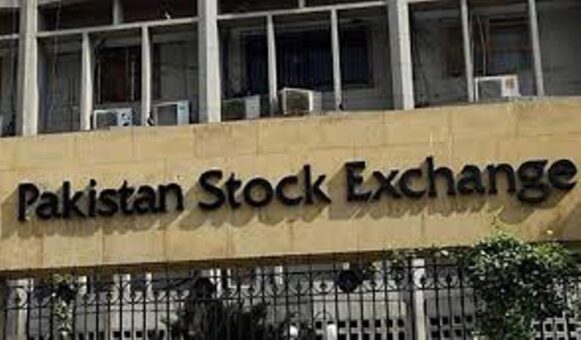
    KARACHI: The stock market witnessed selling pressure in major scrips on Thursday and fell by 286 points.

    The benchmark KSE-100 index of Pakistan Stock Exchange (PSX) closed at 39,869 points as against 40,154 points showing a decline of 286 points.

    Analysts at Arif Habib Limited said that the market opened on a positive note today with +29 points, however, couldn’t carry the momentum showed in the previous sessions.

    Selling activity was observed in Fertilizer, Cement, Refinery and O&GMCs and intensified by the end of session, especially after announcement of MCB’s and FABL’s financial results.

    FABL hit lower circuit after the announcement. Similarly, MCB lost ground after announcement, however, traded above lower circuit. Regional markets already showed bearish activity at the beginning of the session.

    Yesterday’s PIB auction also saw rise in shorter term tenors. Technology sector topped the volumes with 84.5 million shares, followed by Power (40.2 million) and Banks (36.7 million). Among scrips, TRG posted 30.4 million shares, followed by PTC (21 million) and UNITY (20 million).

    Sectors contributing to the performance include Cement (-81 points), Banks (-39 points), O&GMCs (-26 points), E&P (-24 points) and Power (-23 points).

    Volumes declined from 427.2 million shares to 394.3 million shares (-8 percent DoD). Average traded value also declined by 24 percent to reach US$ 84.4 million as against US$ 110.4 million.

    Stocks that contributed significantly to the volumes include TRG, PTC, UNITY, TPL and KAPCO, which formed 28 percent of total volumes.

    Stocks that contributed positively to the index include HBL (+19 points), ABL (+17 points), TRG (+14 points), KAPCO (+13 points) and FFC (+10 points). Stocks that contributed negatively include MCB (-68 points), HUBC (-31 points), LUCK (-29 points), ENGRO (-25 points) and PPL (-16 points).

  • FBR exempts sales tax, income tax on sugar import

    FBR exempts sales tax, income tax on sugar import

    ISLAMABAD: Federal Board of Revenue (FBR) on Thursday exempted sales tax and income tax on import of sugar in compliance with the government decision to lower the price of the commodity.

    The FBR issued SRO 750(I)/2020 to exemption income tax and SRO 751(I)/2020 to exempt sales tax.

    Through SRO 750(I)/2020, an amendment has been made to Second Schedule of Income Tax Ordinance, 2001.

    As per the amendment a new clause 12G has been inserted to the second schedule, which states: “(12G) The provisions of Section 148 shall, in pursuance of the Cabinet Decision dated August 04, 2020, not apply on import by the Trading Corporation of Pakistan of 300,000 metric tons of white sugar having PCT heading 1701.9910, 1701.9920, specification B.”

    As per SRO 751(I)/2020, the same specification and PCT heading the import of sugar has been exempted from whole of sales tax.

    The Economic Coordination Committee (ECC) of the Cabinet in its meeting held last week of July 2020 allowed import of up to 300,000 metric tonnes of white sugar to maintain buffer stocks in the country.

    The permission was given at the ECC meeting in Islamabad with Adviser on Finance Dr. Abdul Hafeez Shaikh in the chair.

    The procurement and other modalities of sugar import will be decided by a three-member committee, comprising Secretary Industries and Production, Secretary Commerce and Secretary Finance.

  • Rupee ends down by 12 paisas on import payment demand

    Rupee ends down by 12 paisas on import payment demand

    KARACHI: The Pak Rupee ended down by 12 paisas against dollar on Thursday owing to persistent demand for import and corporate payments.

    The rupee ended Rs168.38 to the dollar from previous day’s closing of Rs168.26 in interbank foreign exchange market.

    Currency experts said that the rising economic activities after ease in lockdown had increased the demand for imported goods/raw materials.

    The experts however said that the improved trend in export receipts and workers remittance may help the local currency to rebound in coming days.

    The inflow of workers’ remittances hit monthly record high of $2.77 billion in July 2020.

    In July, workers’ remittances rose to US $ 2.768 billion. “This is the highest ever level of remittances in a single month in Pakistan,” according to the SBP.

    In terms of growth, remittances increased by 36.5 percent over July 2019 (y/y) and 12.2 percent over June 2020 (m/m). Given the impact of Covid-19 globally, this increase in worker’s remittances is encouraging.

  • Mobile phones worth Rs24.7 billion imported in July 2020

    Mobile phones worth Rs24.7 billion imported in July 2020

    KARACHI: The country has imported mobile phones worth Rs24.7 billion in the month of July 2020, which is almost double than the import value in the same month of the last year, official data revealed.

    According to data released by Pakistan Bureau of Statistics (PBS) on Wednesday the import of mobile phone increased by 98 percent as the country imported mobile phone worth Rs12.42 billion in the same month of the last year.

    The import value in US dollar term was $148 million in July 2020 as compared with $78.29 million in the corresponding month of the last year, showing an increase of 89 percent.

    Market sources attributed the rise in import of mobile phones to huge demand during lockdown and after ease in lockdown due to rising financial transactions through mobile phones.

    They also attributed the significant growth in rupee term due to depreciation of local currency. The average exchange rate in July 2020 was at Rs166.76 to the dollar as compared with Rs158.82 to the dollar in July 2019.

    Further, the market sources said that the government has provided relief through duty and taxes on import of mobile phones to promote financial inclusion.

  • FBR to reward for identifying fake, flying invoices

    FBR to reward for identifying fake, flying invoices

    ISLAMABAD: Federal Board of Revenue (FBR) on Wednesday announced to give reward money to those people who identify culprits involved tax evasion through fake and flying invoices.

    A statement issued by the revenue body said that it had encouraged the people to come forward and reveal the identity of the people who are involved in causing tax evasion by using fake and flying invoices.

    “FBR will grant reward to such whistle blowers under its Reward Rules,” it said.

    The name of the whistle blowers will be kept secret.

    The information can be given to the Director Intelligence and Investigation Inland Revenue on office number 0519260167 and fax number 0519260156.

    The FBR announced in the wake of strict action launched against tax evaders involving in fake and flying business.

    In this regard FBR chairman issued directions to all the FBR field offices to expedite operation against tax evasion and play active role to stop the menace of fake and flying invoices.

    Meanwhile, implementing the directions, the Karachi Field Office of FBR has taken action against a fake business unit which was involved in evading duties and taxes at import stage under SRO 1125.

    The said unit was also issuing fake and flying invoices in the market due to which the buyers were claiming input adjustment and refunds.

    The said unit has committed tax fraud and caused heavy loss of Rs. 210 million to the pubic exchequer. The principal accused Mubarak Khan has been arrested.

    Similarly, another case of tax evasion of Rs. 105 million has been unearthed. The tax evasion was taking place by issuance of fake and flying invoices.

    FBR Multan office has confiscated the counterfeit and non-duty paid cigarettes. In another case, FBR Karachi office has received a complaint of Rs. 1 billion money laundering. The investigations are underway.

  • SBP allocates additional Rs190 billion refinancing to facilitate exporters

    SBP allocates additional Rs190 billion refinancing to facilitate exporters

    KARACHI: The State Bank of Pakistan (SBP) has allocated an additional amount of Rs190 billion under refinancing schemes for exporters during fiscal year 2020/2021, a statement said on Wednesday.

    In order to further facilitate the exporters, SBP enhanced the limit of refinancing provided to the banks under Exports Finance Scheme (EFS) by Rs100 billion.

    Hence, banks will now have overall limits of Rs700 billion for the exporters for 2020/2021.

    Moreover, to promote export-oriented investment, Rs90 billion have also been allocated under Long Term Financing Facility (LTFF) for the FY 21.

    This amount is in addition to limit of Rs100 billion already allocated to banks/DFIs under Temporary Economic Relief Facility (TERF) – a concessionary refinance scheme for setting up of industrial units, the SBP said.

    Export Finance Scheme and Long Term Financing Facility are two of the oldest schemes of SBP under which concessionary financing is provided to the exporters.

    EFS is operational since 1973 to meet short-term financing needs of exporters, while LTFF has been available 2008. For both the schemes, their Shariah compliant versions are also available.

    Since the emergence of Covid-19, SBP has taken several measures to counter its impact on the economy and safeguarding country’s exports has been a key priority. SBP has provided a number of relaxations under EFS and LTFF since March 2020 including:

    Additional period of six months for making shipment against loans availed under EFS Part-I.

    Additional period of six months for meeting required export performance against loans availed under EFS Part-II.

    The export performance of this extended period will also be considered for calculating the entitlement limit for 2020/2021.

    Reduction in showing export performance from 2 times to 1.5 times against financing availed during FY20 and FY21.

    Relaxation in the eligibility criteria for availing finance under LTFF.

    Allowing deferment of principal amount for one year and/or rescheduling/restructuring of loans under LTFF.

    It is expected that with the above already provided relaxations, which were widely appreciated by business community; above enhancement of around Rs190 billion in limits will cater to exporters’ cheaper liquidity requirement. SBP is closely monitoring the situation and is ready to take any further actions required to support the export sector.