ISLAMABAD: The ministry of commerce on Friday issued Import Policy Order, 2020.
The import policy order shall come into force at once.

ISLAMABAD: The ministry of commerce on Friday issued Import Policy Order, 2020.
The import policy order shall come into force at once.
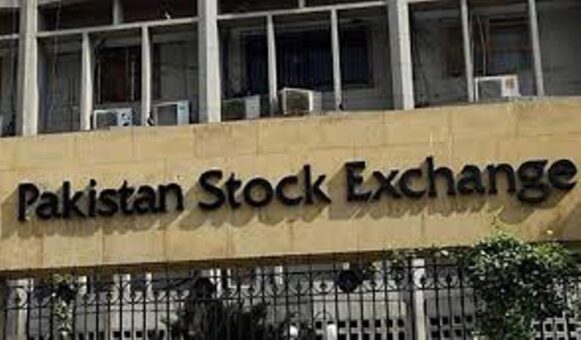
KARACHI: The stock market fell by 105 points on Friday as the market witnessed range bound trading and selling pressure.
The benchmark KSE-100 index of Pakistan Stock Exchange (PSX) closed at 41,701 points as against 41,806 points showing a decline of 105 points.
Analysts at Arif Habib Limited said that the last day of the rollover week replicated what was witnessed for the good part of the outgoing week, i.e range bound performance and selling pressure.
E&P, Cement and banking sector stocks contributed to the downside in Index, whereby OGDC and PPL saw selling pressure in Market on Close (MOC) session.
Cement sector stocks sustained selling pressure due to apprehensions on Competition Commission’s raid on APCMA. O&GMCs led the volume with 64.1 million shares, followed by Vansapati (47.5 million) and Refinery (43.6 million). Among scrips, HASCOL topped the volumes with 57.4 million shares, followed by UNITY (47.5 million) and BYBCO (28.4 million).
Sectors contributing to the performance include Cement (-85 points), Technology (-21 points), Insurance (-17 points), Power (+16 points), O&GMCs (+15 points).
Volumes almost remained the same at 435.0 million shares. Average traded value increased by 2 percent to reach US$ 93.0 million as against US$ 91.1 million.
Stocks that contributed significantly to the volumes include HASCOL, UNITY, BYCO, TRG and PIBTL, which formed 40 percent of total volumes.
Stocks that contributed positively to the index include HBL (+30 points), COLG (+21 points), BYCO (+12 points), HASCOL (+11 points) and KAPCO (+11 points). Stocks that contributed negatively include LUCK (-39 points), UBL (-22 points), TRG (-22 points), DGKC (-16 points) and MUREB (-14 points).
The Pakistani Rupee appreciated by 17 paisas against the US dollar on Friday, closing at Rs165.79 in the interbank foreign exchange market. This marks an improvement from the previous day’s close of Rs165.96, as increased inflows of remittances and export receipts boosted the currency.
(more…)
KARACHI: Federal Board of Revenue (FBR) has issued list of persons who are mandatorily required to get sales tax registration under Sales Tax Act, 1990.
Following is the list of persons required to get sales tax registration:
a. All importers
b. All wholesalers (including dealers) and distributors
c. Manufacturers not falling in cottage industry. {Cottage industry means a manufacturer whose annual turnover from taxable supplies made in any tax period during the last twelve months ending any tax period does not exceed [ten] million rupees or whose annual utility (electricity, gas and telephone) bills during the last twelve months ending any tax period do not exceed [eight] hundred thousand rupees;}
d. Retailers (Tier-1 retailers means:
a. A retailer operating as a unit of a national or international chain of stores;
b. A retailer operating in an air-conditioned shopping mall, plaza or centre, excluding kiosks;
c. A retailer whose cumulative electricity bill during the immediately preceding twelve consecutive months exceeds Rupees six hundred thousand; and
d. A wholesaler-cum-retailer, engaged in bulk import and supply of consumer goods on wholesale basis to the retailers as well as on retail basis to the general body of the consumers;)
e. A person required under any Provincial or Federal Law to be registered for purpose of any duty or tax collected or paid as if it were a levy of sales tax, e.g. service providers like hotels, clubs, caterers, customs agents, ship chandlers, stevedores, courier services etc.
f. Persons making zero-rated supplies, including commercial exporter who intends to obtain sales tax refund against his zero rated supplies.
g. A person who is required to be registered by virtue of aforesaid criteria, but still avoids registration, can be compulsorily registered by the department, after proper enquiry, under sub- rule 1 of Rule 6 of Sales Tax Rules, 2006.
KARACHI: Model Customs Collectorate (MCC) Preventive, Karachi on Thursday announced auction of motor vehicles to be held on September 28, 2020 at Anti-Smuggling Organization (ASO) Headquarter, NMB Wharf, Ghass Bandar, East Wharf, Karachi.
Following vehicles to be presented for the auction:
01. Toyota Harrier Jeep, Reg. No. JAA-454, Model 1998, 2999CC, Chassis No. MCU-10-0013510
02. Toyota Mark-II Saloon Car, Reg. No. BBL-708, Model 2000, 1800HP, Chassis No. JZX110-6000922
03. Toyota Hilux Surf Jeep, Reg. No. UU-691, Model 1992, 240CC, Chassis No. LN130-7022502
04. Mercedes Saloon Car, Reg. No. ZA-030 (Islamabad), Model 2000, 3200CC, Color White, Chassis No. WDB1704652F205019
05. BMW Car (735i), Reg. No. yG-455 (Islamabad), Model 2003, Color Black, Chassis No. WBAGL42050DD81475
06. Toyota Mark-X, Reg. No. AEH-764, Model 2013, 2499CC, Chassis No. GRX-130-6077002
07. Honda Civic Saloon Car, Reg. No. BEE 563, Model 2006, Chassis No. FD3-1006033
08. Honda Civic Hybrid Car, Reg. No. GS-0487, Model 2005, Chassis No. FD3-1001034
09. Hilux Surf Jeep, Reg. No. X-5251, Model 1994, Chassis No. KZN130-9021459
10. Honda Civic Car, Reg. No. AJH-324, Model 2005, 1493CC, Chassis No. DAA-FD3-1000126
11. Toyota Premio Car, Reg. No. UG-424 (Islamabad), Model 2005, 1998CC, Chassis No. AZT-240-0021746

ISLAMABAD: Banks have agreed to share information of accountholders through a solution developed by IT department of the Federal Board of Revenue (FBR), a spokesman said on Thursday.
The spokesman said that the FBR and Pakistan Banks Association (PBA) have agreed on information sharing under Section 165 and Section 165A of Income Tax Ordinance, 2001.
It is agreed that banks will provide information to the FBR regarding cash withdrawal, deposits, payment through credit card and profit on debt.
The spokesman said that the solution would help the banks to instantly provide relevant information to the FBR.
The banks have agreed to provide information to the FBR through IT solution from September 18, 2020.
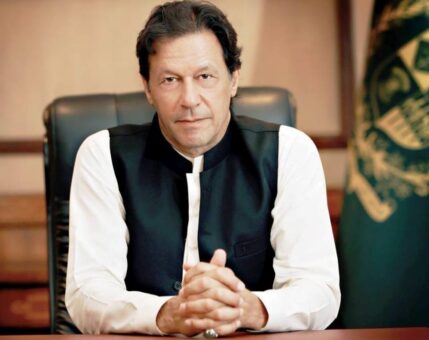
ISLAMABAD: The ‘enablers’ of corruption and bribery, such as accountants, lawyers and other intermediaries, must be closely regulated, monitored and held accountable, said Prime Minister Imran Khan said on Thursday.
He was addressing through video link at the Launch of the Interim Report of the High-Level Panel on International Financial Accountability, Transparency and Integrity (FACTI) for Achieving the 2030 Agenda High-Level Launch Event and Panel Discussion.
The prime minster said that each year, billions of dollars illicitly flow out of developing countries.
“My Government came with a robust public mandate to get rid of this menace from our country. We have taken several initiatives domestically. What is needed, what is required is strengthening international cooperation to bring perpetrators of financial crime to justice,” he said.
The prime minister welcomed the Interim Report of the FACTI Panel. The figures of illicit flows mentioned in the Report are staggering. One trillion dollars is taken out each year by these white-collar criminals, he said.
Twenty to forty billion dollars is in the form of bribes received by these corrupt white-collar criminals. Seven trillion dollars in stolen assets is parked in safe tax ‘haven’ destinations.
Five to six hundred billion dollars is lost each year in tax avoidance by multinational companies.
This bleeding of the poorer and developing countries must stop. International community must adopt decisive actions and these are ones I propose:
One, the stolen assets of developing countries, including the proceeds of corruption, bribery, and other crimes, must be returned immediately.
Two, the authorities in “haven” destinations must impose criminal and financial penalties on their financial institutions which receive and utilize such money and assets.
Three, the “enablers” of corruption and bribery, such as accountants, lawyers and other intermediaries, must be closely regulated, monitored and held accountable.
Four, the “beneficial ownership” of foreign companies must be revealed immediately upon inquiry by interested and affected governments.
Five, multinational corporations must not be allowed to resort to “profit-shifting” to low tax jurisdictions for avoiding taxation. A global minimum corporate tax could prevent this practice.
Six, revenues from digital transactions should be taxed where the revenues are generated, not elsewhere.
Seven, Unequal investment treaties should be discarded or revised and a fair system for adjudication of investment disputes set up.
Eight, all official and non-official bodies set up to control and monitor illicit financial flows must include all the interested countries.
Nine, the UN should set up a mechanism to coordinate and supervise the work of the various official and non-official bodies dealing with illicit financial flows to ensure coherence, consistency and equity in their work.
The need of developing countries to protect and preserve their precious resources has become even more vital because of the recession triggered by COVID-19 pandemic.
He said that unless these steps are taken, the difference between the rich and poor will keep growing. The developing countries will get impoverished and what we see of the current migration crisis, this will be dwarfed by what will happen in the future, if this gulf keeps growing.
ISLAMABAD: Pakistan Telecommunication Authority (PTA) has asked administration of TikTok platform to block/remove immoral and vulgar content for viewership in Pakistan.
In a statement issued on Thursday, the telecom authority asked TikTok platform to immediately block vulgar, inducement, immoral, nude content for viewership in Pakistan.
The PTA has done so keeping in view the negative effects of indecent/immoral/nude content available on the platform.
The PTA has approached TikTok to immediately ensure blocking of objectionable contect and to prevent the usage of its platform for disseminating illegal content.
In addition, the platform has been directed to put in place an effective content monitoring and moderation mechanism to proactively remove indecent/ immoral content failing which necessary action will be taken under the law.

ISLAMABAD: The Competition Commission of Pakistan (CCP) on Thursday raided the central office of All Pakistan Cement Manufacturers Association (APCMA) and seized suspicious record.
In a statement the CCP said that as part of an enquiry launched in May 2020 to investigate the possible anti-competitive activities by the cement manufacturers, carried out a search and inspection of the APCMA in Lahore on Thursday.
It said that two different teams entered and searched the APCMA main office and a member of APCMA. “Since a senior employee of one of major cement company is also the office bearer of the APCMA’s Executive Committee, representing the north region, therefore, the commission also conducted search and inspection of the premises of member concern with the objective to gather evidence of any collusive arrangement for the purposes of the Act,” it added.
The CCP said that the enquiry was started based on the information gathered through various media reports, and concerns and complaints expressed regarding a concurrent increase in cement prices, particularly during the month of April 2020.
The reports indicating that an increase of Rs45 – Rs55 per cement bag was apparently decided in a meeting of the cement manufacturers held under the umbrella of APCMA. Some of the media reports also quoted cement dealers saying that the leading cement companies in the north region had collectively decided to increase the cement prices by Rs55 per bag.
From the analysis done by the CCP’s enquiry officers to see the cement companies’ profitability trend, it transpired that due to the lower demand of cement in the first quarter of 2020, the companies had to undergo financial losses at variance, however, the increase in price was starkly parallel, raising concerns of collective decision making and price fixing by the cement manufacturers.
“Some of the players of the construction industry also hinted upon the cement cartel in the North Region becoming active following price increase trend in northern region.”
The official data available with the CCP indicated the cement price increase of 4 percent in Islamabad, 10 percent in Lahore, and 6 percent in Peshawar from the second week of April 2020.
From analysis of the information obtained from the news reports, price trends and facts gathered pertaining the same, it appears that objective basis, if any, needed to be assessed and / or the correlation between increase in the price of cement and grounds presented by the representatives of cement industry.
Sudden rise in price by the cement manufacturers at the time when there is low demand compared to the installed capacity of the manufacturers at a time when there is low demand compared to the installed capacity of manufacturers and considering the input fuel cost (coal and oil), transportation and interest rate have declined raises suspicion of a collective rise in price by cement companies.
It may be noted that the production capacity of cement sector has increased from 44 million tons in 2014 to 69 million tons in 2020. The losses incurred by the cement sector and increase in the price of cement in a similar time period raises suspicion of collective decision of the cement companies to recover losses incurred due unutilized installed capacities.
The CCP said that the cement sector has history of collusive activities and they have been penalized in the past to an amount of collectively more than Rs6.3 billion on account of involvement in the prohibited agreement in violation of Section 04 of the Act.
In 2012 the commission again initiated enquiry against cement companies, however, the same could not be proceeded further due to stay order granted to cement companies by the Lahore High Court.
The CCP said that the latest search had been carried out to gather the evidence of possible communication, arrangement, agreement, or understanding between the cement producers pertaining to the violation of the provisions of the Competition Act, 2010.
KARACHI: The Pak Rupee gained 26 paisas against dollar on Thursday owing to better inflows and surplus current account balance.
The rupee ended Rs165.96 to the dollar from previous day’s closing of Rs166.22 in interbank foreign exchange market.
Currency experts said that sentiments in the market were remained positive due to surplus in current account balance for the first two months of the current fiscal year.
The further said that the inflows of export receipts and workers’ remittances also helped the rupee to recover losses against the dollar.