Day: January 11, 2021

  • Rules notified for taxpayers profile update

    Rules notified for taxpayers profile update

    ISLAMABAD: Federal Board of Revenue (FBR) on Monday notified rules for making it mandatory for taxpayers to update their profiles through IRIS portal.

    The FBR issued SRO 13(I)/2021 dated January 08, 2021 to amend Income Tax Rules, 2002. Through the SRO the FBR notified online format for taxpayers to update profile.

    Previously, the FBR issued SRO 1341(I)/2020 on December 16, 2020 for notifying draft rules related to taxpayers profile update.

    A new rule 34B has been proposed for taxpayer’s profile. The FBR said that this rule shall apply for the purpose of section 114A of the Income Tax Ordinance, 2001, which provides for the furnishing of a taxpayer’s profile.

    A taxpayer’s profile shall be filed electronically on the prescribed format and manner as provided on IRIS web portal.

    The taxpayer’s profile shall be verified in the manner specified on IRIS web portal.

    Through Finance Act, 2020 a new section 114A was inserted to Income Tax Ordinance, 2001 for making it mandatory for taxpayers to update their profile.

    Following is the text of Section 114A:

    Section 114A: Taxpayer’s profile.

    (1) Subject to this Ordinance, the following persons shall furnish a profile, namely:-

    (a) every person applying for registration under section 181;

    (b) every person deriving income chargeable to tax under the head, “Income from business”;

    (c) every person whose income is subject to final taxation;

    (d) any non-profit organization as defined in clause (36) of section 2;

    (e) any trust or welfare institution; or

    (f) any other person prescribed by the Board.

    (2) A taxpayer’s profile-

    (a) shall be in the prescribed form and shall be accompanied by such annexures, statements or documents as may be prescribed;

    (b) shall fully state, in the specified form and manner, the relevant particulars of –

    (i) bank accounts;

    (ii) utility connections;

    (iii) business premises including all manufacturing, storage or retail outlets operated or leased by the taxpayer;

    (iv) types of businesses; and

    (v) such other information as may be prescribed;

    (c) shall be signed by the person being an individual, or the person’s representative where section 172 applies; and

    (d) shall be filed electronically on the web prescribed by the Board.

    (3) A taxpayer’s profile shall be furnished,-

    (a) on or before the 31st day of December, 2020 in case of a person registered under section 181 before the 30th day of September, 2020; and

    (b) within ninety days registration in case of a person not registered under section 181 before the 30th day of September, 2020.

    (4) A taxpayer’s profile shall be updated within ninety days of change in any of the relevant particulars of information as mentioned in clause (b) of sub-section (2).

    The FBR on December 30, 2020 extended the last date for updating taxpayers profile up to March 31, 2021.
  • Taxpayers urged to use electronic payment facility

    Taxpayers urged to use electronic payment facility

    ISLAMABAD: Federal Board of Revenue (FBR) has urged the taxpayers to avail electronic mode of payment for duty and taxes. The e-payment facility has been introduced for convenient and hassle free payment, said a statement issued on Monday.

    In continuation of FBR reforms and modernization drive, E-Payment facility for payment of all FBR taxes as well as some provincial taxes has been introduced for convenient and hassle free payment.

    On the one hand, traders can electronically pay all import duties and taxes through Customs computerized system WeBOC at ports and border stations across Pakistan.

    While on the other hand, taxpayers can also electronically pay income tax, sales tax and Federal Excise duty sitting in their homes.

    E-Payment system provides round the clock facility to taxpayers and traders to make online payment of customs duties and other FBR taxes as well as provincial cess and stamp duty.

    The facility is available through internet and mobile banking by using more than 15000 ATMs of 16000 Over the Counters (OTC) bank branches of commercial banks spreading across the country.

    The taxpayers’ confidence and interest in E-payment is growing fast and it can be gauged from the fact that the proportion of number of E-payments of Income Tax, Sales Tax and Federal Excise Duty has increased from 6.26 percent of total payments during July to December 2019 to 40.5 percent during same period of 2020.

    Similarly the proportion of amount deposited in these E-payments has increased from 13.55 percent of total payments to 76.5 percent during the comparative periods.

    E-payment facility has greatly helped the traders and other taxpayers’ during the COVID pandemic since all transactions can be completed without physical interaction.

    Currently 18.6 percent of import duties and taxes are being collected by Pakistan Customs through E-Payment system. More than 80,000 consignments consisting of nearly 22 percent of total imports were cleared in WeBOC through E-Payment in the last 6 months.

    Apart from major Customs stations including Karachi, Lahore, Islamabad and Peshawar, the facility is also being availed by importers in remote areas like Taftan and Khunjerab.

    FBR urges the traders and other taxpayers to utilize E-Payment facility as it reduces their cost of doing business and contributes significantly towards improving the ease of doing business.

    It also expedites the clearance of goods, enhances transparency in the duty payment mechanism and ensures timely revenue reconciliation. Acknowledging E-payment as a major step towards trade facilitation, World Trade Organization’s Trade Facilitation Agreement also promotes the use of electronic payment methods amongst the traders.

    FBR has launched an awareness campaign to enhance the use of E-payment facility. In this regard, a number of seminars have been conducted to educate trade bodies and Customs Agents about the benefits of E-Payment. The traders can also take benefit of the FAQs section relating to E-payment available on the WeBOC web page.

  • Prime Minister launches Pakistan’s instant payment system

    Prime Minister launches Pakistan’s instant payment system

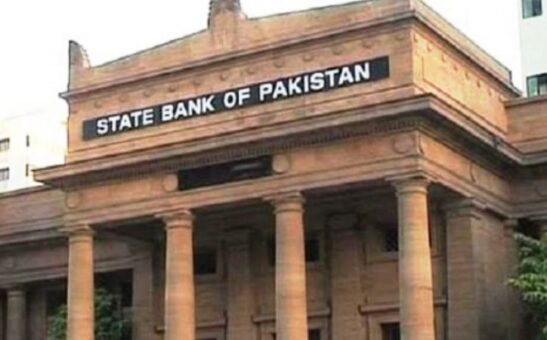
    ISLAMABAD: Prime Minister Imran Khan on Monday launched the completion of the first phase of Pakistan’s Instant Payment System, Raast, according to a statement issued by State Bank of Pakistan (SBP).

    Raast is an initiative of SBP under which it has developed Pakistan’s first instant payment system in collaboration with Bill & Melinda Gates Foundation and Karandaaz, Pakistan. Raast is an accomplishment of one of the milestones of SBP’s broader strategic agenda of digitalization and increasing financial inclusion in the country.

    Speaking at the occasion, the Prime Minister congratulated SBP and termed the launch of Raast as an important step towards fulfilling the Government’s vision and commitment to effectively promote and encourage digitalization of the economy.

    Raast will provide digital, easy-to-use, efficient and cost-effective payment options to people of Pakistan and expected to be a catalyst for providing sustainable opportunities to small businesses and individuals.

    The Prime Minister showed optimism that Raast will help government resolve current inefficiencies in various types of payments such as salary and pension and further improve disbursements under Ehsaas Program and BISPs, amongst other areas.

    In his welcoming remarks, Dr. Reza Baqir informed that the Central Bank has been encouraging technological innovations in banking and payment systems for a long time; however, following the vision of the PM and his support it has stepped up its efforts further to accelerate the pace of digitalization in the country. To modernize country’s banking and payment systems, SBP has taken various initiatives such as enabling Fintechs, and modernizing payments’ infrastructure.

    Referring to the National Payments Strategy prepared with the help of World Bank and announced in November 2019, Governor Baqir remarked that Raast is the first major step taken to implement the strategy.

    He highlighted that SBP initiated the project Raast, with the support of Bill and Melinda Gates Foundation and Karandaaz Pakistan, after a thorough review of ground realities about prevailing payment habits and in line with international best practices and standards.

    The state-of-the-art faster payment system will provide a cheap and universal access to people of Pakistan especially those who are financially excluded and less privileged like women.

    Dr Baqir told the gathering that the faster payment system will help spur economic growth especially by facilitating small businesses and individuals.

    He shared SBP’s plan to launch the system in a phased manner, starting with bulk payment module which will include digitization of dividend payments, salaries, pensions and other payments of government departments.

    In next phases, Raast will digitize payments of micro and small business owners or merchants, who can then pay suppliers on time and fulfill other urgent payment obligations.

    Similarly, the system will provide seamless Person-to-Person payments that will include features such as sending requests for payments and initiating payments using identifiers such as phone numbers or any other alias.

    The UN Secretary-General’s Special Advocate for Inclusive Finance for Development (UNSGSA), H.M Queen Máxima of the Netherlands, also graced the occasion and shared her thoughts.

    The Special Advocate has supported promoting financial inclusion in Pakistan over the years, including country visits in 2016 and 2019.

    Pakistan launched its first national financial inclusion strategy (NFIS) shortly before the UNSGSA’s first visit.

    During her UN country visit in November 2019, the UNSGSA delivered a speech at a ceremony to establish the micropayments gateway now being launched as Raast – Pakistan’s Instant Payment System.

    “I am delighted to be here today for the launch of the pro-poor Micropayments Gateway, Raast, and to congratulate you on the draft Banking on Equality Policy. These are important milestones on the journey to a more inclusive financial system and to a digital economy that works for everyone.

    This is particularly significant for vulnerable segments—such as women and the poor., and especially during this Pandemic. These groups have been disproportionately affected by COVID-19, in part because they were already underserved prior to the pandemic.

    Based on the last Global Findex data from 2018, men in Pakistan were roughly five times more likely than women to have an account and, of the poorest 40% of the population, just 14% had an account.

    We know that financial inclusion has a pivotal role to help people deal with the health and economic crisis caused by COVID-19, and to assist them in exploring new opportunities. So these figures provides us an indication of the challenges lying ahead’.

    Mark Suzman, CEO of the Gates Foundation, shared a prepared statement, via a video message, from co-chair, Bill Gates, who stated: “I hope that in years to come, we will look back and see this new, digital public good as an important contribution to our shared goal of giving all people the tools they need to lift themselves out of poverty. Our foundation is happy to support accelerating efforts towards digital financial inclusion in Pakistan, just like our continued partnership to eradicate polio, and for the Ehsaas poverty alleviation program.”       

    The ceremony was attended by dignitaries including federal ministers and secretaries; CEO Karandaaz; CEOs of banks and telcos and representatives of various other stakeholders.

  • Car sales increase by 18 percent during first half

    Car sales increase by 18 percent during first half

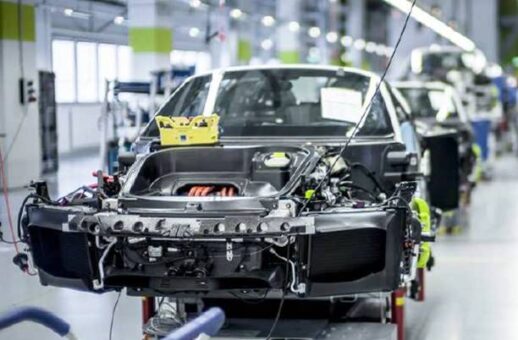
    KARACHI: The sales of domestically manufactured cars have registered 18 percent growth to 78,910 units during first half (July – December) 2021/2021 as compared with 67,019 points in the half of the last fiscal year.

    The increase in cars sales during the first half mainly attributed to addition of 1,169 units manufactured by new entrant Hyundai, according to data released by Pakistan Automotive Manufacturers Association (PAMA) on Monday.

    The sales of Pakistan Suzuki fell by 15 percent to 37,936 units during the first half of the current fiscal year as compared with 44,698 units in the same period of the last fiscal year.

    However, sales of Indus Motors posted strong 84 percent growth to 26,139 units during the first half of the current fiscal year as compared with 14,175 units in the corresponding half of the last fiscal year.

    The sale of Honda Cars also registered increase 68 percent to 13,666 units during July – December 2020 as compared with 8,146 units in the same period of the last fiscal year.

    Car sales, as reported by PAMA, increased by 15 percent YoY in December 2020 to 13,870 units. The same, including Lucky Motor Corporation (KIA, non-member of PAMA), is up by 20 percent YoY.

    Indus Motor (INDU) and Honda Car (HCAR) registered sales increases of 72 percent YoY and 76 percent YoY, respectively. Pak Suzuki’s (PSMC) sales declined by 13 percent YoY.

    New entrants into Pak Auto space Hyundai Nishat sold 511 units (+8 percent MoM) in Dec-2020, while Lucky Motor sold around 600 units, as per our channel checks.

  • Stock market slips by 49 points in mixed trading

    Stock market slips by 49 points in mixed trading

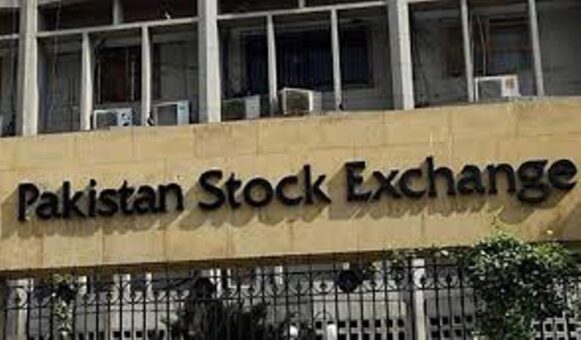
    KARACHI: The stock market slipped by 49 points on Monday in mixed trading activities during the day.

    The benchmark KSE-100 index of Pakistan Stock Exchange (PSX) closed at 45,605 points as against 45,654 points showing a decline of 49 points.

    Analysts at Arif Habib Limited said that the benchmark KSE-100 index crossed another milestone of 46,000 today by posting a total increase of 455 points, however, profit booking eroded all the gains and the index saw decline of 49 points as well.

    International crude oil prices remained range bound that caused the lackluster activity in E&P stocks.

    Similarly, profit booking in Banks and O&GMCs contributed to the attrition in Index.

    Fertilizer sector stocks inched up on the expectation of an increase in Urea prices, however, profit booking kept the rise in check.

    During the session, SBP Governor hinted successful resumption of IMF program that helped built positive investor sentiment.

    Among scrips, SILK topped the volumes with 69.9 million shares, followed by HUMNL (63.9 million) and BYCO (61.5 million).

    Sectors contributing to the performance include Banks (-49 points), Technology (-24 points), Textile (-20 points), E&P (-14 points), Power (+50 points), Pharma (+45 points) and Chemical (+14 points).

    Volumes declined from 696.4 million shares to 588.0 million shares (-16 percent DoD). Average traded value also dipped by 18 percent to reach US$ 110.6 million as against US$ 135.1 million.

    Stocks that contributed significantly to the volumes include SILK, HUMNL, BYCO, BOP and PRL, which formed 41 percent of total volumes.

    Stocks that contributed positively to the index include SEARL (+44 points), KAPCO (+31 points), COLG (+24 points), HUBC (+18 points) and BAHL (+11 points). Stocks that contributed negatively include UBL (-26 points), MEBL (-22 points), PPL (-17 points), TRG (-15 points) and MCB (-13 points).

  • Rupee ends down by 22 paisas on demand for import payments

    Rupee ends down by 22 paisas on demand for import payments

    KARACHI: The Pak Rupee ended down by 22 paisas against the dollar on Monday owing to demand for import and corporate payments.

    The rupee ended Rs160.39 to the dollar form last Friday’s closing of Rs160.17 in the interbank foreign exchange market.

    Currency experts said that the market opened after two weekly holidays which resulted in pressure on dollar demand.

    The said that the market witnessed inflows of export receipts and workers’ remittances during the day. However, inflows were not sufficient to meet the payment demand.

  • Income tax return filing touches new peak at 3.03 million

    Income tax return filing touches new peak at 3.03 million

    ISLAMABAD: Income tax return filing hit record high at 3.03 million for tax year 2019, according to weekly Active Taxpayers List (ATL) updated on Monday.

    The FBR issued the weekly ATL – 2019 updated on the basis of returns filed up to January 10, 2021.

    The ATL-2019 will remain applicable till February 28, 2021 as the FBR will issue new ATL for tax year 2020 on March 01, 2021.

    The return filers including salaried persons, business individuals, Association of Persons (AOPs) and companies can check their names on the ATL by visiting How to check ATL status?

    The filing of income tax return is mandatory for persons driving taxable income or specified under Section 114 of Income Tax Ordinance, 2001.

    The appearance of names on the ATL is only possible after filing income tax returns within due date. In case persons are not on the ATL then the rate of withholding tax shall be increased by 100 percent on various transactions.

    Persons fail to file their returns by due date but file after the date will also not qualify to enlist their name on the ATL until fine is not paid to the Federal Board of Revenue (FBR).

    A taxpayer should check his/her status on the ATL before making transactions in order to avail reduced rate of tax rates.

  • Process initiated to assess, evaluate retirement benefit scheme

    Process initiated to assess, evaluate retirement benefit scheme

    ISLAMABAD, July 12, 2024 – In a significant move aimed at managing fiscal responsibilities, the federal government of Pakistan has launched an initiative to evaluate and assess liabilities pertaining to its retirement benefit schemes.

    (more…)
  • FBR launches mega crackdown against illegal petrol pumps

    FBR launches mega crackdown against illegal petrol pumps

    ISLAMABAD: Federal Board of Revenue (FBR) has launched massive crackdown against illegal petrol pumps from Monday (January 11, 2021) on the directives of Prime Minister Imran Khan.

    Prime Minister Imran Khan in a recent meeting directed the FBR and relevant authorities to initiate harsh action illegal petrol pumps selling smuggled petroleum products.

    The FBR in this regard wrote letters to Chief Secretaries of all the provinces, chairman Oil and Gas Regulatory Authority (OGRA), Inspector General of all the provinces and chief collectors of Pakistan Customs about initiating the crackdown from January 11, 2021.

    The FBR is going to launch action including on-ground checking and scrutiny of requisite documentary enforcement team during operation with the help of Pakistan Customs, District Administration, Police etc.

    A FBR notification said that during the course of operation the enforcement teams would enquire from the owner/manager of the retail outlet to present following documents:

    1. Oil Marketing Companies (OMC) authorization/dealership
    2. Form-K

    In case of non-production of requisite documents, following further steps shall be taken by the team:

    1. Failure to produce both these documents shall render the outlets ‘illegal and unauthorized’ and the POL products present there shall be deemed to have been smuggled or illegally acquired as per The Customs Act, 1969, The OGRA Ordinance, 2002 and Rules made thereunder.
    2. Inventorization of POL will be carried out as per details given in para 6.
    3. Customs officials shall serve the owner/manager of the POL outlet notices under Section 3(kk) and Section 26 of the Customs Act, 1969 to bring forth any legal document establishing the legality of the sale outlet within 7 days.
    4. In case, no one is available at the premises, the notices shall be posted on the doors/walls of the office/building.
    5. After service of notice under Section 2(kk), the POL products will be deemed ‘detained’ pending production of requisite documents by the owner, if any and its verification by customs.
    6. The illegal POL outlet will be sealed by District Administration as per para 5(c) and Police force shall be deployed immediately to safeguard the detained goods and premises till the finalization of the proceedings.

    In case, the process of documentary scrutiny or in the absence of any lawful document, confirms that the petrol pumps, outlet is illegal, the district administration shall seal the premises of the petrol pump under Section 43A of Pakistan Petroleum (Refining, Blending and Marketing) Rules, 1971 made by Minister of Petroleum.

    In case, if the premises of illegal outlet has been closed or found abandoned but it has been used previously as illegal petrol station, the same shall be sealed and the owner/manager shall be proceeded against by District Administration for violation of The Petroleum Act, 1934, the OGRA Ordinance, 2002 and Rules made thereunder.