KARACHI: The Pak Rupee recovered four paisas against the dollar on Wednesday owing to improved supply of the foreign currency to meet demand for import and corporate payments.
(more…)Month: January 2021
-

SBP recommends increasing retirement age to reduce fiscal burden
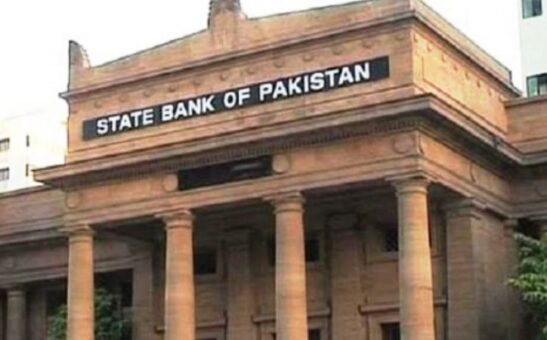
KARACHI: State Bank of Pakistan (SBP) has recommended increase in retirement age in order to reduce average coverage period of retirement benefits.
“The increase in level of standard pension age may reduce the average coverage period of retirement benefits,” the SBP said in a report issued on Tuesday.
The pension system follows two eligibility criteria for retirement: the qualifying service of 25 years and the threshold of 60 years of age.
Interestingly, most of the employees in federal, provincial and defense service join their departments in early- to mid-twenties, and complete 25 years of services during their early- to mid-50s and therefore become eligible for early retirement.
It is pertinent to mention here that the retirement age of 60 years is already markedly lower than many other countries, and so the early withdrawal after completion of qualifying service puts further strain on fiscal sustainability of pension expenses.
In this regard, the increase in level of standard pension age may reduce the average coverage period of retirement benefits.
In addition, the delayed retirement age will support in increasing the contribution period once the government opts for a funded system in the subsequent round of reforms.
The government can use one or multiple approaches to reduce the early retirement incentives.
For instance, measures such as restricting early retirement eligibility, reducing the marginal benefits below a threshold retirement age, and marginalizing the disincentive to work can all help achieve this objective.
The SBP also suggested rationalizing the survivorship benefits.
In contrast, rise in family pension due to increased applicable benefits and inclusion of large set of family members has become a major cause of concern in Pakistan.
To address this, the first and foremost reform should be to exclude all family members other than minor children and widows from the list of eligible survivorship beneficiaries.
Any delay in such reform will cause family pension to grow manifold in the coming years due to the probable increase in time span of pension benefits in each individual case.
In the case of widows, the survivorship benefits can be rationalized in accordance with the increasing labor force participation rates of women.
In the last few years, many countries have downsized the survivorship benefits by limiting the adjustment period or by eliminating the mandatory benefits for survivors.
For instance, in Japan, widows (with no children) under the age of 30 were entitled to receive permanent earnings related survivor pension, which were reduced to five years after comprehensive pension reforms in 2007.
Similarly, in Sweden, widows were entitled to receive the flat survivorship benefit, which after reforms was switched by the minimum income guarantee, eligible for a shorter period than the earlier facility.
The SBP said that the computation of commuted benefits involves a particular factor assigned to each year after retirement which determines the advance payment amount for each retiree.
The commutation table laid out by the Ministry of Finance incentivizes early retirement with excessively high commutation factor applied to the younger cohort.
This is in stark contrast to the traditional pattern followed in most other countries.
For example, in the UK, the commutation facility is only offered to retirees after attaining a certain age for different employee groups (48 years in the police department, for example).
Whereas, the Indian pension structure offers minimal variance in commutation factor to different age groups. The growing fiscal burden due to high commutation expenses calls for a restructuring of the commutation mechanism, with rationally designed factors and revision in eligible age profile to make the overall pension structure actuarially fair: the lifetime benefits enjoyed by those who retire early or choose to avail commutation and those who opt out of such facilities.
-
Pension expenditure becoming unsustainable: SBP report
KARACHI: State Bank of Pakistan (SBP) on Tuesday said that public pension expenditure in Pakistan is on the path to becoming unsustainable.
The central bank prepared a study report on rising expenditures of pension which is worrisome.
“ … limited fiscal space is a major reason why increasing pension spending is worrisome, improvements in the pension framework can substantially help make future payments manageable,” the SBP said.
Eliminating the generous retrospective increments and reducing the list of dependents eligible for pension payments appear as quick and easy-to implement measures.
However, the policy recommendations mentioned in the special section are intended to suggest a general direction.
The concerned authorities must carry out specialized evaluation exercises at their own end and implement the required legislative reforms accordingly.
Finally, it is important to undertake periodic review of implemented reforms in order to ensure long-term sustainability of the pension structure.
The SBP said that in Pakistan the absolute level of old-age income support coverage is on the lower side.
“For instance, the pensions to GDP ratio stands at just 2.2 percent, while the proportion of the population participating in programs that provide old-age contributory pensions, health and/or social security insurance is only 5.9 percent – much lower than the developing economies average of 20.3 percent.”
The old age dependency ratio – the number of people aged 65 and above compared to the number of working age people – is 8.5 percent, and is expected to rise only marginally to 11.2 percent by 2040.
But even with such a low pension coverage in the country, reforms to public pensions have become unavoidable in Pakistan in the face of the worrying acceleration in the associated public sector spending witnessed over the last decade.
“This is principally because public pensions are of an unfunded nature and thus are burdening the already tight fiscal revenue situation.”
Specifically, the pension expenditure at the federal level has risen by a CAGR of 18 percent in Pakistan during FY11-21.
Provincial pension expenditure has also witnessed a similar surge.
Within consolidated pension expenditures, civil pensions (including federal and provincial) constituted 63.2 percent, whereas military pensions made up around 36.8 percent on average during the last 5 years.
The overall pension spending as a share of tax revenue has reached 18.7 percent as of FY20, almost double the level a decade earlier.
“If this proportion continues to grow, it could result in the crowding out of other valuable spending avenues: pension spending as percent of total budgeted expenditures for FY20 exceeded health and education spending on both federal and provincial fronts and is almost half the level of consolidated development expenditures.”
In this regard, International Financial Institutions (IFIs), such as the World Bank and the International Monetary Fund (IMF) have also started flagging the rising pension expenditure as a pressing concern for Pakistan’s debt sustainability.
What is even more concerning is the fact that pension expenditure is expected to rise further going forward, given the increase in both retiree headcount and the lifespan of future retirees. If fiscal revenues continue on their existing trajectory, the rising pace of pension-related spending would become worrying from the sustainability point of view.
According to the World Bank’s projections, civil service pension payments would overtake wage expenditures by 2023 and 2028 in Punjab and Sindh, respectively, and come near to their level in the federal government by around 2050.
Within this context, this special section intends to: (i) describe the existing public sector pensions and benefits system in Pakistan; (ii) highlight major factors that are making pension expenditures unsustainable; and (iii) provide a set of policy recommendations to make the growing postretirement expenditures sustainable going forward.
Here, it is important to mention that structural factors, such as the size of the civil government and the military, the unfunded nature of pensions, and disproportionally high share of non-gazetted employees (95.3 percent of total federal government employees), are all important factors governing the overall level of pension expenditures in the country.
However, these factors are beyond the scope of this section; here, we intend to highlight system-bound aspects that explain the steady rise in these expenditures over the last decade.
-

PSX introduces regulatory fee to cover costs of stock exchange
KARACHI: Pakistan Stock Exchange (PSX) on Tuesday proposed to levy regulatory fee to cover costs of the stock exchange including need to increase marketing and investor awareness programs.
The proposed amount of regulatory fee is kept equivalent to the difference of Centralized Customers Protection Compensation Fund (CCPF) Levy presently charged and proposed reduced rate of CCPF Levy so that the brokers end up paying the same amount of levy on their traded value.
The PSX further said that the proposed fee to be charged to TRE Certificate Holders on the basis of per Rs100,000 value of trade would be equivalent to the amount by which the existing levy is proposed to be reduced under the another proposal of reduction in rate of levy collected from TRE certificate holders based on the value of securities traded at PSX and contributed in CCPF.
“This effectively means that the TRE Certificate Holders would continue to pay same amount of levy per Rs100,000 value of trade as is presently applicable at the rates specified in Schedule – I of Chapter 24 of PSX Regulations.
The only change PSX is proposing that such collected levy should be bifurcated into two categories i.e. one for CCPF contribution at Re0.01 and the remaining to be retained by PSX as a regulatory fee for meeting regulatory expenses as:
(i) Regulatory Fee for Ready Market: 0.67084 – 0.01 = 0.66084 per 100,000 trade value.
(ii) Regulatory Fee for other Markets: 0.93809 – 0.01 = 0.92809 per 100,000 trade value.
The PSX made another proposal for reduction in rate of levy collected from the certificate holders based on the value of securities traded at PSX and contributed in CCPF:
Presently, all TRE Certificate Holders are required to contribute in CCPF at the following rates specified in Schedule-I of Chapter 24 of PSX Regulations:
TABLE
Market Name Rate in Pak Rupee [Per 100,000 value of trade] Ready Market Trade 0.67084 Odd Lots Market Trade 0.93809 Deliverable Futures Contract Market- contract 0.93809 Cash-Settled Futures Contract Market-contract 0.93809 Stock Index Futures Contract Market-contract 0.93809 Squaring-Up Market-trade 0.93809 Negotiated Deals Market- transaction Nil Debt Market – Trades Nil PSX is proposing to reduce the rate of levy collected from TRE Certificate Holders as a contribution to CCPF to PKR 0.01 per PKR 100,000 value of trade executed in different markets as mentioned above based on the following reasons:
1. The CCPF has attained adequate size at the current level. As of audited statements of June 30, 2020, size of CCPF is PKR 3,985,384,043. Even with reduced rates of levy collected from TRE Certificate Holders, CCPF will continue to grow further with the support of earnings of treasury income on invested assets of CCPF;
2. The size of CCPF has grown faster as compared to the actuarial assessment due to the following factors:
(i) Lesser utilization of CCPF due to lower cases of defaults in recent past;
(ii) No outflow is made from CCPF on account of Management Fee;
(iii) Expected increase in treasury income due to anticipation of better interest rates; and
(iv) The current size of CCPF, which is over PKR 4 billion, is sustainable at its current level. This allows lesser contribution from TRE Certificate Holders.
In order to give effect to the above proposals, PSX is proposing to make the following regulatory amendments, which are attached herewith as Annexure A in a comparative format.
Proposal (A) requires amendments to Schedule 1 of Chapter 24 of PSX Regulations whereby the existing rates of levy for different markets are proposed to be reduced to PKR 0.01 per PKR 100,000 value traded.
Proposal (B) requires amendments to Schedule of Charges notified by PSX under clause 3.4 of PSX Regulations whereby a new “Regulatory Fee” schedule is proposed to be inserted to cover cost of regulatory functions and investor awareness programs and marketing campaigns of PSX.
Pursuant to Section 7(3) of the Securities Act, 2015, all concerned are invited to provide written comments on the proposed amendments by Tuesday, January 12, 2021.
-
SBP projects GDP growth in range of 1.5-2.5 percent with high consumer prices in FY21
KARACHI: The State Bank of Pakistan (SBP) on Tuesday projected GDP growth in the range of 1.5-2.5 percent with higher than targeted consumer prices for the current fiscal year FY21 (2020/2021).
The real GDP recorded 0.4 percent negative growth during the last fiscal year 2019/2020.
According to First Quarterly Report on the State of Pakistan’s Economy, the SBP projected the real GDP in the range of 1.5 to 2.5 percent in fiscal year 2020/2021 on the basis of current trends of economic activity.
“However, downside risk to this projection includes the second wave of COVID, which has swept across many countries and, in Pakistan’s case, gained momentum in November 2020. Supply-side shocks from uncertain weather conditions cannot be ruled out either,” the SBP said.
However, at the same time, there are also potential upsides. These include the development and distribution of an effective vaccine and its possible early availability, the SBP added.
The SBP projected average Consumer Price Index (CPI) in the range of 7.0-9.0 percent higher than target set by the government at 6.5 percent.
The inflation rose by 10.7 percent during the last fiscal year 2019/2020.
The SBP said that the government’s handling of the current surge in Covid infections includes keeping of business activities running under standard operating procedures (SOPs), thereby supporting economic activity and employment.
The restrictions are focused more on reduced public gatherings, provisions for staff to work from home, and temporary closure of educational institutes.
Nonetheless, the overall growth outcome hinges on how the Covid infections and the associated government response evolve.
The outlook for the external sector has improved since the previous set of projections published in SBP’s FY20 Annual Report.
The current account deficit is now projected to be in the range of 0.5-1.5 percent of GDP (earlier: 1.0 to 2.0 percent of GDP).
The revision is mainly due to an upward adjustment in workers’ remittances, which are now expected to be in US$ 24.0-25.0 billion (earlier: US$ 22.0-23.0 billion).
However, projections of workers’ remittances are subject to risk from the outlook for the oil-exporting GCC economies, whose fiscal balances might deteriorate further with the escalation in global Covid infections.
This may translate into a sizable reduction in their demand for foreign workers, leading to lower remittance inflows to Pakistan.
The outlook of exports and imports largely remains unchanged from their earlier assessment. The greater quantum of high value added textiles and food commodities – especially rice – are expected to generate above target growth in exports. That said, the key downside risk to this outlook stems from the resurgence of Covid in major export destinations of Pakistan, which has the potential to suppress demand.
On the upside, the incentives given in the industrial support package since early November 2020 may help the textile sector exports perform better. Similarly, imports are projected to surpass their annual target.
The increase in food imports and domestic economic activity is mainly expected to drive import growth. That said, the increase in global Covid infections and associated further decline in crude oil price could lower import payments.
As for the fiscal deficit, the latest projections suggest that it remains on track to meet the annual target of 7.0 percent of GDP. Going forward, the fiscal situation would continue to depend on the domestic evolution of Covid.
The upside risks mainly stem from: (a) the health fallout, and (b) the potential economic fall-out, in case of protracted or intensified lockdowns in the remainder of FY21. By contrast, faster than anticipated economic revival, which gives the government room to generate more revenues, either by rolling back certain tax concessions or imposing fresh levies, could contain the deficit further.
Regarding the inflation outlook, the SBP projects average inflation in FY21 to remain in the 7.0 – 9.0 percent range. It is important to highlight that food inflation, triggered by supply side factors, has been driving up headline inflation recently.
Meanwhile, core inflation has been relatively moderate, owing to benign cost and demand factors. Given the spare capacity in the industrial sector, high base effect, and actions being taken to correct the supply side issues in the food market, upside risks to the inflation outlook are largely contained.
The latest SBP surveys also reflect well-anchored inflation expectations of both businesses and consumers.
-
FBR to impose 100 percent penalty for not mentioning money in tax returns
ISLAMABAD: Federal Board of Revenue (FBR) has started examination of income tax returns filed for tax year 2020 and directed tax offices to identify undisclosed income / amount for imposing 100 percent penalty.
According to sources in the FBR the tax authorities had started examination of tax returns filed for the tax year 2020 and were cross matching with the information of database where details of transactions made by taxpayers had been stored.
The sources said that those taxpayers, who had failed to provide details of those transactions already available to the FBR through third party information, would pay tax at normal rate along with payment of penalty equal to payable tax detected as undisclosed.
The last date for filing the income tax return for tax year 2020 was December 08, 2020 and the FBR for the first time had not extended the date beyond the deadline. The number of return filers by due date was 1.768 million. However, enforcement measures through issuance of hundreds of thousands notices to non filers the number of return filers increased to 2.316 million January 04, 2021.
The sources said that the tax offices were examining tax returns with all aspects of Income Tax Ordinance, 2001. However, undeclared income or assets in the returns will be treated as concealment of income/assets.
Under Section 182 of the Income Tax Ordinance, 2001, where a person has concealed income or furnished inaccurate particulars of such income, including but not limited to the suppression of any income or amount chargeable to tax, the claiming of any deduction for any expenditure not actually incurred or any act referred to in sub-section (1) of section 111, in the course of any proceeding under this Ordinance before any Income Tax authority or the appellate tribunal.
“Such person shall pay a penalty of one hundred thousand rupees or an amount equal to the tax which the person sought to evade whichever is higher. However, no penalty shall be payable on mere disallowance of a claim of exemption from tax of any income or amount declared by a person or mere disallowance of any expenditure declared by a person to be deductible, unless it is proved that the person made the claim knowing it to be wrong.”
-

Stock market ends down by 36 points on selling pressure
KARACHI: The stock market declined by 36 points on Tuesday amid selling pressure seen during the day.
The benchmark KSE-100 index of Pakistan Stock Exchange (PSX) closed at 44,650 points as against previous day’s close of 44,686 points showing a decline of 36 points.
Analysts at Arif Habib Limited said that the market saw selling pressure from the start of trading session, which was primarily caused by an overnight decline in crude oil prices as well as profit booking in Power, O&GMCs and Fertilizer sector stocks.
Cement and Steel sector stocks bounced back today after yesterday’s selling activity on the back of healthy growth in cement dispatches.
Chemical sector stocks also performed well on close of quarter and anticipation of posting better earnings.
Among scrips, HUMNL topped the volumes with 68.4 million shares, followed by PRL (58.1 million) and TRG (31 million).
Sectors contributing to the performance include E&P (-108 points), Power (-53 points), O&GMCs (-33 points), Fertilizer (-10 points) and Technology (+46 points).
Volumes increased from 540.8 million shares to 582.4 million shares (+8 percent DoD). Average trading value, on the contrary, declined by 9 percent to reach US$ 151 million as against US$ 166.3 million.
Stocks that contributed significantly to the volumes include HUMNL, PRL, TRG, PAEL and KAPCO, which formed 36 percent of total volumes.
Stocks that contributed positively to the index include TRG (+43 points), KAPCO (+25 points), HBL (+20 points), SEARL (+17 points) and MCB (+16 points). Stocks that contributed negatively include HUBC (-74 points), PPL (-55 points), OGDC (-41 points), PSO (-19 points) and POL (-12 points).
-

Exporters demand customs duty waiver on cotton yarn
KARACHI: Value-added textile exporters on Tuesday demanded the government of abolishing customs duty on import of cotton yarn to support the industry and ensure timely completion of export orders.
“The gravity of situation demands the government to immediately abolish customs duty on import of cotton yarn either by passing through a Presidential Ordinance or by an immediate act of Parliament, in the interest of export and the country,” said Muhammad Jawed Bilwani, Chairman, Pakistan Apparel Forum & Former Central Chairman, Pakistan Hosiery Manufacturers & Exporters Association (PHMA) in a statement.
The value-added textile exporters are highly perturbed over the unavailability of cotton yarn – which is basic raw material in the local market despite huge export orders are available with the value added textile.
However, where cotton yarn is available is of sub-standard quality owing to which exporters are unable to meet export commitment. To ensure availability of cotton yarn, PHMA had earlier demanded the Government to allow duty-free import of cotton yarn to facilitate Value-added textile export sector to achieve milestone in exports as cotton yarn was unavailable in the local market.
Nevertheless, the government considered removing the Regulatory Duty only. Sense of severe unrest and uncertainty prevails as exporters feel it “discriminatory” because in the case of cotton, the Government had allowed complete duty-free import.
Removal of regulatory duty has supported the value-added textile sector to some extent, whereas, the situation necessitates and demands to also remove the customs duty to fully support the value-added textile sector to complete their export orders which they have materialized for the next several months.
The government must realize the sensitivity of the matter to support the value-added textile exports as due to unavailability of cotton yarn, the prices of cotton yarn of 30/1 were 235 per pound during the month of October 2020 and now in January 2021 were 260 per pound there has been an increase in the yarn rates by 9.62 percent which has also brought an upshot in the cost of manufacturing pushing the exporters towards unviable situation and un-competitiveness.
The gravity of situation demands the government to immediately abolish customs duty on import of cotton yarn either by passing through a Presidential Ordinance or by an immediate act of Parliament, in the interest of export and the country.
The government must accord high priority to the matter in order to turn its policy to enhance export into reality. The exporters profoundly appreciate the government for streamlining and fully automating the sales tax refunds which have been working efficiently and delivering 99 percent result.
While the customs rebate disbursement has also been done rapidly with deliverance of 99 percent. The exporters also request the government to also streamline and automate the system for disbursement of DLTL/ DDT which should be electronically transferred to the exporters with export proceeds.
Value Added Textile Export Industry which contributes around 62 percent in total exports, provides highest urban employment particularly to female workforce and supports approximate 40 allied industries.
In view of its significant importance in the economy and free market mechanism, the government must consider the appeal of the value-added textile sector for duty-free import of cotton yarn to ensure availability of cotton yarn of good quality.
Such state of affairs demands the government to remove 5 percent custom duty on import of 32 single yarn and below count and the exporters, manufacturers and importers, shall be given full liberty to import yarn from any country till the scarcity of cotton yarn is controlled and required quantity of yarn is available in abundance in all Pakistani markets to complete the export order smoothly.
-

Rupee falls by 35 paisas on import, corporate payments
KARACHI: The Pak Rupee fell by 35 paisas against the dollar on Tuesday owing to jack up in foreign currency demand for imports and corporate payments.
The rupee ended Rs160.33 to the dollar from the previous day’s closing of Rs159.98 in the interbank foreign exchange market.
Currency dealers said that the demand of the greenback remained high due to improvement in foreign trade following vaccination initiated for coronavirus.
They further said that the foreign companies operating in Pakistan were also buying dollars to repatriate profit and dividend for the period ended December 31, 2020.
They however hoped that the improved export receipts and inflows of workers remittances would help the local unit to gain value.
On January 02, 2021, Adviser to the Prime Minister on Commerce and Investment, Abdul Razaq Dawood has expressed his satisfaction that the exports in December 2020 have increased by 18.3 percent percent to $ 2,357 million as compared to $ 1,993 million in December 2019, showing an increase of $364 million.
The Adviser said this was the highest export ever in the previous month of December 2020.
He said that the export figures showed the resilience of the economy of Pakistan and was a vindication of the government’s policy to keep the wheels of economy running during COVID-19 pandemic. The 6-months’ performance of exports was also discussed in the meeting.
-

FBR to issue ATL 2020 on March 01
ISLAMABAD: Federal Board of Revenue (FBR) will issued Active Taxpayers List (ATL) for tax year 2020 on March 01, 2021 which will contain names of those taxpayers who file their returns by due date or file return after due date with fine and penalty.
Under Rule 81B of Income Tax Rules 2002, the FBR issues ATL on the first day of March in each financial year. The appearance of name of taxpayers on the ATL guarantees certain benefits including lower rate of withholding tax on certain transactions.
The FBR on Monday advised the taxpayers to assure inclusion of their names in the upcoming ATL by filing annual return for tax year 2020.
The FBR said that Filing of Income Tax Returns (ITRs) has improved significantly during Tax Year 2020, a statement by the Federal Board of Revenue said. 1.768 million taxpayers filed their income tax returns before the deadline of December 8, 2020 while the tax received by FBR stood at Rs 22 billion by this date. The number of filers has further increased to 2.316 million along with the tax collection rising up to Rs 43.6 billion till January 4, 2021 as compared to 2.181 million filers along with the tax collection of Rs 28 billion during the corresponding period of the previous year, showing an increase of 55 percent in tax collection in current year.
It is also mentionable here that the number of income tax returns filed after the deadline of December 8, 2020 remained 0.547 million along with the tax collection of an amount worth Rs22 Billion approximately. FBR has launched a number of initiatives for the facilitation of taxpayers that have resulted in the increased number in filing of Income Tax Returns.
FBR will issue the updated list of Active Taxpayers after March 01, 2021 and only those taxpayers will be included in the list who have filed their Income Tax Returns for Tax Year 2020.
Enlistment in Active Taxpayers List comes with a variety of benefits for taxpayers that include exemption from Withholding Tax in a number of financial transactions and withholding of tax at half of the rate on many other financial transactions carried out by non-filers i.e those not on Active Taxpayers List. Possible legal action on account of concealment of income based of tax withheld on any financial transaction.
It may be noted that the amount of fine on late filing increases in proportion with the delayed period of time.
FBR has urged all taxpayers to file their Income Tax Returns at their earliest to get their names enlisted in the upcoming ATL.