Month: January 2021

  • SHC dismisses petition challenging KE privatization

    SHC dismisses petition challenging KE privatization

    KARACHI: Sindh High Court (SHC) has dismissed a constitutional petition that has challenged the privatization of K-Electric, the power distribution company.

    In a note sent to Pakistan Stock Exchange (PSX) on Monday, K-Electric Limited said that the court had dismissed constitutional petition bearing No. D1511-2012 titled as KESX Labour Union and Others vs. Federation of Pakistan and others’ along with related petitions on January 21, 2020, whereby the court had dismissed the said petition through which the privatization of the K-Electric Limited was challenged.

    The judgment was announced in the open court. However, the certified copy of the afore-noted judgment is still awaited, K-Electric said.

  • Sales tax value addition at 3 percent applicable on all imported goods

    Sales tax value addition at 3 percent applicable on all imported goods

    ISLAMABAD: Sales tax on account of minimum value addition at three percent is applicable on all imported goods subject to exclusions on import of various imported goods.

    According to Sales Tax Act, 1990, all imported goods are subject to 3 percent ad valorem subject to exclusion as in conditions and procedure.

    The government recently abolished three percent sales tax value addition on import of sugar to help in reducing domestic prices of the commodity.

    The officials at the Federal Board of Revenue (FBR) said that under the Sales Tax Act, 1990 the procedure and conditions have been laid down for the levy of three percent value addition tax on imported goods.

    (1) The sales tax on account of minimum value addition as payable under this Schedule (hereinafter referred to as value addition tax), shall be levied and collected at import stage from the importers on all taxable goods as are chargeable to tax under section 3 of the Act or any notification issued thereunder at the rate specified in the Table in addition to the tax chargeable under section 3 of the Act or a notification issued thereunder:

    (2) The value addition tax under this Schedule shall not be charged on,—

    (i) Raw materials and intermediary goods imported by a manufacturer for in-house consumption;

    (ii) The petroleum products falling in Chapter 27 of Pakistan Customs Tariff as imported by a licensed Oil Marketing Company for sale in the country;

    (iii) Registered service providers importing goods for their in-house business use for furtherance of their taxable activity and not intended for further supply;

    (iv) Cellular mobile phones or satellite phones;

    (v) LNG / RLNG;

    (vi) Second hand and worn clothing or footwear (PCT Heading 6309.000);

    (vii) Gold, in un-worked condition;

    (viii) Silver, in un-worked condition;

    (ix) The goods as specified in the Third Schedule on which tax is paid on retail price basis; and

    (x) plant, machinery and equipment falling in Chapters 84 and 85 of the First Schedule to the Customs Act, 1969 (IV of 1969), as are imported by a manufacturer for in-house installation or use.

    (3) The value addition tax paid at import stage shall form part of input tax, and the importer shall deduct the same from the output tax due for the tax period, subject to limitations and restrictions under the Act, for determining his net liability.

    The excess of input tax over output tax shall be carried forwarded to the next tax period as provided in section 10 of the Act.

    (4) The refund of excess input tax over output tax, which is attributable to tax paid under this Schedule, shall not be refunded to a registered person in any case, except that as used for making of zero-rated supplies.

    (5) The registered person, if also dealing in goods other than imported goods, shall be entitled to file refund claim of excess carried forward input tax for a period as provided in section 10 or in a notification issued there under by the Board after deducting the amount attributable to the tax paid at import stage i.e. sum of amounts paid during the claim period and brought forward to claim period. Such deducted amount may be carried forward to subsequent tax period.

  • Procedure for registration of FBR informer

    Procedure for registration of FBR informer

    ISLAMABAD: A person can share information of tax evasion and get monetary reward for the disclosure from Federal Board of Revenue (FBR) provided that the informer should be registered with a tax authority for the purpose.

    According to Income Tax Rules, 2002 a procedure has be laid down for registration of an informer.

    According to the rules, any person desirous of getting himself registered as an informer may make an application to the Chief Commissioner for registration.

    The application shall be in the prescribed form and shall be verified in the prescribed manner.

    The application shall be accompanied by the following documents, namely:

    (a) copy of the Computerized National Identity Card of the applicant;

    (b) copy of national tax number (NTN) certificate; and

    (c) a duly sworn in affidavit stating therein that the information being provided is correct and nothing has been concealed there from and that in case any incorrect information is provided or any information is concealed he shall be liable to penal action under the laws for the time being in force.

    The rules also explain the procedure for submission of information and further action thereupon.

    An informer shall submit any information regarding concealment or evasion of tax leading to detection or collection of taxes, fraud, corruption or misconduct that is in his possession to the Chief Commissioner giving precise details of the alleged act along with all supporting evidences that are in his possession:

    Provided that no information shall be entertained unless it gives precise details of the alleged act and is accompanied with the supporting evidences.

    On receipt of the information, the Chief Commissioner shall scrutinize the information and forward it to the concerned Commissioner.

    On receipt of the information from the Chief Commissioner, the concerned Commissioner shall conduct such further enquiry as he may deem fit and submit his report to the Chief Commissioner.

    On completion of the enquiry, the concerned Commissioner shall take such further action as may be required under the tax laws or any other law for the time being in force, as may be necessary on the basis of the facts of the case, and furnish his report to the Chief Commissioner.

    Notwithstanding anything contained in these rules, an informer, who −

    (a) has knowingly provided false information under these rules; or

    (b) has provided the information under these rules with the intention to intimidate or blackmail a person, or to bring him into disrepute, or to otherwise cause him financial loss, shall be liable to punishment and fine under the tax laws and other laws for the time being in force.

  • Exchange company license may be revoked on false information

    Exchange company license may be revoked on false information

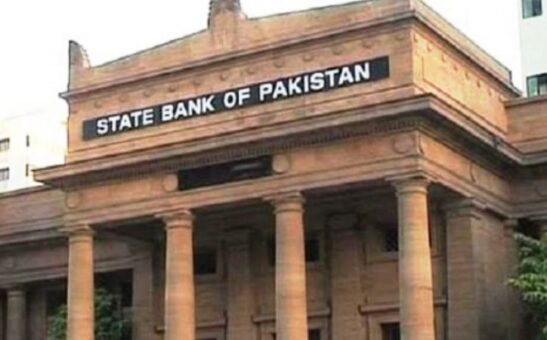
    KARACHI: The State Bank of Pakistan (SBP) has said it can revoke license of any exchange company in case the central bank has been provided with false, misleading or inaccurate information by or on behalf of the exchange company.

    According to Exchange Company Manual, the SBP has the right to revoke a license of an exchange company at any time.

    Before a license is revoked, the Exchange Company shall be served with a notice mentioning therein the reasons for such revocation and instructions for the company to explain its position in writing within 30 days from the date of issuance of notice.

    The SBP said that license of an Exchange Company can be revoked by the central bank if:

    (a) The State Bank is provided with false, misleading or inaccurate information by or on behalf of the Exchange Company.

    (b) It appears to the State Bank that the Exchange Company has violated these or any other regulation, instruction or circular issued by the State Bank or if any of the conditions of license has not been fulfilled or is incapable of fulfillment.

    (c) The interests of the customers of Exchange Company are in any way threatened, whether by the manner in which the company is conducting or intends to conduct its affairs or for any other reason.

    (d) The Exchange Company did not commence its exchange business within three months from the date of issuance of license by the State Bank.

    (e) Deliberate obstruction of the State Bank inspection team in the performance of their duties, by Exchange Companies or officials of its network.

    (f) Any other reason that in the opinion of the State Bank disqualifies the Exchange Company to hold the license.

  • Business demands to withdraw power tariff hike, shutting down captive power plants

    Business demands to withdraw power tariff hike, shutting down captive power plants

    KARACHI: Business community has demanded Prime Minister Imran Khan to withdraw the decision to increase in power tariff hike and shutting down the captive power plants because such decision would sabotage efforts of the government to enhance the exports.

    (more…)
  • KCCI, Jazz sign deal for 35 percent to businessmen

    KCCI, Jazz sign deal for 35 percent to businessmen

    In a significant move to benefit the local business community, the Karachi Chamber of Commerce & Industry (KCCI) and Jazz, Pakistan’s leading 4G operator and top internet and broadband service provider, have announced the signing of a Memorandum of Understanding (MoU). The agreement, formalized on Saturday, aims to provide substantial discounts on Jazz’s services to KCCI members.

    (more…)
  • Weekly Review: market likely to trade in green

    Weekly Review: market likely to trade in green

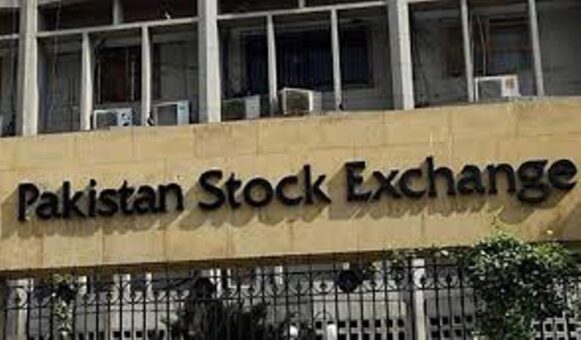
    KARACHI: The stock market is likely to stay in green during the next week owing to the central bank decision to keep policy rate intact at 7 percent.

    Analysts at Arif Habib Limited hoped that the market to trade in green due to

    i) Central bank keeping policy rate unchanged while also hinting at status quo stance in the near term, which is positive for the stock market,

    ii) encouraging SBP projections as current account deficit is expected to remain below 1 percent of GDP for FY21,

    iii) slowdown in Covid-19 infection ratio, and

    iv) stable PKR/USD parity.

    However, once again bears took charge and negative sentiments were fueled by

    i) announcement of current account deficit after five months,

    ii) likely increase in electricity tariff by PKR 1.95/KwH (notification awaited), and

    iii) CCoE’s proposal to discontinue natural gas supply for captive power generation. Our preferred stocks are OGDC, HUBC, HBL, MCB, FFC, LUCK, ACPL, PSO, ENGRO, MCB, INDU, UBL, and NML.

    The benchmark KSE-100 index of Pakistan Stock Exchange (PSX) is currently trading at a PER of 7.7x (2021) compared to Asia Pac regional average of 17.7x while offering a dividend yield of ~6.4 percent versus ~2.6 percent offered by the region.

    This week trading commenced on a negative note due to

    i) worsening gas supply situation in the country which might result in suspension of gas supply to industries,

    ii) decline in international crude prices (negative sentiment in E&P sector), and

    iii) rising political pressure as PDM wanted to protest in front of Election Commission of Pakistan to probe foreign funding case.

    However, the index displayed a rebound on the next trading day and recovered lost points.

    However, once again bears took charge and negative sentiments were fueled by

    i) current account deficit after five months,

    ii) government increased electricity tariff by PKR 1.95, and

    iii) CCoE approves Petroleum Division’s proposal for discontinuation of natural gas supply for captive power generation.

    The KSE-100 index closed at 45,868 points, down by 63 points or 0.14 percent WoW.

    Contribution to the downside was led by

    i) Oil and Gas Exploration Companies (143 points),

    ii) Fertilizer (43 points),

    iii) Oil and Gas Marketing (33 points),

    iv) Automobile Assembler (25 points), and

    v) Pharmaceuticals (16 points). Scrip-wise major losers were PPL (65 points), OGDC (59 points), POL (59 points), ENGRO (31 points), and MCB (22 points).

    Whereas, scrip-wise major gainers were TRG (110 points), MARI (41 points), BAHL (34 points), KTML (29 points) and ICI (26 points).

    Foreigners accumulated stocks worth USD 5.51 million compared to a net sell of USD 2.10 million last week. Major buying was witnessed in Technology and Communication (USD 3.24 million) and Power Generation and Distribution (USD 2.43 million).

    On the local front, selling was reported by Mutual Funds (USD 19.90 million) followed by Broker Proprietary Trading (USD 7.46 million).

    That said, average daily volumes and traded value for the outgoing week were down by 25 percent and 9 percent to 510 million shares and USD 118 million, respectively.

  • FBR issues rules for rewarding informers, officials on recovery of tax evaded money

    FBR issues rules for rewarding informers, officials on recovery of tax evaded money

    ISLAMABAD: Federal Board of Revenue (FBR) on Friday issued rules to reward tax officials and informers on detection and recovery of evaded amount.

    The FBR issued SRO 78(I)/2021 and said that officers and staff deputed to exercise powers, enforce and/or perform functions and duties in designated entities under the specified statutes and informers or whistleblowers.

    According to the rules, the officers / members of staff in Inland Revenue detecting the tax evasion shall be eligible for lesser of 20 percent of the tax sought to be evaded or two years’ salary at the time of detection/filing of the detection report.

    Further, officer/member of staff completing the adjudication/assessment the reward shall be lesser of 20 percent of the tax sought to be evaded or two years’ salary as at the time of completion of adjudication / assessment.

    The FBR said that if no appeal/revision has been filed against the assessment, the whole of the admissible reward shall be paid immediately after expiry of limitation for filing of appeal/revision.

    In case an appeal has been filed against the assessment order the admissible reward claim would be processed as: 50 percent upon confirmation at first appeal forum; and 50 percent upon completion of appellate process on point of fact i.e. Appellate Tribunal Inland Revenue (ATIR).

    The reward shall be paid only if the tax sought to be evaded has been recovered at least to the extent of 50 percent of the tax sought to be evaded.

    In case detection and assessment have been made by the same officer, he shall be entitled to the reward of the lesser of 20 percent of the tax sought to be evaded or three years’ salary as at the time of detection / filing of the detection report.

    In case there are more than one claimants of reward on account of detection or assessment, the reward would be apportioned as per the recommendation of the chief commissioner or director general concerned.

    An informer / whistleblower in terms of clause (v) of rule 2 shall be entitled to a reward at the rate of 20 percent up to a maximum of Rs5 million of the tax sought to be evaded in a single case.

  • FPCCI resents electricity tariff hike, gas supply shortage

    FPCCI resents electricity tariff hike, gas supply shortage

    KARACHI: Federation of Pakistan Chambers of Commerce and Industry (FPCCI) has resented increase in electricity tariff and supply shortage of gas to industry.

    Mian Nasser Hyatt Maggo, President FPCCI in a statement on Friday expressed concerns over electricity tariff hike and disconnection of gas for the industry.

    He said that instead of reforming the energy sector, the adhoc and painful decisions are being made detriment to domestic industry.

    He said that the much awaited outcome of negotiations between IPPs and government which was considered to be directed towards reduction in base tariff do not assures any decrease in the base tariff, which again is shocking outcome questionable as the private sector was of the view that the report published on IPPs which was required to be further expanded towards the eventual objectives of resulting in the reduced cost of energy for increasing the competitiveness of economy and mitigating the inflationary trapped and consumption requirement of the poor segment of the economy.

    He said that the spokesman on the energy has attributed the need of tariff hike due to bad and corrupt agreements made with IPPs in the past. He said that if so, such situation requires to be corrected through invoking all the civil and criminal remedies to correct the agreements by excluding the pay or take, reducing O&M cost, converting the repatriation cost from dollar indexation to rupee and relevant recommended measures in the report.

    He said that while appreciating the present government in ordering the inquiry in respect of agreement with IPPs, the outcome does not appear to be reciprocating for base tariff reduction and availability of electricity sale at reduced cost.

    He further said that the announcement of Rs40 billion per year off-take of financial burden on Government is marginal even against the present announced tariff base hike wherein one rupee hike is over charging consumers of Rs 100 billion on consumption of electricity.

    President FPCCI also said that such on & off increase in tariff is coming in the way of economic development, in specific loaded by the carried forward adverse effect of COVID-19.

    The hike if is linked to any part of the memorandum of understanding with IMF can be fairly convinced for freezing such tariff hike when IMF itself projected low economic growth. Such duplicity cannot be justified.

    On the other side the predictable outward and inward oriented trade has become hostage of keep on increasing gas prices and intending to disconnect the gas supply of captive power plants.

    He said that mismanaged RLNG cargoes by the Petroleum Division are also answerable to such abrupt and non-justified late decisions. He said that during last November the spokesman on energy and petroleum had promised that increasing demand of gas in the winter season will be met through increase in RLNG imports.

    It appears that this non-living promise has forced Government to take decision of disconnecting the gas for captive power of industry. The setting of the deadline for disconnection of gas from February 1, 2021and 1st March 2021 is too short time to adjust.

    He said that some industry is running on captive powers with some emergency required grid loads need more time to arrange all the equipment’s and settle all the requirements of Discos which would take considerable time.

    He said that even CPP’s of industry with equivalent power arrangement from Grid also requires back-up adjustments of power by the Discos which is again time consuming.

    Mian Nasser Hyatt Maggo, President FPCCI proposed that the time period provided be extended reasonably in order to shift to Grid power. He said that the penalty of bad agreements with IPPs on capacity and take or pay clauses is being shifted to industry with their self-generation through captive power plants which basically is assurance for reliability and un-interrupted supply.

    Discos have yet to claim such performance to supply un-interrupted electricity without load shedding. He said that government spokesman has claimed saving of 150 MMCFD gas by disconnecting CPPs of industry, while the gas leakages in the systems are four times of this saving of 150 MMCD.

    He wondered that if there is any efficiency in the management over sighting the political economy of the gas affairs.

    He further suggested that even if the government reduces gas loss by one-fourth, the abrupt imposition of such decision may not have been required to adversely affect the industrial economy.

  • Share market ends down by 116 points in range bound trading

    Share market ends down by 116 points in range bound trading

    KARACHI: The share market ended down by 116 points on Friday in a range bound trading activity.

    The benchmark KSE-100 index of Pakistan Stock Exchange (PSX) closed at 45,868 points as against previous day’s closing of 45,984 points showing a decline of 116 points.

    Analysts at Arif Habib Limited said that the market oscillated between +132 points and -294 points, ending the session down 116 points.

    Global stock markets took breather since last evening, which trickled in regional markets as well.

    KSE-100 saw across the board selling on the concern of monetary policy decision, which was announced in the last half hour of the session, besides the redemptions from mutual funds.

    Increase in electricity tariff also affected investor sentiment towards manufacturing concerns. Among scrips, KEL realized the most volumes with 54 million shares, followed by FFL (24.6 million) and ICIBL (23.7 million).

    Sectors contributing to the performance include E&P (-51 points), Fertilizer (-21 points), Technology (-19 points), O&GMCs (-16 points) and Power (-13 points).

    Volumes declined from 606.3 million shares to 430.6 million shares (-29 percent DoD). Average traded value also declined by 12 percent to reach US$ 98.5 million as against US$ 111.5 million.

    Stocks that contributed significantly to the volumes include KEL, FFL, ICIBL, PIBTL and FFBL, which formed 34 percent of total volumes.

    Stocks that contributed positively to the index include SYS (+21 points), KTML (+15 points), FABL (+13 points), FFBL (+12 points) and INIL (+11 points).

    Stocks that contributed negatively include TRG (-40 points), ENGRO (-16 points), MARI (-16 points), PPL (-14 points) and OGDC (-14 points).