Month: March 2021

  • FBR reminds taxpayers of updating profile by March 31

    FBR reminds taxpayers of updating profile by March 31

    ISLAMABAD: Federal Board of Revenue (FBR) on Thursday reminded taxpayers to update their profile by March 31, 2021 to avoid penal action.

    “Statutory deadline for furnishing/updating of taxpayers’ profile under section 114A of the Income Tax Ordinance, 2001 is March 31, 2021,” the FBR said and urged taxpayers to update profile before the deadline in order to avoid penal consequences under the law.

    Updating profile by all the taxpayers registered under Section 181 of the Income Tax Ordinance, 2001 and other conditions specified by the Federal Board of Revenue (FBR) is a mandatory requirement under Section 114A of the Ordinance.

    Through Finance Act, 2020, the Section 114A was introduced to make the updating profile mandatory for following persons:

    (a) every person applying for registration under section 181;

    (b) every person deriving income chargeable to tax under the head, “Income from business”;

    (c) every person whose income is subject to final taxation;

    (d) any non-profit organization as defined in clause (36) of section 2;

    (e) any trust or welfare institution; or

    (f) any other person prescribed by the Board.

    The FBR explained the newly introduced section as: “Complexity of return forms is an embodiment of the complexity of tax law. Nevertheless, there is a dire need to simplify return forms without compromising on data required to verify accuracy of the declared version.”

    The FBR said that instead of endeavoring to obtain all the relevant information in the income tax return, a new section has been added wherein taxpayers profile may be prescribed in order to capture data relevant to the taxpayer.

    It said that persons who are already registered before September 30, 2020 and are deriving business or incomes subject to final taxation, trusts, welfare institutions, non-profit organizations and such other persons prescribed by the FBR are proposed to file a profile on or before December 31, 2020, which is not extended up to March 31, 2021.

    Persons who obtain their registration after September 30, 2020 are proposed to furnish such profile within 90 days of registration. In case of any change in particulars of information, such persons shall update their profile within 90 days of the change in particulars. The profile contains information relevant to income regarding bank accounts, utility connections, business premises including all manufacturing, storage or retail outlets operated or leased by the taxpayer, types of businesses and such other information as may be prescribed by the FBR.

    The FBR said that if a person fails to furnish or update a taxpayer’s profile within the due date or time period as extended by the FBR under Section214A, such person shall not be included in the active taxpayers list for the latest tax year ending prior to the aforesaid due date or extended date.

    However, upon filing or updating the profile, such persons shall be allowed to be placed on the active taxpayers list upon payment of surcharge which is Rs20,000 in the case of a company, Rs10,000 in the case of an association of persons and Rs1,000 in the case of an individual.

    Further, a penalty for non-filing or not updating of profile is also proposed at the rate of Rs2,500 for each day of default subject to minimum penalty of Rs10,000.

  • SBP issues revised mark-up subsidy for low cost house financing

    SBP issues revised mark-up subsidy for low cost house financing

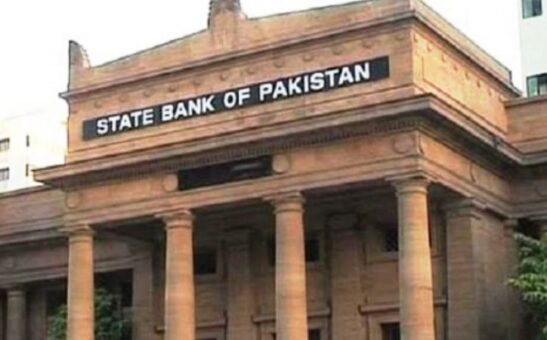
    KARACHI: State Bank of Pakistan (SBP) on Thursday issued revised mark up subsidy allowed by the government for low cost housing scheme.

    The SBP issued instructions to the banks for implementation of the revised mark up subsidy approved by the government.

    In view of the feedback received from various stakeholders, Government of Pakistan (GoP) has decided to revise features of the G-MSS to align it with market dynamics. These revisions aim at significantly enhancing outreach of Scheme to the individuals and households who currently do not own a house.

    The key features of the revised G-MSS approved by the GoP are given below:


    Particulars
    Mark up Subsidy Program


    Eligibility Criteria
    All men/women holding CNIC First time home owner One individual can have subsidized house loan facility under this scheme only once


    Tiers of the Scheme
    Financing under Tier 0 is available through microfinance banks for financing of housing units under non-NAPHDA projects. Financing under Tier 1 is available through banks for financing under NAPHDA projects Financing under Tier 2 and Tier 3 is available through banks for financing of housing units under non-NAPHDA projects

    Size of Housing Unit

    Size of the loan is segregated into four tiers, as under: Tier 0 (T0) – (a) House upto 125 sq yds (5 Marla) and (b) flat/apartment with maximum covered area of 1,250 sq ft. Tier 1 (T1) – (a) House upto 125 sq yds (5 Marla) with maximum covered area of 850 sq ft and (b) Flat/apartment with maximum covered area of 850 sq ft. Tier 2 (T2) – (a) House upto 125 sq yds (5 Marla) and (b) flat/apartment with maximum covered area of 1,250 sq ft. Tier 3 (T3) – (a) House upto 250 sq yds (10 Marla) and (b) flat/apartment with maximum covered area of 2,000 sq ft.

    Age of housing units


    Newly constructed housing units during last one year from the date of application. However, this    requirement will not be applicable till March 31, 2023 under Tier 0, Tier 2 and Tier 3.


    Maximum Price of Housing Units

    Maximum Price (Market Value) of a single housing unit at the time of approval of financing, as under:
    Tier 1 (T1) – Rs 3.5 million
    Tier 0 (T0), Tier 2 (T2) and Tier 3 (T3) – No cap


    Maximum Loan size

    Maximum size of the loan of a single housing unit, as under:
    Tier 0 (T0) – Rs 2.0 million
    Tier 1 (T1) – Rs 2.7 million
    Tier 2 (T2) – Rs 6.0 million
    Tier 3 (T3) – Rs 10.0 million


    Loan type


    Long term housing finance loans


    Loan Tenor


    Minimum 5 years and maximum 20 years loan tenor, depending upon choice of customers.


    Security Requirements


    As per banks’credit policy and prudential regulations for housing finance, the housing unit financed will be    mortgaged in favor of financing bank.

    Allocation in Budget

    Finance Division shall give authority to SBP to debit GOP account on quarterly basis for the subsidy    payment to banks.

    Payment will be made to the banks on submission of quarterly-consolidated subsidy statement as per    format prescribed by State Bank.


    Pricing

    Pricing for Housing Loans: Loan Tiers Customer Pricing Bank Pricing Tier 0 5% for first 5 years &
    7% for next 5 years KIBOR+700 BPS Tier 1 3% for first 5 years &
    5% for next 5 years KIBOR+250 BPS Tier 2 5% for first 5 years &
    7% for next 5 years KIBOR+400 BPS
    (Spread may vary) Tier 3 7% for first 5 years &
    9% for next 5 years For loan tenors exceeding 10 years, market rate i.e. bank pricing will be applicable for the period exceeding 10 years.

    Executing Agency

    All commercial banks including Islamic banks, microfinance banks and House Building Finance Company    Limited (HBFCL)


    Application Form

    A standardized Application Form both in English and Urdu will require minimum essential information with    simple format.

    The processing time will not exceed 30 days after submission of all documents by the borrower and the    same will be clearly stated in the application form.


    Standardized Procedures
    Banks to have standardized loan documents and risk acceptance criteria

    Monitoring

    SBP will publish consolidated information about the loans extended under this program for information of    the public on quarterly basis on its website.


    Geographical distribution
    Whole of Pakistan

    The revised features are applicable with immediate effect. Accordingly, IH&SMEFD Circular No. 11 of 2020 is hereby superseded. However, instructions notified vide IH&SMEFD Circular No. 01 of 2021 will continue to remain applicable.

    The SBP directed the banks to ensure successful implementation of revised G-MSS through dissemination of necessary instructions to branches/ regions, capacity building of field staff, alignment of housing finance products and active marketing campaigns, etc.

  • Foreign exchange reserves increase to $20.435 billion

    Foreign exchange reserves increase to $20.435 billion

    The State Bank of Pakistan (SBP) reported a rise in the country’s liquid foreign exchange reserves, which increased by $276 million to reach $20.435 billion by the week ending March 19, 2021.

    (more…)
  • KSE-100 index gain 182 points on IMF funds

    KSE-100 index gain 182 points on IMF funds

    KARACHI: The benchmark KSE-100 index of Pakistan Stock Exchange (PSX) gained 182 points on Thursday owing to positive sentiments of investors after release of IMF fund for Pakistan.

    The Index closed at 45,726 points as against previous day’s closing of 45,544 points, showing an increase of 182 points.

    Analysts at Arif Habib Limited said that the market responded positively to IMF’s disbursement of 3rd tranche of US$ 500 million and added a total of 456 points during the session and ended the session +182 points.

    Although, Banks, E&P, O&GMCs and Fertilizer stocks ended the session in red, it was mostly Tech, Refinery and Cement sectors that contributed positively to the Index.

    Telecom sector had PTC as the leading stock which had bearing from sale of Dhabi Group’s stake in Pakistan Mobile Communication Limited (an unlisted company).

    Power sector saw KAPCO performing on the expectation of release of funds related to circular debt. Similarly, Chemical sector saw active trades in EPCL, which performed well on the back of healthy product margins.

    Among volume leaders, PTC topped the volumes with 61.3 million shares, followed by TRG (38.8 million) and BYCO (38.2 million).

    Sectors contributing to the performance include Tech (+118 points), Cement (+30 points), Autos (+25 points), Textile (+15 points), Fertilizer (-27 points), E&P (-22 points) and O&GMCs (-17 points).

    Volumes increased from 409.6 million shares to 470.4 million shares (+15 percent DoD). Average traded value moved 1 percent up to reach US$ 166.6 million as against US$ 165.2 million.

    Stocks that contributed significantly to the volumes include PTC, TRG, BYCO, UNITY and HASCOL, which formed 40 percent of total volumes.

    Stocks that contributed positively to the index include TRG (+107 points), ANL (+21 points), LUCK (+17 points), PAKT (+14 points) and KAPCO (+13 points). Stocks that contributed negatively include MEBL (-24 points), ENGRO (-20 points), HUBC (-16 points), PPL (-12 points) and FFC (-9 points).

  • Rupee gains 38 paisas on IMF funds approval for Pakistan

    Rupee gains 38 paisas on IMF funds approval for Pakistan

    KARACHI: The Pak Rupee gained 38 paisas against the dollar on Thursday as IMF approved transfer of $500 million to Pakistan under Extended Fund Facility (EFF).

    The rupee ended Rs155.01 to the dollar from previous day’s closing of Rs155.39 in the interbank foreign exchange market.

    Currency experts said that the market was remained positive due to approval of funds for Pakistan. A day earlier the IMF approved $500 million for Pakistan under EFF loan program.

    Further, they said that the importers were remained cautious in placing new import orders due to rising case of coronavirus in the country.

    The importers were expecting that the government would take harsh measures including strict lockdown in the wake of third wave of coronavirus.

  • Tax Laws (Second Amendment) Ordinance, 2021 likely today

    Tax Laws (Second Amendment) Ordinance, 2021 likely today

    ISLAMABAD: The government to withdraw a large number of tax exemptions through an ordinance on Thursday after the approval of President of Pakistan.

    The federal cabinet has approved the amendments to the Income Tax Ordinance, 2001 to withdraw tax exemptions. Tax Laws (Second Amendment) Ordinance, 2021 to be promulgated after the approval of the president.

    The executive board of International Monetary Fund (IMF) approved $500 million for Pakistan under Extended Fund Facility (EFF) on Wednesday.

    Withdrawal of income tax exemption was one of the conditions for the IMF disbursement.

    According to the draft ordinance approved by the federal cabinet, significant amendments have been made to Second Schedule of the Income Tax Ordinance, 2001.

    The second schedule is related to tax exemptions and concessions granted to different sectors of the economy and individual entities.

    The concessionary regime for Non-Profit Organization (NPOs) has been redrafted and limited the scope of exemption and concession.

    Sources in the Federal Board of Revenue (FBR) said that most of the exemptions had been converted with the tax credit.

    Many provisions related to tax exemptions have been deleted that were already expired, the sources added.

  • IMF relaxes requirements on Pakistan’s FY 2016 misreporting

    IMF relaxes requirements on Pakistan’s FY 2016 misreporting

    Washington, DC: International Monetary Fund (IMF) on Wednesday said that the Pakistani authorities have shown strong commitment in providing accurate data in future so the Executive Board of the IMF decided not to require further remedial action in connection with the breach obligations.

    A statement issued by the IMF said that the Executive Board of the International Monetary Fund (IMF) approved a 39-month Extended Arrangement under the Extended Fund Facility (EFF) for Pakistan in the amount of SDR 4,268 billion (about US$6 billion), equivalent to 210 percent of quota, on July 3, 2019.

    The first review under the arrangement was completed by the Executive Board on December 19, 2019, based upon, inter alia, the reported observance of the quantitative performance criteria (PC) at end-September 2019, including the amount of government guarantees. Upon completion of the first review under the EFF, Pakistan made a purchase equivalent to SDR 328 million (about US$452.4 million).

    Subsequently, new information that came to the authorities’ attention, and which was shared with Fund staff, has revealed that the data on government guarantees dating back to FY 2016 was reported inaccurately.

    The revised data indicates a nonobservance of the PC on government guarantees at end-September 2019 by a margin of Rs357 billion (about 0.9 percent of GDP), which resulted in a non-complying purchase and a breach of obligations under Article VIII, Section 5 of the IMF Articles of Agreement.

    The authorities previously reported that the PC had been met with a margin of PRs 55 billion (0.1 percent of GDP) at end-September 2019. The statistical revision only had a small impact on public debt.

    The authorities have taken strong corrective actions to address institutional and technical short-comings that gave rise to the inaccurate information, including:

    (i) creating a working group to reconcile and cross-check guarantees and debt data;

    (ii) announcing additional functions for the Debt Policy Coordination Office (DPCO), including to act as custodian of all guarantees issued by the federal government; and

    (iii) publishing a semi-annual debt bulletin that consolidates key debt statistics. Beyond these actions, the authorities have committed to include a list of all new guarantees expected to be issued in the FY 2022 budget submitted to Parliament.

    At the conclusion of the meeting, Deputy Managing Director Antoinette Sayeh and Acting Chair, stated:

    “The Executive Board of the International Monetary Fund (IMF) reviewed Pakistan’s remedial actions and data revisions linked to a noncomplying purchase under the Extended Arrangement under the Extended Fund Facility as well as a breach of obligations under Article VIII, Section 5. The non-complying purchase arose as a result of a lack of inter-agency coordination in the compilation of government guarantees provided by the federal government to state-owned enterprises that contributed to incorrect estimates of government guarantees starting as far back as FY 2016.

    In view of the strong and proactive commitment by Pakistan to provide timely and accurate data to the IMF in the future, the Executive Board decided not to require further remedial action in connection with the breach of obligations under Article VIII, Section 5.

    As the authorities have taken appropriate corrective measures since the purchase in December 2019, the Executive Board also granted a waiver for the nonobservance of the quantitative performance criterion.”

  • IMF board allows $500 million disbursement for Pakistan

    IMF board allows $500 million disbursement for Pakistan

    Washington, DC: The Executive Board of the International Monetary Fund (IMF) on Wednesday allowed disbursement of $500 million under Extended Fund Facility (EFF) for Pakistan.

    The IMF board completed the second through fifth reviews of the Extended Arrangement under the EFF for Pakistan. The board’s decision allows for an immediate disbursement of SDR 350 million (about US$500 million), bringing total purchases for budget support under the arrangement to about US$2 billion, said a statement issued by the IMF.

    Pakistan’s 39-month EFF arrangement was approved by the Executive Board on July 3, 2019 about $6 billion at the time of approval of the arrangement, or 210 percent of quota.

    The program aims to support Pakistan’s policies to help the economy and save lives and livelihoods amid the still unfolding Covid-19 pandemic, ensure macroeconomic and debt sustainability, and advance structural reforms to lay the foundations for strong, job-rich, and long-lasting growth that benefits all Pakistanis.

    Following the Executive Board discussion on Pakistan, Ms. Antoinette Sayeh, Deputy Managing Director and Acting Chair, issued the following statement:

    “The Pakistani authorities have continued to make satisfactory progress under the Fund-supported program, which has been an important policy anchor during an unprecedented period. While the Covid-19 pandemic continues to pose challenges, the authorities’ policies have been critical in supporting the economy and saving lives and livelihoods. The authorities have also continued to advance their reform agenda in key areas, including on consolidating central bank autonomy, reforming corporate taxation, bolstering management of state-owned enterprises, and improving cost recovery and regulation in the power sector.

    “Reflecting the challenges from the unfolding pandemic and the authorities’ commitment to the medium-term objectives under the EFF, the policy mix has been recalibrated to strike an appropriate balance between supporting the economy, ensuring debt sustainability, and advancing structural reforms while maintaining social cohesion. Strong ownership and steadfast reform implementation remain crucial in light of unusually high uncertainty and risks.

    “Fiscal performance in the first half of FY 2021 was prudent, providing targeted support and maintaining stability. Going forward, further sustained efforts, including broadening the revenue base carefully managing spending and securing provincial contributions, will help achieve a lasting improvement in public finances and place debt on a downward path. Reaching the FY 2022 fiscal targets rests on the reform of both general sales and personal income taxation. Protecting social spending and boosting social safety nets remain vital to mitigate social costs and garner broad support for reform.

    “The current monetary stance is appropriate and supports the nascent recovery. Entrenching stable and low inflation requires a data-driven approach for future policy rate actions, further supported by strengthening of the State Bank of Pakistan’s autonomy and governance. The market-determined exchange rate remains essential to absorb external shocks and rebuild reserve buffers.

    “Recent measures have helped contain the accumulation of new arrears in the energy sector. Vigorously following through with the updated IFI-supported circular debt management plan and enactment of the National Electric Power Regulatory Authority Act amendments would help restore financial viability through management improvements, cost reductions, regular tariff adjustments, and better targeting of subsidies.

    “Despite recent improvements, further efforts to remove structural impediments will strengthen economic productivity, confidence, and private sector investment. These include measures to (i) bolster the governance, transparency, and efficiency of the vast SOE sector; (ii) boost the business environment and job creation; and (iii) foster governance and strengthen the effectiveness of anti-corruption institutions. Also, completing the much-advanced action plan on AML/CFT is essential.”

  • PSX introduces compliance calendar

    PSX introduces compliance calendar

    KARACHI: Pakistan Stock Exchange (PSX) on Wednesday introduced a compliance calendar to facilitate listed companies for timely compliance with the PSX Regulations.

    The stock exchange said that the compliance calendar will offer multiple benefits including:

    — It tracks and centralizes applicable requirements of PSX Regulations at one place;

    — It will facilitate the listed companies in keeping track of the requirements falling due along with their associated deadlines;

    — The type of form to be used from the correspondence manual for dissemination/submission of particular information; and

    — The regulatory action that may be triggered in case of breach.

    The PSX said that the compliance calendar contains both periodic requirements such as holding of annual general meeting, submission of free float information etc. as well as a situational requirement such as holding of extra-ordinary meeting (EOGM), submission of minutes of EOGM, intimation and credit of dividend/bonus shares in the shareholders’ accounts etc.

    As a matter of good governance, PSX encourages all listed companies to fulfill regulatory requirements prior to their due dates in order to avoid any delay and consequence.

  • KCCI proposes single digit sales tax rate

    KCCI proposes single digit sales tax rate

    KARACHI: Business community has recommended to bring the sales tax rate to a single digit in order to incentivize documentation and improve compliance.

    Karachi Chamber of Commerce and Industry (KCCI) in its proposals for budget 2021/2022 said that the rate of sales tax at 17 percent in Pakistan is among the highest in the region.

    “Realistically such high rate of Sales Tax is in fact a disincentive to documentation and compliance.”

    Mostly the indirect taxes at such high rate at source encourage smuggling, evasion, under-invoicing and mis-declaration. It has been a disincentive to documentation of supply chain and has only burdened a narrow base of registered manufacturers, importers and traders.

    The chamber proposed that the rate of sale tax should be reduced to a single digit on all sectors to reduce cost of inputs and provide support to reduce prices of consumer goods as well as the cost of exports.

    Giving rationale, it said that industry / economy will boost up, raise in the tax base, promote the documented & registered economy, and will generate revenue with growth.

    Smuggling, under-invoicing and mis-declaration will be curtailed. Fake and Flying invoices eliminated.