
Day: April 4, 2021

  • FBR officials given access to declarations filed under amnesty scheme

    FBR officials given access to declarations filed under amnesty scheme

    ISLAMABAD: The senior officials of the Federal Board of Revenue (FBR) have been authorized to access declarations of undisclosed income and assets under amnesty scheme of year 2019.

    The FBR issued SRO 369(I)/2021 to notify Assets Declaration Rules, 2021 dated March 31, 2021. Under rule 15 access has been authorized to declarations under the act i.e. Assets Declaration Act, 2019.

    According to the rule 15: Member Information Technology and Member IR (Operations) are authorized by the FBR to access the declarations under Section 14 of the Act, on their own or when a request by the concerned chief commissioner IR, supported with reasons, is forwarded to any of the aforementioned Members for provision of a copy of the declaration.

    Rule 8 of the notified SRO explained about treatment of asset, income or expenditure in a declaration. According to it the amount of asset, income or expenditure in a valid declaration for and upto tax year 2018 shall not be included in a taxable income of the declarant for any tax year under the Income Tax Ordinance, 2001.

    The FBR explained: “For removal of doubt it is clarified that any assets, income or expenditure that can be plausibly traced as sourced in assets or income declared in a valid deduction shall not be called into question.”

    Rule 9 has explained about the proceedings under the Income Tax Ordinance, 2001 in respect of the information received other than under Common Reporting Standards (CRS).

    Sub Rule 1 stated that subject to sub-rule (2), no proceedings under any provisions of the Income Tax Ordinance, 2001 shall be initiated on the basis of any information relating to any asset, income or expenditure as the 30th day of June 2018 or any prior period, if the information relates to a declarant under the Asset Declaration Act, 2019 and the declarant files an irrevocable written statement along with documentary evidence to the effect that the source of the asset, income or expenditure in the received information has been the assets, income or expenditure declared under the Act. The declarant shall file such a statement on a notice under Section 176 of the Income Tax Ordinance, 2001 along with the related documentary evidence.

    Sub-Rule 2 of Rule 9 stated that the nature and source of asset, income or expenditure shall not be treated as explained and the Commissioner Inland Revenue or his delegate shall be entitled to proceed under Section 111 of the Income Tax Ordinance, 2001, on the basis of definite information acquired from any source other than a valid declaration itself, in following cases:

    (a) where the value of asset, income or expenditure, as at the 30th day of June 2018 or before as per the definite information is in excess of value as per declaration; and

    (b) where the source of asset, income or expenditure relates to a person other than the declarant.

    Sub-Rule 3 of Rule 9 stated that where an action under Section 111 of the Income Tax Ordinance, 2001 as undertaken in accordance with the sub-rule (2) results in invalidation of the declaration then such an action cannot be initiated without prior approval, for reasons to be recorded in writing, of the chief commissioner inland revenue as defined in clause (11B) of the Section 2 of the Income Tax Ordinance, 2001.

    Rule 10 explained declaration filed and the information received under CRS. According to sub-rule 1 of the Rule 10, where a foreign asset or income is reported to the FBR under CRS, then prior to any action under any provision of the Income Tax Ordinance, 2001, the FBR shall ensure compliance of the condition under the protocol for CRS including exchange of information by the person whose information has been received. On completion of that process, following procedure shall be followed:

    (a) the commissioner inland revenue of the concerned person or delegate of the commissioner shall issue a notice under section 176 of the Income Tax Ordinance, 2001;

    (b) the notice referred in clause (a) of this sub-rule shall enquire as to whether or not such asset, income or expenditure has been declared under the Voluntary Declaration of Domestic Assets Act, 2018 and the Foreign Assets (Declaration and Repatriation) Act, 2018 or Asset Declaration Act, 2019;

    (c) if the taxpayer informs the commissioner Inland Revenue or his delegate that the asset, income or expenditure, as reported under the CRS has been declared in a declaration, the commissioner Inland Revenue or his delegate shall require the taxpayer to provide a copy of the declaration; and

    (d) the taxpayer on receipt of such notice under section 176 of the Income Tax Ordinance, 2001 shall:

    (i) provide a copy of his declaration where such asset, income or expenditure, as the case may be, has been declared; and

    (ii) provide a copy of the declaration of another person, being the beneficial owner, where the asset, income or expenditure referred to in the CRS has been declared.

    Sub-Rule 2 of the Rule 10 stated that subject to the provision of Section 11 of the Asset Declaration Act, 2019, in case the information received under CRS as referred above are in agreement then a confirmation in writing shall be issued by the Commissioner Inland Revenue or his delegate that the asset, income or expenditure to the extent referred to in the letter has been declared under the respective declaration law.

    Through Rule 11, the FBR explained the beneficial ownership. The sub-rule 01 of Rule 11 stated that in case of matter relating to legal or beneficial ownership of an asset, income or expenditure, the claim of beneficial ownership shall not be questioned unless there is definite information that the asset was created out of sources of a person other than the person claiming the beneficial ownership.

    The sub-rule (2) of the Rule 11 stated where in the case of a foreign trust the source of contribution to the trust is claimed by any person other than settler, beneficiary or the trustees, the person so claiming shall be entitled to declare his contribution under the Asset Declaration Act, 2019. Such declaration shall not be called in question merely on account that such person is not the settler, beneficiary or trustee of the trust.

    Provided that where the asset, income or expenditure is reported under CRS in the name of settler, beneficiary of the trust or any person, proceedings shall be initiated against such person in the absence of a declaration by such settler, beneficiary or other persons;

    Provided further that in such a case any claim, by a third person as contributor to the asset, income or expenditure, shall only be considered if supported with documentary evidence.

    Through Rule 12, the FBR also explained declaration made by relatives of holder of public office. Sub-rule 1 of the Rule 12 stated that the status of a person as to the holder of public office or otherwise and the period during which a person remained holder of public office shall not be questioned or challenged by the commissioner Inland Revenue or his delegate if the same is confirmed by the relevant office.

    Sub-rule 2 of the Rule 12 stated that no declaration by a person entitled to file a declaration under the Asset Declaration Act, 2019 shall b questioned only for the reason that the declarant is a relative other than spouse and dependent children of the declarant of a person being a holder of public office unless it is confirmed through a definite information that the asset, income or expenditure have been created out of the undisclosed sources of a holder of public office.

  • SBP revises instructions for financing wheat procurement

    SBP revises instructions for financing wheat procurement

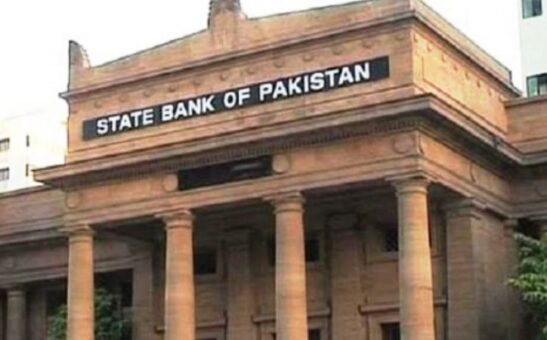
    KARACHI: The State Bank of Pakistan (SBP) has issued notification to revise instructions regarding bank financing for wheat procurement by the private sector.

    The SBP issued circular No. 02 of 2021 for amending the instructions issued on March 19, 2021 for financing wheat procurement by the private sector.

    Following amendments have been notified by the SBP:

    I. For private sector participation in the wheat procurement season 2021, banks are required to strictly fulfill the following minimum conditions for extending financing to eligible borrowers (licensed and functional flour mills duly evidenced by some documentation or licensed wheat traders registered with concerned authority/department);

    a. Fresh financing for procurement of wheat shall start from commencement of wheat procurement season 2021 in respective provinces. Banks will provide financing to eligible borrowers for the procurement of indigenous wheat for the harvest season of 2021 (April 01-June 30, 2021). The financing facility would be extended to the eligible borrowers for procurement of indigenous and imported wheat from July 01, 2021 subject to other conditions mentioned in this circular.

    b. Banks may provide financing facility to functional flour mills for purchase of indigenous wheat from their authorized representative and respective Food Department against supply of wheat by them. Quantum of such loan shall not be more than the value of wheat to be supplied by the respective Food Department or actual purchase from wheat traders, commensurate to the milling capacity of each mill. Banks will also monitor that existing stock of wheat purchased by the concerned functional flour mill, has been grinded and that the by-products of wheat (financed against bank loan) have also been released to the market gradually to repay the loans so obtained.

    c. Banks will ensure that the subject financing will be used only for intended purposes. However, there is no restriction on banks for extending financing to flour mills for purpose other than procurement of wheat. Banks may provide financing to flour mills for general requirements like overhead expenses, however, banks will ensure that such financing is not used for procurement of wheat or to acquire wheat stocks/by-products of wheat.

    d. Financing to private sector for procurement of wheat shall be provided against pledge of fresh wheat stock only and hypothecation / charge of moveable or immovable property would not be acceptable as collateral for such financing. Moreover, banks will ensure that no revaluation of the pledged stock is considered for release of any differential financing amount to the borrowers against stock of wheat already pledged with the banks.

    e. Banks are also allowed to provide financing facilities for wheat procurement by the seed processing plants duly evidenced by the testing certificates issued by the Federal Seed Certification and Registration Department, in line with their lending policies and the capacity/production plans of the seed processing plants ensuring that such stock of wheat will be used for processing purposes.

    f. These loans will be fully settled on or before 31st March 2022, positively.

    g. In order to curb the possibility of hoarding, banks shall:

    i. require client(s) to disclose their storage location and verify the same.

    ii. strictly monitor the wheat stock held by the client vide periodical and random inspections of wheat pledged with the bank as well as the gradual release of wheat stock to generate cash for the purpose of repayment of bank loan. SBP may acquire stock reports from banks to verify their authenticity/genuineness as and when desired.

    iii. be under obligation to immediately recall the advances allowed to the private sector in case of hoarding of wheat.

    iv. ensure that no financing is allowed to client for retirement of loans availed from other banks.

    v. ensure that their clients are in strict compliance with the guidelines of respective government (Federal/Provincial) for release of wheat stock and are not involved in any other activity which may cause speculation of wheat/flour price in market.

    h. The lending shall be in compliance with applicable laws, Prudential Regulations and other instructions of SBP issued from time to time.

    II. Banks will submit a monthly statement in respect of financing to private sector for wheat procurement to this department as per attached format (Annexure-A) within ten working days from the close of the relevant month.

    III. Any violation of the above instructions will attract administrative and/or penal action under the provisions of BCO, 1962 and other relevant laws.

  • FTO proposes initiating criminal prosecution against smugglers

    FTO proposes initiating criminal prosecution against smugglers

    ISLAMABAD: Federal Tax Ombudsman (FTO) has recommended that tax authorities should initiate criminal prosecutions against persons involved in smuggling or selling non-duty paid goods.

    In its proposals for budget 2021/2022, the FTO recommended measures on the issues of smuggling, misdeclarations, under-invoicing and non-transparent auctions.

    In order to effectively check the smuggling, it was recommended that criminal prosecution should be initiated against the persons/owners of the showrooms involved in business of Non-Duty Paid (NDP) vehicles, fuel pumps of smuggled oil and storage godowns of other smuggled items, from whom the NDP goods were recovered as provided in the Customs Act, 1969 read with the Prevention of Smuggling Act, 1977.

    Installation of scanners on the ports was recommended to be given top priority. It was emphasized that if government invested herself in this project, it will raise the potential of higher revenue and more effective check on misdeclaration of description or quantity of imported goods.

    So far two scanners have been added at Karachi Ports in addition to one already installed there. Two scanners have also been installed at Jamrud and Torkham, Peshawar.

    It was recommended to provide a mechanism in law for cross-matching of value declared on export documents of exporting station to import documents at importing station.

    Federal Board of Revenue (FBR) was asked to prescribe Model Auction Rules for auction through electronic means and prepare/operationalize an auction module in the WeBOC system to bring transparency and efficiency in the auctions.

    According to FBR, under the WeBOC-Glo initiative (an enhanced version of WeBOC), an electronic auction module has been developed and deployed in the system. This module envisages online registration of bidders who can bid for all auctionable goods displayed on website by the Customs authorities. Pilot is being run at Karachi Port (South Asia Port Terminal only).

    In view of constant complaints about delayed clearance at the border stations, generators should be provided on priority for speedy passengers/goods clearances and maintenance of IT and infrastructure support.

  • List of exemptions from total income withdrawn through ordinance

    List of exemptions from total income withdrawn through ordinance

    KARACHI: officials in the Federal Board of Revenue (FBR) have said that through Tax Laws (Second Amendment) Ordinance, 2021 various clauses of Second Schedule of Income Tax Ordinance, 2001 have been deleted that have allowed tax exemptions from total income.

    (more…)
  • Minimum penalty of Rs10,000 fixed for defaulting withholding statement

    Minimum penalty of Rs10,000 fixed for defaulting withholding statement

    KARACHI: A minimum penalty of Rs10,000 has been fixed for defaulting withholding statement where no tax is required to be deposited.

    Official at the Federal Board of Revenue (FBR) said that the amendment has been brought into Section 182 of Income Tax Ordinance, 2001 through Tax Laws (Second Amendment) Ordinance, 2021.

    Chartered Accountants said that prior to the amendment following penalties are prescribed for non-filing of statements under sections 165, 165A or 165B within due date:

    a) Rs. 5,000 where the person has deposited the tax withheld within due date and the statement is filed within 90 days;

    b) In all other cases, Rs. 2,500 for each day of default with a minimum penalty of Rs. 10,000.

    However, a new proviso has been inserted whereby minimum penalty has been prescribed at Rs. 10,000 in cases where there is no tax withholding to be deposited in a particular period.