Part II, Second Schedule of the Income Tax Ordinance, 2001 has provided reduced rates of tax for incomes or classes of income, or persons or classes of persons.
(more…)Day: November 3, 2021
-
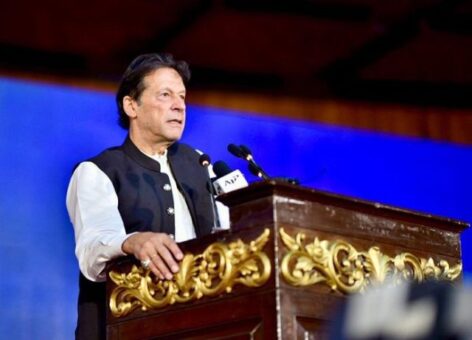
PM Imran Khan announces food subsidy package
ISLAMABAD: Prime Minister Imran Khan on Wednesday announced food subsidy package of Rs120 billion providing 30 percent discount at ghee, flour and pulses.
The prime minister, in his televised address to the nation, said 20 million families would benefit from the subsidy package to be funded jointly by the federal and provincial governments.
Under the package, the beneficiaries would avail a 30 per cent discount on the said three food commodities for next six months.
He said the subsidy package was apart from the ongoing different programs under Ehsaas Initiative worth Rs 260 billion affecting 120 million families.
The prime minister particularly thanked the Ehsaas team for compiling the national database of households to enable the government provide direct subsidy to the entitled families.
“Today, we have a data and now I am in the position to announce… country’s biggest ever welfare program,” he remarked.
The prime minister also announced Rs 1400 billion for Kamyab Pakistan Program aimed at providing interest free business loans to the entitled four million families.
The package consists of interest free loans for house construction, Rs 0.5 million each loan for farmers and businesses besides skill training to a member of the entitled family.
He said under Kamyab Jawan Program had so far given Rs 30 billion loan to 22,000 businesses. The program also featured a program to provide six million scholarship and stipends to the students.
Calling it his dream project, the prime minister the Health Insurance Card has been extended to whole of KP province and would be replicated in Punjab, AJK, GB and federal capital by March next year.
The prime minister also asked the Sindh government to launch the program to provide Rs 1 million health insurance cover to every family.
Imran Khan said the government had inherited a Pakistan with the biggest ever fiscal deficit, foreign debt burden, heaviest mark up, reserves touching the lowest mark, and the kitty with no money to pay back debts.
He thanked Saudi Arabia, UAE and China which supported the country in difficult time to save the country from default.
He said it took almost a year to stabilize the economy which unfortunately followed the outbreak of COVID pandemic – the biggest ever crisis the world faced during last century.
The prime minister felt proud for his team in the NCOC comprising top doctors, cabinet members and Pakistan Army which took bold decisions based on the data and made the country steered through the crisis effectively.
“On one side it was the fear of overcrowding of hospitals like India while the other fear was that the lockdown would destroy the economy. Pakistan opted for the middle course which also involved risks,” he said.
The prime minister recalled that he was pressured to impose India-like blanket lockdown but he said Pakistan was among few countries which successfully sailed through the situation which was also acknowledged by the World Bank, World Health Organization, World Economic Forum as well as the international media including The Economist magazine.
Giving an overview of the COVID impact on world economy, the prime minister the United States spent $4,000 billion to support its economy while Pakistan could only scrape $8 billion to avert the burden of unemployment and support the industry, construction and agriculture.
The prime minister said owing to the government’s prudent policies, the country witnessed a 13.8 per cent growth in rice production, pulses 8 per cent, sugarcane 22 per cent, wheat 8 per cent and cotton 81 per cent growth.
Moreover, an additional Rs1100 billion went to the farmers which was manifested by the record sale of motorbikes, tractors and urea.
He said following the incentives announced by the government, the construction projects worth Rs 600 billion were going on in the country and large scale manufacturing achieved record growth. Moreover, the profit of engineering sector increased by 350 per cent, textile sector 160 per cent, automobiles 138 per cent, cement 113 per cent and oil and gas 75 per cent.
Besides, the country’s tax collection also grew by 37 per cent as the government had already surpassed the set target.
“Our (economic) indicators are on right course. IT achieved 47 per cent growth last year and this year it will touch 75 per cent. This is good news for youth,” he remarked.
The prime minister said no doubt the inflation was an issue but instead of merely criticizing like opposition, the media should also teach the people about the worldwide inflation.
Quoting the Bloomberg Commodity Price Index, the prime minister said commodities’ prices grew by 50 per cent in a year against just 9 per cent in Pakistan.
He said Turkey, US, China and Germany had been facing highest inflation. The gas prices surged by 116 per cent in US, 300 per cent in Europe but Pakistan had made no increase except for the one being imported.
He said oil prices in the global market had increased by 100 per cent but Pakistan shifted only 33 per cent of the burden. Even in India oil prices surged to Rs 250, Bangladesh 200 while it was yet at Rs138 in Pakistan.
The government avoided to shift burden from the masses which otherwise could bring in additional Rs 450 billion revenue to the government.
However, the prime minister said the government would have to increase the oil prices which otherwise would lead to swelling the deficit.
Giving a comparison of food commodities in the region, the prime minister said flour rate was Rs83per kg in India while Pakistan had half of the world’s average price. Moreover, Daal Moong was being sold at Rs338 in India against Rs 162 in Pakistan.
Despite that, the government decided to launch the subsidy program in order to avert the burden of inflation from the people, he remarked.
The prime minister particularly appealed the industrialists and businessmen to take special care of labour class and give them a pay raise considering the inflation.
Commenting on the opposition’s criticism against the government, the prime minister committed to bring down prices of food commodities to half if the opposition leaders’ families brought back even half of the money to the country they had looted over last three decades.
According to the details of the subsidy package provided by the PM Office, the federal cabinet had approved the program on Tuesday which would affect 53 per cent of the country’s population.
Under the package, a subsidy of Rs. 1,000 a month would be given to each of the 20 million families with a poverty score of less than 39 and an income of Rs. 31,500 per month.
Ehsaas has developed a digitally enabled mobile point of sale system in collaboration with National Bank of Pakistan (NBP) to serve beneficiaries through a network of Kiryana stores designated by NBP, all over the country.
This system will digitize parts of the retail sector; there will be use of real time data for decision making. This process will help make beneficiaries and storeowners more digitally adept.
The participating Kiryana store owners will be required to open bank accounts which will help further increase financial inclusion and settlement payments made through RAAST will help increase scale of digital transactions in Pakistan.
For online registration of beneficiaries, Ehsaas will open a registration portal next week.
In interest of transparency, the registered Kiryana stores and beneficiaries will undergo a rigorous verification process to minimize the incidence of fraud.
The federal government and all participating federating units will share fiscal resources in the ratio of 35/65.
The governments of Punjab, Khyber Pakhtunkhwa, Gilgit Baltistan and AJK have already agreed to participate in the programme.
In other federating units, federal share of subsidy worth Rs. 350 per month will be given for each eligible household.
-
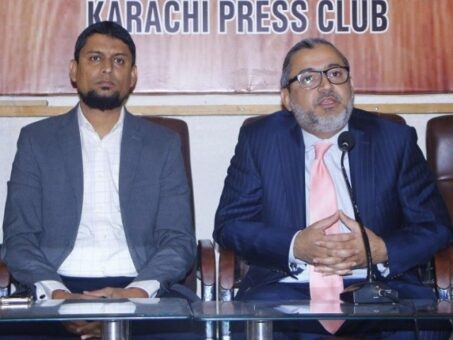
Food inflation not linked to urea prices
KARACHI: The fertilizer industry is playing a critical role in ensuring food security and managing food inflation in Pakistan through adequate and affordable supply of urea at one fifth the international prices.
In a media briefing on Wednesday, Imran Ahmed, CFO of Engro Fertilizers, highlighted that food inflation is one of the biggest challenges being confronted by the Government. However, food inflation is not unique to Pakistan as global food prices have jumped by 34 percent between July 2020 and June 2021, owing to a surge in oil prices, supply chain disruptions and unfavorable weather conditions. Reports suggest that globally the food prices have soared to its highest point in a decade and that has translated locally, where the prices have even been adversely impacted by rupee devaluation on top of global price increases.
He stressed that urea prices do not have any impact on food inflation as only 2.6 per cent of farmers wallet is spent on urea. According to calculations, every Rs 50/bag increase in urea price has an impact of only 1 paisa on the price of a ‘roti’. The impact of a Rs 50/bag increase in urea price on other agri commodities like rice, sugar, maize, potato, tomato and banana is all within 10 paisas per KG.
The local fertilizer industry has shielded farmers from a steep rise in international urea prices as domestically produced urea is currently priced at 2012 level. Urea is available in Pakistan at a significant discount of 81 percent, equivalent to Rs 7500/bag, compared to the international rates. As a result, farmers are getting an annualized benefit in excess of Rs 350 billion and the country is expected to save $3 billion in import substitution during 2021.
He commended the PTI Government for its vision to transform the agriculture sector of Pakistan and supportive policies that enabled the fertilizer sector to reduce urea prices by Rs 400/bag last year. Imran declared that in the absence of a strong local fertilizer industry, Pakistan would have faced at best massive urea shortages like India where landed urea imports are costing as much as $1000 / ton, or even more dire an all-out food emergency as currently being experienced in Sri Lanka.
Imran pointed out that the real issue being faced by the local farmers is the global hike in DAP prices by over 100 per cent that has reflected locally as well as majority of DAP demand is met through imports. To promote balanced mix of fertilizers for higher crop productivity, the Government must urgently provide the farmers relief by implementing the much-promised DAP subsidy. Currently, the subsidy on DAP is being extended only by the Government of Punjab. The Federal Government should convince and mobilize other provincial governments to immediately allocate funding for phosphatic fertilizer subsid for Rabi 2021-22.
It has been widely recommended by the farming community that the Government should increase the subsidy amount to Rs 2,000/bag in view of the current prices of DAP. Further, the subsidy should not be restricted to number of bags, but instead be based on land holding and recommended dose for the farmers.
For the now commenced Rabi season, the Government has very prudently agreed to proceed with disbursement of the subsidy through the usual method of stickers/vouchers. The Government is to be recognized for its adaptability realizing that given the longer than expected duration for the complete roll out of the Kissan Card system, the proven voucher process should be continued for providing timely relief to farmers. The multi-featured Kissan Card is expected to be fully implemented and scaled up by the next season.
-
FTO reconstitutes advisory committee
ISLAMABAD: Federal Tax Ombudsman (FTO) has reconstituted the advisory committee (South) for the year 2021.
The Federal Tax Ombudsman is pleased to reconstitute the Advisory Committee (South) for the year 2021, as follows:-
1. Dr. Asif Mahmood Jah, Federal Tax Ombudsman : Chairman
2. The President Federation of Pakistan Chamber of Commerce & Industry, Federation House, Main Clifton, Block-5, Abdullah Shah Ghazi Road, Karachi : Member
3. The President, Karachi Chamber of Commerce and Industry, Aiwan-E-Tijarat Road, Off: Shahrah-e-Liaquat, P.O.Box No. 4138 Karachi : Member
4. The President Women Chamber of Commerce & Industry, Karachi South #4, Plot # 1-C, Lane # 2sehar Commercial Area Phase-VII, D.H.A. Karachi : Member
5. The Chief Executive, Karachi Women Chamber of Commerce & Industry, District East Plot #391, Block # 3, 6th Floor office # 604, Al Reef Tower, Salamgir Road Karachi
6. The President, The American Business Council of Pakitan 155-C 4th Floor Almurtaza Commercial Lane – 2 DHA Phase 8-A Karachi : Member
7. The President, Overseas Investors Chamber of Commerce & Industry Chamber of Commerce Building, Talpur Road Karachi : Member
8. Chairman, Air Cargo Agents Association Of Pakistan, suite No. 305, 3rd Floor, Fortune Centre, 45-A, Block 6, P.E.C.H.S., Sharah-e-Faisal, Karachi : Member
9. Chairman, All Pakistan Fruit & Vegetables Exporters, Importers & Merchants Association House No. 175, C.P. Berar Society block 7/8 Karachi : Member
10. Chairman Customs Agents Association Room No. 7/8, Bombay Plaza Mezzanine Floor, Bohri Road Opp. New Custom House, Karachi : Member
11. Chairman All Pakistan Shipping Association Room No. 712, 7th Floor, Business Centre, Mumtaz Hassan Road Karachi : Member
12. Chairman, Pak Readymade Garments Manufacturers & Exporters Association 3rd Floor, Plot # 57-C 24th Commercial Street Phase II (Ext), D.H.A. Karachi : Member
13. The Chairman, Pakistan Bedwear Exporters Association 245-1V, Block 6, P.E.C.H.S. Karachi : Member
14. The Chairman, Pakistan Leather Garments Manufacturers & Exporters Association, St # 20, Central Avenue, Sector, 7/A Korangi Industrial Area, Karachi : Member
15. The President, Karachi Tax Bar Association, Strachan Road, Saddar Karachi : Member
16. The President, Sukkur Chamber of Commerce & Industry 1st Floor, Sukkur Chamber House, Bunder Road Sukkur : Member
17. President Hyderabad Chamber of Small Traders and Small Industry Naz & Bilal, Shopping Mall 41/499/1, Mezzanine Floor, Saddar Hyderabad : Member
18. The President, Pak-Iran Joint Chamber of Commerce and Industry Jk Plaza, Plot No. 06 Zonki Ram Road, Tamir-e-Nau Masjid Quetta : Member
19. The President, Chaman Chamber of Commerce & Industry Commerce House, Trunch Road, Chaman : Member
20. The President, Gwadar Chamber of Commerce & Industry GCCI, Civic Center airport Road Gwadar : Member
21. Chairman Pakistan Carpet Manufacturers & Exporters Association 23-D, Block # 6, P.E.C.H.S. Shahrah-E-Faisal Karachi : Member
22. Chairman, Pakistan Chemicals & Dyes Merchants’ Association PCDMA House, Rambharti Street, Jodia Bazar Karachi : Member
23. Chairman, Pakistan Waste Products Association, 7/12-A, Rimpa Plaza, M.A. Jinnah Road Karachi : Member
24. Mr. Adnan Mufti, Chartered Accountant, Moore Sheikha Mufti, C-253, PECHS, Block-6, Karachi : Member
25. Mr. Muhammad Ali, Sr. Reporter, Business Recorder, R-1367/15, Federal B. Area, Karachi : Member
26. Mr. Asif Haroon, FCA, State Life Building No. 1-C, I.I, Chundrigar, City Railway Colony, Karachi : Member
27. Mr. Shahnawaz Akhtar, Sr. Staff Correspondent, Bol News, Bol Headquarter, Bol Road, Karachi : Member
28. Mr. Ashraf Khan, Sr. Correspondent, 24 News, DHA Phase 2 Ext, Karachi : Member
29. Mr. Asif Inam, Chairman South Zone APTMA House, 44-A, Street No. 01, Molvi Tamizauddin Khan Road, Lalazar, Karachi : Member
30. Chief (IR-Policy) – IR, FBR (HQ), Islamabad : Member
31. Chief (ST-Operations) IR, FBR (HQ), Islamabad : Member
32. Chief (Tariff) –Customs, FBR (HQ), Islamabad : Member
33. Mr. Shahid Ahmad, Advisor (Customs), FTO Secretariat, R.O. Karachi : Member
34. Mr. Manzoor Hussain Memon, Advisor (Customs), FTO Secretariat, R.O. Karachi : Member
35. Mr. Badruddin Ahmad Qureshi, Advisor, FTO Secretariat, R.O. Karachi : Member
36. Justice (R) Muhammad Nadir Khan, Advisor Incharge, FTO Secretariat, R.O. Quetta : Member
37. Mr. Manzoor Hussain Kureshi, Advisor Incharge, FTO Secretariat, Secretary Committee R.O. Karachi
The Chairman of the Advisory Committee may co-opt any person for assistance of the Committee as per need.
Due to budgetary constraints, the FTO Secretariat will not be able to bear the expenses relating to participation of the Members in the Advisory Committee Meetings.
-

Ufone signs Rs21 billion agreement for 4G spectrum
ISLAMABAD: Pakistani Telecom Company, Ufone has secured its largest syndicated financing facility jointly led by MCB Bank Limited (MCB) (Agent bank), Allied Bank Limited (ABL), Bank of Punjab (BoP), National Bank of Pakistan (NBP), and United Bank Limited (UBL) to fund the acquisition and rollout of its 4G services across Pakistan.
President and Group CEO, PTCL & Ufone, HatemBamatraf signed the agreement for the syndicated financing of PKR 21 billion at a ceremony held in Islamabad, which was also attended by President, MCB Bank, Imran Maqbool; Group Head, Corporate Finance & International Banking, MCB Bank, Mr. ShoaibMumtaz; President Allied Bank, AizidRazzaq Gill; Chief, Corporate & Investment Banking, Allied Bank, OwaisShahid; Head Investment Banking, Bank of Punjab, Umer Khan, AbidKitchlew Divisional Head C&IBG, National Bank, and Farooq Ahmed Khan Group Head Corporate & Investment Banking, United Bank Ltd .
Ufone has recently been awarded 4G Spectrum License as a result of competitive bidding during the spectrum auction held by the Pakistan Telecommunication Authority (PTA). The company’s investment in 4G spectrum will go onto enhancing its network capacity and readiness besides delivering superior connectivity and user experience to its customers.
Speaking at the ceremony President and Group CEO, PTCL & Ufone, HatemBamatraf expressed his gratitude to the banking consortium for the timely financial support and said “The Financing Solution will go a long way in bringing high quality mobile broadband services to the people of Pakistan. It will improve quality of network services and usher in a host of socio-economic opportunities for growth and development for our customers” He further added “ It is a mutual goal that both Pakistan’s banking and telecom industries are working to achieve in order to create shared value for the communities we serve.”
-
Stocks end down 80 points in range bound trading
KARACHI: The stocks have ended down by 80 points on Wednesday in a range bound trading activity.
The benchmark KSE-100 index of Pakistan Stock Exchange (PSX) closed at 47,032 points as against 47,113 points showing an decrease of 80 points.
Analysts at Arif Habib Limited said that the market remained range-bound today due to concerns over monetary tightening and resuming of foreign selling spree.
Technology sector remained in the limelight throughout the day as traders placed the bet on high-beta stocks to mark quick trading gains. On the flip-side, Institutional investors fetched for value hunting as buying was observed in E&P and banking stocks.
In the last trading hour, investors opted for profit booking specially in cement and steel stocks in expectation of interest rate hike by SBP in the upcoming monetary policy.
Sectors contributing to the performance include Technology (+193 points), Refinery (+22 points), Chemical (+19 points), Leather (+12) and Insurance (+7 points).
Volumes increased from 307 million shares to 381 million shares (+24.2 per cent DoD). Average traded value also increased by 12.7 per cent to reach US$ 91.5 million as against US$ 81.08 million.
Stocks that contributed significantly to the volumes include PTC, HASCOL, WTL, TRG and TPLP.
-
SBP selects eight banks for collateral-free loan scheme
KARACHI: State Bank of Pakistan (SBP) has selected eight banks for lending collateral-free loan to Small and Medium Enterprises (SMEs), a statement said on Wednesday.
Governor State Bank of Pakistan, Dr. Reza Baqir announced that banks have shown overwhelming response to an innovative financing scheme for collateral free lending to SMEs introduced by the State Bank and supported by the Government of Pakistan.
This is the first time a comprehensive collateral free SME lending scheme has been introduced by SBP in the country.
Out of 20 banks that competed for participating in this scheme, 8 banks under four categories have been selected on the basis of highest amount of finance and highest number of SME clients to be served.
These categories include large banks, mid-sized banks, small banks, and banks in collaboration with fintechs.
The winning banks are Habib Bank Ltd, United Bank Ltd, Allied Bank Ltd, Meezan Bank Ltd, Bank Alfalah Ltd, The Bank of Punjab, JS Bank Ltd and The Bank of Khyber. These banks have been selected through a transparent bidding process based on prescribed criteria.
While appreciating banks’ enthusiastic response, Dr. Reza Baqir, Governor State Bank emphasized early roll out of the scheme by banks.
He also underscored the importance of extensive awareness and marketing of the scheme for the SMEs to fully utilize its benefits.
Access to finance for SMEs remains low in Pakistan due to a number of factors including lack of collateral and perceived high risk due to non-availability of track-record.
To address these issues, SBP adopted an innovative approach by designing SME Assan Finance, commonly known as SAAF which refers to the collateral free nature of finance. SAAF has been developed after thorough consultation with stakeholders.
To implement this scheme, the SBP decided that rather than advising all banks to offer this product, only willing banks will be encouraged to be part of this initiative and develop their expertise through a transparent process.
SAAF was launched in August 2021 and bids were solicited from the interested banks. Under SAAF, SBP will provide refinance to the banks at 1 per cent per annum (p.a.) for onward lending to SMEs at a maximum end-user rate of up to 9 per cent p.a.
The end user rate under SAAF would be attractive for SMEs when compared with usual cost of financing for them from informal sources which can run 25 per cent – 50 per cent p.a.
The margin available to banks will help them to make an upfront investment in human resources, technology and processes to cater to promote SME finance.
This incentive has been provided to banks for the first three years of this scheme after which it is expected to become self-sustaining.
Additionally, under SAAF, risk coverage of up to 60 percent is being provided by Government of Pakistan. Under the SAAF scheme, SMEs can avail collateral free financing of up to Rs 10 million to meet their long-term capital expenditure and short-term working capital needs.
Governor Baqir also emphasized that a Shariah compliant version of SAAF is also available.
SBP has allocated refinance limits to eight winning banks for three years. Currently, these banks are finalizing their roll out plans for successful implementation of the scheme.
It is expected that selected banks will shortly roll out their SAAF programs through public announcements and marketing campaigns so that SME borrowers can approach any of these eight banks to request collateral free financing.
-
Rupee appreciates to dollar for sixth consecutive day
KARACHI: The Pak Rupee (PKR) appreciated for sixth consecutive day on Wednesday as dollar fell below Rs170 in the interbank foreign exchange market.
The rupee gained 57 paisas to close at Rs169.97 against the dollar from previous day’s closing of Rs170.54 in the interbank foreign exchange market.
The local currency is making a continuous recovery against the greenback since falling to historic low at Rs175.27 on October 26, 2021.
The appreciation in the local unit has been seen soon after an announcement by the Saudi government to support Pakistan in managing balance of payment.
Last week Saudi Arabia announced an additional support of $3 billion to Pakistan for building its foreign exchange reserves. The additional financial support is besides a $1.2 billion dollars deferred oil facility to Pakistan to help its balance of payment issues, an official statement said.
Besides, the latest number of exports also improved the sentiments in the foreign exchange market.
The exports of the country surged by 25 per cent to $9.44 billion during July – October 2021 as compared with $7.57 billion in the corresponding period of the last year.
-
Issuance of debit, credit notes for tax adjustment
Section 9 of the Sales Tax Act, 1990 provides a framework for the issuance of debit and credit notes by registered persons.
(more…) -
Provision for input tax adjustment
Section 8B of Sales Tax Act, 1990 has defined provision for input tax adjustment.
The Federal Board of Revenue (FBR) issued the Sales Tax Act, 1990 updated up to June 30, 2021. The Act incorporated amendments brought through Finance Act, 2021.
Following is the text of section 8B of Sales Tax Act, 1990:
8B. Adjustable input tax.– (1) Notwithstanding anything contained in this Act, in relation to a tax period, a registered person other than public limited companies listed on Pakistan Stock Exchange shall not be allowed to adjust input tax in excess of ninety per cent of the output tax for that tax period:
Provided that the restriction on the adjustment of input tax in excess of ninety percent of the output tax, shall not apply in case of fixed assets or Capital goods:
Provided further that the Board may by notification in the official Gazette, exclude any person or class of persons from the purview of sub-section (1).
(2) A registered person, subject to sub-section (1), may be allowed adjustment or refund] of input tax not allowed under sub-section (1) subject to the following conditions, namely:–
(i) in the case of registered persons, whose accounts are subject to audit under the Companies Ordinance, 1984, upon furnishing a statement along with annual audited accounts, duly certified by the auditors, showing value additions less than the limit prescribed under sub-section (1) above; or
(ii) in case of other registered persons, subject to the conditions and restrictions as may be specified by the Board by notification in the official Gazette.
(3) The adjustment or refund of input tax mentioned in sub-sections (2), if any, shall be made on yearly basis in the second month following the end of the financial year of the registered person.
(4) Notwithstanding anything contained in sub-sections (1) and (2), the Board may, by notification in the official Gazette, prescribe any other limit of input tax adjustment for any person or class of persons.
(4A) Notwithstanding anything contained in sub-sections (1), (2) and (3), input tax allowed in case of locally manufactured electric vehicles subject to reduced rate of tax under the Eighth Schedule shall be limited to the extent of amount of output tax and no refund or carry forward of excess input tax shall be allowed.
(5) Any auditor found guilty of misconduct in furnishing the certificate mentioned in sub-section (2) shall be referred to the Council for disciplinary action under section 20D of Chartered Accountants, Ordinance, 1961 (X of 1961).
(6) In case a Tier-1 retailer does not integrate his retail outlet in the manner as prescribed under sub-section (9A) of section 3, during a tax period or part thereof, the adjustable input tax for whole of that tax period shall be reduced by 60%.
(Disclaimer: The text of above section is only for information. Team PkRevenue.com makes all efforts to provide the correct version of the text. However, the team PkRevenue.com is not responsible for any error or omission.)